
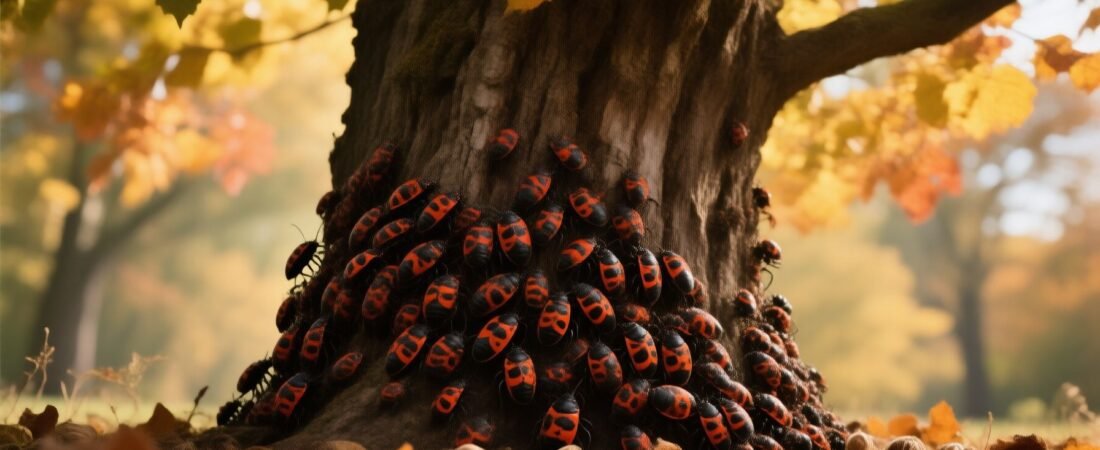
Boxelder bugs aren’t actually dangerous — and that’s exactly why so many people mishandle them. Because they look alarming (that bold black-and-orange pattern reads “danger” at a glance), homeowners either panic and grab the wrong product or dismiss them entirely because they heard boxelders are harmless. Both reactions miss the real problem: boxelder bugs invade in the hundreds or thousands, and if you can’t correctly identify what you’re looking at — nymph vs. adult, boxelder vs. its common look-alikes — you’ll never understand why they’re there or how to stop them from coming back every fall like clockwork.
What Does a Boxelder Bug Actually Look Like?
Adult boxelder bugs (Boisea trivittata) are flat, oval-shaped insects about half an inch long — roughly the size of a watermelon seed. They’re predominantly black or dark gray with three distinctive red-orange lines running along the thorax and red veining on the wings, which fold flat against the body in an overlapping X-pattern when the bug is at rest.
That wing pattern is the detail most people overlook, and it’s one of the most reliable ID markers. Up close, the edges of the abdomen flash bright orange-red, and the underside of the body is also orange. The antennae are long and dark, and the legs are black with faint reddish tinting. They won’t bite unless handled roughly, and even then it’s rare.
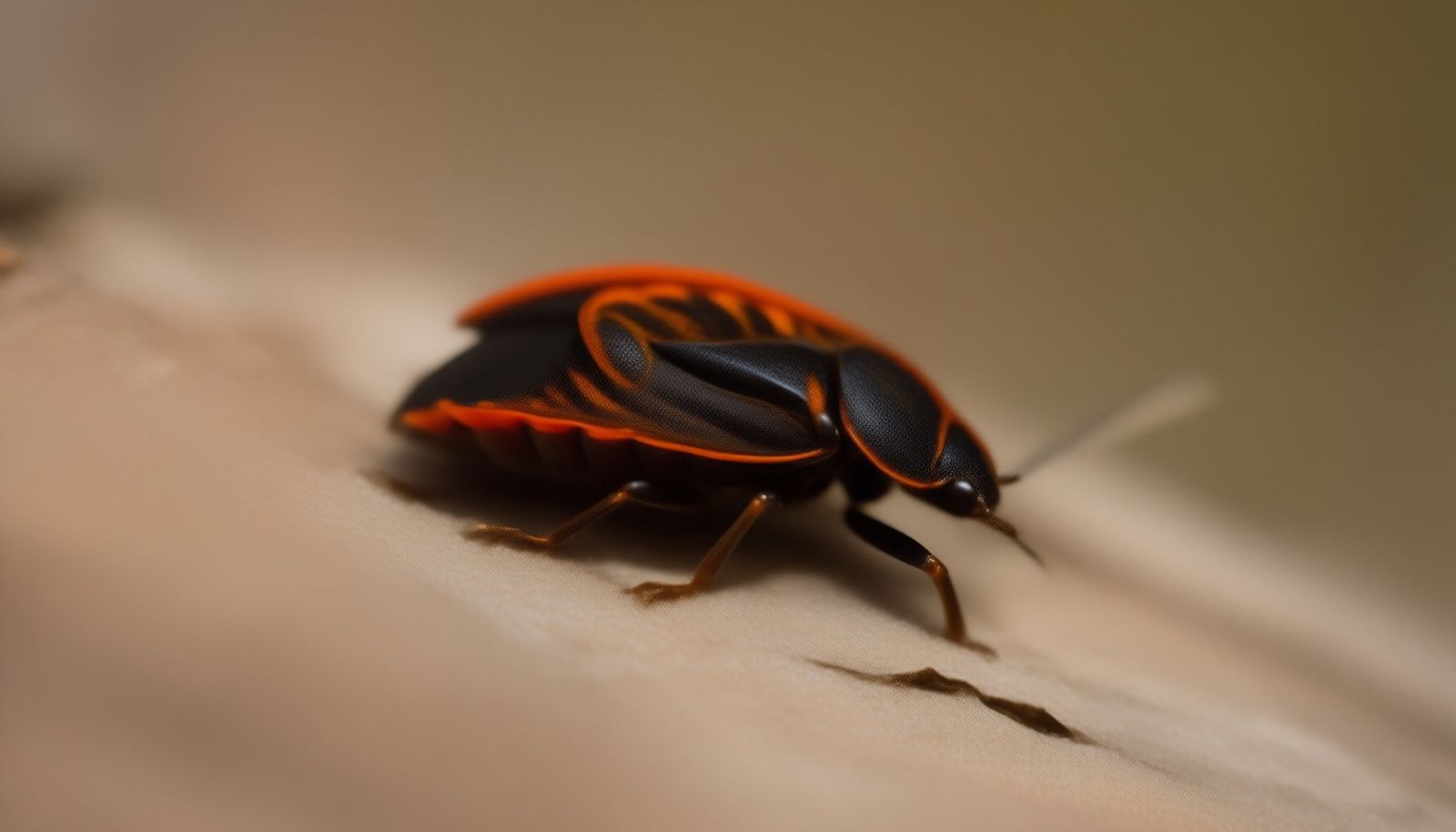
This close-up shows the three red-orange stripes on the thorax and the red wing venation that distinguish boxelder bugs from similar-looking species — details that matter when you’re trying to confirm what you’re dealing with before treating.
How Do Boxelder Bug Nymphs Differ From Adults?
Here’s where most identification articles fall flat: they describe the adult and call it done. But the bugs you’re most likely to see in summer — crawling on your boxelder or maple tree in clusters — are nymphs, not adults. And nymphs look completely different from the black-and-orange insect in every stock photo.
Young nymphs in their first and second instars are almost entirely bright red or red-orange, with tiny dark wingpads that haven’t developed yet. As they molt through five instars over the course of six to eight weeks, the black coloring gradually increases until they reach the familiar adult pattern. A first-instar nymph crawling across your patio furniture could easily be mistaken for a clover mite, a spider mite, or even a tiny assassin bug nymph — which matters because some of those look-alikes do bite.
Pro-Tip: If you spot clusters of bright red, BBQ-seed-sized bugs on or near a tree in late spring or early summer, look at the tree species first. Boxelder bugs almost exclusively feed on boxelder, maple, and ash trees. If the tree is one of those, you’re almost certainly looking at early-stage boxelder nymphs — not a mysterious new invader.
Which Bugs Are Commonly Mistaken for Boxelder Bugs?
Getting the identification wrong here has real consequences. Treat for the wrong insect and you’ll spend money on products that don’t work while the real population keeps growing. There are four insects that homeowners regularly confuse with boxelder bugs, and the distinctions are worth knowing cold.
The most common mix-up is with the milkweed bug (Oncopeltus fasciatus), which shares the same red-and-black color scheme and is similar in size. The key difference: milkweed bugs have a bold black band across their middle and feed exclusively on milkweed seeds — if you don’t have milkweed on your property, it’s almost certainly not a milkweed bug. Stink bugs are another frequent confusion, though they’re wider, more shield-shaped, and brown rather than black. Here’s the comparison at a glance:
| Insect | Size | Color Pattern | Distinctive Feature |
|---|---|---|---|
| Boxelder Bug | ~½ inch | Black with red-orange stripes and wing veins | Three thorax stripes, flat X-wing fold |
| Milkweed Bug | ~½ inch | Black with orange-red patches | Bold black band across midsection |
| Brown Marmorated Stink Bug | ~⅝ inch | Mottled brown | Shield shape, banded antennae |
| Elm Seed Bug | ~⅓ inch | Dark brown with rust-orange | Smaller, rust X-pattern on back |
The elm seed bug deserves a special mention because it’s a relatively recent invader in the western U.S. and is still misidentified constantly. It’s smaller than a boxelder bug and rounder, with a rust-colored X on its back rather than the crisp red striping of a true boxelder bug. The elm seed bug also produces a far stronger, more unpleasant odor when disturbed.
Why Are Boxelder Bugs Suddenly Appearing on Your House?
Picture this: it’s mid-September, temperatures start dropping in the evenings, and overnight your south-facing brick wall is covered in what looks like hundreds of slow-moving black-and-red dots. Your neighbor has zero. You have a swarm. The difference almost always comes down to one thing — and it’s not cleanliness or luck.
Boxelder bugs are thermophilic, meaning they actively seek heat. South- and west-facing walls that absorb sunlight throughout the day act like a giant radiator, and boxelder bugs congregate on those surfaces because warmth signals a good overwintering site nearby. If your house has a female boxelder tree, silver maple, or ash within about 200 feet, you’re essentially running a bug magnet: food source plus sun-warmed entry point. They’re not there because your house is dirty or has moisture problems. They’re there because of physics and tree selection.
“Homeowners are often surprised to learn that boxelder bug aggregations have almost nothing to do with sanitation or structural defects. These insects are following thermal gradients and chemical cues from seed-bearing boxelder and maple trees. Remove the female tree — or switch to a male cultivar — and the pressure on the structure drops dramatically within one to two seasons.”
Dr. Sandra Tillman, Urban Entomology Extension Specialist, Midwestern Land-Grant University
One counterintuitive fact that almost never makes it into mainstream pest articles: only female boxelder trees produce seeds, and boxelder bugs feed almost exclusively on those seeds. Male boxelder trees are essentially ignored. If a neighbor has a large female boxelder tree, you may see heavy aggregations on your house even though the source tree isn’t on your property at all — which is genuinely frustrating and also why treating just your house is a temporary fix at best.
Where Do Boxelder Bugs Hide Once They Get Inside?
Once temperatures drop below about 50°F consistently, boxelder bugs stop feeding and start looking for a protected space to overwinter. They don’t reproduce indoors — they’re not colonizing your house the way termites or cockroaches would. They’re using it as a hotel, and they can squeeze through gaps as small as 1/8 inch to get in.
Inside the house, boxelder bugs tend to congregate in wall voids, attics, and the spaces behind baseboards or around window frames. They go dormant and you may not see them for weeks. Then on a warm winter day — or when your heating system kicks on and warms up a wall void — they become active again and start wandering toward light sources. Finding what looks like a Signs of Squirrels in the Attic: Sounds, Damage and Droppings situation in your attic can sometimes be complicated by the fact that multiple pest types — including boxelder bugs — may be overwintering in the same space simultaneously. The common indoor hiding spots include:
- Wall voids adjacent to south- and west-facing exterior walls
- Attic spaces, especially near ridge vents and gable ends
- Behind baseboards near exterior walls
- Window frames and door casings with weatherstripping gaps
- Inside electrical outlet boxes on exterior walls
- Beneath door thresholds with worn or missing sweeps
The damage they do indoors is genuinely minor — they don’t eat wood, fabric, or food stores. Their feces, however, can leave reddish-purple staining on curtains, upholstery, and light-colored walls. Crushing them makes it worse and releases a strong, unpleasant odor. That staining is actually one of the more reliable signs of a boxelder presence in an attic or wall void before you ever see the bugs themselves.
How to Confirm You’re Dealing With Boxelder Bugs (Not a Look-Alike)
Confident identification comes down to a checklist, not a gut feeling. If you’re finding black-and-orange insects on or in your home and you’re not 100% sure what they are, run through these steps before buying a single product or calling anyone.
- Check the tree species nearby. Walk a 200-foot radius around your house. If you find a boxelder (compound leaves with 3–5 leaflets, helicopter seeds), silver maple, or ash, that’s your first confirmation data point.
- Look at the wing pattern. Boxelder bugs fold their wings flat across their backs forming a visible X or overlapping shield shape, with red veining visible in the wing membrane. Stink bugs have a plain brown shield shape with no red veining.
- Count the thorax stripes. Three red-orange lines run lengthwise across the pronotum (the area just behind the head). Milkweed bugs have a different banding arrangement — typically a black central band with orange on the sides.
- Note the aggregation behavior. Boxelder bugs cluster in large numbers on sunny surfaces in fall and early spring. Finding 50+ bugs on a warm wall in September is a strong behavioral indicator.
- Check the size. Adults are consistently around half an inch. Elm seed bugs are noticeably smaller — closer to a third of an inch — and you can see the difference side by side without a magnifier.
- Smell test (with caution). If you carefully disturb one and it releases a faint, mildly unpleasant odor, that’s consistent with boxelder bugs. A sharp, intensely acrid smell points more toward elm seed bugs or stink bugs.
One honest nuance worth stating directly: in homes with multiple potential entry points and adjacent wooded lots, you may be dealing with more than one species simultaneously. A wall void near a bathroom drain might harbor drain flies (you can read about a similar multi-pest scenario in our guide on What Are the Bugs Coming Out of My Drain?), while the attic harbors overwintering boxelder bugs. Don’t assume a single cause for every bug you see indoors in fall.
Geography also matters. If you’re in the Pacific Northwest and seeing what looks like a boxelder bug, it might be an elm seed bug — a species that established itself in Idaho and Oregon and has been spreading. If you’re in the upper Midwest or Northeast near mature boxelder stands, it’s almost certainly the real thing. Regional context is a legitimate part of ID, not a shortcut.
The good news is that once you’ve correctly identified boxelder bugs, you have a genuinely manageable situation — especially if you act on the entry points before mid-October when they begin serious overwintering entry. A correctly identified pest is a pest you can actually do something about. That’s what the whole exercise is for.
Frequently Asked Questions
how do I identify boxelder bugs?
Boxelder bugs are about 1/2 inch long with a flat, oval-shaped body that’s black with three distinctive red or orange stripes running along the thorax and red veining on their wings. They’re pretty hard to misidentify once you know what to look for — no other common household bug has that exact black-and-red pattern combined with that shape and size.
what is the difference between boxelder bugs and stink bugs?
Stink bugs are wider and more shield-shaped, usually brown or gray with no bright markings, while boxelder bugs are narrower and always have those red or orange stripes. Both invade homes in fall, but if you’re seeing a black insect with clear orange or red lines on its back, you’re almost certainly dealing with boxelder bugs, not stink bugs.
are boxelder bugs harmful to humans?
Boxelder bugs don’t bite, sting, or transmit diseases, so they’re not dangerous to people or pets. They can leave behind a reddish stain on curtains, walls, or upholstery if crushed, and their feces can also cause minor discoloration — so it’s worth controlling an infestation before it gets into the hundreds inside your home.
what time of year do boxelder bugs come inside?
They start pushing indoors in late September through October as temperatures drop below about 50°F, looking for a warm place to overwinter. You’ll usually see the biggest surge on warm, sunny days in fall when they gather in large groups on the south and west sides of buildings before squeezing through gaps and cracks.
what do boxelder bug eggs look like?
Boxelder bug eggs are tiny, about 1mm long, and start out a pale yellow before turning red as they get closer to hatching — usually within 10 to 14 days. You’ll most likely find clusters of them tucked into bark crevices, leaf litter, or seed pods on or near boxelder, maple, or ash trees in spring and early summer.