
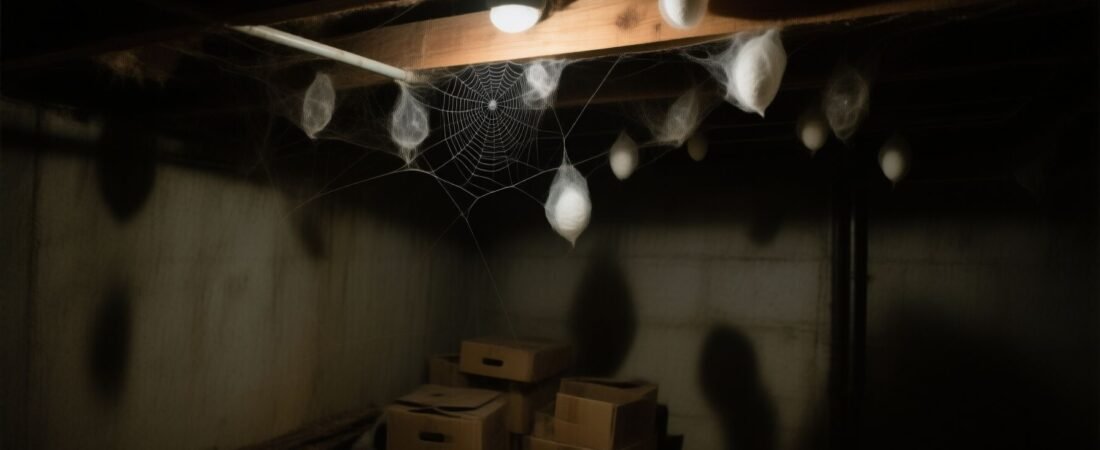
About 45,000 spider species exist worldwide, and at least a dozen of them are living in your house right now — whether you’ve seen them or not. That’s not a horror-movie fact. That’s just biology. The real problem isn’t that spiders are present; it’s that by the time most people recognize an infestation, they’ve been living with hundreds of spiders for months. Webs are the obvious sign everyone knows to look for. But webs are actually one of the last signals to appear at scale — by then, you’re well past the early-warning stage. The signs that actually matter show up long before your ceiling corners look like a haunted house.
Why Webs Alone Are a Misleading Indicator of Spider Activity
Not all spiders build webs. Ground hunters like wolf spiders, jumping spiders, and sac spiders actively chase prey instead of trapping it — which means a home overrun with these species might have almost zero visible webbing. Homeowners who do a quick visual scan, see nothing, and walk away thinking they’re fine are often completely wrong. The absence of webs tells you nothing definitive about whether you have a spider problem.
Web-building species like cellar spiders, cobweb spiders, and orb weavers do leave visible evidence — but even then, a single web in a corner doesn’t signal infestation. What you’re looking for is the pattern: multiple webs in multiple rooms, webs reappearing within 24–48 hours of being removed, webs clustered near consistent food sources like window frames where insects congregate. The web isn’t the problem — it’s just a symptom of something larger going on with your home’s insect population and entry points.

This image shows the less-obvious physical evidence of spider activity — egg sacs tucked into a corner, small dark droppings on a baseboard, and translucent shed exoskeletons — exactly the kind of detail most people walk past without realizing what they’re seeing.
What Does Spider Frass, Shed Skin, and Egg Sacs Actually Look Like?
Spider droppings — technically called frass — look like tiny dark specks or streaks, often white-tipped, smeared against walls, baseboards, or underneath furniture. They’re easy to confuse with mold, dirt, or rodent droppings if you’re not looking carefully. A consistent line or cluster of these marks beneath a specific spot almost always means a spider is living directly above it and feeding regularly.
Egg sacs are arguably the most important sign to find early. A single female house spider can produce up to 17 egg sacs in her lifetime, each containing 100–400 eggs. Find one egg sac in your basement, and you’re not looking at one spider problem — you’re looking at a potential population explosion within weeks if conditions support it. Egg sacs look like small papery or silken balls, sometimes wrapped in a protective web, cream to tan in color, and usually tucked into protected corners, behind appliances, or inside wall voids. Shed exoskeletons — pale, translucent, and fragile — often accumulate in the same spots spiders favor for molting.
Pro-Tip: Run a flashlight along the gap between your baseboard and the floor in rarely-disturbed rooms like storage areas or spare bedrooms. Frass streaks, shed skins, and collapsed egg sacs are easiest to spot in these low-traffic zones where spiders establish without interference.
How Do You Know If Spiders Are Multiplying or Just Passing Through?
One spider in your kitchen is a visitor. Eight spiders in your basement over the course of a week is a colony establishing itself. The difference isn’t just the number — it’s the behavior pattern and the distribution. Spiders that are simply wandering in through a gap tend to appear in random locations, move on quickly, and don’t leave consistent physical evidence. Spiders that are breeding and hunting inside your home stake out territory and return to the same feeding zones repeatedly.
Here’s how to distinguish between the two scenarios:
- Multiple sightings in the same zone. Seeing spiders repeatedly in the same area — near a specific pipe, under a specific shelf — means they’ve found stable food, water, and shelter there, not that they’re passing through.
- Webs reappear within 48 hours of removal. A web that comes back overnight tells you the spider hasn’t left — it’s simply relocated a few inches and rebuilt. Active rebuilding is a clear sign of residency.
- Egg sacs in multiple locations. Finding egg sacs in more than one room means reproduction is already underway at scale, not just in a single corner.
- Spiders of multiple sizes present simultaneously. When you see juveniles (tiny, pale spiders) alongside adults, you’re watching a breeding cycle happen in real time inside your home.
- Prey evidence accumulating. Dead insects wrapped in silk — the leftover husks of meals — building up in multiple spots is a sign of sustained hunting activity, not a single event.
- Distinct species in distinct zones. Finding web-builders in upper corners and ground hunters under appliances simultaneously suggests you’re not dealing with random entry — your home has become a sustained habitat for multiple species.
Which Rooms Signal a Serious Spider Infestation vs. Routine Activity?
Location matters enormously when you’re trying to read spider activity. A spider in your living room in October is almost certainly a seasonal wanderer — males of many species roam widely in fall looking for mates. But a spider in your basement in July, surrounded by shed skins and frass under the water heater, tells a completely different story. Understanding which rooms correlate with infestation-level activity versus incidental entry is what separates an accurate assessment from unnecessary panic or dangerous complacency.
Picture this: a homeowner notices one spider on their bathroom ceiling every few weeks and assumes it’s just coming up through the drain. Meanwhile, down in their unfinished basement, forty cellar spiders have built an interconnected web system across three ceiling joists, producing egg sac after egg sac undisturbed for an entire season. The bathroom spider was a distraction. The basement was the infestation. Use this table to orient your inspection priorities:
| Room / Area | What High Activity Signals | Concern Level |
|---|---|---|
| Unfinished basement / crawl space | Breeding colony, sustained food source (other insects), moisture issue | High — inspect thoroughly |
| Attic / rafters | Entry points from exterior, overwintering population | High — check for gaps and soffit damage |
| Garage / storage areas | Established territory, rarely disturbed, multiple species | Medium-High — common infestation starting point |
| Living spaces (walls, corners) | Population has outgrown lower zones, food source present throughout home | High — infestation is widespread |
“Most homeowners focus on the spider they just saw and miss the population supporting it. Spiders don’t appear out of nowhere — they’re responding to a prey base. If you have a lot of spiders, you have a lot of insects feeding them. That underlying insect population is the actual infestation that needs addressing, and the spiders are just the visible symptom.”
Dr. Melissa Kwan, Board-Certified Entomologist and Urban Pest Management Specialist, Purdue University Extension
What Are the Hidden Signs That Spiders Have Found a Consistent Food Source Inside Your Home?
This is the angle most spider articles completely ignore, and it’s the one that actually tells you how serious the situation is. Spiders don’t randomly colonize homes — they follow prey. A high spider population is almost always downstream of a thriving insect population somewhere in the same structure. Finding spiders clustered near window tracks, basement drains, pantry walls, or utility entries isn’t a coincidence. Those are the exact locations where other insects are entering or congregating, and the spiders know it before you do.
The hidden signs to look for that confirm spiders have a reliable food pipeline inside your home include:
- Silk-wrapped insect husks accumulating in corners. These are the meal remnants left after a spider feeds — if you’re finding several per week in the same area, something is actively hunting there.
- Webs positioned directly over heat or light sources. Spiders that build near lamps, HVAC vents, or electronics are capitalizing on the insects those sources attract. It’s strategic positioning, not random.
- Webs oriented toward entry points. A web strung across the inside of a gap in your window frame or a crack in your foundation wall means a spider has identified active insect traffic through that exact opening.
- Concentration near moisture sources. Clusters of spiders near leaky pipes, damp basement walls, or a poorly sealed crawl space indicate that moisture-loving insects — like fungus gnats, drain flies, or springtails — are already established there.
- Spiders active during daylight hours. Most house spiders are nocturnal. Seeing multiple spiders actively moving during the day often signals that the nighttime food supply has become so competitive that some individuals are hunting off-hours — a sign of a large, established population.
It’s worth noting that this dynamic plays out differently depending on your home’s construction and climate. A humid slab-foundation home in the Southeast is going to support a much denser spider population year-round than a dry, well-sealed newer build in the Mountain West. What counts as “concerning” activity in one building type might be baseline normal in another. That said, if you’re finding consistent evidence of feeding and breeding — not just occasional strays — the geography doesn’t change the conclusion. Something is sustaining them inside your walls. Just as a termite infestation signals structural conditions that favor colony growth, a dense spider population signals environmental conditions inside your home that are actively feeding and sheltering them.
One more thing worth knowing: some spider species that look nearly identical to harmless house spiders are actually medically significant. Brown recluse and black widow populations that establish inside a home aren’t just a nuisance problem — they’re a safety issue. Identifying species matters, and while most of the signs above apply across species, the presence of any funnel-shaped webs low to the ground, or dark-colored spiders with bulbous abdomens in undisturbed areas, warrants a closer look before you decide this is something you can manage casually. Just as you’d want to correctly identify something like an unfamiliar black and orange insect before assuming it’s harmless, the same caution applies to spiders that might look like common house species but aren’t.
If you’re finding consistent signs across multiple categories — egg sacs, frass, feeding remnants, spiders of multiple sizes, webs near entry points — the next step isn’t spraying a can of raid into a corner and hoping for the best. Address the insect population feeding them, seal the gaps bringing both insects and spiders inside, and reduce the moisture and clutter that make your home a hospitable habitat. Fix those three things and most spider populations will collapse on their own within a few weeks. The spiders aren’t your actual problem — they’re just the clearest sign that something else in your home has gotten out of balance.
Frequently Asked Questions
how do I know if I have a spider infestation or just a few spiders?
A few spiders here and there is normal — most homes have 1 to 10 spiders living in them at any given time. You’re likely dealing with an infestation if you’re consistently spotting more than that, finding egg sacs in multiple locations, or noticing webs rebuilding overnight after you clear them. If spiders are showing up in high-traffic areas like your bed, couch, or kitchen counters, that’s also a sign the population has grown beyond typical levels.
what do spider egg sacs look like and where are they usually found?
Spider egg sacs look like small silky pouches — they can be round, flat, or teardrop-shaped depending on the species, and they range from the size of a pea to a marble. They’re usually cream, white, or tan in color. You’ll most often find them tucked into corners, behind furniture, under windowsills, or attached to the underside of shelves. A single egg sac can contain anywhere from 100 to 300 eggs, so finding one means your spider problem could multiply fast.
can a lot of bugs in my house cause a spider infestation?
Yes — spiders follow their food supply, so if your home has a noticeable number of flies, gnats, mosquitoes, or other insects, spiders will move in to hunt them. An increase in other pests is actually one of the clearest indirect signs of a spider infestation building up. Fixing the underlying bug problem by sealing entry points, fixing moisture issues, and eliminating food sources will often reduce the spider population on its own.
are there signs of spiders in walls or hidden areas I can’t see?
Spiders love dark, undisturbed spaces like wall voids, crawl spaces, attics, and the backs of closets. Signs they’re living in hidden areas include finding shed exoskeletons, dead insects with no obvious source, or thin irregular webbing near baseboards and vents. If you’re noticing spiders consistently emerging from the same wall outlet, gap, or crack, there’s a good chance they’re nesting inside that wall.
what attracts spiders to come inside my house?
Spiders come inside mainly to hunt prey, escape extreme outdoor temperatures, or find a mate. Clutter gives them shelter, moisture from leaky pipes or poor ventilation draws in the insects they feed on, and gaps around windows, doors, and utility lines give them easy entry. Outdoor lighting also plays a role — bright lights attract flying insects, which in turn attract spiders to the exterior of your home and eventually inside.