
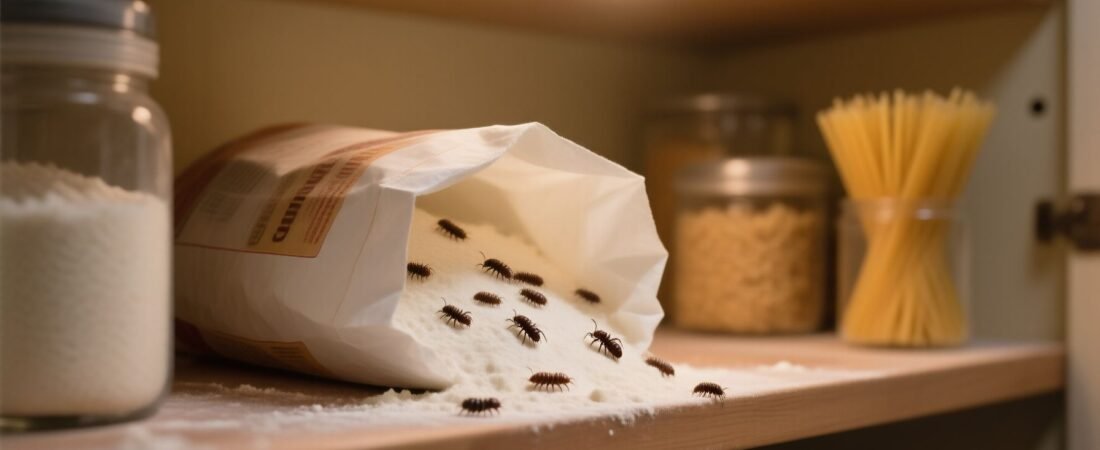
Flour can look completely normal and still be crawling with weevils — that’s the part nobody warns you about. The bugs you’re looking for are small enough to hide between grains, and the eggs they lay are completely invisible to the naked eye. Most people throw out an infested bag only after they’ve already eaten from it multiple times, which is an uncomfortable truth but a useful one: the goal isn’t to catch weevils the moment they arrive. It’s to know exactly what you’re looking at so you can act before the infestation spreads to every shelf in your pantry.
What Do Weevils Actually Look Like Up Close?
Adult weevils are roughly 1/8 to 1/4 inch long — about the size of a sesame seed or slightly larger — and they have one feature no other pantry bug shares: a long, downward-curving snout called a rostrum. That snout isn’t just for show. The female uses it to bore a hole directly into a grain kernel, deposit a single egg inside, and then seal the hole with a secretion. You’ll never see that egg without a magnifying glass, which is exactly why weevil infestations are so far along by the time most people notice them.
Their bodies are oval and hard-shelled, ranging in color from reddish-brown to nearly black depending on the species and age. Young adults tend to be lighter — almost rust-colored — while older ones darken significantly. They have six legs, segmented antennae that bend at a slight angle, and tiny pitted grooves along their wing covers that look almost like a rough texture when you hold one up to the light. They can fly, though they rarely do indoors unless disturbed.
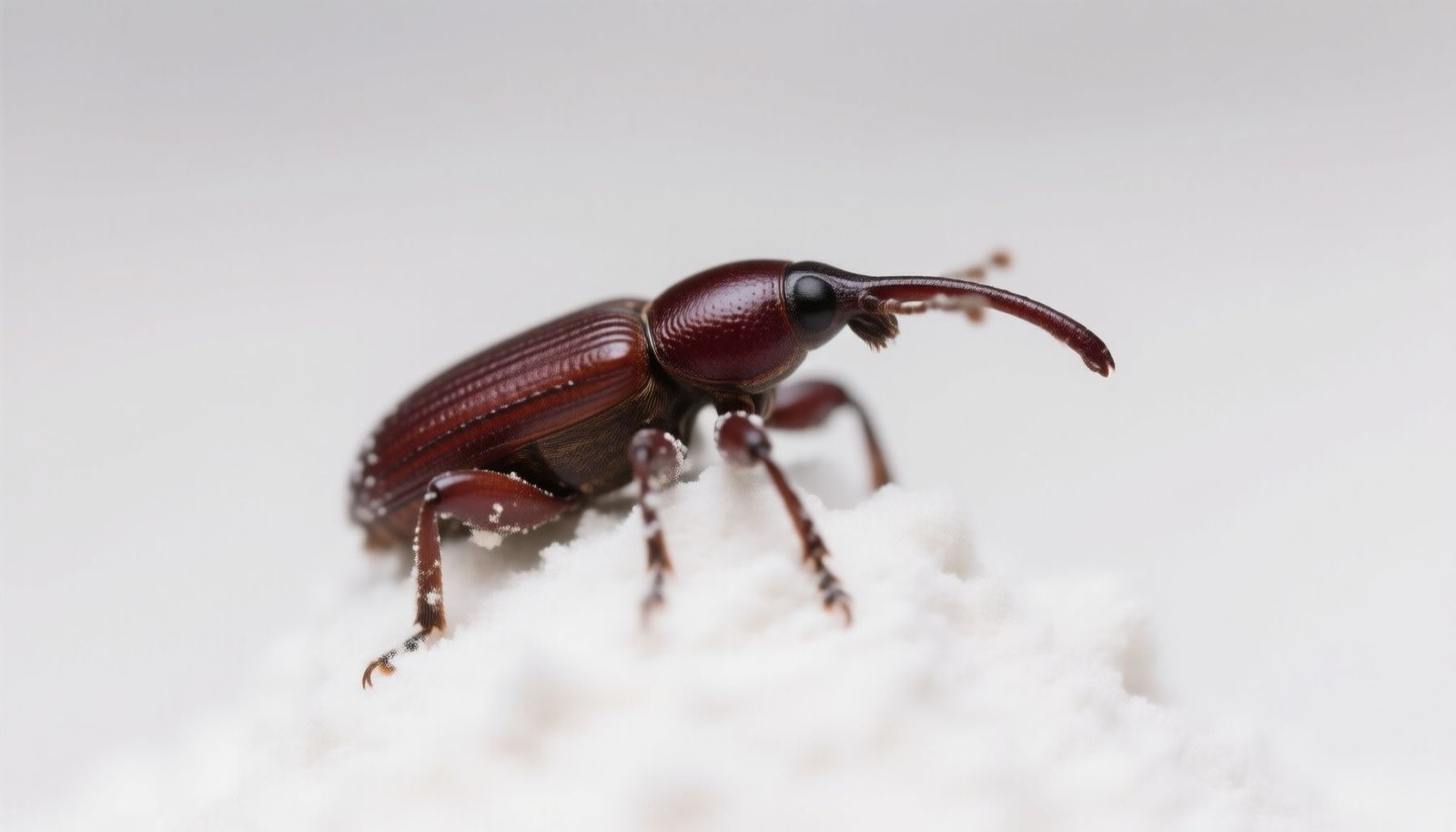
This close-up shows adult weevils against a flour background, which makes it easy to spot both their characteristic snout and the grooved texture of their wing covers — two features that definitively separate them from other small pantry beetles you might mistake them for.
What Do Weevils Look Like in Flour Specifically — and Why Is Flour So Deceptive?
Here’s the thing most weevil articles skip over entirely: by the time you see adult weevils moving through your flour, you’ve already been living with multiple generations of them. A single female rice weevil or granary weevil can lay up to 300 eggs in her lifetime, and the larvae spend their entire developmental period hidden inside individual grain kernels or packed into the compressed layers of flour. In all-purpose flour — which is already ground — the larvae live burrowed into dense, damp clumps near the bottom or edges of the bag where moisture and compaction protect them.
What weevils look like in flour isn’t always a moving bug. Look instead for tiny, reddish-brown specks that don’t belong — roughly the size of a grain of pepper — either stationary or moving slowly across the surface. You may also notice fine powder “tunnels” or compressed patches in your flour that shouldn’t be there, along with a slightly musty or stale smell that wasn’t present when you first opened the bag. Infested flour sometimes clumps in ways that don’t match normal moisture absorption, because the larvae produce moisture and heat as they feed.
Pro-Tip: Scoop a tablespoon of flour onto a dark plate or cutting board and wait 60 seconds. Weevils that appeared motionless in the bag will often start moving once they’re spread thin and exposed to light — this is the fastest visual confirmation method and works better than trying to spot them in a white-on-white background inside the bag.
How Do Weevils Compare to Other Pantry Bugs You Might Confuse Them With?
The rostrum — that elongated snout — is the single most reliable way to confirm you’re looking at a weevil rather than a flour beetle, a grain beetle, or a drugstore beetle. All of these are similarly sized and similarly colored, and they all show up in pantry staples. But none of them have that snout. If you’re looking at a tiny brown bug in your flour and it has a distinctly extended “nose,” that’s a weevil. If the head looks blunt and rounded, you’re probably dealing with something else entirely.
The table below breaks down the key visual differences between the most commonly confused pantry bugs so you can make a fast, confident ID without needing to catch one under a magnifying glass:
| Bug | Size | Snout? | Color | Where Found Most |
|---|---|---|---|---|
| Granary Weevil | 1/8–3/16 inch | Yes — long, curved | Reddish-brown to black | Whole grains, wheat, corn |
| Rice Weevil | 1/8 inch | Yes — shorter snout | Dark brown with pale spots | Rice, pasta, flour |
| Red Flour Beetle | 1/8 inch | No — blunt head | Reddish-brown | Flour, spices, dried fruit |
| Sawtoothed Grain Beetle | 1/10 inch | No — flat body | Dark brown | Cereal, crackers, nuts |
What Do Weevil Eggs and Larvae Look Like — and Why You’ll Almost Never See Them?
Picture this: you buy a 5-pound bag of flour from the grocery store, it sits on your shelf for three weeks, and one day you open it and count a dozen live weevils crawling across the surface. The natural reaction is to wonder where they came from so fast. The reality is they were already there — either as eggs sealed inside intact grain kernels that got milled into the flour, or as larvae that hitched a ride in packaging that wasn’t fully sealed. A weevil egg is about 0.3 millimeters long, white, and completely transparent. Seeing one without magnification is effectively impossible.
Larvae are creamy white, legless, C-shaped grubs that stay completely hidden until they pupate. They have a small, tan-colored head and a soft, plump body — but again, they spend their entire larval stage inside a grain kernel or burrowed into compacted flour. You won’t see them with a casual glance. What you might see instead is a faint darkening on individual wheat berries or rice grains (the entry hole), a tiny “plug” of grain material sealing a kernel, or flour that seems to have developed small hardened lumps that break apart with pressure. Those lumps are often pupation sites.
“Most people are shocked to learn that weevil larvae develop entirely inside individual grain kernels — the adult you find in your flour is the end of a cycle that started long before you ever opened the package. By the time you see adults moving freely, there are almost certainly eggs and larvae you can’t see distributed throughout. Checking the grain source, not just the flour surface, is always where the investigation needs to start.”
Dr. Marcus Hale, Board-Certified Entomologist and Stored Product Pest Specialist, University Extension Program
Which Pantry Foods Are Weevils Actually Found In — and Which Are Surprisingly Safe?
Weevils are specialists. They go after starchy, dry grains — and they’re far more selective than most people realize. Flour is the most commonly reported food because it’s stored long-term and often in paper packaging that weevils can chew through, but it’s actually not their preferred environment. Whole grains are better for them because each kernel provides a protected shelter for the egg and larva. Once grain is milled into flour, the larvae can’t complete their full developmental cycle inside individual particles — so flour infestations often start with whole grain products stored nearby and then spread.
Knowing which foods carry risk — and which are genuinely resistant — helps you prioritize where to look during an inspection. The honest nuance here is that climate matters: humid storage areas accelerate weevil breeding dramatically, while cool, dry pantries can slow reproduction enough that a small infestation stays contained for months. Here’s a practical breakdown of risk by food type:
- High risk: whole wheat berries, brown rice, white rice, dried corn, barley, oats in paper or thin plastic packaging
- Moderate risk: all-purpose flour, bread flour, cornmeal, semolina, dried pasta, unpopped popcorn
- Lower risk (but not immune): breakfast cereals with coatings, spices stored in sealed glass, dried beans and lentils (weevils rarely complete development in legumes)
- Effectively safe: sugar, salt, baking powder, canned goods, freeze-dried foods in sealed mylar pouches
- Often overlooked: pet food stored in original bags, birdseed in the garage, decorative dried corn — these are common hidden sources that reinfest a cleaned pantry
That last point about pet food and birdseed is one that catches people off guard repeatedly. You can strip your entire kitchen pantry, freeze every grain product, and scrub the shelves — and then watch weevils reappear in two weeks because a 20-pound bag of dog kibble is sitting in an unsealed bin three feet away. Just like pantry pests can travel between storage areas, other household invaders exploit multiple rooms too: silverfish, for example, follow starchy food sources from pantries into bookshelves and bedrooms, which is a pattern worth knowing if you’re seeing multiple types of insects at once.
How Do You Confirm It’s a Weevil Infestation and Not Something Else in Your Pantry?
A reliable visual confirmation follows a specific sequence — not just “I saw a bug and threw out the bag.” The reason this matters is that misidentification leads people to treat the wrong product, leave the actual source untouched, and repeat the same infestation cycle every few months. There are four species of weevils commonly found in US homes — granary weevil (Sitophilus granarius), rice weevil (Sitophilus oryzae), maize weevil (Sitophilus zeamais), and wheat weevil — and while they’re treated identically, confirming you have a weevil rather than a flour beetle or grain moth changes where you look for the source.
Follow these steps to confirm what you’re dealing with before you start pulling everything off the shelf:
- Collect a specimen: Use a piece of tape or a damp fingertip to pick up one of the bugs you’ve spotted. Place it on a white surface in good light — natural sunlight is ideal.
- Look for the snout: Under a magnifying glass or even a phone camera zoom, check the head. A distinct elongated projection pointing downward confirms it’s a weevil. No projection means you’re looking at a different pest entirely.
- Check whole kernels for entry holes: If you have whole grain products nearby, examine 20–30 kernels under magnification. Tiny round entry holes sealed with a plug of grain material confirm active weevil breeding in that product specifically.
- Test your flour with a dark surface: Spread a small amount of flour on a dark cutting board. Wait 60–90 seconds. Movement confirms live adult weevils. Dense white clumping in particular spots may indicate larval activity.
- Smell the product: Weevil-infested flour and grain develops a distinctive slightly sweet, musty odor that differs from the neutral, clean smell of fresh flour. If your flour smells “off” and you can’t trace it to age alone, that’s a real signal.
- Inspect beyond the pantry: Check anywhere else dry goods are stored — utility closets, garage shelving, even cardboard boxes in the basement. Weevil infestations in storage areas share behavioral patterns with other hidden pest problems; just as mouse damage in walls often extends much further than the single visible entry point, a weevil source is often in a location that wasn’t your first suspect.
One counterintuitive fact worth knowing: weevils found crawling on your pantry shelf or on the outside of a bag are often escapees from a product that was already infested when you bought it — not bugs that entered your home from outside and found the food. Granary weevils, in particular, have been associated with commercial grain facilities for so long that they’re thought to have lost the ability to survive in the wild. They exist almost exclusively inside stored grain systems, which means the most common entry route is the grocery store bag itself, not a gap in your wall.
Once you’ve confirmed a weevil infestation, the identification work is done — and that’s actually the most important part of the whole process. Acting fast and precisely based on what you know is far more effective than a broad panic response that misses the real source. Freeze any suspect products at 0°F for at least four days to kill all life stages, seal confirmed clean dry goods in airtight hard-sided containers, and treat the shelf surfaces themselves, since adult weevils can survive in cracks and crevices for weeks after the food source is removed. Getting the ID right the first time is what keeps you from doing this all over again in two months.
Frequently Asked Questions
what do weevils look like in flour?
Weevils in flour are tiny reddish-brown to dark brown beetles, usually between 1/8 and 1/4 inch long. They have a distinctive long snout that sticks out from their head, which sets them apart from other pantry bugs. If you dump some flour on a white plate, you’ll see them moving slowly — they don’t jump or fly indoors.
are flour weevils harmful if accidentally eaten?
Eating a few weevils by accident isn’t dangerous — they’re not poisonous and don’t carry disease. That said, heavily infested flour can trigger allergic reactions in some people, and the flour itself will smell musty and taste off. If you spot more than a handful of bugs, it’s best to toss the whole bag and sanitize the pantry shelf.
how do I know if my flour has weevils or just clumps?
Clumps in flour are usually white and break apart easily when pressed — weevils are small, dark, and move on their own. Look for tiny brown specks that aren’t evenly distributed, fine webbing, or a dusty residue that isn’t just flour. Spreading a thin layer on a dark surface under good lighting makes it much easier to spot moving insects.
what other pantry foods can weevils get into besides flour?
Weevils can infest rice, cornmeal, oats, pasta, dried beans, nuts, spices, and even dry pet food. They chew through thin plastic bags and cardboard pretty easily, so no sealed box is automatically safe. Checking these items every few weeks, especially if you buy in bulk, is the best way to catch an infestation before it spreads.
where do weevils in flour come from?
Most of the time, weevils come in with the groceries — female weevils lay eggs inside grain kernels at the processing facility or store, and the eggs hatch after you bring the product home. They’re not a sign of a dirty kitchen; it happens in clean homes all the time. Storing flour and grains in airtight glass or hard plastic containers right after purchase is the most effective way to prevent them from spreading.