
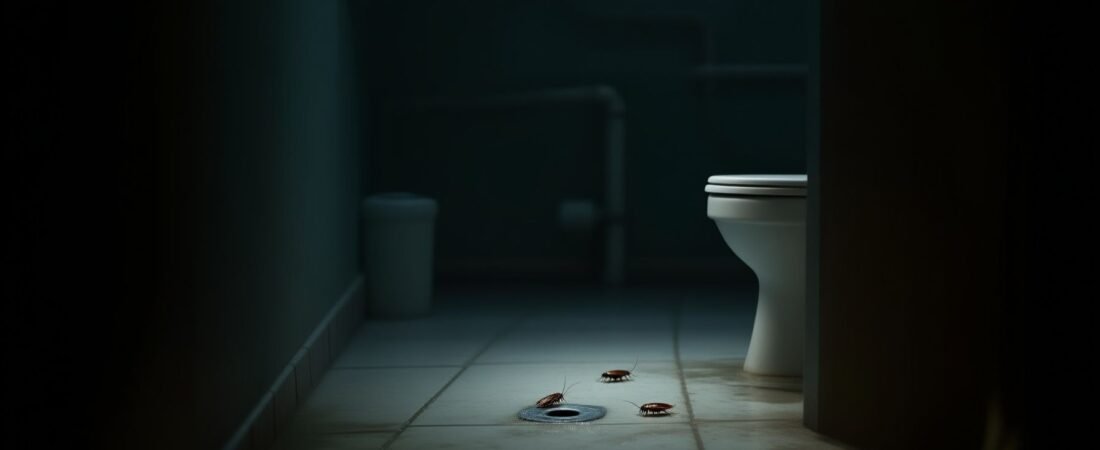
Cockroaches in your bathroom but not your kitchen means one thing almost every pest control article gets completely backward: the roaches aren’t there because of food — they’re there because of water and harborage, and your bathroom is quietly winning that competition right now. Most people assume cockroaches follow crumbs. The truth is that moisture matters more to a cockroach than a meal, especially in the early stages of an infestation when populations are small and hiding spots are still being claimed.
That distinction changes everything about how you should respond. If you’re scrubbing your kitchen counters harder while roaches are living behind your toilet tank, you’re solving the wrong problem entirely. Here’s what’s actually happening — and why your bathroom became prime real estate first.
Why Do Cockroaches Prefer Bathrooms Over Kitchens in the First Place?
Cockroaches need three things to survive: warmth, moisture, and shelter. Your kitchen offers two of those reliably — warmth from appliances and shelter behind cabinets. But your bathroom often delivers all three simultaneously, with almost zero foot traffic interrupting them. The area behind a toilet, inside a vanity cabinet with slow pipe sweating, or under a loose baseboard near a shower is essentially a cockroach five-star hotel: dark, humid, undisturbed, and close to a permanent water source.
German cockroaches — the most common indoor species in the US — can survive for up to a month without food but die within a week without water. That biological priority means a bathroom with even minor moisture issues will attract and hold cockroaches before a kitchen ever gets colonized. Kitchens actually have one disadvantage roaches dislike: regular human activity. If someone’s in the kitchen every few hours, that disruption pushes roaches toward quieter, wetter spaces.

This close-up view shows the typical harborage zone behind a toilet base — the gap between the porcelain and the floor tile is exactly the kind of dark, humid crack cockroaches exploit first, often weeks before you ever spot one in an open space.
What Kind of Cockroach Is Most Likely Living in Your Bathroom?
Not all cockroach species behave the same way, and the species matters enormously for understanding why you’re seeing them specifically in the bathroom. German cockroaches (Blattella germanica) are the most likely culprit in US homes — they’re small, fast-reproducing, and deeply tied to plumbing infrastructure. A female German cockroach carries an egg capsule containing 30–40 eggs, and she can produce up to 6 of those capsules in her lifetime, meaning one pregnant female that slipped in through a shared wall or plumbing chase can seed a full infestation within 60–90 days.
American cockroaches (Periplaneta americana) are a different story. They’re larger, slower-reproducing, and strongly associated with sewer systems and drain pipes — which is why if you’re seeing a big reddish-brown roach in the bathroom specifically, it may have come directly up through your floor drain or from under the toilet’s wax ring seal. Oriental cockroaches also favor drains and cool, damp spaces. Knowing which species you’re dealing with tells you whether the problem is inside your walls or coming from beneath your foundation.
| Species | Size | Primary Entry in Bathroom | Moisture Dependence |
|---|---|---|---|
| German Cockroach | ½–⅝ inch | Walls, plumbing chases, shared units | Very high |
| American Cockroach | 1½–2 inches | Floor drains, sewer lines, wax ring gaps | High |
| Oriental Cockroach | 1–1¼ inches | Drains, crawl spaces, exterior pipes | Extremely high |
Which Bathroom Features Are Secretly Attracting Cockroaches?
Picture this: you’ve lived in your apartment for two years without a single roach sighting. Then a slow drip starts under the sink — not bad enough to call the super about, just a slight seep at the shutoff valve. Within six weeks, you’re seeing roaches at night near the vanity. That’s not a coincidence. Even minor, persistent moisture changes the microenvironment behind a cabinet enough to make it cockroach-viable, and they locate these spots through sensory organs that detect humidity gradients from several feet away.
Beyond leaks, there are several bathroom features most homeowners never think of as cockroach attractants:
- Condensation on toilet tanks — creates a consistently wet surface that drips to the floor nightly, especially in summer
- Loose caulk around the tub or shower base — creates a hidden cavity that holds moisture and provides direct wall access
- Damp bath mats left on tile floors — provides ground-level moisture and a physical hiding spot simultaneously
- Hair and soap scum in drain traps — both serve as a food source for cockroaches, which are genuinely omnivorous and will eat organic matter that isn’t food by any human standard
- Exhaust fan housings with lint or dust buildup — dark, elevated, rarely cleaned, often warm from the motor
- Gaps where pipes enter walls — even a ¼-inch gap is more than enough for a German cockroach nymph to pass through and establish harborage inside the wall void
One thing worth acknowledging: the degree to which these factors matter depends heavily on your climate and building type. In humid Southern states, bathroom condensation alone can sustain a population. In a dry desert climate, the infestation dynamics shift — roaches may actually prefer the bathroom precisely because it’s the only room with predictable humidity. Building age matters too; older homes with galvanized pipes and degraded caulk offer far more entry and harborage opportunities than newer construction.
Does a Cockroach in the Bathroom Mean Your Kitchen Is Next?
Yes — but the timeline depends on population size and what’s available to them. Cockroaches don’t stay in one room by choice; they explore along edges, behind baseboards, and through shared wall voids. A bathroom infestation in an early stage, with only a handful of roaches, may stay localized for weeks. But German cockroaches reproduce fast enough that a population can double roughly every 30 days under ideal conditions, and once harborage in the bathroom fills up, scouts will start pushing into adjacent spaces — including your kitchen.
The honest nuance here is that “not seeing roaches in the kitchen” doesn’t mean they haven’t been there. Cockroaches are strongly nocturnal and deeply photophobic — they scatter within fractions of a second when a light turns on. If you’ve only been checking your kitchen during the day, you may have an active kitchen population that you simply haven’t caught yet. Placing sticky glue traps under the sink and behind the refrigerator for 48 hours is a much more reliable survey method than a visual inspection. If the traps catch anything, the infestation has already expanded.
“Bathroom-only cockroach sightings are almost always a sign of a very early or very small infestation — but ‘early’ is relative when you’re dealing with German cockroaches. I’ve seen a single pregnant female turn into a 500-plus population in under three months. The bathroom is where they start. The kitchen is where they’re going. Don’t wait to treat.”
Dr. Marcus Yellin, Board-Certified Entomologist and Urban Pest Management Specialist, University Extension Program
How Do You Get Rid of Cockroaches That Are Specifically in the Bathroom?
Bathroom cockroach elimination requires a different approach than kitchen treatment because the infestation is moisture-driven, not food-driven — which means bait placement and harborage reduction are even more important than sanitation. Gel baits placed in harborage zones outperform sprays significantly here, because sprays in a humid environment lose efficacy quickly and can actually push roaches deeper into wall voids rather than eliminating them. Apply small pea-sized dots of gel bait in these specific locations, in this order of priority:
- Behind the toilet tank — place bait on the wall or baseboard directly behind the tank where it meets the floor, since this is the single most common cockroach harborage zone in bathrooms
- Inside the vanity cabinet near the plumbing penetrations — apply bait within 2 inches of where pipes enter the wall, not in the middle of the cabinet shelf where moisture and cleaning products will degrade it
- Under the edge of the bathtub or shower base — if there’s a small gap at the floor level, place bait there; this is a secondary harborage point that’s almost always overlooked
- At the base of the door frame where it meets the floor — cockroaches use wall-floor junctions as travel corridors and bait here intercepts them in transit
- Seal every pipe gap with expanding foam or plumber’s putty — this is the step most homeowners skip, and it’s what allows the infestation to return even after successful baiting because new roaches keep entering through the same infrastructure gaps
It’s also worth acknowledging something that cockroach health articles rarely connect: the same cockroach allergens that cause respiratory issues in kitchens are just as active in bathrooms, since roach shed skins, droppings, and saliva particles become airborne in any enclosed space. If anyone in your household has been experiencing unexplained allergy flare-ups or nighttime breathing issues, the bathroom could be the source — and you can read more about what insects in your home can trigger allergic reactions to understand the full scope of what a bathroom infestation means for air quality.
Pro-Tip: Run a dehumidifier in a bathroom without a window, or leave the exhaust fan running for 20–30 minutes after every shower. Cockroaches need environments above 50–60% relative humidity to thrive. Dropping that number consistently is one of the few passive deterrents that actually reduces their biological motivation to stay — gel bait kills the ones that are there, but reducing humidity discourages new arrivals from settling in.
One counterintuitive fact that most pest control articles miss entirely: cockroaches are actually capable of learning to avoid bait products after repeated sub-lethal exposure — a phenomenon called bait aversion that has been documented in German cockroach lab populations. This means rotating between two different active ingredient families (for example, alternating indoxacarb-based baits with fipronil-based baits every 60–90 days) is a genuinely smarter strategy than just reapplying the same product over and over when you don’t see improvement. It’s not a commonly advertised limitation of bait products, but it’s real, and it explains why some bathroom infestations seem stubborn despite correct placement.
Bathroom pest situations also have a habit of overlapping with other identification challenges. If you’ve ever spotted tiny white bugs in soil near a bathroom houseplant and assumed it was part of the same cockroach problem, that’s worth ruling out separately — the same way that identifying whiteflies on houseplants requires a completely different diagnostic approach than identifying roaches, even when both show up in the same space.
Fix the moisture first, bait the harborage zones second, seal every pipe gap third — in that order. If you’ve done all three and you’re still seeing roaches after 30 days, the infestation has almost certainly spread into the wall void or into an adjacent unit, and that’s the point where a licensed pest control professional with a borescope inspection capability is worth calling, because no amount of consumer-grade bait will reach a colony that’s living inside a wall.
Frequently Asked Questions
Why are there cockroaches in my bathroom but not kitchen?
Bathrooms offer cockroaches two things they need most — moisture and warmth — without the food competition that makes kitchens riskier for them. Leaky pipes, standing water near the base of toilets, and damp grout can keep humidity above 70%, which is exactly the environment roaches thrive in. German and American cockroaches both commonly nest near drains and under sinks, so it’s not unusual to see them concentrated in one room.
what kind of roaches live in bathrooms?
German cockroaches and American cockroaches are the two species most commonly found in bathrooms. German roaches are smaller, about half an inch long, and prefer tight, humid spaces like under the sink cabinet or behind the toilet tank. American cockroaches are larger, up to 2 inches, and often come up through floor drains from sewer lines. If you’re seeing large reddish-brown roaches, the entry point is likely your drain.
can cockroaches come up through bathroom drains?
Yes, they can and they do — especially American cockroaches, which live in sewer systems and travel through plumbing. A dry P-trap is one of the most common entry points; if a drain isn’t used regularly, the water seal evaporates and roaches can walk straight through. Pouring a cup of water down infrequently used drains and installing a drain cover with a backflow stopper will block this route.
how do I get rid of roaches in my bathroom only?
Start by fixing any leaks and reducing moisture — a bathroom with under 50% relative humidity is far less attractive to roaches. Apply gel bait like Advion or Maxforce in small dots behind the toilet, under the sink, and along baseboards, and place glue traps near the drain to track activity. If you’re still seeing more than 2 to 3 roaches per week after two weeks of treatment, it’s worth calling a pest control professional to check for a larger infestation in the walls or plumbing.
do cockroaches in the bathroom mean my apartment is dirty?
Not necessarily — roaches in the bathroom are usually more about moisture than cleanliness. Even spotless bathrooms can attract roaches if there’s a leaky pipe, poor ventilation, or a connected infestation from a neighboring unit in an apartment building. That said, sealing cracks, fixing drips, and running the exhaust fan during and after showers will make the space less hospitable regardless of how clean it is.