
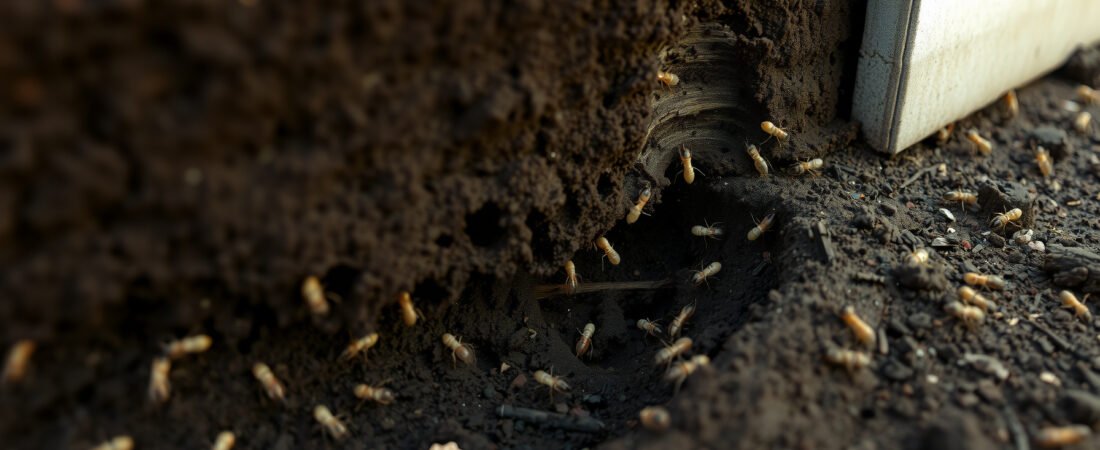
Subterranean termites almost never look like what you’d expect — because by the time most people picture “termites,” they’re imagining the winged swarmers that emerge in spring. Underground, it’s an entirely different cast of characters, and misidentifying which caste you’re dealing with is exactly why so many DIY treatments fail. The workers doing the actual damage to your home look nothing like the swarmers you’ve seen in photos, and most homeowners have no idea there are three visually distinct forms living beneath their slab right now.
What Do Subterranean Termite Workers Actually Look Like?
Workers are the termites responsible for the structural damage in your home, and they look almost nothing like the insects most people associate with the word “termite.” They’re soft-bodied, creamy white to pale yellow, and roughly 1/8 inch long — about the size of a grain of rice. No wings, no hard shell, no dramatic coloring. If you crack open a mud tube and see what looks like a faint, almost translucent maggot with six legs and antennae, that’s a worker.
Their coloring makes biological sense: workers spend their entire lives underground or inside wood, never exposed to light. Pigmentation costs energy, and a termite that never sees sunlight has no use for it. This is also why workers die within hours of exposure to open air — their cuticle (the outer layer) provides almost no protection against desiccation. That vulnerability is something pest control professionals exploit with certain treatment methods.
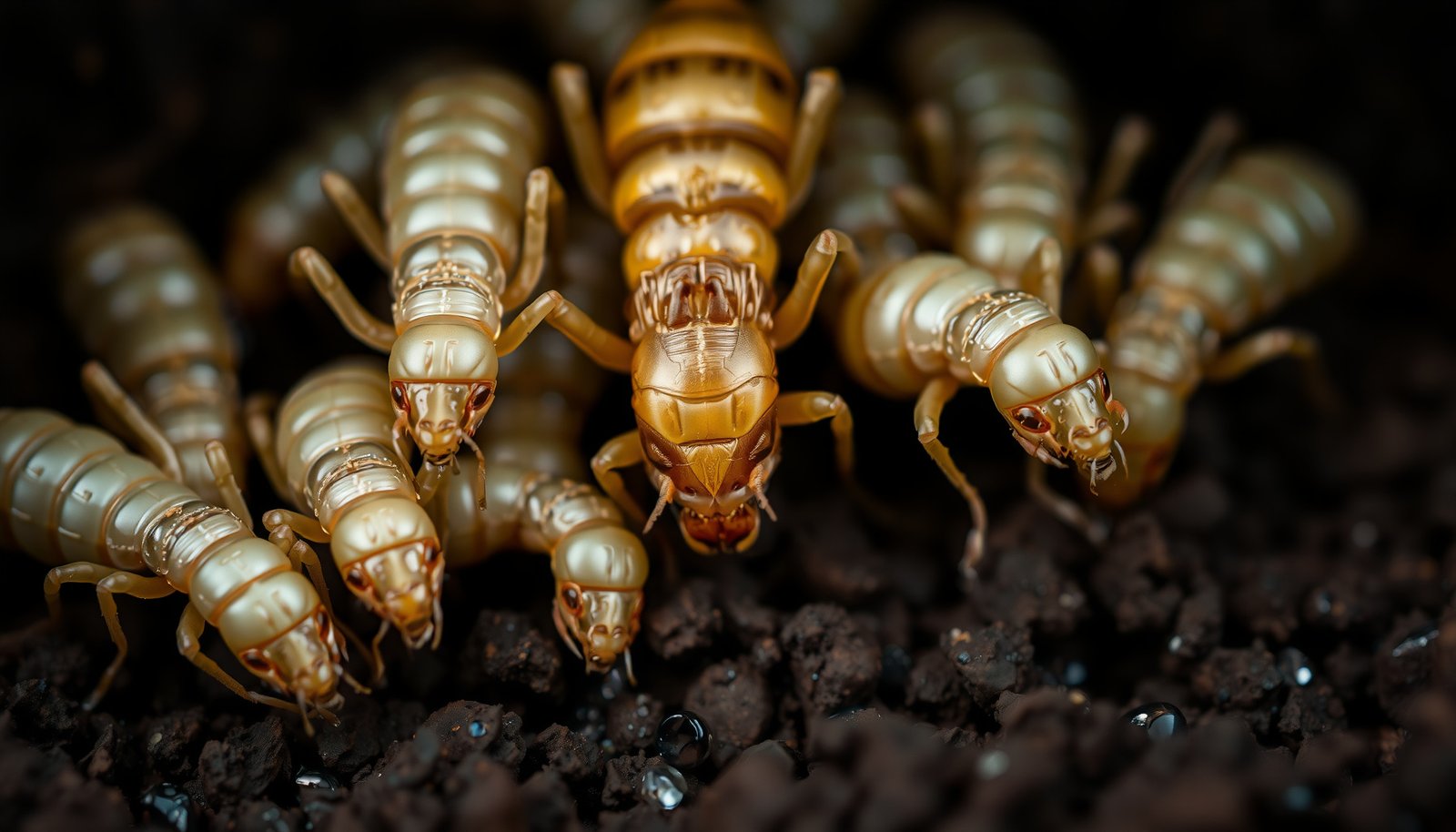
This close-up shows the pale, almost ghostly appearance of subterranean termite workers in their natural underground environment — the same insects that are silently consuming wood inside walls and floor joists in infested homes across the US.
How Do You Tell the Three Underground Castes Apart?
A subterranean termite colony underground contains three castes, and they look meaningfully different from one another. Soldiers are the easiest to distinguish: they have enlarged, amber-colored heads that are clearly larger than the rest of their body, with long dark mandibles used for defense. Workers are the pale, soft-bodied ones already described. Then there’s the queen — rarely seen unless a colony is excavated — who can grow to nearly an inch long with a massively distended abdomen capable of producing up to 10,000 eggs per day in a mature colony.
Here’s a quick visual breakdown of what you’d see if you exposed an active underground colony:
| Caste | Size | Key Visual Feature |
|---|---|---|
| Worker | 1/8 inch | Creamy white, soft body, no wings, no pigmented head |
| Soldier | 1/4 inch | Amber/orange enlarged head, dark pincer-like mandibles |
| Queen (mature) | Up to 1 inch | Enormous pale abdomen, mostly immobile, surrounded by workers |
What surprises people most is that soldiers make up only about 1-2% of a colony’s total population. You might crack open a mud tube and see dozens of workers swarming out before spotting a single soldier. Don’t mistake the rarity of soldiers for an indicator that the colony is small — a mature subterranean termite colony can contain over 1 million individuals, the vast majority of them workers.
What Do Subterranean Termite Mud Tubes Look Like, and Why Do They Build Them?
Mud tubes are arguably the most important visual clue for a homeowner, because they’re the one thing subterranean termites build that you can actually see above ground. They’re constructed from soil, wood particles, termite saliva, and fecal matter — which sounds unpleasant but produces a surprisingly strong structure. Tubes typically run from the soil up a foundation wall, a pier block, or even along a plumbing pipe, and they’re usually pencil-width to finger-width in diameter.
The reason they build these tubes is one of the most counterintuitive facts about subterranean termites: they aren’t actually underground when they’re eating your house. They’re traveling between their colony (underground moisture source) and the wood above. Mud tubes solve their desiccation problem — the same vulnerability that kills workers in open air. Inside a tube, termites maintain the high humidity they need to survive. Break a tube open and you might see live workers and soldiers rushing around inside, or it may be abandoned. An abandoned tube with dry, crumbly edges usually means the colony has moved, not that the problem is solved.
Pro-Tip: If you find a mud tube and aren’t sure whether it’s active, break off a small section about the size of your thumb and check back in 24-48 hours. Active colonies repair damage fast. If the break has been patched with fresh moist soil, you have a live infestation. If it stays broken and dusty, the colony may have relocated — but get a professional inspection anyway before assuming you’re clear.
How Is Subterranean Termite Damage Different From What You’d See Underground?
Picture this: you’re renovating a bathroom and pull up a section of subfloor near the tub. The wood looks slightly discolored and feels soft when you press on it, but from the top surface it looked fine. You flip a piece over and see a honeycomb of hollow galleries running parallel to the wood grain, packed with what looks like dark, damp soil. That’s classic subterranean termite damage — and it’s almost never visible from the outside of a board.
Drywood termites (a different species, common in coastal areas) eat across the grain and leave behind dry, pellet-shaped frass. Subterranean termites eat with the grain and pack their galleries with soil to maintain moisture. That soil inside the galleries is a signature identifier — if you see wood damage filled with dark, earth-like material, you’re almost certainly looking at subterranean termites, not drywood. This distinction matters enormously because the treatment approach is completely different for each species.
“Most homeowners never actually see subterranean termites — they see the evidence left behind. The soil-packed galleries are really the smoking gun. Drywood termites clean their galleries out; subterranean termites bring the outside in. Once you understand that distinction, misidentification drops dramatically.”
Dr. Marcus Teller, Board-Certified Entomologist and Urban Pest Management Specialist, University Extension Program
What Signs Underground or at the Foundation Tell You the Colony Is Established?
A new subterranean termite colony takes 3-5 years to produce its first swarmers, which means by the time you see any aboveground evidence, the underground colony is already well-established. That’s the genuinely unsettling part of this pest. Here’s what to actually look for at and below the foundation line, ranked from easiest to hardest to spot:
- Mud tubes on foundation walls or crawl space piers — the most reliable visual indicator; look for pencil-thin brown tubes traveling vertically from the soil line upward.
- Swarm debris near windows or in spider webs — shed wings from swarmers often pile up on windowsills or get caught in cobwebs, especially in spring after the first warm rain.
- Bubbling or uneven paint on baseboards — workers eating the wood directly behind drywall create air pockets that push paint outward, often mistaken for a moisture problem.
- Hollow-sounding wood when tapped — use the handle of a screwdriver and tap along baseboards, door frames, and window sills; a dull thud instead of a solid knock means galleries inside.
- Sagging floors or doors that suddenly don’t close right — structural wood compromise from active feeding; this indicates a colony that’s been established for years, not months.
- Soil disturbance around exterior foundation — look for fine grain soil pushed up through cracks in concrete slabs or expansion joints, which termites use as entry points.
One honest nuance worth acknowledging: what you’re able to detect yourself depends heavily on your home’s construction type and your region’s climate. Slab-on-grade homes in the Southeast — where Reticulitermes flavipes (the Eastern subterranean termite) thrives in warm, moist soil — may show mud tubes inside the home along interior walls, because the colony is entering through the slab itself. Homes with crawl spaces give you a fighting chance to spot activity early. A home with a full basement poured with modern concrete is harder for termites to enter but not immune. Climate, soil moisture, and construction type all shift what the evidence looks like and where you’ll find it. If your situation doesn’t fit neatly into what you’ve read online, that’s not a reason to dismiss the concern — it’s a reason to get eyes on it from someone qualified. Just as you’d expect from what to expect from a professional cockroach treatment, a professional termite inspection follows a structured process and covers areas a homeowner typically can’t access.
What’s the Difference Between Subterranean Termite Swarmers and Underground Castes?
Swarmers are the reproductive caste — alates — and they look almost nothing like the workers doing the damage below ground. They’re darker (ranging from dark brown to nearly black), about 3/8 inch long including wings, and have two pairs of wings of equal length that extend well past their abdomen. This wing detail is the single fastest way to tell them apart from flying ants, which have wings of unequal length. After swarming, they shed those wings almost immediately — within minutes of landing — which is why you’ll often find piles of identical-length discarded wings rather than live insects.
Here’s what most articles miss about swarmers: seeing them doesn’t necessarily mean your house has termites. Swarmers are produced by a mature colony seeking to establish new ones, and they can fly from a neighbor’s yard, a tree stump 300 feet away, or a utility pole. Finding swarmers inside your home, however — especially near windowsills or light fixtures — is a different story. That typically means the colony is either inside your structure already or immediately adjacent to it, because swarmers that successfully exit an outdoor colony don’t typically find their way inside unless the source is very close. The presence of soil-packed galleries in your wood is the confirmation, not the swarmers themselves. Here’s a visual comparison of what you’d see:
- Worker: 1/8 inch, creamy white, no wings, soft body, moves quickly when exposed
- Soldier: 1/4 inch, pale body with orange-amber enlarged head, defensive posture, moves more slowly than workers
- Swarmer (alate): 3/8 inch including wings, dark brown to black, two equal-length wing pairs, shed wings immediately after landing
- Queen (rarely seen): Up to 1 inch, enormous pale abdomen, essentially sedentary, surrounded by attendant workers at all times
- Nymph: Smaller version of worker, same coloring, in the process of molting toward a specific caste — can be mistaken for juvenile workers
It’s worth noting that subterranean termite infestations can intersect with housing rights in ways most people don’t think about until the damage is already serious. If you’re renting and discover signs of an active infestation, understanding your legal standing matters — and the question of whether a pest problem can break a lease because of a pest infestation depends on your state, the severity, and how your landlord responds to notice.
Knowing what you’re looking for underground and at the foundation level is the difference between catching a termite problem in year two of a colony’s development versus year seven, when the damage bill is no longer something a weekend repair can fix. Subterranean termites aren’t dramatic or fast — they’re quiet and patient, and so is their damage. The homeowners who catch them early aren’t lucky; they know what a mud tube looks like, they tap their baseboards occasionally, and they don’t assume that because they don’t see wings they don’t have a problem.
Frequently Asked Questions
what do subterranean termites look like underground?
Underground, subterranean termites look like small, pale or creamy-white insects about 1/8 inch long, often moving through dark mud tunnels they build to stay moist. Workers are the ones you’re most likely to spot — they’re wingless, soft-bodied, and almost translucent. Soldiers look similar but have larger, darker heads and visible mandibles they use to defend the colony.
how deep underground do subterranean termites nest?
Subterranean termite colonies are typically found 18 to 20 inches below the soil surface, though they can go as deep as 40 inches in dry or cold conditions. They stay deep enough to access moisture and avoid temperature extremes. During warmer months, worker termites travel closer to the surface — sometimes just a few inches down — to reach wood food sources.
what do subterranean termite mud tunnels look like?
Mud tubes are roughly the diameter of a pencil — about 1/4 to 1/2 inch wide — and look like narrow, dried dirt tunnels running along foundations, walls, or soil. They’re made from a mix of soil, termite saliva, and feces, giving them a gritty, brownish texture. Finding an active mud tube means there are likely live termites inside; if it’s hollow and dry with no insects, the tube may be abandoned.
how many termites are in an underground colony?
A mature subterranean termite colony typically contains between 60,000 and 1 million workers, depending on the species and colony age. Eastern subterranean termites — the most common species in the US — average around 300,000 workers per colony. It takes about 3 to 5 years for a colony to grow large enough to cause noticeable structural damage to a home.
can you see subterranean termites without digging?
You usually can’t see subterranean termites underground without disturbing the soil, since they actively avoid light and stay hidden in tunnels. The clearest above-ground signs are mud tubes on your foundation, hollow-sounding wood, or a swarm of winged termites near windows and doors in spring. If you suspect underground activity, pressing a screwdriver into wood near the foundation and checking for soft spots is a quick first test.