
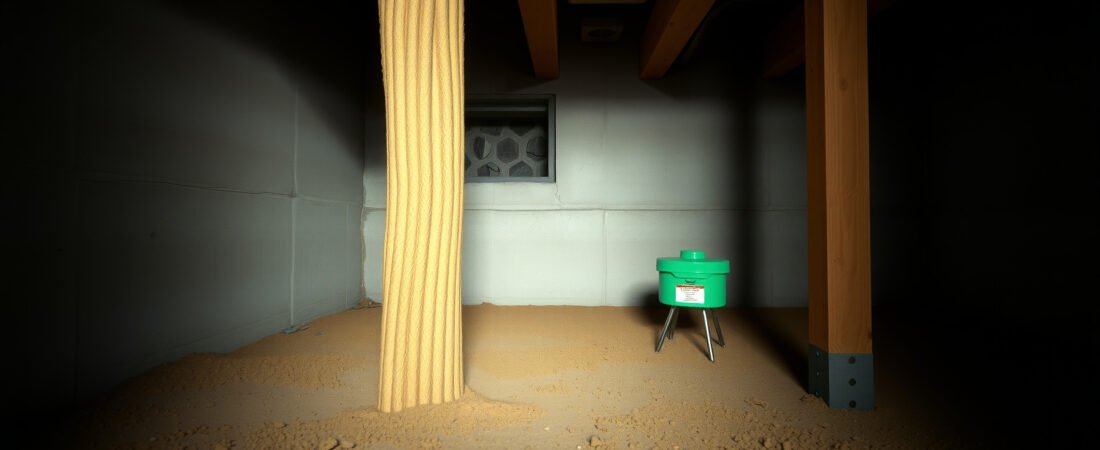
Termite fumigation gets recommended far more often than it should be — and local spot treatments get written off far too quickly. The real decision between these two approaches isn’t about how bad the infestation looks from the outside. It’s about where the termites are living and what species you’re actually dealing with. Get that wrong, and you could spend $3,000 on a tent job that solves nothing, or spend $300 on a spot treatment that leaves 90% of a drywood colony untouched inside your rafters.
Why the Species of Termite Matters More Than the Size of the Infestation
Here’s the thing most pest control articles skip over: fumigation and local treatment aren’t just different in intensity — they target completely different termite behaviors. Subterranean termites live in underground colonies that can exceed 1 million individuals, and they forage upward into your home through mud tubes. Local treatment — whether that’s a liquid termiticide barrier, bait stations, or direct wood injection — works beautifully against them because you’re intercepting a colony that still lives in the soil. Fumigation does almost nothing to their colony.
Drywood termites are the opposite problem. They nest entirely inside the wood itself — no soil contact, no mud tubes, no foraging trails you can intercept. A colony can live completely sealed inside a single beam for years, expanding slowly through the wood grain. That’s exactly why local treatment often fails against drywood: if you can’t pinpoint every pocket of infestation, you’re leaving active colonies in place. Fumigation fills every void in the structure with gas, which is why it’s the standard recommendation for drywood termites that have spread to multiple areas.
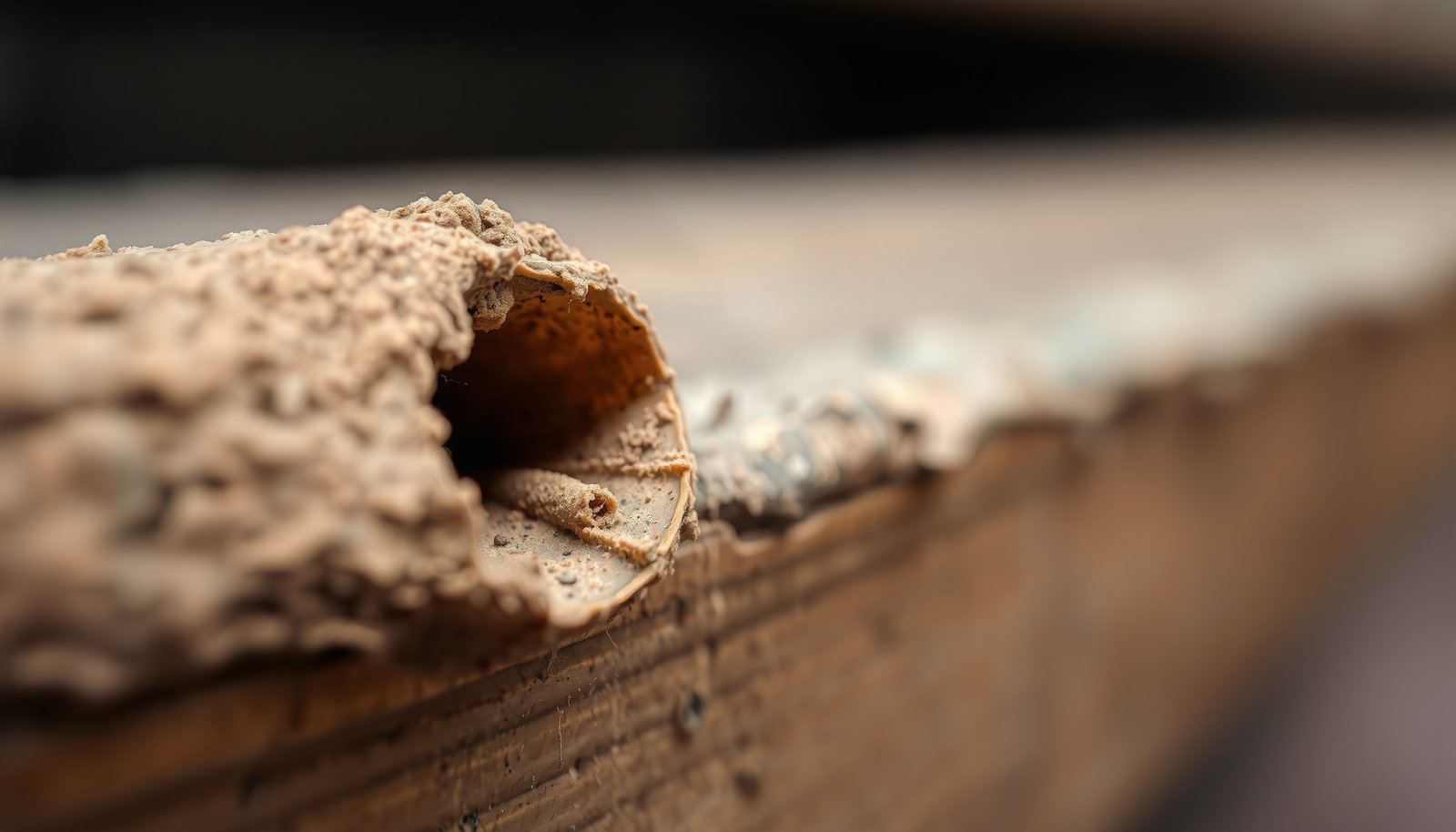
This image shows the visual contrast between drywood termite damage (smooth galleries inside wood with no soil) and subterranean damage (mud-packed tunnels) — two completely different infestation profiles that require different treatment strategies.
What Are the Actual Signs That Point Toward Fumigation?
Picture this: you’re having your roof replaced, and the contractor pulls back some fascia board only to find five separate sections of wood riddled with smooth, clean galleries — no soil, no mud, just hollow channels winding through the grain. That’s a drywood termite infestation that has been quietly spreading for years, probably from multiple entry points. One localized injection isn’t going to touch all of it. That’s a fumigation scenario.
There are specific signs that tell an experienced inspector the infestation has spread beyond what spot treatment can reliably address. Knowing these signs before you get a quote can prevent you from being oversold — or undersold — on the treatment you actually need:
- Frass in multiple rooms or on multiple floors. Drywood termites push their fecal pellets (frass) out of small kick-out holes. Finding frass piles in more than one part of the structure strongly suggests spread beyond a single colony.
- Damaged wood in areas you can’t access for direct treatment. If galleries are confirmed inside enclosed wall voids, inaccessible attic framing, or behind permanent cabinetry, localized injection can’t reach them reliably.
- Evidence of prior spot treatments that didn’t hold. If you’ve had two or three localized treatments and termites keep showing up in new areas, the infestation likely spread before treatment — fumigation may be the only reset available.
- Active swarmers emerging from inside the home. Swarmers (winged reproductives) emerging from inside wall outlets, window frames, or ceiling fixtures indicate established colonies inside the structure itself, not just at one entry point.
- More than 3 distinct infestation points confirmed by inspection. Many inspectors use this rough threshold — when there are 3 or more active, separate sites, the cost-benefit math often tips toward fumigation over repeated localized treatments.
When Is Local Treatment the Smarter (and Cheaper) Call?
Local treatment gets unfairly dismissed as a half-measure, but for the right termite situation it’s not just sufficient — it’s actually more targeted and less disruptive than tenting your entire house. If a licensed inspector confirms you’re dealing with subterranean termites, a liquid termiticide barrier or bait system addresses the actual colony. You don’t vacate the home for 2-3 days, you don’t bag every piece of food and medication, and you don’t spend $1,500–$4,000 on a structural tent.
Local treatment is also the right call when drywood termite activity is genuinely isolated — a single piece of furniture brought in from elsewhere, one section of trim on a detached garage, or a localized spot caught very early before any spread. Direct wood treatment with an injectable termiticide like Tim-bor or a spot application of orange oil can eliminate a contained drywood colony without the logistical ordeal of fumigation. The honest nuance here is that “isolated” has to be confirmed by a thorough inspection, not just assumed because you only see damage in one place.
Pro-Tip: Before accepting a fumigation recommendation, ask the inspector to show you specifically where they found evidence of more than one active infestation site. A reputable company will have photos or probing results. If they can only point to one location but are still pushing tenting, get a second opinion — you may be looking at a localized treatment job that’s being upsold.
How Do the Costs, Risks, and Timelines Actually Compare?
The cost difference between these two approaches is significant enough to understand in detail before you sign anything. Fumigation pricing is typically calculated by cubic footage of the structure — most single-family homes run between $1,200 and $3,500, though larger homes or severe infestations can push past $5,000. That price usually includes the tenting, the fumigant (sulfuryl fluoride is the most common), and re-entry clearance. What it doesn’t always include: a follow-up warranty inspection, repair of any termite damage, or treatment of any reinfestation from soil-dwelling species.
| Treatment Type | Typical Cost Range | Home Displacement | Best For |
|---|---|---|---|
| Structural Fumigation (Tenting) | $1,200 – $5,000+ | 2–3 days required | Widespread drywood termites |
| Local / Spot Treatment | $200 – $900 per site | None to a few hours | Subterranean termites; isolated drywood |
| Liquid Termiticide Barrier | $800 – $2,500 | None | Subterranean termites (soil-based colonies) |
| Bait Station System | $800 – $3,000 + monitoring | None | Subterranean termites, slow colony elimination |
One risk that rarely gets discussed upfront: fumigation kills every termite present at the time of treatment, but it leaves zero residual protection. The moment the gas dissipates — typically within 72 hours — your home is just as vulnerable to a new termite entry as it was before. Some companies offer post-fumigation barrier treatments as an add-on for exactly this reason. If that’s not included in your quote, ask about it specifically.
“Homeowners often assume fumigation is the ‘nuclear option’ that solves termite problems permanently — but structurally, it’s a reset, not a shield. Without a follow-up preventive treatment or monitoring program, you can have a new drywood termite colony establishing itself within a season of re-entry. The decision between fumigation and local treatment should always start with species confirmation and a map of infestation sites, not just a visual walkthrough.”
Dr. Renata Voss, Board-Certified Entomologist and Wood-Destroying Organism Specialist, University Extension Services
What Questions Should You Ask Before Accepting a Treatment Recommendation?
A termite inspection report should feel like a diagnosis, not a sales pitch. The best inspectors can tell you the species confirmed, the locations of active and inactive damage, and why the treatment they’re recommending fits the specific infestation pattern they found. If you’re getting a quote without that level of detail, you’re not getting a real inspection — you’re getting a price. These two things are not the same, and the difference can cost you thousands of dollars.
There’s a useful parallel to think about here — just as people sometimes reach for a flea fogger when the actual problem requires a more targeted approach to break the flea life cycle, homeowners sometimes accept a fumigation recommendation when the infestation is actually confined and treatable locally. The treatment method has to match the biology of what you’re dealing with, not just the anxiety level of the discovery. Before you agree to any termite treatment plan, get clear answers to these questions:
- What species was confirmed? Drywood, subterranean, or Formosan subterranean — these all require different approaches, and a credible inspector will identify the species, not just say “termites.”
- How many active infestation sites were found, and where exactly? Ask to see this documented — photos, probing locations, or a diagram of the structure.
- Is any of the damage inactive (old)? Not all termite damage means active termites. Old damage from a previously treated infestation doesn’t require re-treatment.
- What does the warranty cover, and for how long? Some warranties only cover re-treatment of the same species in the same location — reinfestation from a new entry point may not be included.
- If recommending fumigation, why specifically isn’t localized treatment sufficient? Force the inspector to explain the reasoning in terms of the infestation map they found, not just general policy.
Getting a second opinion on termite treatment recommendations is almost always worth the time. Unlike some pest situations where speed matters — subterranean colonies actively eating structural wood can cause measurable damage within months — a drywood termite colony consuming a single rafter isn’t going to collapse your house in the two weeks it takes you to get a second quote. Take the time. The diagnosis drives the entire cost and disruption of what comes next.
One more thing worth understanding: termite inspectors in some states are required to be licensed separately from general pest control technicians, and Wood-Destroying Organism (WDO) reports — the formal inspection documents used in real estate transactions — must meet specific state standards. If you’re getting an inspection outside of a real estate context, confirm the inspector holds a WDO or termite-specific license, not just a general pest applicator license. The difference in training matters when you need an accurate species ID and infestation map. And if you’ve noticed other moisture-loving pests alongside what you suspect might be termite activity — tiny insects near damp wood or paper materials — it’s worth ruling out unrelated culprits like psocids (booklice), which thrive in similar humid conditions but require a completely different response.
The bottom line is this: the fumigation vs. local treatment decision is really a species and spread question first, a cost question second. Get the species confirmed in writing, get the infestation sites documented, and then evaluate whether the recommended treatment method logically follows from what was actually found. A good inspector makes that case clearly. If they can’t, that’s your answer about whether to trust the recommendation.
Frequently Asked Questions
How do I know if my termite problem needs fumigation or spot treatment?
If termites are found in more than one isolated area of your home, or if you have drywood termites spread across multiple rooms, fumigation is usually the right call. Spot treatments work best when the infestation is caught early and confined to a single, accessible location — like one window frame or a small section of baseboard. A licensed pest inspector can probe your walls and use a moisture meter to map how far the colony has spread before recommending either option.
What type of termites require fumigation vs local treatment?
Drywood termites are the species that most often require fumigation because they nest inside the wood itself and don’t need soil contact, making them hard to reach with localized treatments. Subterranean termites, on the other hand, are typically treated with soil barrier treatments or bait stations because their colony lives underground and foragers travel up to feed. Knowing which species you’re dealing with is the single most important factor in choosing between fumigation vs local termite treatment.
How much does fumigation cost compared to spot termite treatment?
Whole-home fumigation typically runs between $1,200 and $2,500 for an average-sized house, and you’ll need to vacate the property for at least 3 days. Spot or local termite treatments are much cheaper, usually ranging from $200 to $900 depending on the size of the affected area and the method used. The cost difference is significant, so it’s worth getting a thorough inspection to confirm whether the infestation actually justifies full fumigation.
Can you skip fumigation if you only see a few termite droppings?
Finding small piles of frass — those tiny, pellet-shaped droppings — doesn’t automatically mean you need fumigation, but it does mean you need an inspection right away. A few piles in one spot often points to a localized drywood termite infestation that can be handled with spot treatment or orange oil injections. However, if frass shows up in multiple rooms or areas that are hard to access, a pest professional may still recommend fumigation to make sure no hidden colonies are missed.
How long does local termite treatment last compared to fumigation?
Local treatments like foam injections or liquid termiticides applied to a specific area can last anywhere from 1 to 5 years depending on the product used and how well the infestation was contained. Fumigation kills all drywood termites present in the structure at the time of treatment but doesn’t leave a residual barrier, so re-infestation is still possible within a few years. Many pest control companies recommend pairing either treatment with an annual inspection to catch new activity before it spreads.
Disclaimer: This article is for informational purposes only. Pest control costs, timelines, and outcomes vary widely depending on the pest, the severity of the infestation, your location, and the company you hire. Always get multiple quotes and ask for a written inspection report before agreeing to a treatment plan.