
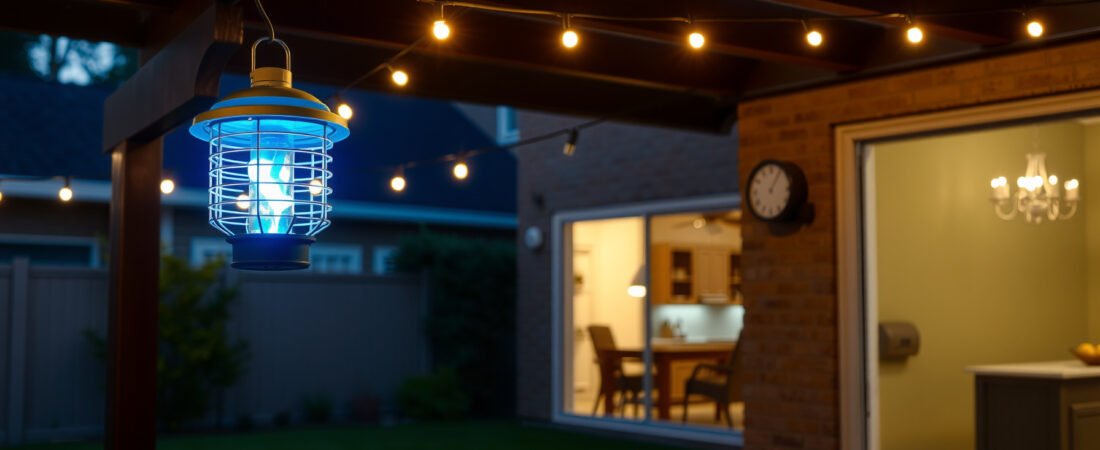
Bug zappers work — just not the way most people think they do. The popular assumption is that a zapper kills the mosquitoes biting you at your backyard cookout, but independent studies have found that mosquitoes make up less than 1% of insects killed by traditional UV-light zappers. What dies instead? Mostly moths, beetles, and other beneficial insects that were never a threat to you. That single fact should change how you shop for one.
That doesn’t mean zappers are useless — it means the wrong type of zapper is worse than no zapper at all. The best bug zappers for indoor and outdoor use are the ones designed around the right attractants for the right target pest. UV light alone won’t cut it for most flying biters. Carbon dioxide lures, octenol, and specific wavelengths of UV matter enormously depending on where you’re placing the unit and what you’re actually trying to eliminate.
This guide skips the vague rankings and gets into the mechanism: why certain zappers outperform others, what specs actually matter, and which features are marketing fluff. If you want to stop buying the wrong zapper for the third time in a row, you’re in the right place.
Why Most Bug Zappers Fail to Kill the Bugs That Actually Bother You
The core problem with traditional electric grid zappers is that they rely almost entirely on UV light as an attractant. Mosquitoes are primarily attracted to carbon dioxide exhaled by humans, body heat, and specific skin compounds like lactic acid — not ultraviolet light. So a classic zapper hanging on your porch will light up the night and crackle satisfyingly, but the mosquitoes biting your ankles two feet away are completely ignoring it.
A study published in the Journal of the American Mosquito Control Association tracked the insect kills from six residential zappers over a summer and found that of roughly 13,000 insects killed, only 31 were biting flies or mosquitoes. The rest were gnats, moths, and midges — many of them important pollinators or natural predators of actual pest insects. This is the part that should genuinely give you pause before you plug one in.
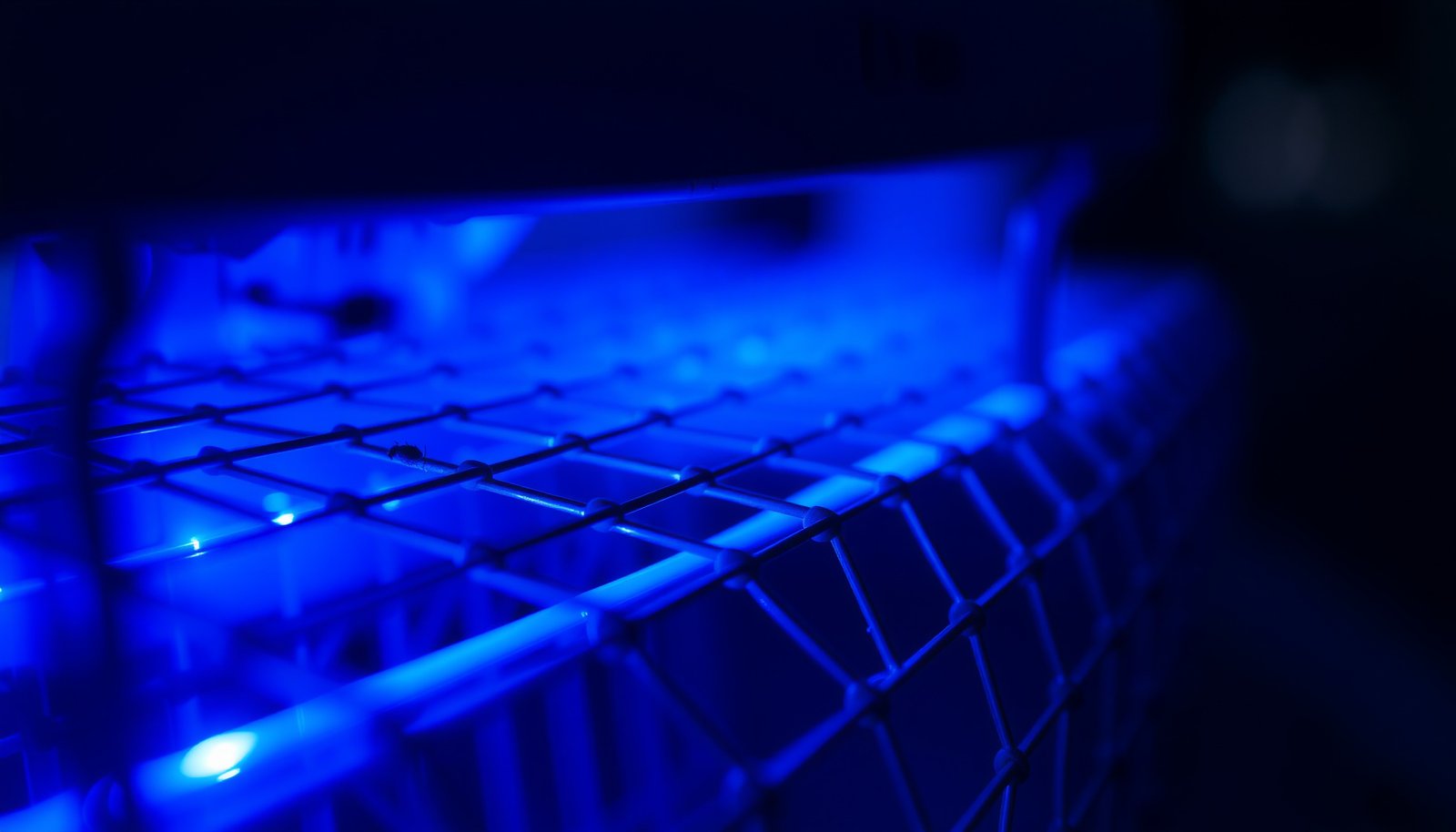
The image above shows the internal grid and UV bulb configuration of a mid-range outdoor zapper — the distance between the attractant source and the kill grid is one of the most overlooked specs when comparing models.
What Specs Actually Matter When Comparing Bug Zappers?
Coverage area claims on bug zapper packaging are almost always calculated under ideal lab conditions — open space, no wind, no competing light sources. A unit marketed as covering 1 acre outdoors might realistically protect a 400-square-foot patio in a suburban backyard with porch lights on. When you’re comparing specs, the numbers to focus on are wattage of the UV bulb (higher wattage = longer effective range), the presence of an octenol or CO₂ lure, and the kill grid voltage, which typically ranges from 1,500 to 4,000 volts.
For indoor use, grid voltage matters less because you’re killing smaller insects like fungus gnats, fruit flies, and mosquitoes at close range — and you probably don’t want a loud crack every time something hits the grid at 3am. Indoor zappers with adhesive catch trays instead of electric grids are often more practical for kitchens and bedrooms. Outdoor units need that higher voltage to handle larger insects like horse flies and June beetles that require more energy to kill instantly.
Best Bug Zappers for Outdoor Use: What to Look For and What Delivers
Outdoor zappers need to survive rain, handle temperature swings, and stand up to the kind of abuse that comes from being mounted under a pergola or on a fence post all summer. IP44 or IP55 waterproof ratings are the floor — anything less and you’re replacing the unit after the first heavy thunderstorm. Beyond weather resistance, the attractant system is everything for outdoor biting pest control.
Picture this: it’s peak mosquito season in late July, the sun just went down, and you’ve got an outdoor dinner going. A zapper with only UV light is essentially a decoration at that point. The units that actually earn their keep outdoors combine UV with an octenol attractant cartridge — octenol is a chemical compound that mimics the carbon dioxide and body odor blend that draws mosquitoes and black flies. Models from Flowtron and DynaTrap have built this into their design for years, and independent user testing consistently shows a meaningful difference in mosquito catch rates compared to UV-only competitors.
Pro-Tip: Place outdoor zappers 20–30 feet away from where people are sitting, not directly overhead. Zappers positioned too close to a seating area can actually draw more mosquitoes toward your guests rather than redirecting them away — the goal is to intercept insects before they reach you, not to compete with your body heat and CO₂ at point blank range.
Here’s a quick comparison of the specs that matter most for outdoor units:
| Feature | Basic UV Zapper | UV + Octenol/CO₂ Zapper |
|---|---|---|
| Mosquito catch rate | Very low (<1% of kills) | Significantly higher (10–30% of kills) |
| Effective coverage | Up to 1/2 acre (claimed) | Up to 1 acre with lure active |
| Cost range | $20–$60 | $80–$250 |
| Lure cartridge replacement | Not applicable | Every 30–45 days (~$8–$15) |
Best Bug Zappers for Indoor Use: The Rules Are Completely Different
Indoor bug zappers operate under a completely different set of constraints than outdoor ones. You don’t need high voltage, you don’t need wide coverage area, and you absolutely don’t want one that explodes audibly every time a fungus gnat touches the grid at midnight. What you do need is something that reliably catches the small stuff — fruit flies, gnats, mosquitoes that snuck in through a screen door — without scattering insect debris into a kitchen where food is being prepared.
The best indoor bug zappers use a UV LED bulb paired with a sticky adhesive board. The light draws insects in, and the glue board captures them without any electrical discharge. These units are whisper quiet, safe around kids and pets, and easy to clean — just swap out the adhesive tray every few weeks. Brands like GLOUE, Katchy, and Black+Decker make solid versions in the $25–$50 range that have earned consistently strong real-world reviews. If you’re also dealing with ants in your bathroom alongside flying insects, it’s worth knowing that these are separate problems with separate solutions — a UV trap will do nothing for ants.
Key features to look for in an indoor bug zapper:
- UV LED bulb (365nm wavelength) — This specific wavelength is most attractive to flying insects at close range indoors
- Adhesive catch tray — Cleaner and quieter than electric grids; traps rather than incinerates, so no fine insect particle mist
- Low-profile design — Units that sit on a countertop or plug directly into an outlet work best in kitchens and bathrooms where counter real estate is limited
- No ozone emission — Some older UV bulb designs produce trace ozone; modern LED-based units avoid this entirely
- 360-degree light emission — Omnidirectional UV coverage matters more indoors where insects approach from any direction in a confined space
How to Choose the Right Bug Zapper Based on Your Actual Pest Problem
Choosing the right zapper isn’t just about indoor versus outdoor — it’s about which specific pest is driving you crazy. A gnat problem in a kitchen calls for a completely different setup than a mosquito problem on a back deck in a humid Southern climate. Treating them the same way is exactly why people end up disappointed and write “doesn’t work” in Amazon reviews for a unit that would have worked perfectly for a different problem.
Dr. Sandra Mendes, an urban entomologist and extension specialist at the University of Florida, puts it plainly: “The single biggest misuse of bug zappers is deploying them without understanding what’s attracting the pest in the first place. Mosquitoes won’t reliably respond to UV light alone. If your goal is mosquito reduction, you need a lure that mimics a host — CO₂, octenol, heat. The light just gets them close enough to the kill mechanism.” That distinction is worth $150 in avoided wasted purchases.
“The single biggest misuse of bug zappers is deploying them without understanding what’s attracting the pest in the first place. Mosquitoes won’t reliably respond to UV light alone. If your goal is mosquito reduction, you need a lure that mimics a host — CO₂, octenol, heat. The light just gets them close enough to the kill mechanism.”
Dr. Sandra Mendes, Urban Entomologist, University of Florida Extension
Here’s a practical decision framework based on pest type:
- Fruit flies and gnats indoors — Use a UV LED sticky trap placed near the source (fruit bowl, sink drain, trash can). These insects are attracted to both light and the fermentation odors in those areas, so proximity matters more than power.
- Mosquitoes on a covered patio — A UV + octenol outdoor zapper hung 20–30 feet from the seating area is your best bet. Run it starting 30 minutes before sunset when mosquito activity peaks.
- Moths and beetles around outdoor lights — A standard high-wattage UV zapper works well here because UV is genuinely what draws these insects. These are also cases where yellow “bug light” bulbs on your porch can reduce attraction in the first place.
- Horse flies and deer flies near water features or wooded edges — These biting flies are notoriously resistant to most zappers. Canopy traps like the H-Trap or Epps Biting Fly Trap, which use a visual decoy and no electricity at all, dramatically outperform electric grid units for this specific pest.
- Mosquitoes inside the home — One or two UV LED sticky traps placed in bedrooms and living areas catch mosquitoes that entered through doors or windows. Combine with window screen repairs for meaningful long-term reduction.
- Mixed pest pressure in a large yard — Consider a two-unit setup: one CO₂/octenol unit for mosquito reduction at yard perimeter and a high-wattage UV zapper near the structure for moths and beetles. Single-unit solutions rarely satisfy in complex outdoor environments.
One honest nuance worth naming: zappers work significantly better in some climates than others. In the arid Southwest where mosquito populations are naturally lower, a good UV zapper might genuinely solve your flying insect problem. In the humid Gulf Coast or Great Lakes regions where mosquito pressure is intense from May through October, even the best CO₂-lure zapper is a tool in the toolkit — not a complete solution. Landscape changes that eliminate standing water within 100 feet of your home will do more for mosquito reduction than any zapper on the market, because a female mosquito can complete her egg-laying cycle in as little as one inch of standing water held for 7–10 days.
There’s also a renter-specific consideration here that rarely gets discussed. If you’re in an apartment or rental home and your landlord hasn’t addressed the underlying conditions drawing insects to your unit — unsealed gaps, poor drainage, neighboring units with pest problems — a bug zapper is treating the symptom, not the cause. You have more legal standing than most renters realize. If persistent insect problems are tied to structural or maintenance failures on your landlord’s part, understanding what constitutes illegal landlord retaliation after you report a pest issue is important before you take any formal action.
The zapper market has genuinely improved in the last decade — the addition of chemical lures to electric units was a meaningful leap forward. But the next real evolution is already here in professional-grade units: propane-powered CO₂ generators that don’t require any UV at all, purely simulating a large mammal host. These run $300–$600 and are overkill for most residential use, but they underscore the direction the technology is heading. UV-only zappers are likely to become obsolete for biting insect control within a generation of product cycles — the science has outpaced the shelf stock at most hardware stores, which is exactly why it pays to understand the mechanism before you buy.
Frequently Asked Questions
what is the best bug zapper for indoor and outdoor use?
The best bug zappers for indoor and outdoor use combine a UV light that attracts insects with a high-voltage grid that kills them on contact. For most homeowners, a unit with a 1/2 to 1 acre coverage rating works well outdoors, while a compact 10–20 watt model handles indoor spaces up to 1,500 square feet. Look for models with a removable tray for easy cleaning and a weatherproof rating if you’re using it outside.
are bug zappers safe to use indoors?
Yes, electric bug zappers are generally safe for indoor use as long as you keep them away from food prep areas and out of reach of kids and pets. Most indoor-rated models use enclosed grids to reduce the risk of accidental contact. Avoid zappers that use propane or other fuels indoors — those are strictly for outdoor use.
how many watts does a bug zapper need to be effective?
For indoor use, a bug zapper in the 10–20 watt range is typically enough to cover a room or small space. Outdoor zappers should be at least 40–80 watts to cover a yard or patio effectively, with some heavy-duty models running up to 100 watts for larger properties. Higher wattage doesn’t always mean better results — placement near standing water or shaded areas matters just as much.
do bug zappers work on mosquitoes?
Bug zappers aren’t the most effective tool specifically for mosquitoes. Studies have shown that mosquitoes make up less than 10% of insects killed by typical UV zappers, since mosquitoes are more attracted to carbon dioxide and body heat than UV light. If mosquitoes are your main problem, look for zappers that combine UV light with an octenol or CO2 attractant for significantly better results.
how often do you need to clean a bug zapper?
You should clean your bug zapper every 1–2 weeks during peak bug season to keep it working efficiently. Dead insect buildup on the grid can reduce its effectiveness and, in some cases, create a fire hazard if debris accumulates too heavily. Most models have a removable collection tray — just switch off the unit, unplug it, and brush the grid with the cleaning brush that typically comes included.