

You flip on the kitchen light at 2am and three roaches scatter under the stove. Your first instinct is to grab whatever spray is under the sink — but that instinct is exactly why so many people stay stuck in an endless cycle of treatment that never works. The species you’re dealing with determines everything: where they’re hiding, how fast they’re reproducing, and what will actually kill them. Treating a German cockroach infestation the same way you’d treat an American cockroach infestation is like using a snow shovel to dig a garden bed. The tools aren’t wrong, they’re just built for a completely different problem.
Here’s the angle most identification guides completely miss: homeowners spend hours Googling “how to get rid of roaches” before they’ve confirmed which species they have. That single misstep is what keeps infestations alive. German cockroaches, the most common indoor species, reproduce so aggressively — a single female produces up to 40 eggs per capsule and can generate 6 generations in one year — that misidentifying them as the slower-breeding American cockroach could mean weeks of wasted effort. Get the ID right first, and everything else gets easier.
Why Misidentifying the Species Is the Real Reason Treatments Fail
Most pest control advice online skips past identification and jumps straight to “buy this spray.” The problem is that cockroach species don’t just look different — they behave differently, infest different zones of your home, and respond to different treatment strategies. American cockroaches are primarily outdoor insects that wander inside through gaps; German cockroaches are almost exclusively indoor animals that almost never survive outside. Those two facts alone mean you’d set bait traps in completely different locations for each.
There’s also a huge variance in how fast things escalate. A single American cockroach in your bathroom is often just a lost wanderer. A single German cockroach sighting almost always means there are already dozens more hiding in the walls. Knowing which one you’re looking at changes your urgency level — and your budget. Getting the species wrong doesn’t just waste money on products; it wastes the 24-48 hour window after first sighting when populations are still manageable.
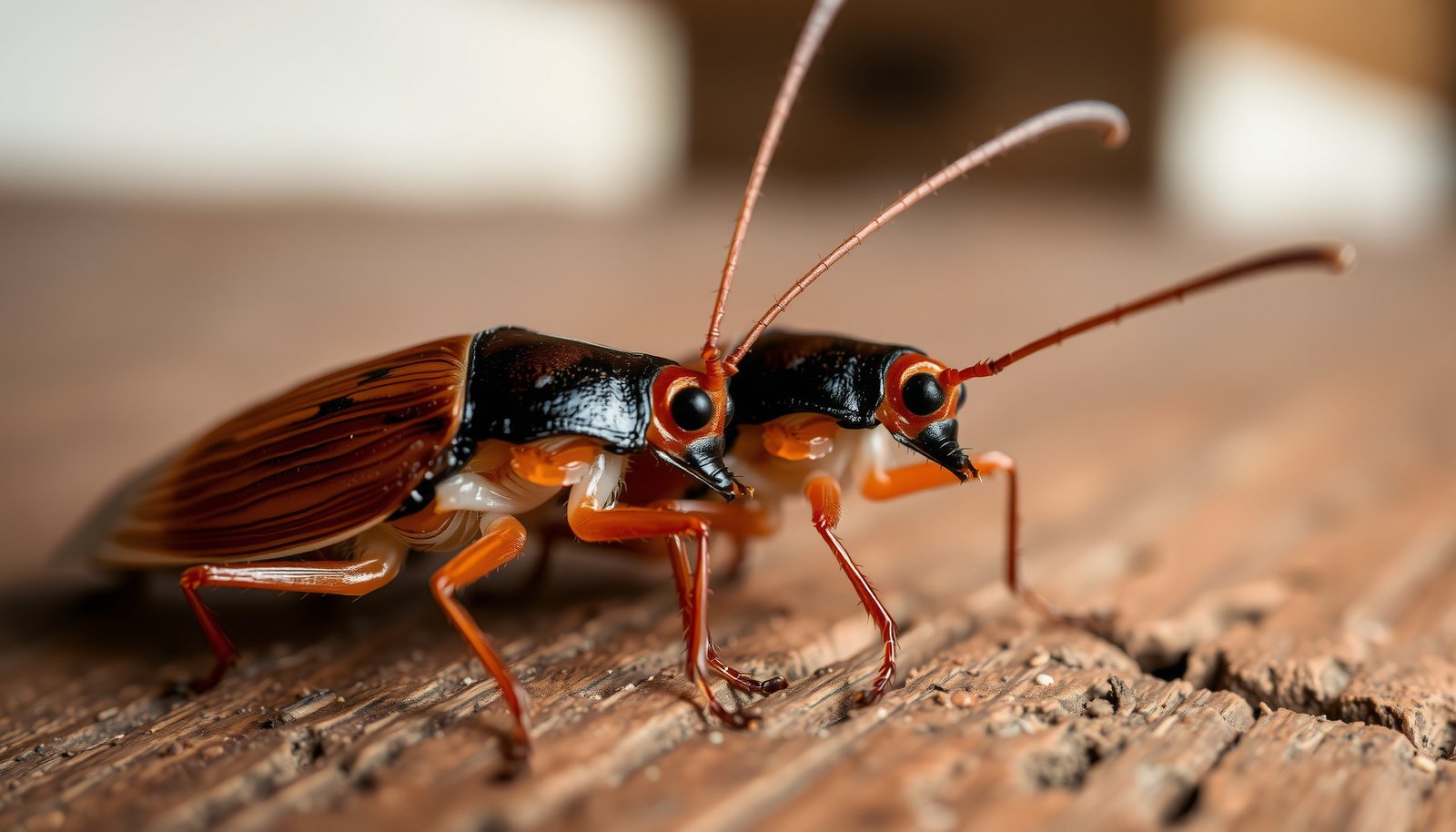
This close-up comparison shows the key physical differences between the most common household cockroach species — including size, color banding, and wing structure — details that are easy to miss but essential for making the right treatment call.
What Do the 6 Most Common Cockroach Species Actually Look Like?
Size and color get you most of the way there, but the details matter. A tan cockroach with two dark parallel stripes running down its pronotum (the shield-shaped plate behind its head) is almost certainly a German cockroach. A reddish-brown roach that’s 1.5 inches or longer is likely an American cockroach. Below is a quick reference table for the six species you’re most likely to encounter in a US home, followed by deeper breakdowns of each.
| Species | Size | Color / Key Markings | Most Common Location |
|---|---|---|---|
| German Cockroach | ½ – ⅝ inch | Tan/light brown, 2 dark stripes behind head | Kitchen, bathroom |
| American Cockroach | 1.5 – 2 inches | Reddish-brown, yellowish figure-8 on pronotum | Basements, drains, sewers |
| Brown-Banded Cockroach | ½ inch | Light brown, pale bands across abdomen | Bedrooms, upper cabinets, electronics |
| Oriental Cockroach | 1 – 1.25 inches | Dark brown/black, dull finish | Damp basements, crawl spaces |
Two additional species round out the list: the Smokybrown cockroach, a mahogany-colored flier common in the Southeast US that’s slightly smaller than the American at about 1.25 inches, and the Pennsylvania Wood cockroach, which is only a real problem in homes near wooded areas and rarely establishes indoor colonies. Knowing which of these six you’re looking at narrows your search from a generic pest aisle to an actual strategy.
How to Tell German and Brown-Banded Cockroaches Apart (Most People Get This Wrong)
These two species get confused constantly, and it’s an expensive mistake. Both are small, both are tan-ish, and both end up inside your home. But their preferred hiding zones are almost opposite. German cockroaches are heat and moisture chasers — they cluster within 12 feet of a food or water source, almost always in kitchens and bathrooms. Brown-banded cockroaches are the dry-loving outliers of the cockroach world, preferring upper walls, picture frames, behind TVs, inside electronics, and even inside furniture. Treating only your kitchen when you have a brown-banded infestation will feel completely useless, because most of the population is in your living room.
The visual tell is the banding location. German cockroaches have two dark stripes that run lengthwise down the pronotum, just behind the head. Brown-banded cockroaches have light, pale tan bands that run horizontally across the abdomen — a fundamentally different pattern, and one that’s visible even to the naked eye with a flashlight. Males of both species have wings, but neither flies reliably indoors. Don’t let the wings confuse you into thinking it’s a larger species.
Pro-Tip: Use a flashlight and a thin piece of cardstock to gently encourage a cockroach to pause against a light-colored surface before trying to identify it. Trying to ID a running roach in dim light is how people end up misidentifying species — and misbuying $40 worth of the wrong bait gel.
What Physical Features to Look For When Identifying Any Cockroach Species
You don’t need an entomology degree to make a confident ID. There are four physical features that, taken together, narrow down the species in almost every case. Work through them in this order:
- Body length: Measure against something familiar. A roach under ¾ inch is almost always a German or brown-banded. Over 1.25 inches points toward American, Smokybrown, or Oriental species.
- Overall color: Tan or light brown narrows it to German or brown-banded. Reddish-brown suggests American or Smokybrown. Dark brown to near-black with a dull, matte finish points almost exclusively to Oriental.
- Pronotum markings: The shield behind the head is your best single diagnostic feature. Two dark lengthwise stripes = German cockroach. A pale yellowish figure-8 or eyeglass shape = American cockroach. No distinct markings = Oriental or Smokybrown.
- Wing development: American and Smokybrown cockroaches have fully developed wings and will occasionally fly toward lights. Oriental cockroaches have shortened, stubby wings on males and almost no wings on females — neither flies. German cockroaches have wings but virtually never use them.
- Where you found it: Location inside the home is almost as diagnostic as the insect itself. A roach in a drain or sump pit in a damp basement is almost certainly Oriental. One scurrying across your kitchen countertop at night is statistically most likely to be German.
One counterintuitive observation worth knowing: cockroach nymphs (juveniles) look substantially different from adults of the same species. German cockroach nymphs are dark brown to almost black with a pale stripe down the center of their back — not tan at all. This throws a lot of people off when they try to identify an early-stage infestation, because the nymphs look nothing like the adult photos in every identification guide. If you’re seeing a mix of small dark nymphs and slightly larger tan adults in the same spot, that’s a confirmed German cockroach colony, not two different species.
“The single biggest mistake I see homeowners make is buying a general-use roach spray before confirming what species they have. German cockroaches, for example, have developed resistance to many pyrethroid-based sprays in urban populations — so if you’re using the wrong active ingredient on the wrong species, you’re essentially training the survivors to be harder to kill. Species identification isn’t a formality; it’s the first treatment decision you make.”
Dr. Karen Vail, Extension Urban Entomologist, University of Tennessee Institute of Agriculture
Does the Species You Have Change How You Should Respond?
Dramatically, yes. And this is where most generic “how to get rid of cockroaches” guides fall short — they treat all roaches as a single pest problem with a single solution. The approach that works for an American cockroach showing up in your basement (seal entry points, reduce moisture, maybe a perimeter treatment) is almost useless against a German cockroach population that’s already established inside your cabinetry and is reproducing every 60 days. German cockroaches require indoor bait gel placed precisely near harborage sites, not perimeter sprays that they’ll simply avoid.
Here’s a quick breakdown of what each species’ presence actually signals, because the right response depends as much on understanding the pest’s biology as it does on the treatment product:
- German cockroach indoors: Established indoor colony, rapid reproduction, requires bait gel + IGR (insect growth regulator), not sprays. Even one sighting warrants immediate action.
- American cockroach indoors: Usually a wanderer from outdoors or the sewer system. Focus on entry point sealing, drain treatments, and exterior perimeter barriers rather than indoor chemical treatments.
- Oriental cockroach indoors: Signals excess moisture — look for plumbing leaks, poor drainage, or high humidity in basements. Eliminate the moisture source first; the roaches will follow.
- Brown-banded cockroach indoors: Requires whole-room treatment, including upper wall surfaces, furniture interiors, and electronics. Bait placement must go beyond the kitchen.
- Smokybrown cockroach indoors: Primarily a Southern US problem; attracted to light and warmth. Entry point sealing and exterior lighting adjustments are more effective first steps than indoor treatment.
One honest nuance here: what counts as a “manageable DIY problem” versus a “call a professional” situation genuinely depends on the species, how long the infestation has been developing, and what kind of structure you live in. A single American cockroach in a detached house is very different from a German cockroach sighting in a multi-unit apartment building, where colony members can travel through shared walls, pipes, and conduit. If you’re a renter, it’s also worth understanding who is actually responsible for pest control — you or your landlord — because misidentifying the species could affect your legal standing in a habitability dispute.
If you’ve confirmed German cockroaches in a multi-unit building, or you’ve done two rounds of DIY treatment without seeing a meaningful drop in activity, that’s the threshold where professional intervention typically outperforms continued self-treatment. This guide on when to call an exterminator versus handling it yourself walks through exactly how to make that call without second-guessing yourself.
What Cockroach Droppings and Egg Cases Tell You When You Can’t Find the Roach Itself
You won’t always catch the roach in person. Evidence left behind — droppings, egg cases (called oothecae), and shed skins — can confirm both presence and species even when the insects themselves stay hidden. German cockroach droppings look like tiny black or dark brown specks, similar to ground pepper or fine coffee grounds, and they accumulate in corners, drawer tracks, and along the edges of cabinet shelving. American cockroach droppings are larger, cylindrical, and have ridged sides — they’re often mistaken for mouse droppings, though mouse droppings taper to a point while cockroach droppings are blunt-ended.
Egg cases are equally diagnostic. A German cockroach ootheca is small, tan, and rectangular, holding 30-40 eggs. Females carry it attached to their body until about 24-48 hours before hatching — which is part of why German cockroach populations explode so fast, since the female is essentially a mobile incubation unit. American cockroach oothecae are dark brown, mahogany-colored capsules about ⅓ inch long, and females deposit them in sheltered locations rather than carrying them. Finding an ootheca tells you not just the species, but that reproduction is actively occurring in your home — which should change your urgency level immediately.
Species identification isn’t the end of the conversation — it’s the beginning of it. Once you know what you’re dealing with, you can stop spraying at random and start treating with actual precision. A cockroach problem doesn’t get better by throwing more product at it; it gets better when you understand the animal well enough to interrupt its specific biology. That’s the shift that actually ends infestations instead of just temporarily reducing them.
Frequently Asked Questions
how do I know what kind of cockroach I have in my house?
Start by looking at size, color, and where you’re finding them. German cockroaches are small (about 1/2 inch), tan with two dark stripes, and stick to kitchens and bathrooms. American cockroaches are much larger (up to 2 inches), reddish-brown, and usually show up in basements or drains. Matching those three traits — size, color, and location — gets you to the right species pretty quickly.
what is the most common cockroach found in homes in the US?
The German cockroach is the most common species found inside US homes and apartments. It’s especially hard to control because it reproduces fast — a single female can produce up to 300 offspring in her lifetime. If you’re seeing small, light-brown roaches near your stove, refrigerator, or under the sink, there’s a good chance it’s a German cockroach infestation.
does one cockroach mean I have an infestation?
Not necessarily, but you shouldn’t ignore it either. Cockroaches are nocturnal, so if you’re seeing one during the day, it often means the hiding spots are overcrowded — which points to a larger population. A single American cockroach can wander in from outside, but spotting a German cockroach even once usually means there are more hiding nearby.
what cockroaches come inside from outside vs live inside year round?
American, Smokybrown, and Oriental cockroaches typically live outdoors and wander inside through gaps, drains, or vents — especially when it’s hot or after heavy rain. German and Brown-banded cockroaches are true indoor species that don’t survive well outside and live and breed entirely inside your home. Knowing which type you have tells you whether to focus on sealing entry points or treating the interior directly.
are cockroaches dangerous to have in your home?
Yes, they’re a real health concern — not just a nuisance. Cockroaches spread at least 33 types of bacteria, including Salmonella and E. coli, by walking across food prep surfaces. Their shed skins and droppings are also a known trigger for asthma and allergies, particularly in children. The longer an infestation goes untreated, the higher the exposure risk.