
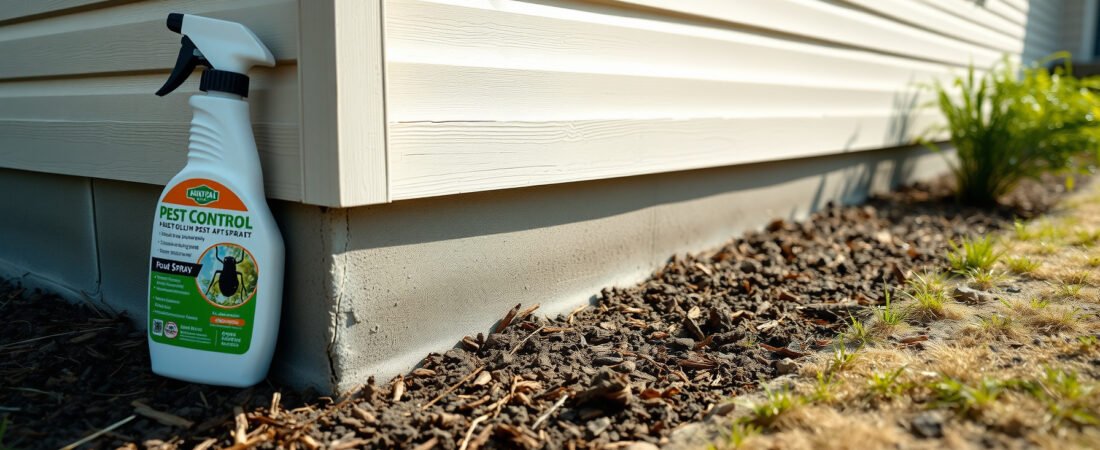
Perimeter spraying works — but not the way most homeowners think it does. The mistake isn’t buying the wrong product. It’s treating the perimeter like a wall when it actually functions more like a tripwire. A spray barrier doesn’t stop insects from entering your home; it kills or repels them after they’ve already started crossing toward it. That shift in thinking changes everything about which product you choose, where you apply it, and how often you need to reapply.
Most articles on this subject hand you a ranked list of sprays and call it done. What they skip is the mechanism — why certain active ingredients outperform others at the foundation line, why some sprays fail completely on porous surfaces like brick or mulch, and why a product with a longer residual isn’t always better for your specific situation. That’s what this article actually covers.
Why Most Perimeter Sprays Fail Before You Even Open the Bottle
Picture this: a homeowner spends $40 on a professional-grade bifenthrin concentrate, mixes it correctly, and sprays a neat 3-foot band around the entire foundation on a Saturday morning. By Tuesday, ants are back inside. They don’t return the spray. They assume it doesn’t work. In reality, the spray worked fine — but it was applied over a 6-inch layer of mulch pressed directly against the siding. Mulch acts as a sponge, absorbing the chemical before it can bind to any surface that insects actually walk across. The barrier was never formed.
Surface chemistry is the piece almost no consumer guide bothers to explain. Pyrethroid-based sprays — which include bifenthrin, cypermethrin, and permethrin — bond to hard mineral surfaces like concrete, brick, and soil. They do not bind effectively to organic matter like wood chips, pine straw, or leaf litter. If your foundation is buried in landscaping material, you’re applying an expensive spray to a surface that will degrade it in days, not weeks. Clear a 12-inch buffer of bare soil or gravel between your mulch beds and the foundation wall before you spray anything.
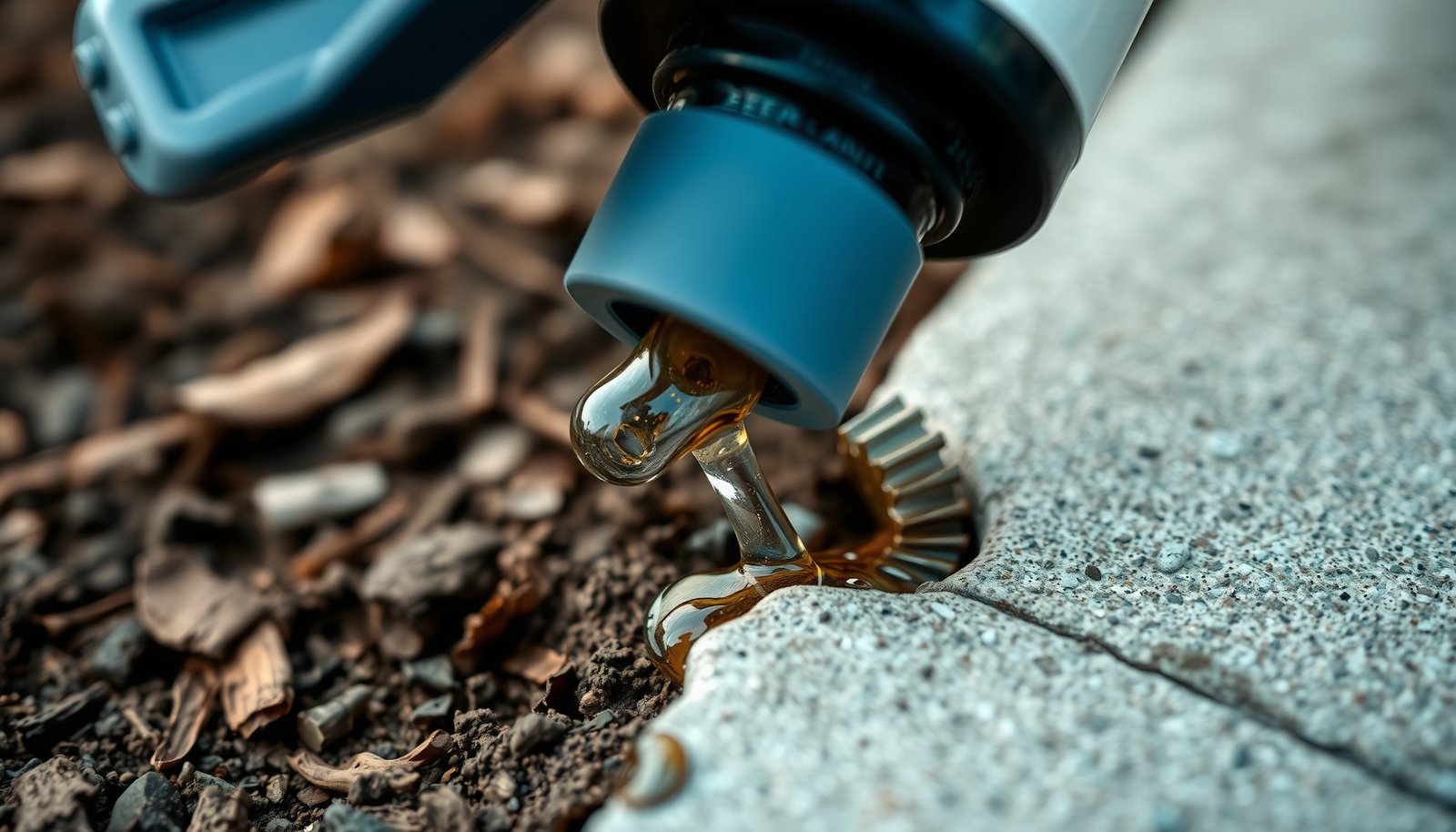
This photo shows the gap between a mulch bed and a concrete foundation — that cleared strip is exactly where an effective perimeter spray needs to land and bind, not on top of organic material where it will break down within 48–72 hours.
Which Active Ingredients Actually Belong in a Perimeter Spray?
Not all insecticides are built for outdoor perimeter use, and using the wrong chemistry is one of the most common (and most expensive) mistakes DIYers make. Pyrethroids are the workhorse class for perimeter defense because they have a strong knockdown effect, bind well to most outdoor surfaces, and carry residual activity measured in weeks rather than hours. Bifenthrin is consistently the top performer among them — it binds tightly to soil particles, resists UV degradation better than permethrin, and stays active on concrete for 30–90 days depending on sun exposure and rainfall.
Cyfluthrin and lambda-cyhalothrin are strong alternatives if bifenthrin isn’t available in your area, though they degrade slightly faster in direct sunlight. For homeowners dealing with a broader pest spectrum — including ants tunneling under slabs, cockroaches sheltering in foundation cracks, and occasional invaders like the half-dozen cockroach species that commonly enter homes from outside — a bifenthrin concentrate diluted per label instructions gives you the best cost-per-square-foot value of any retail option. Imidacloprid is sometimes added to perimeter treatments as a systemic option that targets ants specifically, but it won’t provide the broad knockdown you need for a multi-pest barrier.
How to Compare Perimeter Spray Products Without Getting Fooled by the Label
Retail perimeter sprays are sold in ready-to-use (RTU) bottles, hose-end applicators, and concentrated liquids that you dilute yourself. The label marketing is often more impressive than what’s inside, so here’s how to actually compare products side by side.
| Product Type | Active Ingredient | Residual (Outdoor) | Best For |
|---|---|---|---|
| Ortho Home Defense Max (RTU) | Bifenthrin 0.05% | 12 months (indoor claim); 30–60 days outdoor | Quick spot treatment, renters, small homes |
| Bifen I/T Concentrate | Bifenthrin 7.9% | 60–90 days outdoor on hard surfaces | Full perimeter of large homes, best value |
| Suspend Polyzone (Concentrate) | Deltamethrin 4.75% | 90 days; polymer coating resists rain | High-rainfall climates, exposed surfaces |
| Cyzmic CS (Concentrate) | Lambda-cyhalothrin 9.7% | 60–90 days; microencapsulated | Porous surfaces like brick and stucco |
The single most useful thing to look at on a perimeter spray label isn’t the brand name or the pest list — it’s the percentage of active ingredient. A ready-to-use spray with 0.05% bifenthrin is already diluted to its working concentration. A concentrate with 7.9% bifenthrin mixed at the label rate gives you the same final concentration for a fraction of the cost per gallon. Over a full season of reapplications, that math matters.
How to Apply a Perimeter Spray So It Actually Works
Application method determines whether a perimeter spray performs at all. The goal is a continuous treated band, not patches. Here’s the sequence that professional applicators follow — and that most DIY guides skip over entirely.
- Clear the zone first. Move potted plants, decorative rock, and any organic debris away from the foundation before spraying. Spray applied over debris is wasted product.
- Apply a 3-foot band up the foundation wall and 3 feet out onto the ground. This “3-up, 3-out” rule ensures you’re hitting the full travel zone insects use as they approach entry points.
- Don’t forget the transition zones. Spray around door thresholds, window frames at ground level, utility penetrations (where pipes and conduit enter the foundation), and any cracks or expansion joints in the concrete.
- Let it dry completely before foot traffic or rain. Most pyrethroid sprays need at least 30–60 minutes to bind to the surface. Rain within 2 hours of application will significantly reduce residual effectiveness.
- Reapply on a schedule, not a whim. Outdoor residuals break down from UV exposure and rainfall even on hard surfaces. Reapply every 60–90 days during pest season rather than waiting until you see insects again.
One honest nuance here: application frequency depends heavily on your climate and home construction. A stucco home in Florida with heavy summer rain needs reapplication every 45–60 days. A brick home in the Southwest with minimal rain and partial foundation shade might hold a good bifenthrin application for 90 days or more. There’s no universal schedule — adjust based on what your surface type and weather actually do to the product.
Pro-Tip: Apply your perimeter spray in the early morning or evening when temperatures are below 85°F. High heat causes pyrethroids to volatilize faster, reducing the amount that actually binds to the surface. A cooler application means a longer-lasting barrier.
What Perimeter Sprays Don’t Cover (And What to Pair With Them)
A perimeter spray is not a complete pest management strategy on its own, and treating it like one is exactly why so many homeowners end up disappointed. Perimeter sprays target insects that travel across exterior surfaces — ants, cockroaches, earwigs, centipedes, spiders, and other ground-level foragers. They do almost nothing for pests that arrive by flight, for insects already established inside the structure, or for pests tunneling underground beneath the foundation. Subterranean termites, for example, can bypass a surface spray entirely by traveling through the soil and entering wood that’s in contact with the ground — no surface crossing required.
The most effective perimeter defense layers multiple tools. Pair your spray with these complementary measures for genuinely complete coverage:
- Granular insecticide in garden beds and mulch areas — products containing bifenthrin or imidacloprid in granular form treat organic surfaces where sprays bind poorly, reaching ant trails and soil-dwelling beetles that the liquid spray misses.
- Door sweep and weatherstripping replacement — insects don’t just walk across treated soil; many enter through the 1/4-inch gap under a worn door threshold. Mice can fit through a gap that same size. Mechanical exclusion stops what chemistry can’t.
- Residual dust in wall voids and utility entry points — a deltamethrin or pyrethrin dust applied inside weep holes, pipe penetrations, and expansion joints addresses the bridge points that a perimeter spray can’t reach from the outside.
- Exterior bait stations for ants and cockroaches — perimeter sprays kill foragers on contact, but bait stations are carried back to the colony, addressing the source population rather than just the ones crossing your foundation. This is especially important for species like pharaoh ants that nest deep inside wall voids.
- Sticky monitoring traps at interior entry points — placing glue traps along interior baseboards near doors and garage entries tells you whether your perimeter spray is holding or whether insects are still making it through. It’s diagnostic, not just reactive.
“The biggest misconception I see is homeowners treating the perimeter spray as a set-it-and-forget-it solution. Surface residuals break down — that’s chemistry, not a flaw in the product. A perimeter spray is one leg of the stool. Without addressing harborage, entry points, and indoor populations simultaneously, you’ll be respraying every few weeks and wondering why nothing sticks.”
Dr. Karen Voss, Board-Certified Entomologist and Extension Pest Management Specialist, University of Kentucky
It’s also worth noting that perimeter sprays have real limits against certain soft-bodied insects like aphids and thrips that arrive via wind or on infested plant material rather than walking across your foundation. If you’re dealing with a garden pest situation rather than a structure-invading one — say, an infestation working through ornamentals near your home’s entry — that’s a separate category of problem, and you’d want to look at something like the targeted approaches covered in how to get rid of aphids on indoor and outdoor plants, rather than reaching for your perimeter spray.
The counterintuitive truth about perimeter defense is that the spray itself is actually the least complicated part of the equation. Choosing bifenthrin concentrate, mixing it correctly, and applying it in a continuous 3-up-3-out band is learnable in an afternoon. What takes longer to figure out is the diagnostic piece — identifying which pest pressure you’re actually facing, understanding how your specific home’s construction creates entry points, and knowing when a spray barrier alone is sufficient versus when you need to layer it with granules, dusts, or exclusion work. Get that assessment right first, then choose your spray. That order matters more than which product you pull off the shelf.
Frequently Asked Questions
how often should I apply pest control spray around the perimeter of my house?
Most pest control sprays for perimeter defense need to be reapplied every 30 to 90 days, depending on the product and your local climate. Heavy rain can wash away residual sprays faster, so check after any storm that drops more than an inch of rainfall. Products with bifenthrin or lambda-cyhalothrin tend to hold up longer outdoors than basic pyrethrin sprays.
how far out should I spray pesticide around the foundation of my house?
For a solid perimeter barrier, spray at least 3 feet up the foundation wall and 3 feet out onto the ground — that 3×3 zone is the standard recommendation from most pest control professionals. If you’re dealing with ants or spiders that travel along mulch or landscaping, extend that band out to 6 feet where the lawn meets the bed. Don’t forget to treat around window frames, door thresholds, and utility entry points too.
what is the best pest control spray to use around the outside of a house?
Sprays containing bifenthrin, permethrin, or lambda-cyhalothrin are consistently the top performers for outdoor perimeter defense because they kill on contact and leave a residual barrier that keeps working for weeks. Bifen I/T and Ortho Home Defense are two widely available options that homeowners can apply themselves without a license. If you want a lower-toxicity alternative, sprays with beta-cyfluthrin still provide solid control and break down faster in the environment.
is perimeter pest spray safe for pets after it dries?
Most perimeter pest control sprays are considered safe for pets once the treated area is completely dry, which typically takes 30 to 60 minutes under normal conditions. Keep dogs and cats off treated surfaces until dry, and don’t let them chew on sprayed vegetation. If you’re using a pyrethroid-based spray, be especially cautious with cats — they metabolize these chemicals more slowly than dogs, so letting the area dry fully before allowing access is non-negotiable.
can I spray pest control around my house myself or do I need a professional?
You can absolutely do your own perimeter treatments — concentrate products like Bifen I/T, Talstar P, and Suspend SC are all labeled for DIY use and are the same active ingredients pros use. A 1-gallon pump sprayer or backpack sprayer works fine for most homes, and treating your own perimeter costs a fraction of what a quarterly pest control service runs. That said, if you’re dealing with a heavy infestation, termites, or pests that need targeted baiting rather than a spray barrier, calling a licensed exterminator makes more sense.