
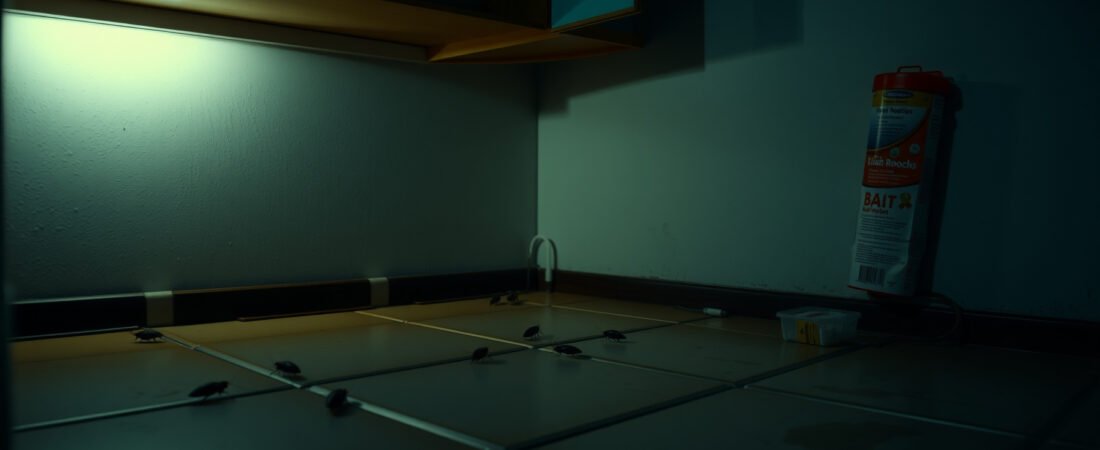
Forty percent of apartment dwellers who try to eliminate cockroaches on their own fail — not because the products don’t work, but because they’re solving the wrong problem. The real issue isn’t the roaches you can see. It’s the ones you can’t, the harborage sites you haven’t touched, and the fact that in a multi-unit building, you’re fighting a moving target that your neighbors keep replenishing. That’s the part most DIY guides skip entirely.
Here’s the bottom line: you can absolutely get rid of cockroaches in an apartment without an exterminator — but only if you understand that your unit is not a sealed box. Roaches migrate through shared walls, plumbing chases, and electrical conduits. Treating your kitchen alone is like bailing out a boat without plugging the hole. This guide is built around that reality.
Why Cockroaches Keep Coming Back Even After You’ve Treated
The number one reason DIY roach treatments fail in apartments is reinfestation from adjacent units — not product failure. A female German cockroach produces 30–40 eggs per capsule and can generate up to 8 capsules in her lifetime. That’s potentially 320 new roaches from a single adult that crawled in through the gap around your dishwasher drain line. Killing the roaches in your kitchen doesn’t stop the next wave from walking right back in through the same path two weeks later.
Most people treat the surfaces they can see — countertops, under the stove, maybe behind the fridge. But cockroaches spend about 75% of their lives in harborage: tight, dark, humid spaces where they cluster, breed, and molt. If your treatment doesn’t reach those voids, you’re just inconveniencing the colony. You need to understand where they actually live before you can kill them effectively.
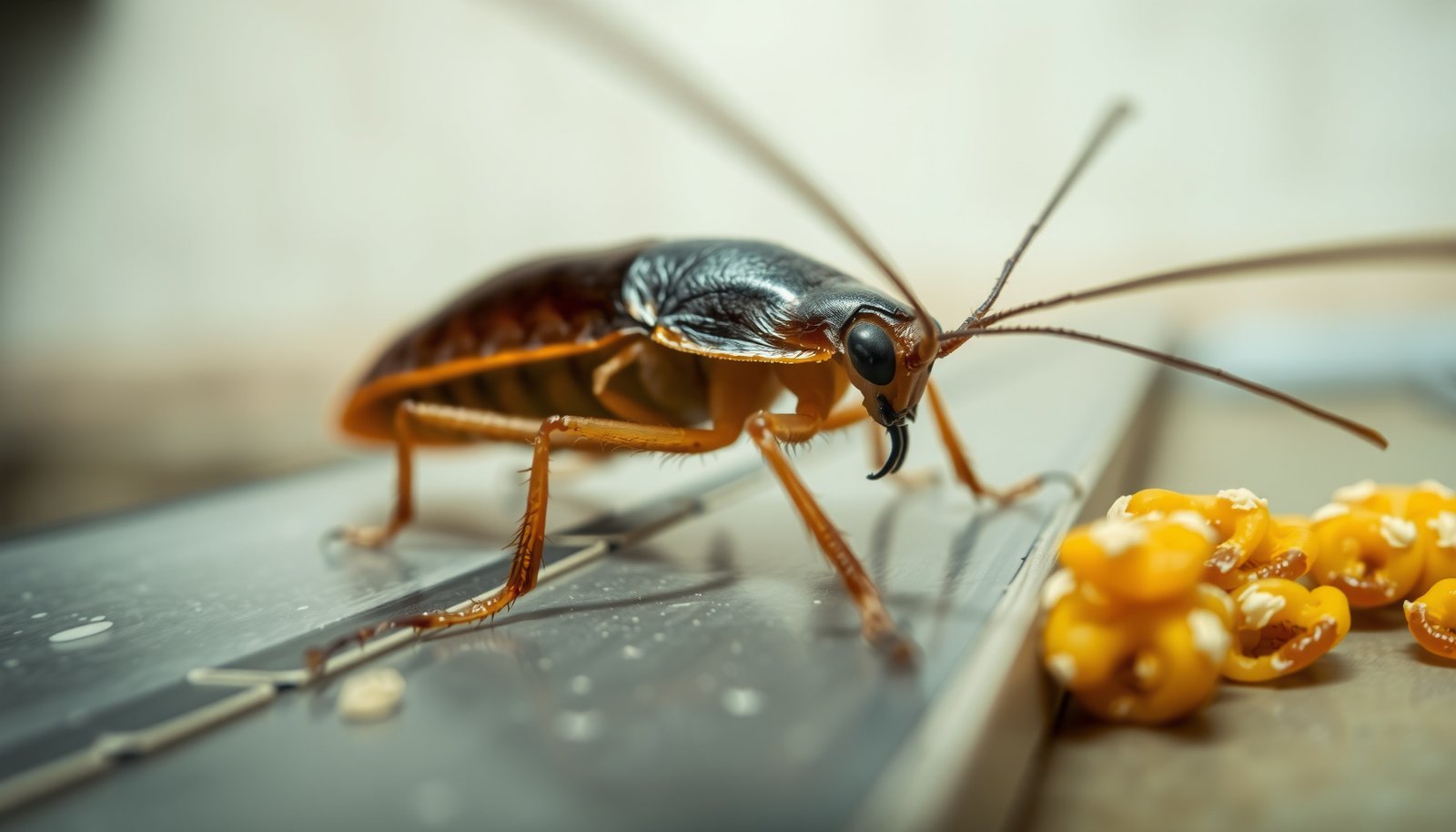
This close-up shows the narrow gap behind a kitchen cabinet where cockroaches establish harborage sites — exactly the kind of spot that gets missed when people only spray visible surfaces.
How to Figure Out What Species You’re Actually Dealing With
Not all cockroaches respond the same way to the same treatments. German cockroaches — the small, fast ones, about half an inch long with two dark stripes behind the head — are the dominant apartment pest in the US, and they almost never come in from outside. They hitchhike in on grocery bags, cardboard boxes, secondhand appliances, and furniture. American cockroaches, by contrast, are large (up to 2 inches), reddish-brown, and typically enter from drains, crawlspaces, or basement areas. Treating for the wrong species wastes time and money.
Species ID also tells you where to focus. German cockroaches cluster in the kitchen and bathroom — they need warmth and moisture within about 12 feet of food and water. American cockroaches tend to roam further and are more commonly found in laundry rooms, under sinks, or near water heaters. If you’re not sure what you’ve got, identifying the cockroach species in your home is the single fastest way to narrow down where to look and what products will actually work.
The Right Way to Use Gel Bait, IGR, and Boric Acid Together
Here’s the counterintuitive part that most articles won’t tell you: using a cockroach spray alongside gel bait will actively sabotage your results. Repellent sprays — including many common aerosol “roach killers” — scatter cockroaches and make them avoid the bait placements you’ve set up. You end up with skittish roaches that disperse deeper into your walls and stop feeding. That’s not progress. That’s making things worse.
The most effective no-exterminator approach combines three non-competing products in a specific sequence. Used together correctly, they address the live adults, the egg capsules, and the nymphs that haven’t hatched yet — which is the only way to actually break the reproductive cycle.
- Gel bait first: Apply small pea-sized dots of gel bait (Advion or Vendetta are widely available) inside cabinet hinges, under the sink, behind the toilet, and along the back edge of the stove. Cockroaches eat the bait and carry the active ingredient back to harborage sites, killing others through contact and secondary poisoning. Replace placements every 3 months or when dried out.
- Insect Growth Regulator (IGR) spray second: Products containing pyriproxyfen or hydroprene (like Gentrol Point Source or Zoecon Gentrol) prevent nymphs from maturing into reproducing adults. IGRs don’t kill on contact — they disrupt the cockroach’s hormonal development, so adults stop producing viable eggs. Spray or place IGR products in the same zones as your bait.
- Boric acid in voids, not on surfaces: A thin layer of boric acid powder applied inside wall voids (accessible via outlet plates), under appliances, and behind cabinet kick plates creates a residual kill zone. Cockroaches walking through it get the powder on their legs and antennae, then ingest it during grooming. Too much boric acid and roaches walk around it — a light dusting is the goal.
- Diatomaceous earth as a supplemental barrier: Food-grade DE applied along the back of cabinet shelves and inside the kickplate area damages the cockroach’s exoskeleton and causes dehydration. It works mechanically, not chemically, so roaches can’t develop resistance to it.
- Glue traps for monitoring, not killing: Place sticky traps in corners, under the fridge, and under the sink. Check them every 3–5 days. The number of catches tells you whether your treatment is working — a sharp drop in captures within 10–14 days means you’re on the right track. If numbers aren’t declining, you’re missing a harborage site.
Pro-Tip: Never place gel bait on a surface you’ve just cleaned with a citrus or pine-based cleaner. The residue repels cockroaches and dramatically reduces bait uptake. Wipe the surface with plain water first and let it dry completely before applying bait dots.
How to Seal Entry Points in an Apartment (Without Violating Your Lease)
Sealing gaps is the part most renters skip because they think they can’t touch anything in the unit. But there’s a big difference between permanent structural modifications — which your lease likely prohibits — and temporary exclusion measures that any tenant can use and remove. You don’t need to drill or caulk load-bearing walls. You need to close the pathways cockroaches actually use to migrate between units.
Picture this: a tenant in a ground-floor apartment spends three weeks diligently baiting and treating, gets the roach population down to near zero — then within 10 days, they’re back. The source? A gap the width of a pencil around the hot water pipe under the kitchen sink, connecting directly to the shared plumbing chase behind the wall. That’s the real entry point, and no amount of bait addresses it until it’s physically blocked. Here are the renter-safe ways to do it:
- Copper mesh (not steel wool): Stuff copper mesh into gaps around pipes under the sink and behind the stove. Unlike steel wool, copper doesn’t rust or compress over time. It’s removable and leaves no damage.
- Removable foam backer rod: For larger gaps around pipe penetrations, foam backer rod (available at any hardware store) can be pressed into place without adhesive and pulled out cleanly when you move.
- Outlet and switch plate gaskets: Foam gaskets designed for electrical outlets (sold as draft stoppers) block the gap behind outlet covers — one of the most overlooked cockroach entry points in shared-wall apartments.
- Door sweep on the unit entry door: If there’s a visible gap at the bottom of your front door or any door to a shared hallway, a self-adhesive door sweep seals it and is fully removable.
- Notify your landlord in writing: Even if you’re doing your own treatment, document the infestation and your actions in writing. This matters more than most renters realize — depending on your state, your landlord may be legally obligated to address building-wide pest conditions. Understanding who is responsible for pest control as a renter can change your options significantly.
What Realistic Results Look Like — and When to Reassess
Honest answer: in a standalone house, a well-executed DIY treatment can eliminate a German cockroach infestation in 4–6 weeks. In a multi-unit apartment building, the same treatment often reduces the population significantly but doesn’t achieve complete elimination — because you genuinely cannot control what’s happening in the units around you. That’s not a product failure. That’s the structural reality of apartment living, and any guide that promises complete eradication without mentioning it is overselling.
Here’s what you should realistically expect at each stage of a proper DIY treatment in an apartment:
| Timeframe | What to Expect | What It Means |
|---|---|---|
| Days 1–5 | Increased visible activity | Normal — bait is drawing roaches out of harborage |
| Days 7–14 | Noticeable drop in glue trap catches | Treatment is working; continue monitoring |
| Weeks 3–5 | Sporadic sightings only | Residual population; maintain bait and IGR |
| Week 6+ | No new captures for 7+ days | Active infestation resolved; shift to prevention |
If you’re still seeing consistent activity at the 6-week mark despite correct bait placement, fresh IGR application, and sealed entry points, you’re likely dealing with continuous reinfestation from a neighboring unit — and that’s a building-management problem, not a product problem. That’s also the point where a formal complaint to your landlord, backed by your written documentation, carries the most weight.
“The biggest mistake I see renters make is using a repellent spray the moment they spot a roach. That single action can scatter a localized population across an entire floor of an apartment building, turning a manageable infestation into a building-wide problem. In a multi-unit structure, non-repellent baiting combined with an IGR is always the first call — not the last resort.”
Dr. Patricia Enlow, Board-Certified Entomologist and Urban Pest Management Specialist, Midwest Cooperative Extension
One thing that genuinely surprises people: cockroach infestations in spotlessly clean apartments are not uncommon, and they’re often worse to resolve because there’s less competing food to draw cockroaches away from the bait. A clean kitchen doesn’t repel roaches — it just means they’ll find your bait placements faster. That’s actually an advantage if you use it correctly.
The longer-term insight here is this: successful cockroach control in an apartment isn’t a one-time event. It’s a maintenance posture. Monthly glue trap checks, quarterly bait replacement, and keeping those pipe gaps plugged will do more to keep your unit clear than any single treatment — no matter how thorough. The goal shifts from “elimination” to “making your unit the least hospitable stop on the route,” and that’s a goal any renter can achieve without calling anyone.
Frequently Asked Questions
What is the fastest way to get rid of cockroaches in an apartment without an exterminator?
The fastest results come from combining gel bait like Advion or Combat with boric acid powder placed along baseboards and under appliances. You’ll typically see a significant drop in roach activity within 3 to 7 days when both methods are used together. Make sure to eliminate food and water sources at the same time, or the baits won’t work as well.
How do I get rid of cockroaches in my apartment if my neighbors have them?
Seal every gap, crack, and pipe penetration in shared walls with caulk or expanding foam — roaches can squeeze through openings as thin as 1/16 of an inch. Place roach bait stations and sticky traps along the walls that border your neighbors’ units, since that’s the most likely entry path. You can’t control what’s happening next door, but making your unit a dead end will keep reinfestation to a minimum.
What smells keep cockroaches away in an apartment?
Peppermint oil, cedarwood oil, and white vinegar are commonly cited as natural roach repellents, but they work best as a supplement rather than a standalone fix. Mix 15 to 20 drops of peppermint essential oil with water in a spray bottle and apply it along baseboards and entry points. Don’t rely on scent-based repellents alone — without eliminating harborage spots and food sources, roaches will push through the smell.
How long does it take to get rid of a cockroach infestation in an apartment?
A light infestation can be cleared in 2 to 4 weeks with consistent bait placement and sanitation. A heavy infestation — where you’re seeing roaches during the day or finding them in multiple rooms — can take 6 to 12 weeks of repeated treatment to fully knock down. Stick with the treatment even after sightings drop off, because egg cases can hatch up to 4 to 8 weeks after adults are eliminated.
Is it possible to get rid of roaches in an apartment permanently without a professional?
Yes, it’s possible, but it requires treating both the active infestation and sealing off the conditions that attracted them in the first place. Fix any leaky pipes or drips, store food in airtight containers, and take out trash daily — roaches need water more than food and can survive on almost nothing. Once the infestation is gone, keep bait stations in place and do a monthly check of high-risk areas like under the refrigerator, stove, and bathroom sink.
Disclaimer: This article is for informational purposes only and isn’t a substitute for professional pest control advice. Always read and follow the product label instructions exactly — label directions are legally binding and vary by brand and active ingredient. Keep all pesticides, baits and traps away from children and pets, ventilate treated areas as directed, and consider calling a licensed pest control professional if an infestation is large, recurring, or involves a structural pest like termites or carpenter ants.