
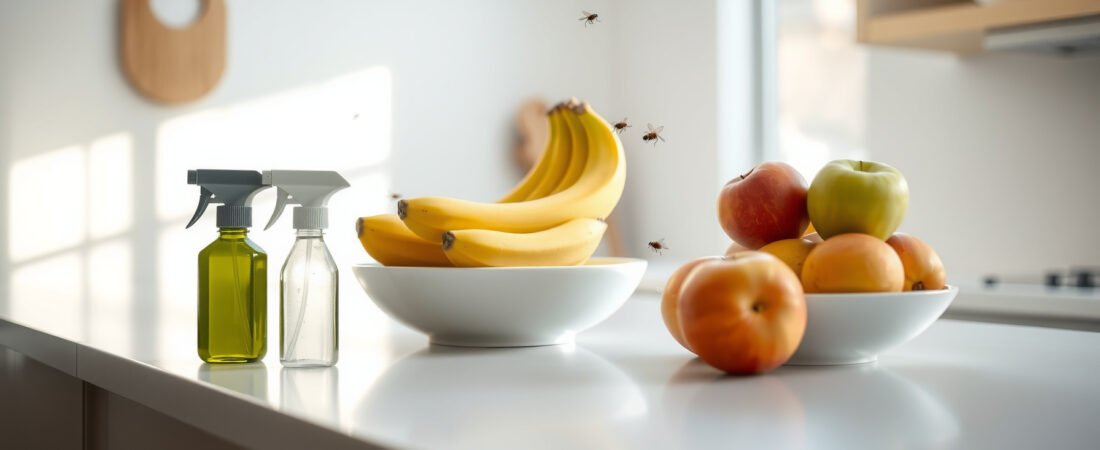
You don’t have a fruit fly problem. You have a spray problem — specifically, you’ve probably been reaching for the wrong kind. Most people grab whatever flying insect killer is under the sink, fog the kitchen, and wonder why the same cloud of gnats is back two days later. The spray isn’t failing because it’s weak. It’s failing because fruit flies and fungus gnats aren’t airborne hitchhikers you can simply mist out of existence — they’re tied to a source, and no spray touches that source without the right formulation.
That’s the thing most product roundups quietly skip over: indoor-safe sprays for fruit flies and gnats aren’t interchangeable with general flying insect killers, and picking the wrong one means you’re just buying time. This guide cuts through the noise and ranks the sprays that actually interrupt the breeding cycle, not just knock down the adults you can see.
Why Most Fruit Fly Sprays Don’t Actually Work (and What to Look For Instead)
Here’s the counterintuitive part: adult fruit flies make up a tiny fraction of the total infestation. For every adult you see hovering over your banana bowl, there are dozens of larvae buried in rotting organic matter — inside drains, beneath appliance drip pans, in the soil of overwatered plants. A contact spray kills what it touches, and that’s mostly the adults you could see anyway. The larvae? Completely unaffected.
Effective indoor-safe sprays fall into one of three categories: contact killers with low mammalian toxicity (like pyrethrins derived from chrysanthemum flowers), insect growth regulators (IGRs) that prevent larvae from maturing into breeding adults, and enzyme-based or plant-oil formulas that degrade the organic matter larvae depend on. The best solutions often combine two of these. If a spray only lists “kills on contact” without any larval or breeding-site action, it’s essentially pest control theater.
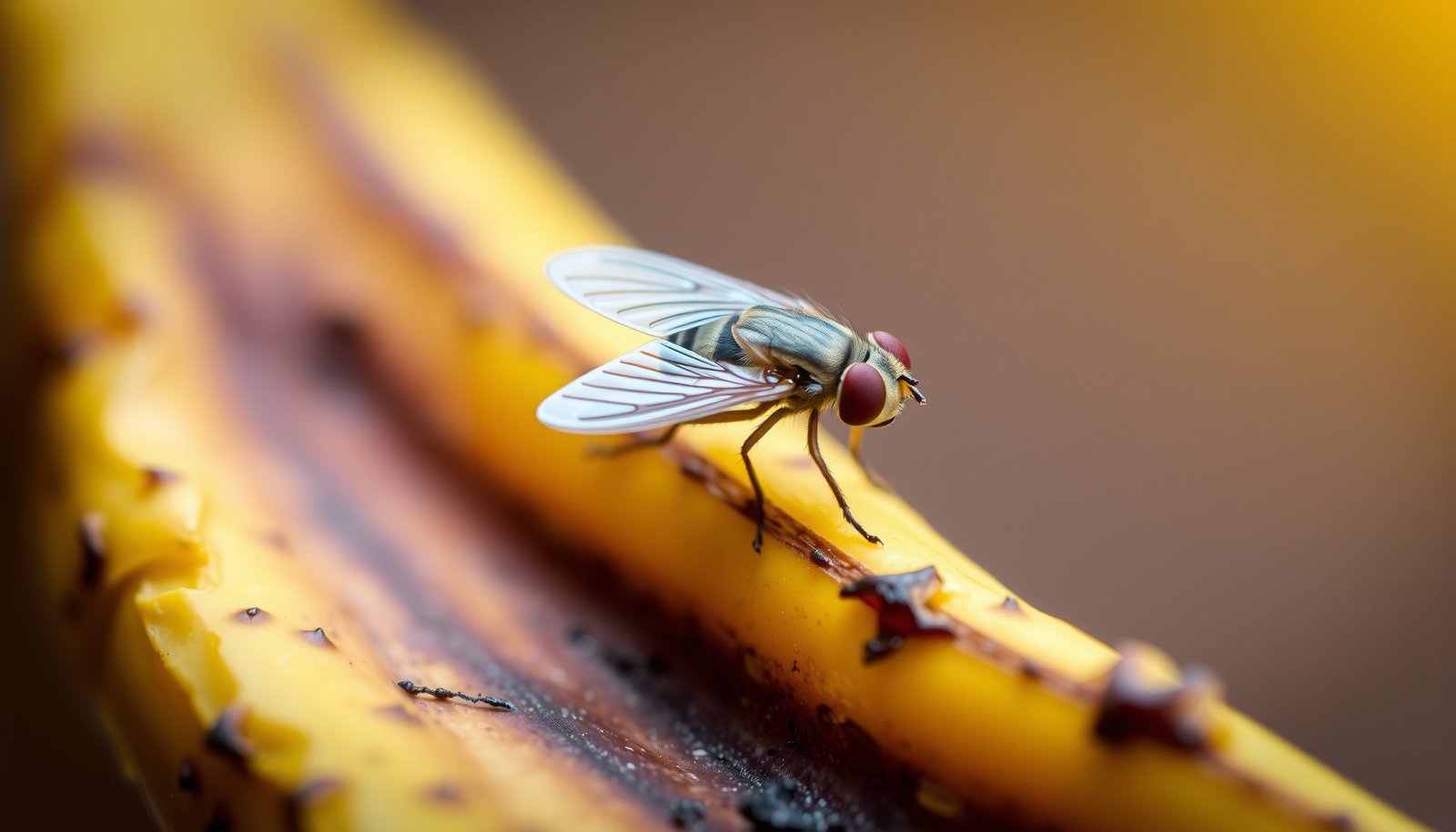
This close-up shows the difference between a thin contact spray residue and a thicker enzyme-based formula — the latter clings to drain walls and organic buildup where larvae actually live, which is why application method matters as much as the product itself.
Which Sprays Are Ranked Best for Indoor Fruit Fly and Gnat Control?
After digging through formulations, active ingredients, and real-world performance patterns, here’s how the top indoor-safe options stack up. Rankings are based on safety profile (FIFRA-registered, low-VOC or plant-derived), mechanism of action, and whether the product addresses breeding sites or only adults.
- Zevo Flying Insect Spray — Uses cinnamon oil and lemongrass oil as active ingredients. Kills fruit flies and fungus gnats on contact with no harsh chemical residue, making it genuinely food-area safe. Won’t touch larvae, so pair it with a drain treatment.
- Wondercide Indoor Pest Control Spray (Rosemary or Peppermint) — Sodium lauryl sulfate combined with plant essential oils disrupts the pest’s nervous system on contact. Residual effect lasts up to a week on treated surfaces. Safe around kids and pets when dry.
- Harris Pyrethrin Home Pest Killer — Pyrethrin is a naturally derived compound (from chrysanthemum flowers) that hits the insect nervous system fast. Harris adds piperonyl butoxide to extend knockdown time. Low mammalian toxicity; keep food covered during application and ventilate for 15–20 minutes after.
- EcoSmart Flying Insect Killer — OMRI-listed formula using thyme and rosemary oil. Works well in kitchens and around pantries. The plant-oil base breaks down quickly, which is both a safety benefit and a limitation — reapplication every 3–4 days is often necessary during a heavy infestation.
- Raid Flying Insect Killer (Indoor Formula) — Synthetic pyrethroid (d-phenothrin) with higher knockdown speed than plant-oil options. Effective for fast knockdown of large adult populations, but requires vacating the room for 15 minutes and thorough ventilation. Avoid spraying directly on food prep surfaces.
One honest caveat: performance varies by infestation source. A spray that wipes out a fruit fly swarm originating from a forgotten lemon in the fruit bowl will feel like a miracle. That same spray will feel useless if the source is a blocked P-trap under the kitchen sink — a scenario where no surface spray alone will solve anything without drain treatment running alongside it.
Fruit Flies vs. Fungus Gnats: Does the Spray Need to Be Different?
Yes — and this is where a lot of people waste money. Fruit flies (Drosophila melanogaster) are primarily attracted to fermenting sugars: overripe fruit, spilled juice, the residue inside recycling bins, the drip tray of your espresso machine. Fungus gnats (Bradysia species) breed almost exclusively in moist, organically rich soil — which means your houseplants, specifically ones that stay wet between waterings. Same tiny flying insect, very different breeding environment, and that changes which spray approach actually works.
For fungus gnats specifically, a spray that contains Bacillus thuringiensis var. israelensis (Bti) — like Bonide Mosquito Beater or diluted Mosquito Dunks solution — applied as a soil drench kills larvae in the root zone without harming plants, pets, or people. Most “flying insect sprays” won’t do this. Surface sprays kill the adult gnats flying around your plant but do nothing to the next 200 larvae already hatching in the top inch of potting mix. The existing site article on fungus gnats in houseplant soil covers the soil side of this in depth — this guide is specifically about the spray component, which is a different decision.
“People conflate ‘kills flying insects’ with ‘solves the infestation,’ but those aren’t the same outcome. A pyrethrin spray can kill 95% of adults in a room and have zero effect on the next generation already developing in a drain or soil. You need to address the larval habitat — the spray is just buying you visual relief while you do that.”
Dr. Rachel Mossberger, Urban Entomologist and Extension Specialist, Midwest Integrated Pest Management Center
How Do These Sprays Compare on Safety for Kitchens, Kids, and Pets?
Picture this: you’re mid-spray in the kitchen when you realize your dog just walked in and your kid’s snack is still on the counter. That moment of panic is avoidable if you’ve matched the product to the space beforehand. Indoor safety isn’t just about the active ingredient — it’s about application method, surface type, and how long residue lingers.
| Product | Active Ingredient Type | Safe Around Food Surfaces? | Pet/Kid Re-entry Time |
|---|---|---|---|
| Zevo Flying Insect Spray | Plant essential oils | Yes, wipe after spraying | Immediate when dry (minutes) |
| Wondercide Indoor Spray | SLS + essential oils | Yes, wipe after spraying | Immediate when dry |
| Harris Pyrethrin Killer | Pyrethrin + PBO | No — keep food covered | 15–20 min + ventilate |
| Raid Flying Insect (Indoor) | Synthetic pyrethroid | No — cover all surfaces | 15 min minimum + ventilate |
The plant-oil options earn their premium price in kitchens where you can’t easily clear everything off the counter before spraying. That said, their trade-off is speed — essential oil-based sprays take 30–60 seconds of direct contact to kill a fruit fly, compared to near-instant knockdown from pyrethrin or pyrethroids. For a heavy infestation where you’re dealing with dozens of adults mid-swarm, the faster chemistry often makes more practical sense, assuming you can ventilate properly.
Pro-Tip: If you’re dealing with gnats or fruit flies near a drain, skip spraying the drain entirely — contact sprays evaporate before reaching larvae deep in the P-trap. Instead, use a dedicated enzyme drain gel (like InVade Bio Drain) to break down the organic buildup where larvae feed, then use your indoor spray for the adults flying around the room. Two-product approach, one solved problem.
What’s the Right Way to Apply These Sprays So They Actually Work?
Application technique is where most DIY attempts fall apart — not the product. Spraying at the cloud of fruit flies hovering over your sink is mostly wasted product. The flies that survive (and there will be survivors) immediately return to laying eggs, and a female fruit fly can deposit up to 500 eggs over her 25–30 day lifespan. Even a 70% kill rate on adults buys you less than a week before the population rebounds from existing larvae.
Here’s what effective spray application actually looks like for fruit flies and gnats indoors:
- Target resting surfaces, not the air. Fruit flies rest on walls, the underside of cabinet shelves, and surfaces near food sources. A thin, even coat on these surfaces creates a contact kill zone adults walk into.
- Spray in the early morning. Fruit flies are most active and clustered in the evening, but applying spray to resting surfaces the morning after activity means they encounter it after you’ve left the kitchen.
- Don’t saturate — mist. Heavy application on porous surfaces (wooden counters, grout lines) shortens residue life and increases the chance of surface damage. A fine mist coat is more effective and safer.
- Treat the perimeter of your trash can, not just the lid. The exterior base of trash cans where spills run down is one of the most overlooked adult resting and egg-laying spots in any kitchen.
- Reapply every 3–5 days during active infestation. Essential oil-based sprays break down faster than synthetic options; expect to reapply more frequently until the breeding source is eliminated.
One thing worth knowing: if you’re dealing with multiple pest types in the same space — say, gnats near the sink and something else near lower cabinets — keep in mind that the same spray strategy doesn’t necessarily transfer to every pest. The approach for something like getting rid of cockroaches in an apartment without an exterminator is completely different from what works for flying pests, because cockroaches respond to bait-based systems, not contact sprays. Mixing strategies in the same space without understanding the pest is a good way to waste both products.
Similarly, the chemistry behind sprays matters differently for different pest types. If you’ve looked at gel baits for roaches, you already know how cockroach bait stations and gel baits work on a completely different mechanism — attracting rather than repelling, using slow-acting toxicants rather than fast knockdown. Understanding why these tools are designed the way they are helps you make better choices across the board, not just for one pest.
Should You Spray or Trap — or Both?
Traps and sprays solve different parts of the same problem, and the honest answer is that most fruit fly situations call for both running simultaneously. Traps — whether apple cider vinegar DIY setups, sticky yellow cards for fungus gnats, or commercial lure-based units like TERRO Fruit Fly Trap — give you a measurable read on how bad the infestation actually is. The number of insects caught per 24 hours tells you whether you’re winning or losing. Sprays reduce the adult population fast but give you no feedback on infestation severity.
The scenario where sprays outperform traps alone is when the population has already exploded and you need immediate visible reduction — think guests arriving in two hours and a swarm near the kitchen island. In that situation, a fast-acting pyrethrin or pyrethroid spray drops the visible population within minutes, traps pick up survivors over the next 24–48 hours, and a source elimination step (clearing drains, removing overripe produce, letting plant soil dry out) prevents the next wave. None of these steps replaces the others. A spray with no source elimination is the pest control equivalent of mopping around a leaking pipe without turning off the water.
The best use of an indoor-safe fruit fly and gnat spray is as one component of a 3-day push: spray adults on day one, apply enzyme drain treatment or Bti soil drench on day two (depending on source), and reassess trap counts on day three. If trap counts are dropping by at least 50% by day three, the strategy is working. If not, the breeding source hasn’t been found yet — and that’s where to focus next, not on upgrading the spray.
Frequently Asked Questions
what is the best fruit fly and gnat spray that is indoor safe?
The most effective indoor-safe options use pyrethrin or essential oil-based formulas — products like Zevo Flying Insect Spray and Raid Essentials are popular picks that won’t leave harsh chemical residue. For heavy infestations, look for sprays with at least pyrethrin 0.1% as the active ingredient, since lower concentrations often don’t cut it. Always check that the label specifically says safe for indoor use around humans and pets before you buy.
will fruit fly spray kill gnats too?
Yes, most fruit fly sprays will also kill fungus gnats and drain gnats because they target the same small flying insects. The key is that the spray reaches where gnats actually hide — fungus gnats live in soil, so you’ll want to also drench the top inch of potting mix, not just spray the air. A contact spray kills on the spot, but it won’t stop a gnat infestation unless you’re also treating the source.
how long does indoor safe fruit fly spray take to work?
Contact sprays kill fruit flies and gnats on the spot — usually within 30 to 60 seconds of direct application. However, you won’t see the full population drop for 3 to 5 days because eggs and larvae in drains or soil aren’t affected by a surface spray alone. For faster results, combine a spray with apple cider vinegar traps to knock down adult numbers while you treat the breeding source.
is it safe to spray for fruit flies with pets in the house?
It depends on the formula — pyrethrin-based sprays are generally low-risk for dogs but can be toxic to cats, even at small exposures. Essential oil sprays marketed as natural aren’t automatically safe either, since oils like peppermint and clove can irritate pets. Keep pets out of the sprayed room for at least 30 minutes, let it air out, and always read the pet safety section on the product label before using it indoors.
can I use fruit fly spray directly on my plants?
Most aerosol contact sprays aren’t meant to be applied directly to plant leaves and can cause leaf burn or damage if you drench the foliage. For plants dealing with fungus gnats, you’re better off using a soil drench with Bacillus thuringiensis var. israelensis (Bti), which kills larvae in the soil without harming your plants. If you do spray near plants, aim for surrounding surfaces and keep the nozzle at least 12 inches away from leaves.