
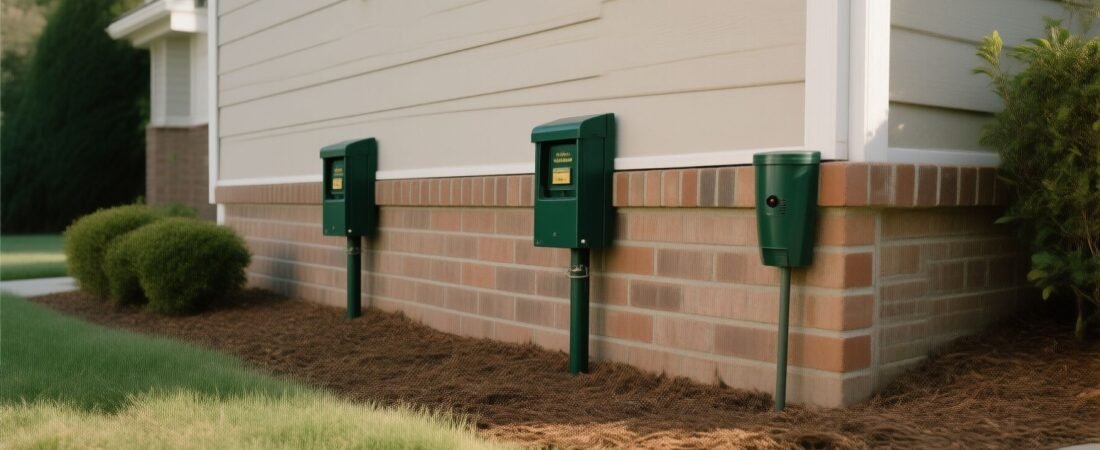
Forty feet. That’s roughly how far a Norway rat will travel from its nest to find food — which means a bait station sitting right next to your foundation is already positioned too late in the game. Most homeowners think perimeter rodent control is about placing stations close to the house. The real strategy runs in the opposite direction: you intercept rodents before they ever reach your walls, not after they’ve already decided your home smells interesting.
Why Most Outdoor Bait Stations Fail Before Rodents Even Touch Them
The single biggest mistake isn’t buying the wrong bait — it’s placing stations in spots that feel logical to you but make no sense to a rat or mouse. Rodents are neophobic, meaning they’re genuinely afraid of new objects in their environment. A freshly placed bait station sitting in open grass will be avoided for days, sometimes weeks, while the rodent cautiously circles it from a distance. That’s not a product failure; it’s a placement failure.
Effective perimeter bait stations need to be positioned along established rodent travel corridors — fence lines, dense shrub borders, wood piles, and the edges where lawn meets mulch. Rats and mice almost never cross open ground by choice. They hug cover, following the same paths repeatedly, which is why you’ll often see grease smear marks or worn trails in the dirt before you ever see a rodent itself. Place your stations flush against those edges, not in the middle of the yard, and you’ll start seeing results within 3–5 days instead of three weeks.
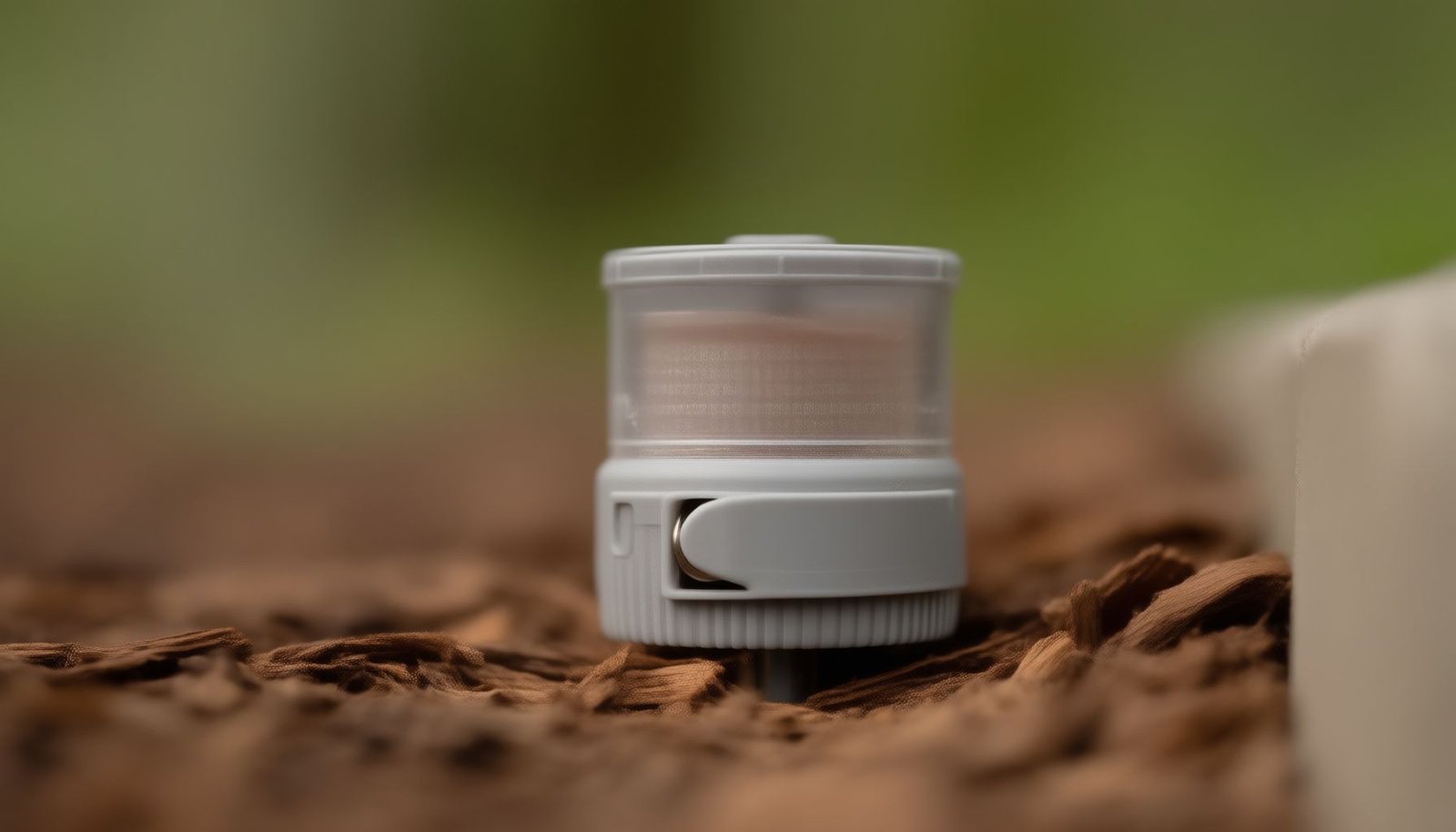
This close-up shows a properly installed tamper-resistant bait station flush against a fence line — exactly the kind of placement along a natural rodent travel corridor that turns a mediocre setup into one that actually intercepts activity before it reaches your home.
What Makes a Bait Station Actually “Outdoor-Ready”?
Not every bait station sold for outdoor use can handle real outdoor conditions. UV exposure, standing water after rain, and temperature swings between seasons will degrade cheap plastic housings, warp lids, and turn bait blocks into something rodents won’t touch. If the bait inside gets moldy or soaked, the whole point of the station is gone — and you won’t know it failed because you can’t see inside without opening it.
Look for stations with a few non-negotiable physical features before you buy. Here’s what separates a station built for outdoor perimeter use from one that just says “outdoor” on the label:
- Tamper-resistant locking lid — required by EPA regulations when using rodenticide bait in any accessible outdoor area; protects children, pets, and non-target wildlife
- Weighted or stake-mounted base — prevents stations from being knocked over by raccoons, dogs, or wind; some models include ground stakes or a built-in stake cavity
- Interior bait rod or securing post — bait blocks should be anchored inside; loose bait can be pulled out by non-target animals, creating secondary poisoning risk
- Dual-entry design — openings on both ends of the station allow rodents to enter without feeling trapped, which is critical given their neophobic tendencies
- UV-stabilized or heavy-duty polyethylene housing — resists cracking in sun and freezing temperatures; thin plastic turns brittle and breaks within one season in harsh climates
- Raised internal floor or drainage channel — prevents water pooling inside the station, which degrades bait and discourages rodents from entering
A station that checks all six of those boxes is doing its job as infrastructure, not just packaging. The bait still matters, but a well-built station keeps it effective for 30–90 days between inspections depending on your climate and rodent pressure.
Top Rodent Bait Stations for Outdoor Perimeter Use — How They Compare
There are dozens of bait stations on the market, but a handful consistently stand out for actual perimeter use at the residential level. The differences come down to build quality, interior design, and whether the station is realistically serviceable by a homeowner without professional tools. Here’s how the most widely used options compare head-to-head:
| Station Model | Best For | Key Strength | Watch Out For |
|---|---|---|---|
| Protecta LP Bait Station | Tight spaces, fence lines, wall edges | Low-profile design hugs surfaces; rodents enter easily | Smaller interior limits bait block size options |
| Tomcat Rat-Sized Bait Station | Budget-conscious homeowners, first-time setup | Widely available, keyed lid, accepts most standard bait blocks | Lighter plastic; may need staking in high-wind or high-wildlife areas |
| Bell Aegis Bait Station | High-pressure zones, professional-grade residential use | Extremely durable; holds up to 2 bait blocks; excellent tamper resistance | Higher cost; larger footprint; key required for service |
| Protecta EVO Express | Perimeter runs needing easy inspection access | Opens with a single hand; good drainage design; dual entry | More expensive than basic options; overkill for light pressure |
Picture this: a homeowner in a suburban Phoenix neighborhood sets up six Tomcat stations around her property in October when cooler temps start pushing rodents indoors. By day four, two stations show feeding activity — but the ones placed along the open fence line near her lawn? Zero. The ones she pushed flush against the concrete block wall behind her AC unit? Cleaned out by night two. Same stations, same bait, completely different results based on placement alone.
How to Set Up a Perimeter Bait Station Network That Actually Works
Running a proper perimeter isn’t just scattering stations wherever there’s space. There’s a logic to it that mirrors how rodents actually move through a property, and getting the layout right is what separates a system that works from one that looks good on paper. Most pest control professionals follow a spacing and placement protocol that’s worth adopting even for DIY setups.
Here’s the setup sequence that consistently gets results for outdoor perimeter control:
- Walk your perimeter first and find the travel corridors. Look for droppings (Norway rat droppings are 3/4 inch, blunt-ended; house mouse droppings are 1/8–1/4 inch, pointed), grease smears on walls or fences, burrowing near foundations, or runways in tall grass. These are your primary target zones.
- Space stations 15–30 feet apart for mice, 30–50 feet apart for rats. Rats have a home range of roughly 100–300 feet from their nest. Mice stay within 10–30 feet of their food source. Adjust your spacing to the species you’re dealing with.
- Position each station with both entry holes parallel to the wall, fence, or structure — never perpendicular to it. Rodents run along edges and enter stations in stride. A perpendicular station forces them to stop and turn, which many will avoid.
- Secure the station before baiting it. Stake it down or weight it if on soft ground. A station that gets flipped by a skunk or raccoon on night one isn’t just ineffective — it can expose bait to non-target animals and create a secondary poisoning hazard.
- Check stations every 7–14 days for the first month. If a station shows zero feeding activity after two weeks in a high-sign area, move it 3–5 feet in either direction. Small position adjustments can make a dramatic difference with neophobic species.
- Replace bait that looks dried out, moldy, or has been wet. Compromised bait won’t get taken. Most second-generation anticoagulant blocks stay palatable for 30–60 days in sheltered stations under normal conditions.
One thing worth knowing: if you’re dealing with mice that have already gotten inside your walls, bait stations outside won’t solve that problem directly. You’ll need to address the interior activity separately — understanding How to Get Rid of Mice in Walls: What Actually Works can help you tackle both fronts at the same time without doubling your work.
Pro-Tip: If you’re in an area with owls, hawks, or outdoor cats, consider non-toxic monitoring bait (like tracking wax blocks) for the first two weeks before switching to rodenticide. This confirms activity, helps you dial in placement, and reduces the risk of secondary poisoning to raptors and pets during your setup phase.
What Type of Bait Goes Inside — and Why It Matters More Than the Station Brand
Here’s the part most product roundups gloss over: the station is just the delivery mechanism. The bait you put inside determines whether rodents actually die or just get a free meal and leave. For outdoor perimeter use specifically, bait selection has to account for non-target wildlife risk, weather palatability, and the biology of the rodent species you’re targeting.
Second-generation anticoagulant rodenticides (SGARs) — like brodifacoum, bromadiolone, and difethialone — are highly effective but carry significant secondary poisoning risk to raptors, foxes, and neighborhood cats that might eat a dying rodent. As of current EPA regulations, SGARs in bait stations are restricted to certified pest control operators in most residential perimeter applications, meaning homeowners need to use first-generation anticoagulants (like diphacinone) or non-anticoagulant options (like bromethalin or zinc phosphide formulations). That’s not a minor detail — using a restricted-use pesticide without certification is a federal violation. Always read the label before you buy, not after.
“The bait station is just the vehicle — the wrong bait choice in a residential perimeter situation can cause more ecological harm than the rodent problem itself. Homeowners should strongly consider first-generation anticoagulants or bromethalin-based blocks in tamper-resistant stations, check wildlife risk for their specific region, and inspect stations consistently. A station that’s not being serviced is worse than no station at all.”
Dr. Marcus Hale, Board-Certified Entomologist and Urban Pest Management Specialist, Purdue University Extension
Bait flavor and formulation also matter more than people realize. Rodents have highly developed palates and will reject bait that smells off, has gone rancid, or doesn’t match their current food preferences. Peanut butter-flavored blocks tend to outperform grain-based blocks in late summer and fall when natural seed sources are abundant. Variety matters too — if one bait gets ignored for two consecutive inspection cycles, switch to a different formulation before assuming there’s no rodent activity. Rodents will eat around a bait they don’t trust while actively feeding on something nearby. This is especially worth knowing if you’re also dealing with hitchhiker pest problems from travel — similar logic applies to why How to Get Rid of Bed Bugs From Luggage After Travel requires targeting the actual harborage point rather than just the surface symptom.
Climate adds another layer. In the desert Southwest, bait blocks can dry out inside stations within two weeks even with good housing — paraffin-based blocks hold up better in extreme heat. In the Pacific Northwest and humid Southeast, moisture-resistant blocks are worth the extra cost because soggy bait simply doesn’t get eaten. There’s no one universal bait choice that works everywhere; your zip code should influence your selection almost as much as your rodent species does.
Getting your outdoor perimeter set up correctly the first time is genuinely worth the extra hour of research. A properly placed, properly baited network of tamper-resistant stations — serviced on a consistent schedule — will reduce rodent pressure at your foundation within two to four weeks and keep it down season after season. The rodents that never reach your walls are the ones you never have to deal with inside your home.
Frequently Asked Questions
how far apart should rodent bait stations be placed around the perimeter of a house?
For mice, place bait stations every 8 to 12 feet along the perimeter. For rats, space them 15 to 30 feet apart since rats travel farther between feedings. Always position them flush against the foundation wall or fence line, not out in the open.
are outdoor rodent bait stations safe to use around dogs and kids?
Tamper-resistant bait stations are designed so that only rodents can access the bait inside, but they’re not completely foolproof with determined pets or curious toddlers. Look for stations that meet EPA tamper-resistance standards and are secured to the ground with a stake or anchor. You should still place them in low-traffic spots like behind shrubs or along fence lines where kids and pets don’t normally go.
what bait works best in outdoor rodent bait stations?
Rodenticide blocks — also called bait blocks or blocks with diphacinone or brodifacoum — are the most commonly used and hold up better outdoors than loose bait or pellets. Wax-coated or weather-resistant blocks are your best bet since they won’t break down from rain and humidity. Peanut butter flavor blocks tend to get eaten faster than plain grain-based ones in most field situations.
how often do you need to check and refill outdoor rodent bait stations?
During an active infestation, check stations every 5 to 7 days because bait can get eaten quickly or go stale. Once activity slows down, checking every 2 to 4 weeks is usually enough for ongoing perimeter maintenance. Always replace bait that’s been damaged by moisture, insects, or mold even if rodents haven’t touched it.
how many bait stations do I need around the outside of my house?
A general starting point is one station per corner of your home plus one every 15 to 30 feet along the foundation, depending on whether you’re dealing with mice or rats. For an average single-family home, that usually works out to 6 to 12 stations total. If you’ve got a large yard, detached garage, or woodpile nearby, add extra stations near those hotspots since rodents use them as harborage.