

By the time you can hear termites in your walls or spot a mud tube snaking up your foundation, a colony of up to a million individuals has likely been feeding on your home’s structural wood for two to five years. That’s the part most detection articles skip: the devices sold as “early warning” tools are only genuinely early if you deploy them before any visible sign appears — not after you’ve already got a sinking feeling about that soft spot in the floor. The real question isn’t which device detects termites best in general. It’s which one catches them at the colony’s feeding edge, before structural damage becomes measurable.
Why Most Termite Detection Fails Before It Even Starts
Here’s the assumption that gets homeowners into trouble: they believe detection devices do the scanning for them. In practice, a termite monitoring station sitting in the wrong location in your yard can go completely untouched for years while a subterranean colony is actively tunneling five feet away toward your floor joists. Placement — not product quality — is the single biggest variable in whether any detection system works at all. Subterranean termites forage in unpredictable branching tunnels, and a worker that doesn’t cross your station will never trigger it.
The mechanism matters here. Subterranean termite workers are drawn to cellulose, moisture, and darkness — in roughly that order of priority. Detection devices that rely on wood or compressed cellulose stakes work because they offer an appetizing food source, but termites still have to find them randomly through their foraging tunnels. A single colony can maintain 300 to 500 feet of active tunnels at any given time, which means the odds of a randomly placed stake intercepting one of those tunnels isn’t as high as manufacturers tend to imply. Spacing stations correctly — typically every 10 feet around the structure’s perimeter — is non-negotiable for meaningful coverage.
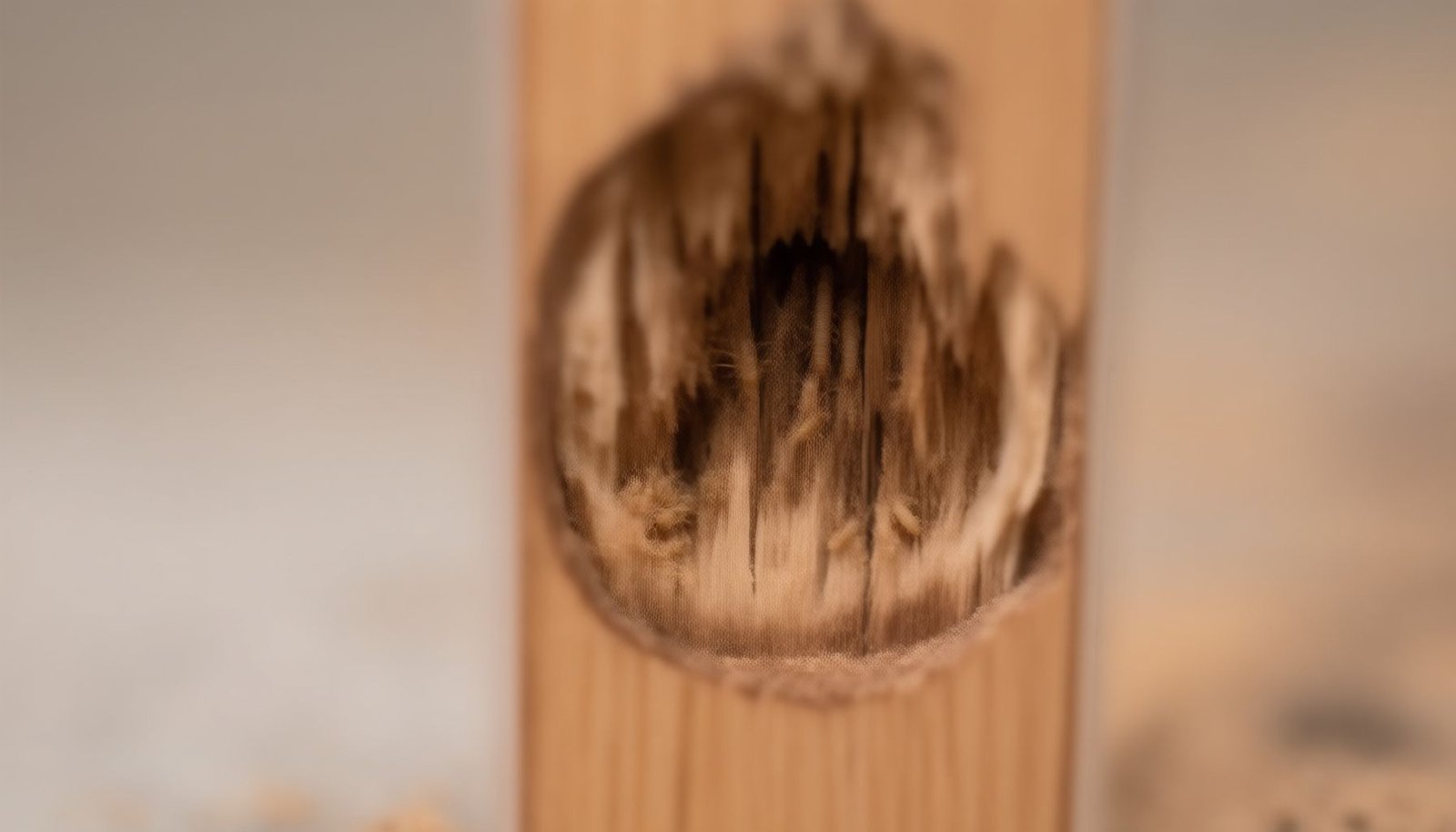
This close-up shows the internal cellulose bait matrix inside a ground-monitoring station — understanding what termites are actually attracted to inside these devices explains why the quality of that matrix, and its moisture retention, determines whether workers recruit to it or pass it by.
What Types of Termite Detection Devices Actually Exist?
The category “termite detection device” covers a wider range of technology than most people realize, and they don’t all work the same way or catch the same species. Knowing which type fits your situation prevents wasted money on a product that’s solving the wrong problem for your home’s construction type, soil type, or regional termite pressure.
Here’s a breakdown of the main categories you’ll encounter as a DIY homeowner:
- In-ground cellulose monitoring stations — Plastic tubes pushed into the soil around your foundation that contain a wood or compressed paper matrix. Termite workers enter, feed, and get counted during inspections. Brands like Spectracide Terminate, Advance Termite Bait System, and Hex-Pro Shatter fall into this category. These are the most widely used DIY option.
- Above-ground bait stations — Designed for placement directly on active mud tubes or areas of known activity inside a crawl space or basement. These are reactive by nature — you use them once you’ve already spotted evidence — but they can intercept a feeding site quickly and prevent further spread into untouched wood.
- Acoustic emission detectors — Handheld devices (like the Termatrac T3i) that pick up the vibration and sound produced by termite mandibles chewing through wood. These are inspection tools, not passive monitors. A pest control professional sweeps walls and floors with them the way a doctor uses a stethoscope. They can detect activity inside walls without drilling.
- Microwave and radar-based sensors — The Termatrac also includes a motion-detection sensor that uses low-power microwave radar to detect movement inside wall cavities without any physical intrusion. This technology detects termites through drywall, plaster, and even tile — though it has a higher false-positive rate in walls with other insect activity.
- Moisture meters used as indirect detection — Not a termite detector in the traditional sense, but termite feeding almost always elevates localized moisture content in wood. A quality pin-type or pinless moisture meter catching anomalous readings in a specific wall section is often the first technical confirmation that something is consuming the wood from inside.
Which Termite Detection Devices Are Worth Buying for DIY Homeowners?
Picture this: you’ve just bought a house with a crawl space in a pine-heavy Southern state, and your home inspector mentioned “previous termite treatment” with no follow-up monitoring in place. You’re not seeing damage, but you want active coverage. That’s exactly the scenario where in-ground monitoring stations earn their cost. For around $30 to $60 for a 15-station kit, you can ring your entire foundation perimeter with detection points that cost less than a single professional inspection visit.
The table below compares the most practical DIY termite detection devices based on what they actually catch, what they miss, and the realistic cost to cover a typical 1,500–2,000 square foot single-story home:
| Device Type | Best For | Limitations | Approx. Cost (Full Perimeter) |
|---|---|---|---|
| In-ground cellulose monitoring stations | Early subterranean termite intercept around foundation | Requires monthly inspection; won’t detect drywood termites | $30–$70 (kit) |
| Above-ground bait stations | Targeting confirmed active mud tube locations | Reactive only — not a preventive tool | $15–$35 per unit |
| Acoustic emission detector (pro-grade) | Confirming suspected wall activity without drilling | Expensive ($1,500+); typically professional use only | Not DIY-practical to purchase |
| Moisture meter (pin or pinless) | Identifying termite-damaged wood by elevated moisture | Indirect indicator only — confirms damage, not presence | $25–$80 |
Pro-Tip: If you’re placing in-ground stations yourself, use a steel dibble bar or soil probe to make the pilot hole rather than forcing the station cap-first into the ground — compressed soil around the station blocks termite access to the wood matrix and renders the station essentially useless. The station tube needs direct soil contact on all sides.
What Do Termite Detection Devices Miss — and Why That Matters?
Ground-based monitoring stations are essentially useless against drywood termites, and this is a gap that gets glossed over constantly. Drywood termites don’t forage through soil — they enter directly through exposed wood surfaces like attic framing, window frames, and fascia boards, and they establish contained colonies entirely within the wood they’re eating. No amount of in-ground monitoring will catch them because they never touch the ground. If you’re in coastal California, Florida, Hawaii, or the Gulf Coast states, drywood termites are a real risk, and you need a completely different detection approach.
For drywood termite detection, the practical DIY tools are limited but not zero. Hexagonal fecal pellets (called frass) collecting on windowsills, in attic corners, or on the floor below infested furniture are often the first sign — they look like tiny sand granules with six flattened sides and measure roughly 1 millimeter long. A good LED flashlight and a systematic attic inspection twice a year will catch drywood activity earlier than any passive device currently on the consumer market. The honest nuance here is that if your home was built before the 1970s with old-growth lumber, drywood termites may have been living in your attic framing for decades with essentially no structural threat — old-growth wood resists termite damage far better than modern plantation-grown pine, and a pest professional who understands that distinction is worth consulting before spending money on treatment.
“Homeowners focus almost entirely on subterranean termites because that’s where most of the marketing is, but in drywood termite territory, I see more missed infestations from over-reliance on in-ground stations than from any other single mistake. A good flashlight and knowing what frass looks like will outperform a $50 monitoring kit in certain regions every single time.”
Dr. Raymond Hutchins, Board-Certified Entomologist, University Extension Termite Specialist
How to Use Termite Detection Devices as a System, Not a Single Fix
The counterintuitive thing about termite detection is that no single device gives you full-spectrum protection — and the companies selling these products have a financial incentive not to tell you that directly. Genuine early warning comes from layering passive monitoring stations with active visual inspection habits and a basic understanding of what termite activity actually looks like in your specific construction type. A monitoring station that triggers in your yard tells you there’s a colony nearby. A mud tube on your foundation tells you they’ve already arrived. Those are two entirely different situations that demand two entirely different responses.
Building a practical detection system for a typical house looks like this — and it works regardless of whether you’re in a high-pressure termite zone or a moderate-risk region:
- Install in-ground stations every 10 feet around the full perimeter, including along garage walls, wood deck posts, and any outbuilding within 30 feet of the main structure. Termites don’t respect property zones and will often hit a detached shed or fence post long before reaching your home’s foundation.
- Check stations every 30 days during termite swarm season (typically spring through early summer) and every 60 days the rest of the year. The cellulose matrix dries out in hot, dry summers and loses its attractiveness — stations need to be checked for moisture content, not just termite presence.
- Combine station monitoring with a quarterly visual sweep of your crawl space, basement perimeter walls, and any exterior wood-to-soil contact points. Just as you might notice something odd — like ants coming through electrical outlets, which can sometimes indicate moisture damage that also attracts termites — strange frass, hollow-sounding wood, or unexplained cracks in drywall deserve a closer look.
- Use a moisture meter on any wood that feels soft, sounds hollow when tapped, or shows unexplained surface bubbling under paint. Readings above 19% moisture content in structural wood indicate conditions that almost guarantee termite or fungal activity — often both together.
- Note that even small structural gaps create opportunities — much like how roaches entering through bathroom drains exploit plumbing gaps, termites exploit any point where soil meets wood without a physical or chemical barrier. Sealing those gaps doesn’t just keep other pests out — it removes termite entry points too.
One specific insight that almost never makes it into detection guides: termite colonies expand their foraging territory most aggressively in the 48 to 72 hours following a rain event that saturates soil to a depth of 4 to 6 inches. If you’re going to do a visual inspection, do it three days after a significant rainfall — that’s when fresh mud tube construction is most likely to be visible, when worker activity near the surface is highest, and when your detection stations are most likely to show new entry marks in the wood matrix.
Getting your detection system in place before any sign of activity isn’t pessimism — it’s the only window where these tools actually perform the function they’re sold to perform. Once you’re reacting to visible damage, you’ve already lost the early-warning advantage entirely. Set the system up now, inspect it on a calendar reminder, and you’ll catch a foraging colony at the edge long before it becomes a structural repair bill.
Frequently Asked Questions
what are the best termite detection devices for homeowners?
The most reliable termite detection devices for homeowners include acoustic emission detectors, moisture meters, and infrared thermal cameras. Acoustic detectors pick up the chewing and movement sounds termites make inside wood, while moisture meters flag readings above 19% — a level that often signals termite-friendly conditions. For most DIYers, a combination of a handheld moisture meter and a borescope camera gives you the best coverage without professional-grade costs.
how accurate are termite detection devices?
Accuracy depends heavily on the type of device and how far the infestation has progressed. Acoustic emission detectors can identify termite activity with roughly 80-95% accuracy when colonies are large enough to produce detectable sound. Thermal imaging cameras are highly accurate for spotting moisture and heat anomalies behind walls, but they won’t confirm termites on their own — you’ll still want to follow up with a physical inspection or borescope.
can I use a termite detection device instead of hiring an exterminator?
Detection devices are great for early warning and monitoring, but they’re not a replacement for a licensed exterminator once you’ve confirmed an infestation. These tools help you catch problems sooner, which can save you thousands in structural repair costs, but treatment — especially for subterranean or Formosan termites — needs professional-grade chemicals or baiting systems. Think of detection devices as your first line of defense, not the whole battle plan.
how much do termite detection devices cost?
Prices vary widely depending on the technology involved. Basic moisture meters run $20-$60 and are a solid starting point for most homeowners. Acoustic termite detectors typically cost $100-$400, while professional-grade infrared thermal cameras can run anywhere from $300 to over $1,500. If full thermal imaging is out of your budget, many pest control companies offer thermal inspections as a standalone service for $150-$300.
where should I place termite detection devices in my home?
Focus on areas where termites are most likely to enter or thrive — foundation walls, crawl spaces, areas around plumbing, window frames, and anywhere wood contacts soil or concrete. Subterranean termites typically enter from the ground up, so monitoring the perimeter of your foundation is critical. If you’re using acoustic detectors or moisture meters, check wooden beams, baseboards, and any area that’s shown previous moisture damage first.