
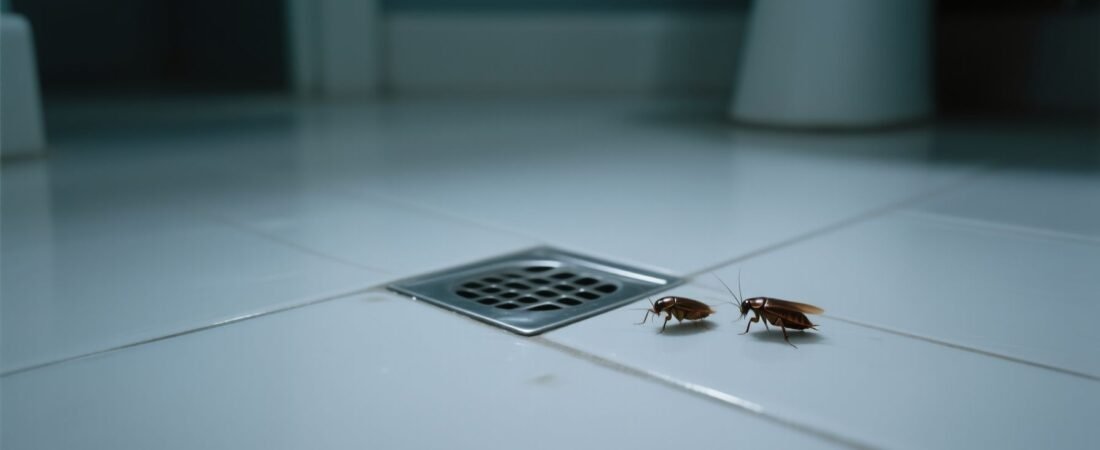
Bleach down the drain won’t solve your roach problem — and most people waste weeks figuring that out the hard way. The real issue isn’t that roaches live in your bathroom drain; it’s that the drain is a highway they travel through, not a home base. Treating the drain while ignoring what’s attracting them to your bathroom in the first place is like bailing out a boat without plugging the hole.
Roaches found near or in bathroom drains are almost always German cockroaches (Blattella germanica) or American cockroaches (Periplaneta americana), and they behave very differently. German roaches — the small, fast ones — nest inside walls, vanities, and under sinks, then use the drain as a foraging route. American roaches — the big ones — actually move through sewer lines and can enter your home through the P-trap if it dries out. Knowing which species you’re dealing with changes your entire elimination strategy.
Why Are Roaches Coming Through My Bathroom Drain?
The P-trap under every drain is supposed to hold a small amount of water that creates a physical seal against sewer gases — and against roaches coming up from below. When that water evaporates (which happens fast in a guest bathroom that rarely gets used), the barrier disappears and you’ve essentially left a door open into the sewer system. American cockroaches are the species most likely to exploit this, since they live in municipal sewer systems in enormous numbers — a single sewer system in a mid-sized city can harbor hundreds of thousands of them.
German cockroaches, on the other hand, almost certainly didn’t come up through your drain at all. They entered your home through a grocery bag, a used appliance, a piece of luggage, or a gap behind a wall — and they’re using the drain area as a moist, dark foraging corridor. The drain gives them water, and the biofilm coating the inside of your pipes gives them a food source that most people don’t think about. That slick layer of dead skin cells, soap residue, and hair is a genuine meal for a cockroach.
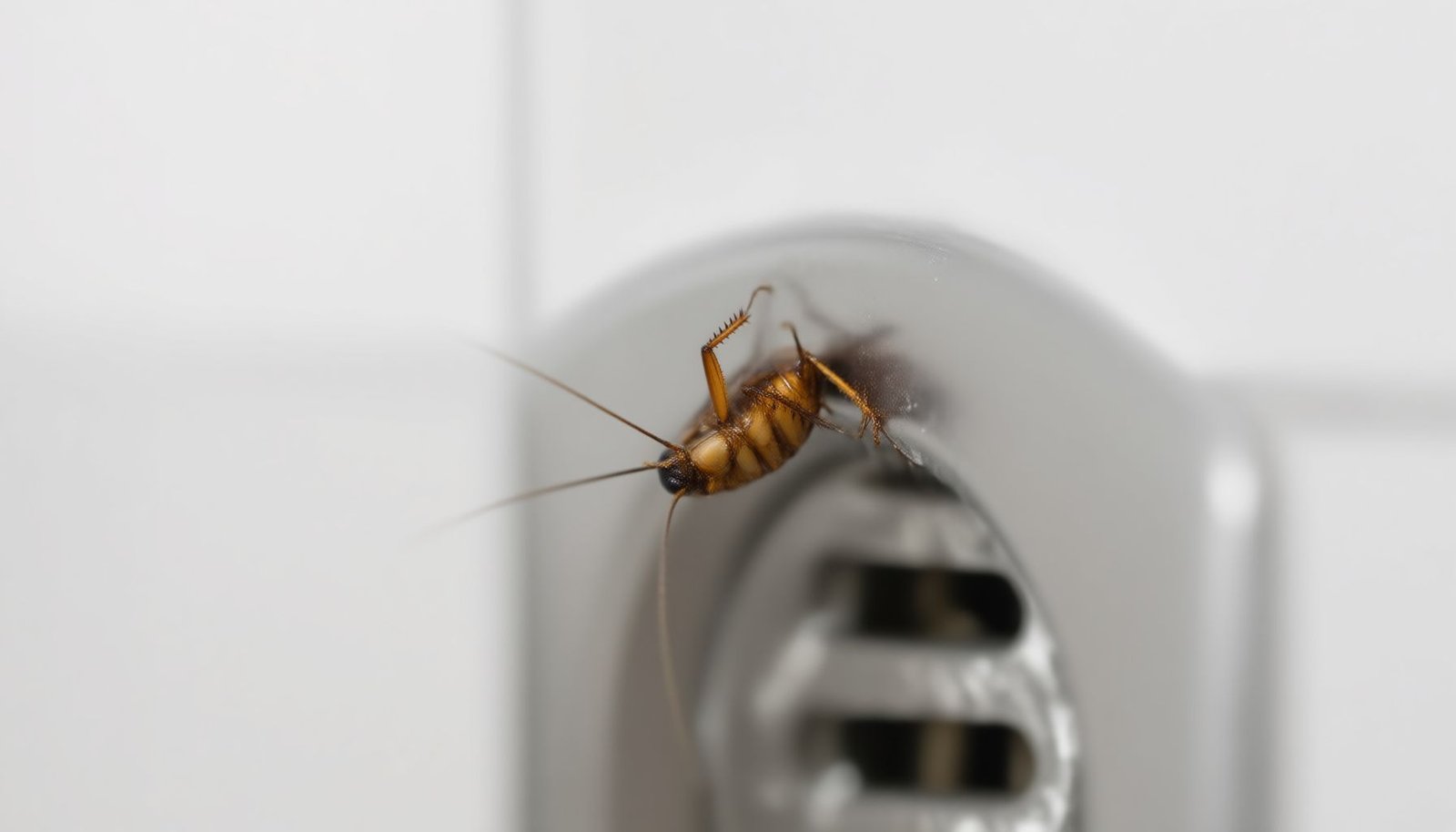
This close-up view of a bathroom drain shows the biofilm buildup and gap space around the drain flange — exactly the kind of environment that makes drains both attractive to roaches and surprisingly difficult to seal without the right approach.
How to Tell Whether the Drain Is the Entry Point or Just a Pit Stop
There’s a quick test most pest control articles skip entirely: place a piece of clear tape loosely over the drain before you go to bed, and check it in the morning. If roaches are coming up through the drain, they’ll be stuck to or disturbing the tape from below. If the tape is undisturbed but you’re still seeing roaches in your bathroom, they’re entering from somewhere else — gaps behind the toilet, the vanity base, or wall voids — and the drain is just where they congregate for moisture.
This distinction matters enormously for treatment. A sewer-entry problem (American roaches, dry P-trap) is fixed mostly through plumbing and exclusion. A wall-void nesting problem (German roaches) requires gel bait and IGR placement inside cabinets, behind baseboards, and under the sink — not drain treatments. Confusing the two is exactly why people spend money on drain cleaners and enzyme gels and still have roaches three weeks later.
“Homeowners almost always focus on the drain itself as the source, but in my experience, the drain is a symptom, not the cause. German cockroach infestations originating in bathroom drain areas almost universally have a nesting site within 12 feet — usually inside the vanity, behind the drywall near a pipe penetration, or in the ceiling void above. Eliminate the nest and you eliminate the problem. Treating the drain alone is a short-term fix at best.”
Dr. Marcus Tilley, Ph.D. Urban Entomology, NPMA-Certified Pest Management Professional
Step-by-Step: How to Actually Eliminate Roaches Using the Drain as a Starting Point
Once you’ve identified whether you’re dealing with a sewer-entry situation or an internal nesting problem, you can build a treatment plan that actually addresses the source. The steps below are organized for the most common combined scenario — where you may have both a compromised P-trap and a small internal population that’s already established.
- Run every drain that rarely gets used. Guest bathrooms, utility sinks, and floor drains are the biggest culprits for dry P-traps. Run the water for 30 seconds to refill the trap, and add a tablespoon of mineral oil to slow evaporation in drains you won’t use for weeks.
- Clean the biofilm from the drain interior. Use an enzyme-based drain cleaner — not bleach, which only kills surface bacteria for a few hours and doesn’t penetrate biofilm — to remove the organic material roaches are feeding on. Apply it two nights in a row, let it sit overnight.
- Seal the gap around the drain flange. Most bathroom drains have a small gap between the drain body and the floor tile or tub surround. Roaches move through this easily. Use clear silicone caulk to seal it flush.
- Apply gel bait to internal harborage zones. Place pea-sized dots of cockroach gel bait (look for products containing indoxacarb or fipronil as the active ingredient) inside the vanity cabinet, behind the toilet base, and along the wall where pipes enter. Keep bait away from the drain itself — moisture degrades it quickly.
- Use an insect growth regulator (IGR) spray. Products containing pyriproxyfen or hydroprene prevent roach nymphs from reaching reproductive maturity, which breaks the breeding cycle. A female German cockroach produces 30–40 eggs per capsule and can carry 4–8 capsules in her lifetime — without an IGR, you’re always behind.
- Monitor with sticky traps for 2–3 weeks. Place roach glue traps flat against the wall inside the vanity and near the toilet base. Count catches every 3–4 days. If numbers aren’t dropping by the second week, there’s a nesting site you haven’t found yet — common hiding spots include the hollow interior of vanity side panels and the gap behind the toilet tank.
One thing that catches a lot of people off guard: the bait placement matters more than the bait brand. Roaches forage along edges and corners — placing a bait dot in the middle of a shelf is almost useless. Put it in the back corner where the wall meets the shelf floor, and you’ll get 10 times the contact.
What Products Actually Work on Bathroom Drain Roaches (and What’s a Waste of Money)
The bathroom drain roach niche has attracted a lot of products that prey on the desperation of people who’ve already tried three things that didn’t work. Drain foams, bleach pours, and baking-soda-and-vinegar combinations are popular online but accomplish almost nothing against a roach population. Vinegar and baking soda react to produce carbon dioxide — satisfying to watch, zero effect on cockroaches.
| Product Type | What It Actually Does | Useful for Drain Roaches? |
|---|---|---|
| Enzyme drain cleaner | Breaks down biofilm roaches feed on; removes food source | Yes — use as prep step |
| Bleach / caustic drain cleaner | Kills surface bacteria briefly; does not penetrate biofilm or kill roaches | No |
| Gel bait (indoxacarb/fipronil) | Kills foraging roaches; spreads through colony via transfer feeding | Yes — most effective tool |
| IGR spray (pyriproxyfen) | Prevents nymphs from reproducing; breaks cycle over 4–8 weeks | Yes — essential for German roaches |
Picture this: you buy a drain foam spray, apply it twice a week for a month, and roach sightings gradually go down. You assume it worked. Three months later they’re back, worse than before. What actually happened is that you slightly disrupted foraging patterns without touching the nest — and in the meantime, the colony had time to expand into a wall void you didn’t know about. The lesson there is that reduction in sightings doesn’t equal elimination, and that’s something worth sitting with before you call the job done.
Pro-Tip: If you’re using gel bait and it disappears within 24 hours, that’s actually a good sign — it means roaches are feeding on it actively. Replace it immediately and keep it fresh. If bait is drying out untouched after 72 hours, you’ve placed it in the wrong location or there are competing food/moisture sources nearby that are more attractive. Eliminate those first.
Long-Term Prevention: Keeping Roaches Out of Your Bathroom Drain for Good
Roaches don’t randomly show up in bathrooms — they show up because something in the bathroom is meeting a need: moisture, warmth, darkness, or a food source. The bathroom drain checks all four boxes simultaneously. Prevention isn’t about spraying something once a month; it’s about making your bathroom structurally unappealing for roaches to use as a corridor.
- Fix slow drains immediately. Standing water in a tub or sink drain is a roach water source and a biofilm factory. A slow drain that sits wet for hours after use is significantly more attractive than a drain that clears in 10 seconds.
- Check and seal all pipe penetrations. Behind every toilet, under every vanity, and where supply lines enter the wall — these are gaps that roaches move through freely. Steel wool packed into gaps larger than 1/4 inch, followed by caulk over the top, closes them off permanently.
- Run infrequently used drains weekly. A floor drain or guest bath drain that sits dry for two weeks gives American cockroaches a wide-open entry point from the sewer. Takes 10 seconds to run the water.
- Keep under-sink storage minimal and organized. The cluttered darkness under a bathroom vanity is prime real estate for a roach colony. The more stuff you store under there — old cleaning bottles, spare rolls, damp sponges — the harder it is to spot an infestation early and the more harborage you’re providing.
- Use a drain screen consistently. A fine-mesh drain screen doesn’t block P-trap entry (that’s a different part of the pipe system), but it does physically block roaches that are moving along the surface of the pipe from entering the drain opening from above — and it’s cheap enough that there’s no reason not to use one.
Honest caveat here: if you live in an older multifamily building — a pre-war apartment complex, a converted duplex, older row housing — your ability to fully eliminate roaches through bathroom drain prevention alone is limited. Your neighbors’ plumbing shares walls with yours, and what happens in their unit directly affects yours. In that situation, consistent bait maintenance and quarterly perimeter treatments matter more than one-time fixes. The underlying infestation pressure is just different in a dense urban building than in a standalone house, and it’s worth being realistic about that.
Pest management in connected living spaces is genuinely its own discipline. Just as you might research specialized solutions for other hidden infestations — like the kind of targeted trap-and-treat approach covered in resources on best pantry moth pheromone traps compared by brand — roach control in shared buildings often requires layered strategies rather than a single silver bullet. And for people dealing with multiple pest types across different surfaces in older homes, even something as different as best powderpost beetle treatments for furniture and floors illustrates how much the building’s age and material composition changes what actually works.
Get the drain sealed, get the bait placed correctly, and stay consistent with monitoring for at least 30 days after you stop seeing roaches — because the ones you’re not seeing are the ones that will restart the problem if you quit too early. The bathroom drain is where roaches get caught, but the real work happens in the walls around it.
Frequently Asked Questions
Why are roaches coming out of my bathroom drain?
Roaches in bathroom drains are usually American cockroaches or sewer roaches that live in your pipes and come up searching for food, water, or shelter. They’re attracted to the organic buildup — soap scum, hair, and grease — that collects inside drains. If you’re seeing them regularly, it means there’s an established population in your plumbing or the sewer line connected to your home.
What can I pour down the drain to kill roaches?
A mixture of 1 cup baking soda followed by 1 cup white vinegar will break down the organic buildup roaches feed on, but it won’t kill them outright. Boiling water poured slowly down the drain can kill roaches on contact and flush out debris. For a stronger option, enzyme-based drain cleaners dissolve the organic matter that sustains roach populations without damaging your pipes.
How do I keep roaches from coming up through the drain at night?
The easiest fix is to place a drain stopper or screen over the drain when it’s not in use — roaches are most active at night, so this blocks their entry point. Make sure your drain cover has openings no larger than 1.5mm so roaches can’t squeeze through. You should also check that the P-trap under your sink or tub stays filled with water, since a dry P-trap removes the water seal that normally blocks pests from entering through the plumbing.
Does bleach kill roaches in drains?
Bleach can kill roaches on direct contact, but pouring it down a drain rarely eliminates them because it dilutes too quickly in the water and doesn’t reach roaches hiding deeper in the pipes. It’s also hard on your plumbing if used frequently and can damage older pipes. You’re better off using enzyme drain cleaners or boric acid around the drain perimeter, which target roaches more effectively without the pipe damage risk.
How do I know if roaches are living in my drain vs just passing through?
If you’re seeing roaches near the drain more than 3 times a week or spotting them at multiple times of day, they’re likely living in or very near your plumbing rather than just wandering in. Check around the drain for roach droppings, which look like dark specks or tiny cylinders about 1mm long, and look for a musty or oily smell near the drain. A roach that’s just passing through is rare — if they’ve found your drain, there’s usually an accessible food source or moisture problem keeping them there.
Disclaimer: This article is for informational purposes only and isn’t a substitute for professional pest control advice. Always read and follow the product label instructions exactly — label directions are legally binding and vary by brand and active ingredient. Keep all pesticides, baits and traps away from children and pets, ventilate treated areas as directed, and consider calling a licensed pest control professional if an infestation is large, recurring, or involves a structural pest like termites or carpenter ants.