

Pheromone traps don’t kill pantry moths — and misunderstanding that one fact is why so many people buy a pack of traps, stick them in the cabinet, and declare victory before the infestation doubles. The traps are a monitoring tool first and a population-reduction tool second. Used correctly as part of a cleanup strategy, they work well. Used as a standalone fix, you’ll be buying refills forever while the larvae keep quietly destroying your flour, oats, and dried fruit.
That’s the part most trap comparison articles skip entirely. They rank products by star ratings and stickiness, which matters — but it’s less than half the picture. This article compares the leading pantry moth pheromone trap brands on the factors that actually determine whether your infestation gets under control: lure potency, trap geometry, refill availability, and how honestly each brand represents what the product can and can’t do.
Why Pheromone Traps Catch Males But the Females Are Still Laying Eggs
Every pantry moth pheromone trap on the market uses a synthetic version of the female Indian meal moth’s sex pheromone — specifically a blend of Z,E-9,12-tetradecadienyl acetate and related compounds — to attract and trap adult males. That’s the mechanism. Male moths follow the scent plume expecting to find a mate; instead they land on a sticky glue board and die there.
Here’s what that doesn’t do: it doesn’t touch females, it doesn’t touch larvae, and it doesn’t touch eggs. A single female Indian meal moth can lay between 100 and 400 eggs in her lifetime, directly onto food sources. So even a trap that catches 50 males over a week may have zero effect on how many larvae are actively feeding inside your cereal box right now. Traps matter most as an early-warning system and as a way to interrupt the mating cycle over multiple generations — not as a one-and-done solution.
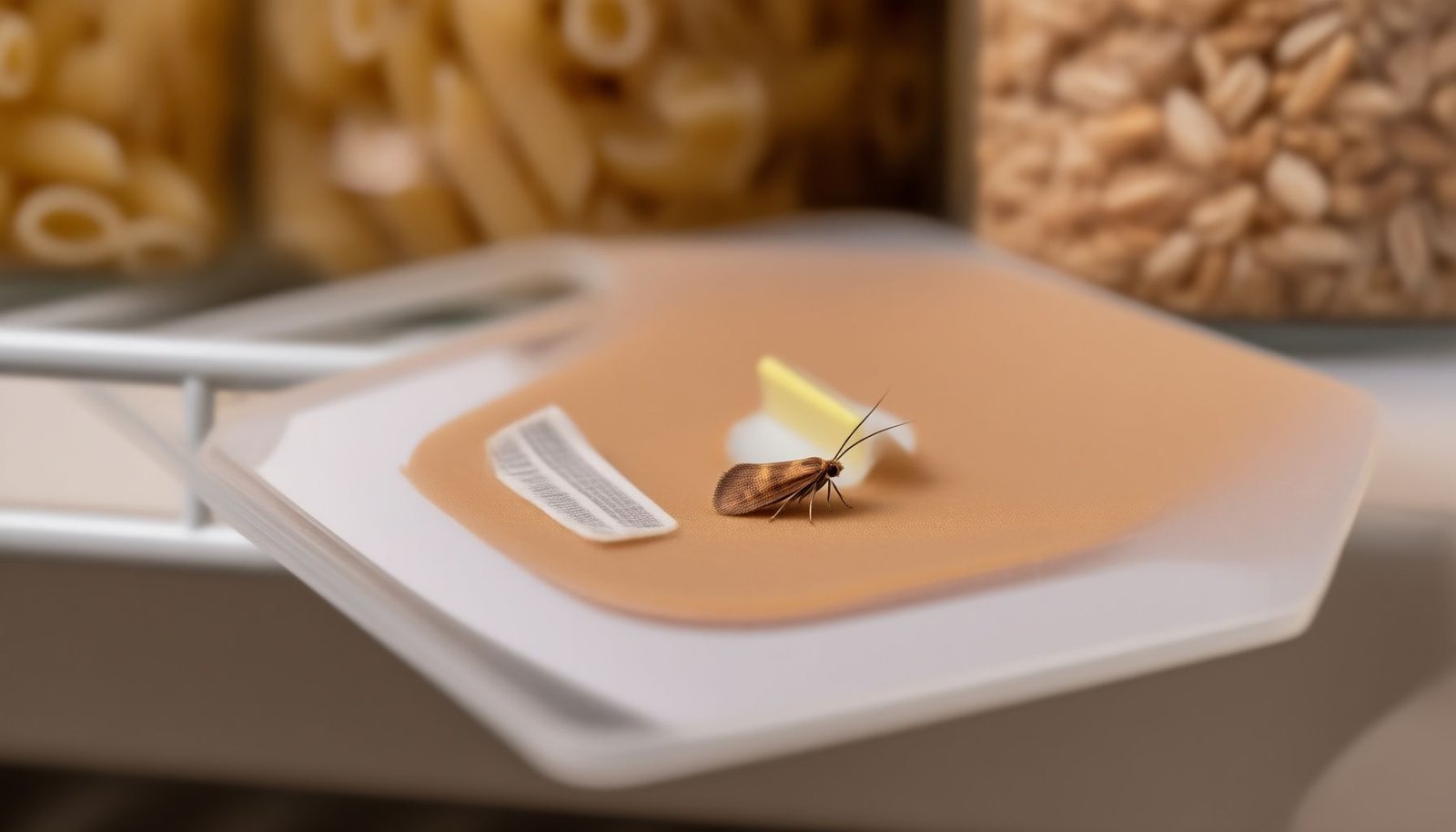
The image above shows the interior design difference between a flat glue card and a tent-style trap — the folded tent design matters because it shields the lure from airflow that disperses the scent too quickly and reduces catch rates in open-shelf environments.
Which Pantry Moth Trap Brands Are Actually Worth Buying?
There are roughly a dozen brands selling pantry moth pheromone traps in the US, but most of them share the same lure formulation sourced from two or three manufacturers. Brand differentiation comes down to trap housing design, adhesive quality, lure longevity, and packaging. Here’s how the major players stack up against each other.
| Brand | Trap Style | Lure Duration | Refills Available? |
|---|---|---|---|
| Safer Brand Pantry Pest | Tent/fold-flat | Up to 3 months | Yes (lure + trap kits) |
| Dr. Killigan’s Premium | Decorative tent | Up to 3 months | Yes (lure-only refills) |
| TERRO Pantry Moth Trap | Flat glue card | Up to 3 months | No standalone refill |
| SpringStar BioCare | Tent | Up to 3 months | Yes |
Safer Brand’s Pantry Pest trap has the longest real-world track record and the widest retail availability — you’ll find it at Walmart, Home Depot, and Amazon without having to wait on shipping. Dr. Killigan’s leans into aesthetics (the traps look less industrial), which sounds superficial but genuinely matters if you’re placing them in an open pantry where guests will see them. TERRO’s flat card design works, but the lack of a refill option makes it more expensive long-term if you’re running 4–6 traps simultaneously, which is the recommended number for an active infestation.
Does Trap Placement Matter More Than the Brand You Choose?
Bluntly: yes. Trap placement is probably the single biggest variable in whether you catch anything meaningful, and it’s the thing the product packaging explains least clearly. Pheromones disperse as a plume — they don’t fill a room uniformly. A trap shoved into the back corner of a deep cabinet creates a very short scent corridor. A trap placed at the front edge of a shelf, with some air circulation, creates a longer plume that males can actually follow from a distance.
Picture this: a homeowner in a townhouse kitchen runs four traps for six weeks and catches almost nothing, assumes the product doesn’t work, and throws them out. She’d placed every single trap inside a closed cabinet door. The moths she was seeing were flying freely through her open pantry area — the scent from those sealed traps never reached them. Moving two traps to the pantry doorframe and one to the countertop near her spice rack changed the catch rate dramatically within 72 hours. The product hadn’t changed. The placement had.
Pro-Tip: Place traps at or slightly below eye level on open shelves rather than on the floor or high shelves. Pantry moths tend to fly at mid-height, and the pheromone plume will intercept their natural flight path more effectively. Never place traps inside completely sealed cabinets unless airflow enters through gaps — the lure needs moving air to do its job.
How Many Traps Do You Need, and How Often Should You Replace Them?
The label on most brands says one or two traps per area, which is fine as a baseline for monitoring but undershoots for an active infestation. Entomologists and extension pest specialists typically recommend 4–6 traps for a kitchen and pantry with confirmed moth activity, placed across multiple zones rather than clustered together. Clustering traps creates overlapping pheromone plumes that can confuse the scent trail and reduce individual trap effectiveness.
“Pheromone traps are excellent for both detection and mating disruption, but homeowners consistently underestimate how many they need and overestimate how much the traps alone will accomplish. The trap count matters, but so does the concurrent removal of infested food — traps without a thorough pantry cleanout will keep producing moths because you haven’t addressed the larval population feeding in your food products.”
Dr. Patricia Weston, Board-Certified Entomologist and Extension Specialist in Urban Pest Management, University of Florida IFAS
As for replacement timing: most lures are rated for 90 days, but real-world lure potency degrades faster in hot kitchens. If your kitchen regularly hits 80°F or above — which is common near ovens and dishwashers — plan to replace lures every 6–8 weeks rather than waiting the full three months. You’ll notice reduced catches as a signal the lure is fading, but by then you’ve likely missed a generation of moths.
What Should You Do Alongside the Traps to Actually End the Infestation?
This is where the traps-only approach falls apart completely. The Indian meal moth life cycle — egg to larva to pupa to adult — runs about 4 to 7 weeks depending on temperature. That means every generation of adults you trap was a larva eating your food 4 to 7 weeks ago. The infestation you’re seeing in traps today reflects activity that started weeks before you noticed it. To break the cycle, you have to go after the food sources, not just the flying adults.
Just as some pest problems require attacking the source rather than just the visible symptom — similar to how getting rid of ants coming through electrical outlets requires addressing the colony entry points rather than just killing the scouts you see — pantry moth control means eliminating the food sources where larvae are living, not just trapping the adults that emerge from them. Pheromone traps are the smoke alarm; the pantry cleanout is the fire extinguisher.
- Empty and inspect every susceptible item. Check flour, cornmeal, oats, dried pasta, spices, dried fruit, nuts, pet food, and birdseed. Look for webbing, clumping, or small larvae. Larvae can enter factory-sealed packaging through microscopic gaps within 24–48 hours of arriving in your home.
- Dispose of all infested food immediately. Put it in a sealed plastic bag before throwing it in an outdoor trash can — don’t leave it in kitchen bins where adults can still emerge.
- Vacuum every shelf, crack, and corner. Larvae pupate in cracks, hinges, and even under shelf liner. A thorough vacuum with a crevice tool removes pupae that will otherwise hatch regardless of how many traps you’re running.
- Wipe shelves with white vinegar. It disrupts pheromone trails and removes residual food debris that attracts newly hatched larvae. Let shelves dry fully before restocking.
- Transfer food into airtight hard containers. Glass or thick rigid plastic with sealed lids. Thin zip-lock bags don’t reliably stop larvae from chewing through. This is the single most effective long-term prevention step.
- Keep traps running for at least 3 months after your last catch. A zero-catch period of 3+ months using active, properly placed traps is the closest thing to a reliable all-clear signal you’ll get without a professional inspection.
One honest nuance worth naming: the severity of what you’re dealing with changes everything here. A homeowner who caught the problem early — one or two moths, minimal webbing — may get clear within 8 weeks of cleanup plus trapping. Someone with a heavy infestation spread through an entire wall of pantry shelving, including some food items they’ve had for over a year, may need 4–6 months of consistent trap monitoring and multiple rounds of cleanout. The same traps, the same brands, the same placement — and very different timelines based on how entrenched the population is.
Are There Any Pantry Moth Traps That Actually Work Better Than Others?
Honest answer: the lure formulation differences between major brands are small enough that they’re unlikely to determine your outcome. What separates the better traps from the worse ones is adhesive quality and housing design. A lure is only useful if the moth that follows it actually sticks to the glue board — and in a warm kitchen, cheap glue loses tackiness faster than it should.
Some traps handle this better than others, and it’s worth knowing what to look for rather than just defaulting to whichever brand Amazon ranks first. Some pest problems benefit from similar nuanced product evaluation — the same way choosing the right spray approach matters for something like removing a hornets nest in your eaves, where product design and application method determine success more than brand loyalty. With pantry moth traps, here’s what actually separates effective products from mediocre ones:
- Tent-style housing with ventilation slots outperforms flat open glue cards in most kitchen environments because it channels airflow over the lure rather than letting it dissipate in all directions at once.
- Separately packaged lures indicate fresher pheromone at point of purchase — lures that are pre-embedded in the glue surface start degrading immediately from manufacturing date, while separately sealed lures preserve potency longer.
- Refill availability matters more than most buyers realize. Replacing just the lure every 6–8 weeks costs far less than replacing the entire trap unit, especially when running 4–6 traps simultaneously.
- Pressure-sensitive adhesive that remains tacky at temperatures up to 90°F holds moths reliably in warm kitchens. Check the product description or reviews for mentions of glue performance in warm conditions specifically.
- Transparent or light-colored trap housing lets you check catch levels without opening the trap — useful because opening and refolding tent traps repeatedly can compromise the adhesive edge.
A counterintuitive fact that almost no trap comparison mentions: a trap that catches zero moths isn’t always a sign the product isn’t working. If you’ve done a thorough cleanout and removed all the food sources, the adult population drops fast. Zero catches after a proper cleanout can mean the traps are working exactly as intended — by confirming the infestation has been eliminated — rather than meaning the traps are defective. Most people interpret an empty trap as a product failure. Experienced pest managers read it as data.
Use that information actively. Keep a simple log: how many traps, where placed, how many moths per week. A spike in catches after weeks of low numbers signals a new emergence — likely from a food source you missed, or from a pupa that survived your cleanout in a crack or hinge. That spike is the trap doing its job as a monitoring tool, telling you exactly when and where to look again.
Frequently Asked Questions
how long do pantry moth pheromone traps last?
Most pantry moth pheromone traps stay effective for about 3 months before the lure loses potency. Brands like Safer Home and Dr. Killigan’s recommend replacing the sticky insert and lure together every 90 days, or sooner if the trap fills up with moths.
do pantry moth pheromone traps actually work?
Yes, but they work as a monitoring and reduction tool, not a complete solution on their own. The pheromone attracts and traps adult male moths, which breaks the breeding cycle over time — most homeowners start seeing a noticeable drop in moth activity within 2 to 4 weeks when traps are combined with removing infested food.
where should I place pantry moth traps in my kitchen?
Put traps inside or near your pantry, ideally on a shelf close to where you store grains, flour, or dried goods — that’s where moths concentrate. Don’t place them near windows or vents, since air movement can disperse the pheromone before it draws moths to the trap. One trap per 100 square feet is a common guideline.
are pantry moth traps safe around food and pets?
Pantry moth pheromone traps are considered safe for use in food storage areas — the lure mimics a natural insect hormone and isn’t a pesticide. They’re non-toxic to pets and kids, though you’ll want to keep the sticky surface out of reach of small children and animals since the glue is hard to remove from fur or fingers.
what’s the difference between pantry moth traps and clothes moth traps?
They use completely different pheromones and won’t work interchangeably — a pantry moth trap targets Indian meal moths and similar food-infesting species, while a clothes moth trap targets webbing or casemaking clothes moths. Using the wrong trap in the wrong area will catch nothing, so it’s worth checking the packaging to confirm which moth species the lure is formulated for.