
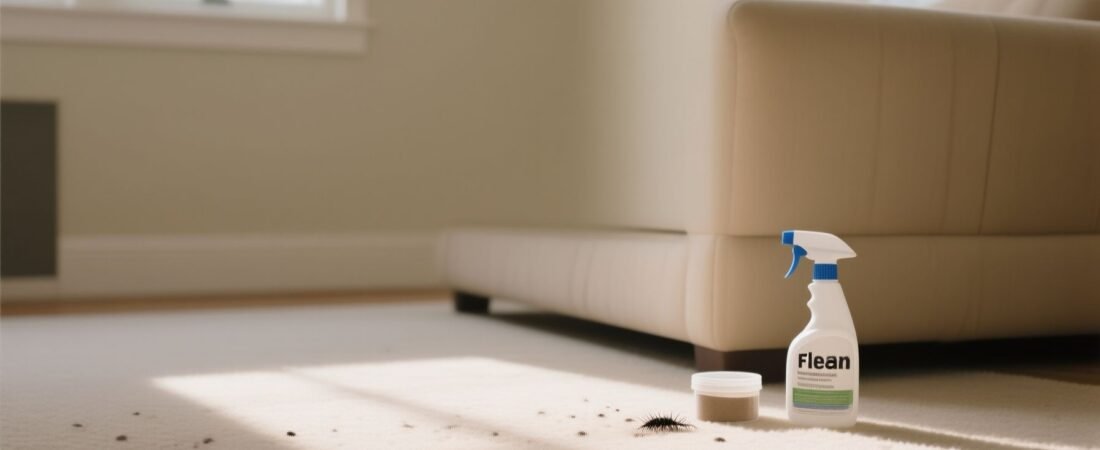
Vacuuming once and calling it done is exactly why flea infestations in furniture and carpets drag on for weeks. The real problem isn’t the adult fleas you can see jumping — it’s the eggs, larvae, and pupae buried deep in upholstery fibers and carpet pile that no single treatment touches. Adult fleas make up only about 5% of the total flea population in your home at any given time. The other 95% are invisible stages hiding in your couch cushions and carpet padding, completely protected from surface sprays and foggers. Until you understand that, you’ll keep retreating the wrong thing.
Why Fleas Keep Coming Back After You Treat Furniture and Carpets
Most people focus their energy on killing adult fleas because those are the ones biting and jumping. That’s understandable — but it’s also the core reason treatments seem to work for a few days and then the infestation bounces right back. A single female flea can lay 40 to 50 eggs per day, and those eggs slide off your pet and settle into carpet fibers and furniture seams within hours of being laid. By the time you’re treating the adults you see, there are already hundreds of eggs maturing in the places you haven’t thought to treat.
The pupal stage is the real wildcard. Flea pupae are encased in a sticky, debris-coated cocoon that physically resists pesticides — almost nothing penetrates it, including most IGRs (insect growth regulators). They can stay dormant inside that cocoon for up to 5 months, waiting for vibration, heat, and carbon dioxide to signal that a host is nearby before hatching. This is why you can treat a room thoroughly, leave for two weeks, come back, and get ambushed by what feels like a fresh infestation. It’s not fresh — it was always there.
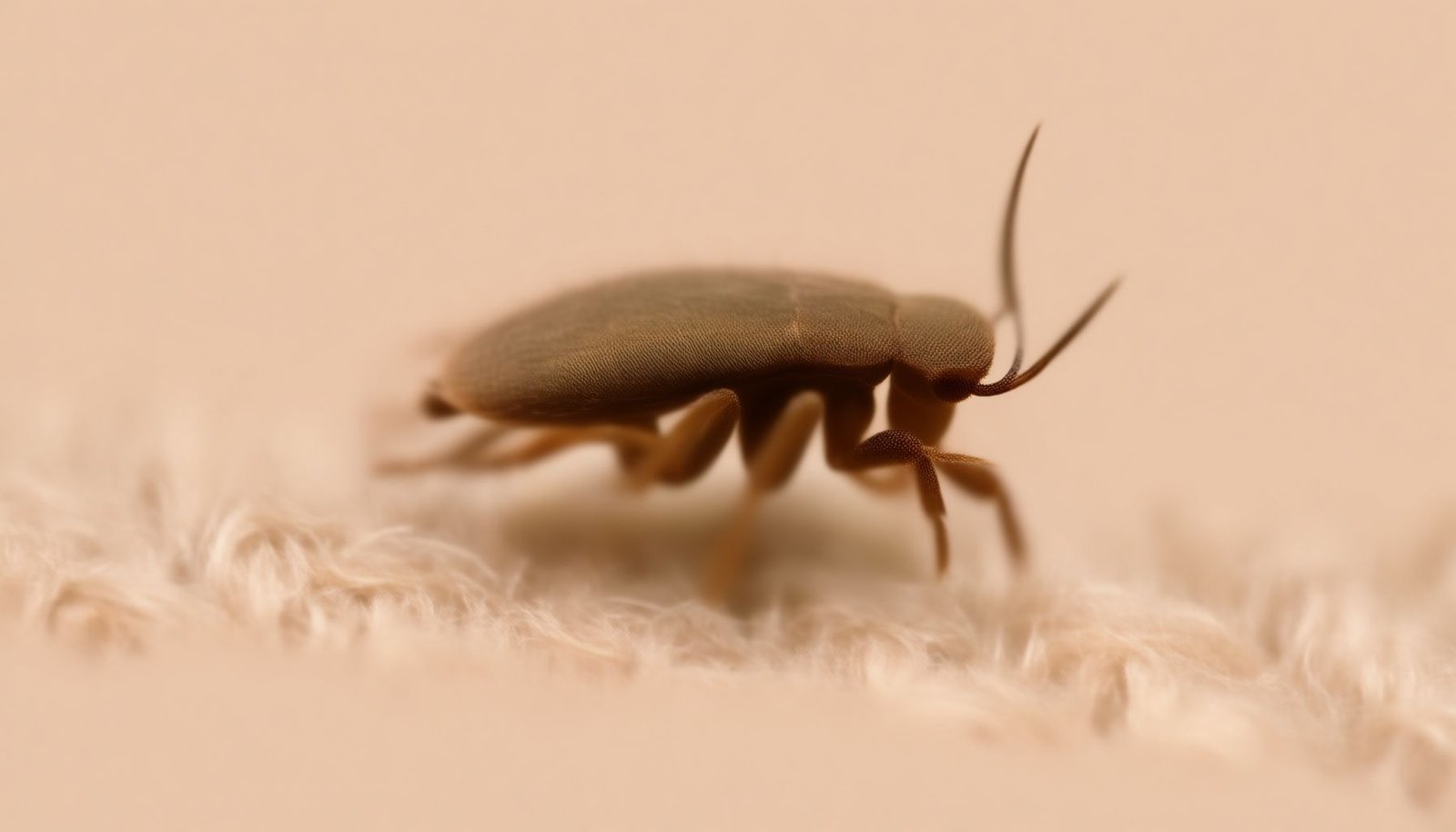
This close-up shows flea eggs and flea dirt scattered through carpet fibers — the kind of detail that’s easy to miss with a quick visual inspection but explains why surface-only treatments consistently fall short.
How to Actually Treat Carpets So the Infestation Doesn’t Restart
Treating carpet correctly is a sequence, not a single step. You need mechanical disruption first, then a chemical or natural agent that addresses multiple life stages, and then a sustained follow-up strategy that accounts for those pupae hatching over the next several weeks. Skipping any part of this sequence leaves a gap the population will exploit. Here’s the order that actually works:
- Vacuum aggressively before any product goes down. Use a vacuum with a beater bar, not just suction. The mechanical vibration mimics foot traffic and triggers dormant pupae to hatch — which means you’re pulling out fleas that were about to emerge anyway. Vacuum every carpet surface, including edges, under furniture, and along baseboards. Immediately seal and dispose of the vacuum bag outside.
- Apply an IGR (insect growth regulator) to carpeted areas. Products containing S-methoprene or pyriproxyfen prevent flea eggs and larvae from developing into biting adults. They don’t kill existing adults, but they break the reproduction cycle. A single IGR application can remain effective in carpet fibers for up to 7 months.
- Pair the IGR with an adulticide. Permethrin-based or bifenthrin-based carpet sprays kill adults on contact. Apply evenly across all carpet surfaces, paying special attention to areas where pets sleep or rest most often — that’s where egg density is highest.
- Work diatomaceous earth into carpet pile in low-traffic zones. Food-grade DE damages the exoskeleton of larvae and newly hatched adults through physical abrasion, not chemistry. It’s a good complementary layer for areas like under furniture or in corners where spray coverage is inconsistent.
- Re-vacuum 48 hours after treatment, then again at 10 days and 21 days. The repeat vacuuming serves the same purpose as the first round — triggering pupae to hatch so they emerge into a treated environment rather than waiting until the residual fades. This is the step most people skip, and skipping it is why they end up calling a professional.
One honest caveat here: if you have thick, plush carpet in a humid climate like the Southeast, the timeline extends. Humidity keeps flea larvae viable longer, and dense carpet pile traps moisture. You may need to repeat the full treatment cycle at day 21 rather than just following up with vacuuming. It’s not a failure — it’s just the reality of dealing with fleas in those conditions.
What Actually Works on Furniture — and What Wastes Your Time
Furniture treatment is where a lot of people make costly mistakes. The instinct is to spray everything down with a flea spray and let it sit — but upholstered furniture is a layered environment, and most sprays only coat the surface. Flea eggs and larvae live down in the fabric weave and along seam edges where spray penetration is minimal. Picture this: you’ve got a well-used sectional couch where the dog sleeps every evening. The cushions look clean, but the egg density in the seam crevices and under the removable cushion covers can rival what’s in the carpet underneath it.
Here’s what actually addresses furniture effectively:
- Remove all cushion covers and wash them in hot water (130°F or higher). Heat kills all flea life stages — eggs, larvae, pupae, and adults. The washing machine alone won’t do it if the water temperature is low; the heat is the active mechanism, not the detergent.
- Vacuum the furniture frame and all crevices with a crevice attachment before treating. This pulls out eggs and flea dirt that products won’t penetrate.
- Apply an IGR spray labeled for upholstery use, not a general flea spray. Most standard flea sprays aren’t formulated for fabric penetration. Look for products specifically listing upholstered furniture on the label.
- Don’t overlook the undersides of furniture and the floor directly beneath it. Eggs fall off pets and land in that zone constantly. Treat the carpet under and around furniture the same way you treat the rest of the floor.
- Let the furniture dry completely before allowing people or pets on it. Wet product on upholstery can transfer to skin or fur, which reduces effectiveness and raises safety concerns, especially with children and cats.
One thing most flea articles don’t mention: cats are significantly more sensitive to permethrin than dogs. If you have cats and you’re treating upholstered furniture they use, choose a cat-safe IGR spray rather than a permethrin-based product. This isn’t a minor consideration — permethrin toxicity in cats can be serious.
“The single biggest treatment failure I see in residential flea cases is targeting adult fleas while ignoring the developmental stages. People treat once, the adults die, and they think it’s over — then three weeks later they’re covered in bites again because the pupae have started hatching. Effective flea control in carpet and furniture requires at least two to three rounds of treatment spaced 10 to 14 days apart, every time.”
Dr. Karen Voss, Board-Certified Entomologist and Urban Pest Management Specialist, University Extension Program
How Long Does It Take to Get Rid of Fleas in Carpet and Furniture Completely?
The honest answer is 3 to 8 weeks, depending on how severe the infestation is, how consistently you treat, and whether the pet is being treated simultaneously. That range surprises people who expect a single afternoon of spraying to resolve things. The timeline isn’t about how powerful your products are — it’s about the flea life cycle and the fact that pupae are impervious to everything until they hatch.
| Flea Life Stage | Where They Hide | Vulnerable To Treatment? |
|---|---|---|
| Eggs | Carpet fibers, furniture seams, floor cracks | Yes — killed by heat, IGRs, adulticides |
| Larvae | Deep in carpet pile, under furniture, along baseboards | Yes — killed by IGRs, DE, contact sprays |
| Pupae | Sticky cocoons in carpet and upholstery | No — must hatch before they’re vulnerable |
| Adults | On host, jumping to furniture and carpet | Yes — killed by contact adulticides |
The pupal stage is the reason the 8-week timeline exists. You can eliminate 95% of your flea population in the first treatment round, but if there are pupae cocooned in your carpet — and there will be — you need to still be treating when they hatch. Stopping treatment because the biting has slowed down is one of the most common ways people end up dealing with a second full infestation from the same source.
Pro-Tip: After your initial carpet treatment, place a warm lamp on the floor near a piece of white paper at night. The heat and light attract newly hatched adult fleas toward the lamp, and you’ll catch them on the paper — this doubles as a monitoring tool to tell you whether pupae are still hatching and whether your residual treatment is still working. If you’re still seeing significant flea activity at day 21, do a full re-treatment rather than waiting.
Can You Get Rid of Fleas in Furniture and Carpet Without Treating Your Pet?
No — and this is the part of the equation that makes or breaks the entire treatment. Your carpet and furniture are being re-seeded with eggs as long as the pet is untreated. An infested dog or cat can carry anywhere from 10 to 30 adult fleas at a time, each of which is laying up to 50 eggs per day. Treating your home without treating the animal is the environmental equivalent of mopping the floor while the tap is still running. The indoor flea population can’t be brought to zero if there’s a constant source re-introducing eggs into treated areas.
Veterinarian-prescribed oral flea treatments like nitenpyram kill adult fleas on the pet within 30 minutes. Monthly topical treatments with imidacloprid or fipronil prevent re-infestation on the animal. The combination of a fast-kill oral treatment and a sustained monthly topical is what stops the re-seeding cycle. If you’re also dealing with outdoor flea exposure — a yard where the pet roams, or strays that access your property — the indoor treatment alone won’t hold, and you’ll need to think about yard management as well. For broad outdoor pest pressure, reviewing what Best Outdoor Perimeter Pest Control Sprays for Homeowners recommends for yard and perimeter applications is a useful next step for cases that keep recurring.
There’s also a less obvious angle worth knowing: fleas don’t exclusively come from pets. Wildlife — squirrels, opossums, and raccoons — that access crawl spaces, attics, or the underside of porches can introduce fleas that eventually make their way into your living space. Homes without pets aren’t immune. If you’re dealing with what appears to be a flea problem and don’t own animals, check for evidence of wildlife activity around your foundation and crawl space. Flea infestations in pet-free homes are almost always traceable to a wildlife source or a previous tenant’s pet. The treatment approach is the same, but eliminating the wildlife pressure matters just as much as what you do inside — similar to how persistent pest problems in other parts of the home often trace back to exterior access points, a dynamic covered in detail in how to address How to Get Rid of Carpenter Ants Without an Exterminator when the source is structural rather than behavioral.
Once your pet is on consistent flea prevention and you’ve completed two full treatment cycles on furniture and carpets — with the follow-up vacuuming at 10 and 21 days — the population should drop to undetectable levels. The lamp-and-paper monitoring trick mentioned earlier will tell you if you’ve actually hit zero or if there’s still residual pupal activity. At that point, maintaining monthly pet prevention is your long-term insurance policy. Fleas can re-enter any home at any time; the difference between a new infestation taking hold and getting stopped cold is whether there’s a treated pet in the house to interrupt the reproductive cycle before it gets started.
Frequently Asked Questions
how long does it take to get rid of fleas on furniture and carpets?
Most flea infestations take 3 to 8 weeks to fully eliminate, even with consistent treatment. That’s because flea eggs and pupae are resistant to sprays and can hide deep in carpet fibers — you have to break the full life cycle, not just kill the adults you can see.
what kills fleas in carpet instantly?
Salt and baking soda can dehydrate fleas when worked into carpet fibers, but they’re slow — not instant. For faster results, a carpet spray containing IGR (insect growth regulator) combined with an adulticide like permethrin will kill adult fleas within hours and prevent eggs from hatching for up to 7 months.
can fleas live in a couch without pets?
Yes, fleas can live in a couch for up to 2 weeks without a host, and their eggs can survive even longer in cushion seams and under fabric. If you moved into a home where pets previously lived, or if wildlife like raccoons or opossums were nearby, you can absolutely get a flea infestation without owning any pets yourself.
how many times do you need to vacuum to get rid of fleas in carpet?
You should vacuum every day for at least 10 to 14 days during an active infestation. Vacuuming stimulates flea pupae to hatch, which makes them vulnerable to treatments — but if you skip days, you’ll miss emerging adults and the cycle keeps going. Always empty the vacuum bag or canister immediately into an outdoor trash bin after each session.
is it safe to use flea spray on furniture if I have kids or pets?
Most flea sprays are safe on furniture once they’re fully dry, which typically takes 30 minutes to 2 hours depending on the product. Keep kids and pets out of treated rooms until the spray dries completely, and always check the label for specific re-entry times — some products with stronger chemicals like deltamethrin may require longer wait periods of up to 4 hours.
Disclaimer: This article is for informational purposes only and isn’t a substitute for professional pest control advice. Always read and follow the product label instructions exactly — label directions are legally binding and vary by brand and active ingredient. Keep all pesticides, baits and traps away from children and pets, ventilate treated areas as directed, and consider calling a licensed pest control professional if an infestation is large, recurring, or involves a structural pest like termites or carpenter ants.