
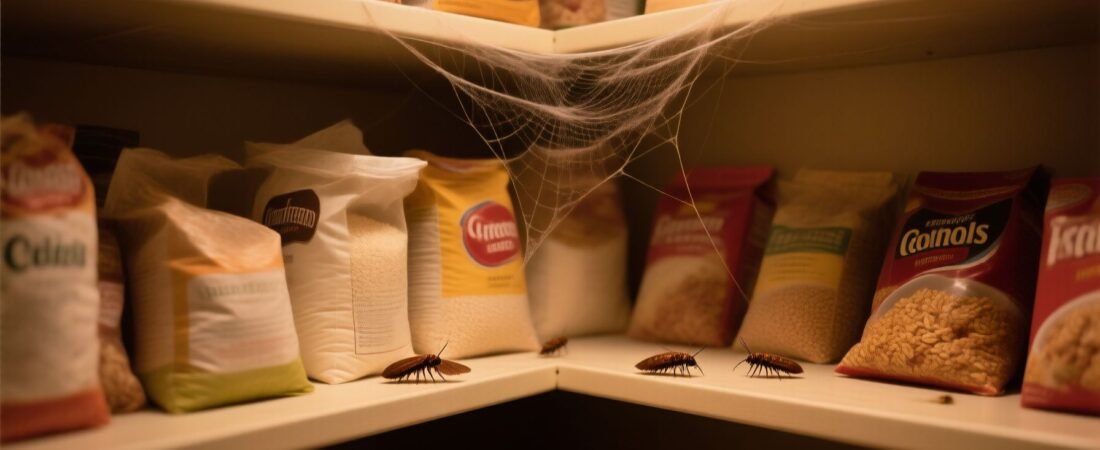
Throwing out infested food is not the fix — it’s just the beginning of the fix. Most people pull a moth-eaten bag of cornmeal, toss it in the trash, feel like they’ve solved the problem, and then find moths again three weeks later. The reason that keeps happening has nothing to do with how thorough you were with the cleanup. It has everything to do with where Indian meal moths actually hide, and almost nobody checks those spots.
Here’s the part most guides skip: a single female Indian meal moth can lay between 100 and 300 eggs in her lifetime, and those eggs are small enough to be nearly invisible to the naked eye. She doesn’t lay them in one place — she scatters them across multiple food sources, cracks in shelving, the underside of shelf liners, and even in the seams of cardboard boxes you haven’t opened yet. You can empty an entire pantry and still have a full second generation hatching two weeks later from a spot you never thought to look.
Why Indian Meal Moths Keep Coming Back After You’ve Cleaned the Pantry
The moth you see flying around your kitchen is not the problem — it’s the symptom. Adult Indian meal moths (Plodia interpunctella) don’t actually eat your food. They don’t have functional mouthparts for it. The larvae do all the damage, spinning silky webbing through grain, nuts, dried fruit, pet food, and even spices. By the time you spot a flying adult, the larvae have already been feeding for weeks, potentially in multiple locations throughout your pantry.
The infestation cycle runs roughly 25 to 135 days depending on temperature — warmer kitchens accelerate it dramatically. A larva that hatches in a forgotten bag of wild bird seed on your bottom shelf can pupate in a corner of your cabinet, emerge as an adult, and lay eggs in your pasta before you’ve even noticed the original bag was compromised. This is why eliminating the infestation requires breaking the cycle at every stage, not just removing visibly infested food.
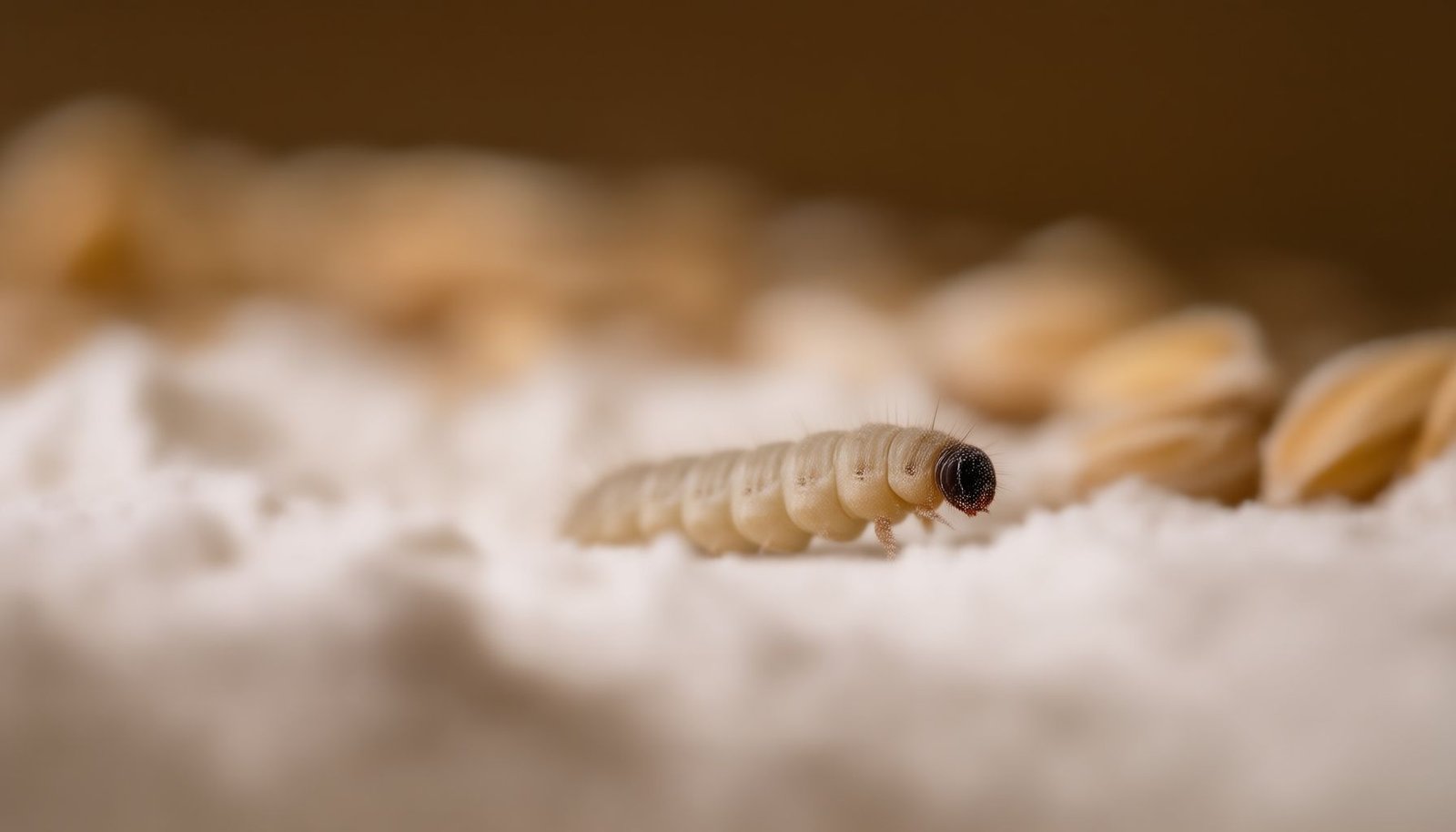
This close-up view shows the distinctive webbing and frass Indian meal moth larvae leave behind inside food packaging — exactly the kind of sign most homeowners overlook until the infestation has already spread to multiple containers.
Where Are Indian Meal Moths Actually Hiding in Your Pantry?
Picture this: you’ve bagged up everything, wiped every shelf, and declared victory. Two weeks later, you find a moth crawling on the wall next to your pantry. It didn’t come from nowhere — it came from one of these spots you almost certainly didn’t check. Indian meal moth larvae are surprisingly mobile and will pupate far from the food source, crawling up walls and into tight corners before spinning their cocoons.
The places most homeowners miss completely include the underside of shelf liners (especially the sticky rubber kind), the corrugated channels inside cardboard boxes stored in the pantry, gaps between the wall and the back of shelving units, the hinges and door frame of the pantry cabinet itself, and — this catches nearly everyone off guard — unopened factory-sealed packages. Indian meal moths can enter food packaging at the processing facility, meaning a bag that’s never been opened in your home can already be infested when you bring it in from the store.
Here’s a systematic list of every spot to inspect and treat during your cleanout:
- Shelf liners — Pull them up entirely and check the underside for cocoons; throw them out and don’t replace them until the infestation is resolved.
- The ceiling corners of the pantry cabinet — Larvae crawl up to pupate, and cocoons are often tucked into the very top corners where walls meet. Use a flashlight.
- Wall and ceiling junction molding — Any gap or crevice within 10–15 feet of the pantry is fair game for pupating larvae.
- Pet food bags and birdseed — These are among the most common original infestation sources and are often stored separately from the main pantry, making them easy to overlook.
- Spice jars and dried herb containers — The larvae can penetrate poorly-sealed spice containers and have been found infesting paprika, chili powder, and even dried bay leaves.
- Cardboard boxes holding canned goods — The cardboard itself can harbor eggs or cocoons even when the cans inside are unaffected.
How to Actually Eliminate an Active Infestation Step by Step
The cleanout has to be more aggressive than most people expect, and it needs to happen in a specific order. Starting with pheromone traps before you’ve removed the food source is one of the most common mistakes — traps are a monitoring and mop-up tool, not a primary control method. You’ll catch moths, feel like it’s working, and miss the larvae still feeding behind the scenes.
Start by removing every item from the pantry and inspecting it individually. Anything in a paper bag, cardboard box, or thin plastic bag that isn’t heat-sealed should be treated as suspect regardless of whether you can see webbing. Transfer anything you’re keeping to airtight glass or heavy plastic containers with gasket seals — not just Ziplocs, which larvae can chew through. Wipe all surfaces with a 50/50 white vinegar and water solution, paying special attention to corners, cracks, and shelf bracket holes. After that, vacuum every surface including walls and ceiling, then immediately dispose of the vacuum bag or empty the canister outside. Only after all of that should you place pheromone traps.
Pro-Tip: Freeze suspect dry goods (flour, grains, nuts, dried fruit) at 0°F for at least 4 days before storing them — this kills eggs, larvae, and pupae at any life stage without chemicals and is safe for everything except chocolate and coffee, which absorb freezer odors.
Do Pheromone Traps Actually Work, or Are You Just Catching Moths?
Pheromone traps do work — but not the way most people use them. The glue board inside a pheromone trap attracts and captures adult male moths using a synthetic version of the female moth’s sex pheromone. When you catch a male, he can’t mate, which gradually reduces reproduction. But here’s the honest limitation: traps don’t touch eggs, larvae, or pupae. They won’t eliminate an infestation on their own; they will tell you whether you still have one.
The practical use is this — place one or two traps in the pantry area after your cleanout and check them weekly. If you’re catching more than 5 moths per week after the first two weeks post-cleanout, you’ve missed a food source or breeding site and need to search again. If catches drop to zero for three consecutive weeks, you’re likely through the infestation. Think of the trap as your progress meter, not your treatment plan. As a comparison, this monitoring-first approach is similar in logic to how you’d handle other pantry pests like grain beetles — the trap tells you where to look, not what to do about it.
“The biggest mistake I see homeowners make is treating Indian meal moths like a cleaning problem when it’s actually a containment and cycle-breaking problem. You can have a spotless kitchen and still have a persistent infestation if there’s a single overlooked breeding site — a forgotten bag of quinoa in the back of a cabinet, pet food in the garage, even an ornamental wreath made with dried grains. The larvae don’t care how clean your shelves are. They care about finding food.”
Dr. Karen Vail, Extension Entomologist, University of Tennessee Institute of Agriculture
Should You Use Any Pesticides for Indian Meal Moths in the Pantry?
This is where a lot of people either overreact and reach for a bug spray, or underreact and assume cleaning alone will be enough. The honest answer is that chemical pesticide sprays have almost no appropriate role in treating an active Indian meal moth infestation inside a food pantry. Spraying insecticide on pantry shelves where food will be stored is an unnecessary health risk when non-chemical methods are fully effective for this pest. The EPA and most extension entomologists agree on this.
That said, there is one product category that genuinely helps in stubborn cases: pyrethrin-based aerosols applied to cracks and crevices in empty, cleared-out cabinets — not on shelving surfaces. Pyrethrin is derived from chrysanthemum flowers, breaks down quickly, and is approved for limited use in food-handling areas when applied correctly. Wait 24 hours after application before restocking the pantry. If you’re dealing with an infestation that has spread beyond the pantry into adjacent wall voids or a suspended ceiling (yes, this does happen in older homes with loose construction), that’s the scenario where a professional assessment makes more sense than DIY spraying. Just like you wouldn’t try to address a hidden infestation in structural wood without proper diagnosis — the kind of thorough inspection described for getting rid of powderpost beetles in furniture and flooring — pantry moth spread into building cavities deserves the same methodical approach.
Here’s a quick reference for what works, what doesn’t, and why:
| Method | Effective Against | Limitations |
|---|---|---|
| Pheromone traps | Adult males only | Doesn’t affect larvae, eggs, or females |
| Freezing (0°F for 4+ days) | All life stages | Requires planning before storing dry goods |
| Airtight containers (glass or thick plastic) | Prevents new infestations and spread | Won’t eliminate existing larvae inside food |
| Pyrethrin crack/crevice spray (empty cabinets only) | Exposed larvae and adults in voids | No residual effect; won’t reach deep pupae |
How to Stop Indian Meal Moths From Coming Back in the First Place
Prevention is almost entirely about what happens at the grocery store and the moment food enters your home — not about what you do to your pantry after the fact. The infestation almost always starts with an already-infested product, not with moths flying in through a window. Eggs are laid in commercial food processing facilities or distribution warehouses, and the bags get sealed with the eggs already inside. You’ve never done anything wrong. You just got unlucky with a particular batch.
The habits that actually prevent re-infestation come down to a few non-negotiable changes to how you store and rotate dry goods:
- Transfer everything to sealed hard containers immediately — Don’t store any dry goods in their original packaging. The moment you get home, pour flour, rice, oats, cornmeal, dried fruit, nuts, and pasta into glass jars or airtight rigid plastic containers.
- Never mix old and new batches — If you’re refilling a container, finish the old stock first or wash and dry the container before adding new product. Mixing gives any surviving eggs a fresh food source.
- Keep one pheromone trap in the pantry year-round as a monitoring tool — Replace it every 3 months. If you catch a moth, you know to start looking immediately rather than discovering an infestation after it’s established.
- Store pet food separately and in a sealed container — Dry kibble and birdseed are the most common reinfestation sources, and most people never connect the bag in the laundry room to the moths in the kitchen.
- Check for seasonal surges — Indian meal moth populations surge in warmer months, so a kitchen that stays above 80°F in summer will cycle through generations faster. If you live in a hot climate, be more vigilant between late spring and early fall.
One honest nuance worth mentioning: if you live in an apartment building with a shared food storage area, a connected pantry wall, or a neighbor who has had an ongoing infestation, your reinfestation risk is higher regardless of what you do internally. Moth larvae can travel through wall gaps, and adults can fly in under doors. In that scenario, the monitoring trap becomes even more essential as an early warning system — the same way addressing cluster flies in windows and attics in multi-unit buildings is partly about what’s happening next door, not just in your own unit.
Getting to zero moths and staying there is completely achievable — but it requires accepting that this was never really about cleanliness and always about containment. Once you switch your thinking from “cleaning up a mess” to “breaking a biological cycle at multiple stages simultaneously,” the whole problem becomes a lot more solvable. Keep the traps running, keep the containers sealed, and the next infested bag that comes home from the store won’t stand a chance of becoming a three-month headache.
Frequently Asked Questions
How do Indian meal moths get into sealed pantry food?
Indian meal moths can chew through thin plastic bags and cardboard boxes, so “sealed” packaging isn’t always enough to stop them. They’re also notorious for sneaking in as eggs or tiny larvae already inside products at the store — grain, flour, dried fruit, and pet food are the most common culprits. If you bring infested food home, they’ll hatch and spread to everything nearby within weeks.
What do Indian meal moth larvae look like in food?
The larvae are small, off-white caterpillars — usually under half an inch long — with a brownish head. The clearest sign is the silky webbing they spin inside food, which clumps grains or flour together in a way that looks almost like a cobweb. If you see that webbing or tiny worm-like bugs in your pantry staples, you’ve got an active infestation.
How long does it take to get rid of Indian meal moths in the pantry?
A full Indian meal moth infestation typically takes 4 to 8 weeks to completely eliminate, even if you act fast. That’s because eggs can hide in cracks and crevices and hatch weeks later, so you’ll need to stay consistent with cleaning, trapping, and inspection. Using pheromone traps helps you track whether moth activity is dropping — if you’re still catching moths after 8 weeks, there’s likely a food source you’ve missed.
Do I need to throw away all my food if I have Indian meal moths?
Not necessarily — you only need to toss anything that shows signs of infestation like webbing, larvae, or a musty smell. Foods in hard, airtight containers like glass jars or thick plastic canisters are usually safe once you’ve confirmed they’re clean. As a rule of thumb, inspect everything in your pantry and when in doubt, throw it out — replacing a few bags of flour is cheaper than dealing with a reinfestation.
What pantry items attract Indian meal moths the most?
Indian meal moths are most drawn to grain-based products — think flour, cornmeal, oats, rice, and dried pasta. They also go after dried fruit, nuts, chocolate, birdseed, and dry pet food, so don’t overlook those when you’re searching. Basically, if it’s a dry, starchy, or high-fat food sitting in a paper or thin plastic package, it’s at risk.
Disclaimer: This article is for informational purposes only and isn’t a substitute for professional pest control advice. Always read and follow the product label instructions exactly — label directions are legally binding and vary by brand and active ingredient. Keep all pesticides, baits and traps away from children and pets, ventilate treated areas as directed, and consider calling a licensed pest control professional if an infestation is large, recurring, or involves a structural pest like termites or carpenter ants.