

Scratching your ankles raw after a walk through tall grass doesn’t mean chiggers are still on you — by the time the itching starts, the mites are almost certainly gone. That’s the part most people get completely wrong, and it’s why so many chigger treatments focus on the wrong thing at the wrong time. The real problem isn’t the chigger on your skin right now. It’s the yard that’s infested, the re-exposure happening every time you step outside, and the inflammatory reaction that will keep itching for 1–2 weeks regardless of what you put on it. Fix those two things — the yard and the re-exposure — and you actually solve the problem.
Why You’re Still Itching Even After the Chiggers Are Gone
Chigger larvae — the only life stage that bites humans — don’t burrow under your skin and don’t stay attached for days like ticks. They latch on, inject a digestive enzyme called stylostome that dissolves skin cells, feed for 1–4 hours, and then drop off. The intense, maddening itch you feel 1–3 days later is your immune system reacting to that enzyme, not to a parasite that’s still present. Knowing this matters because it completely changes what you should do to your skin versus what you should do to your yard.
Because the itch peaks 2–3 days after exposure and lasts up to two weeks, people assume something is still on them and scrub, scratch, or apply gasoline, nail polish, or bleach — none of which help and some of which cause real skin damage. The larva is long gone. What you’re fighting at that point is inflammation, and the treatment is antihistamines, hydrocortisone cream, and keeping the area clean so it doesn’t get infected from scratching.
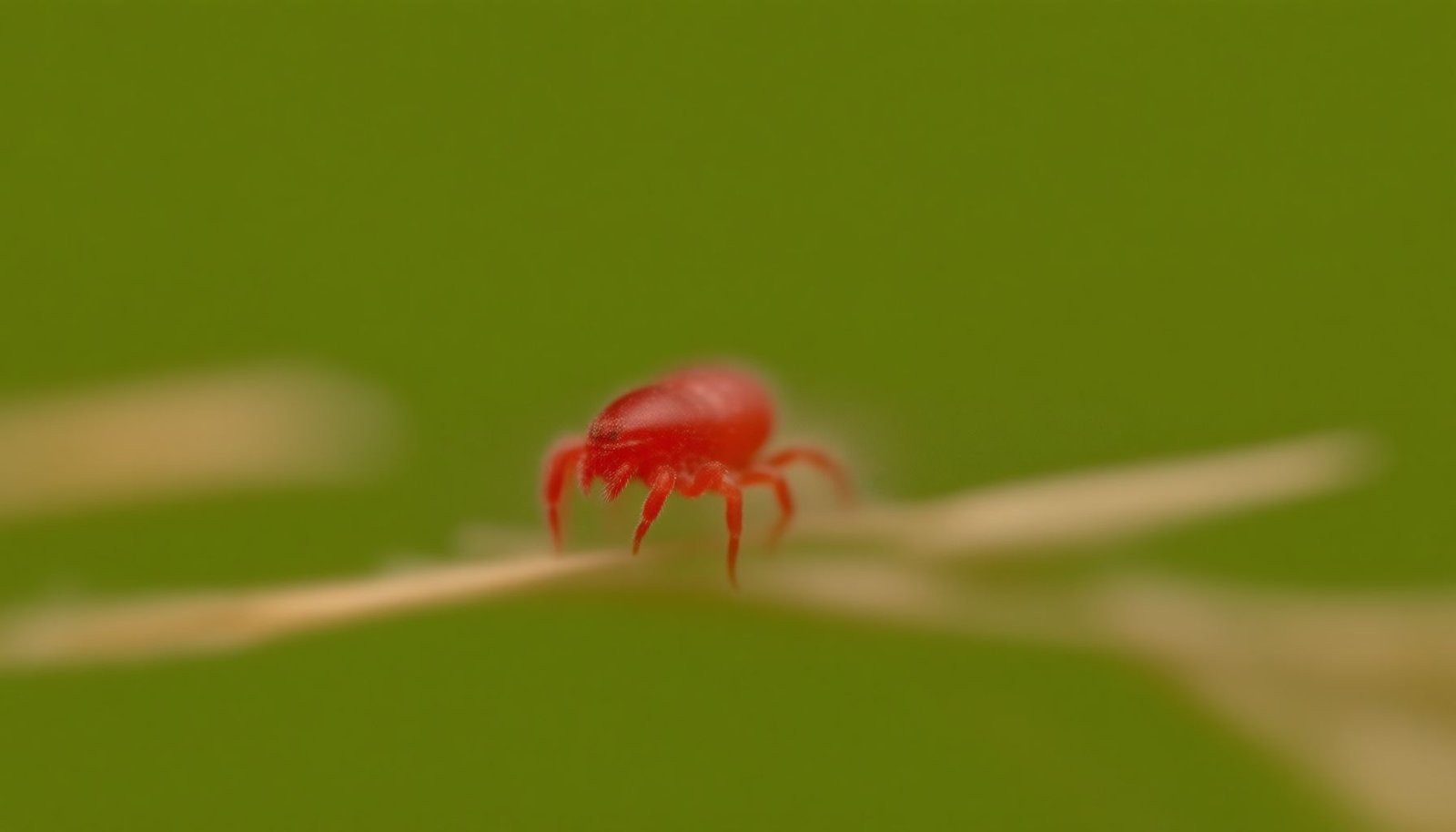
This close-up shows the characteristic red welt pattern chigger bites leave around waistbands, sock lines, and skin folds — the exact locations where larvae tend to pause and feed, which helps confirm chiggers rather than another biting insect.
How to Identify a Chigger Hotspot in Your Yard Before You Treat
Chiggers don’t spread evenly across a lawn. They cluster in microhabitats — shaded, humid areas with dense ground cover, leaf litter, or tall grass — and the cluster can be as concentrated as a 10-foot-wide patch in an otherwise clean yard. Spraying your entire half-acre because you got bitten near the back fence is wasteful and largely ineffective. You need to find the hotspot first.
The black cardboard test is the most reliable DIY method: cut a piece of black cardboard into a 6-inch square, set it upright in suspected areas, and wait 5–10 minutes. Chigger larvae are attracted to warmth and will crawl to the top edge — you’ll see tiny orange-red dots (they’re only about 1/150th of an inch) clustered at the top. Do this in multiple spots along the perimeter, near wood piles, under low-hanging shrubs, and at the edge where your lawn meets a wooded area or unmowed field. Once you find the hot zones, you can target your treatment precisely instead of broadcasting pesticide across your whole yard.
What Actually Works to Get Rid of Chiggers in the Yard
Habitat modification is the most underrated step and the one most articles skip straight past to get to the pesticide section. Chiggers need humidity and shade to survive — desiccation kills them fast. A yard that gets full sun, has short grass, and has no accumulated leaf litter or wood debris is a genuinely hostile environment for chigger larvae. That’s not a minor point. It’s the reason your neighbor’s yard might be chigger-free while yours isn’t, even if you’ve both sprayed.
Once you’ve done the habitat work, targeted pesticide application to the identified hotspots is your next move. Here’s a practical sequence that actually works:
- Mow low and remove clippings. Drop grass height to 3 inches or below in problem areas. Bag or rake the clippings — they hold moisture and give chiggers shelter.
- Clear brush and leaf litter. Remove accumulated leaves, mulch piles, and woody debris within 10–15 feet of areas where people walk or sit. This alone can dramatically reduce populations within a week.
- Apply bifenthrin or permethrin concentrate to hotspot zones. Mix according to label and spray a 3–5 foot swath along identified hotspot edges, fence lines, and lawn perimeters. These pyrethroids kill larvae on contact and have residual activity for 2–4 weeks in dry conditions.
- Consider diatomaceous earth for shaded areas where spray is hard to reach. Food-grade DE dusted around wood piles and dense shrubs damages the larvae’s exoskeleton, causing death by dehydration. It’s slower than permethrin but works well in spots where spray dries out too fast or can’t penetrate.
- Re-treat after heavy rain. Rain washes away residual pesticide. Check your cardboard test strips again 2 weeks after treatment — if activity remains, re-apply. Most homeowners need 2–3 applications across a season to break the cycle.
Pro-Tip: Spray in the late morning or early afternoon when chigger larvae are most active near the surface of vegetation — treating at dusk when they’ve retreated deeper into the soil means the pesticide makes less direct contact and you’ll get noticeably weaker results.
What to Do Immediately After Suspected Chigger Exposure
The window between exposure and the inflammatory reaction setting in is surprisingly short — but acting in that window makes a real difference. Picture this: you’ve been pulling weeds along the back fence for an hour. You come inside and your ankles feel vaguely tingly. That tingly feeling is early — larvae may still be on you, and this is exactly the right moment to act.
Here’s what to do on your skin in the first hour after likely exposure:
- Shower immediately with soap and warm water. Scrub with a washcloth to physically remove larvae before they’ve finished feeding. This is the single most effective skin-side action you can take.
- Wash all clothing in hot water. Larvae on clothing can transfer back to skin. Don’t leave those clothes in a hamper — wash them right away.
- Apply over-the-counter hydrocortisone 1% cream early. Starting it before the itch peaks reduces the severity of the inflammatory response, not just the symptom.
- Take an oral antihistamine (like cetirizine or diphenhydramine) at the first sign of itching. These help reduce the histamine-driven reaction, and starting early keeps it more manageable overnight.
- Do not scratch. Scratching breaks the skin and turns an itchy bite into an infected wound. Trim your fingernails short if you know you’ll scratch in your sleep.
“The biggest mistake I see is people treating the skin like the chigger is still there — scrubbing with harsh chemicals, trying to ‘extract’ something that left hours ago. The inflammation is the problem at that point, and the treatment should match the problem: anti-inflammatory, antihistamine, and wound care. The yard treatment is what actually stops the cycle.”
Dr. Ellen Marsh, Ph.D., Extension Entomologist, University of Missouri Extension Service
How to Keep Chiggers Off Your Body When You’re Outside
Repellents are genuinely effective against chiggers — more so than against many other biting pests — but the method of application matters far more than most people realize. DEET at 25–30% concentration applied to exposed skin works well, but chiggers travel upward from the ground and often get under clothing before they bite. Spraying just your arms misses the point entirely. They’re climbing your socks, not landing on your forearms.
Permethrin-treated clothing is arguably the most effective single prevention tool for people who spend time outdoors regularly. A single treatment of 0.5% permethrin on socks, pants, and shoes remains effective through 5–6 washings and kills larvae on contact — before they can find a place to bite. For yard work specifically, tucking pants into socks (even though it looks ridiculous) and applying DEET to the sock line and waistband cuts bite rates dramatically. Chiggers favor the path of least resistance to thin skin, which is why bites cluster around sock lines, waistbands, and the backs of knees.
| Method | Effectiveness | Duration | Best For |
|---|---|---|---|
| DEET 25–30% on skin | High | 4–6 hours per application | Short outdoor activities |
| Permethrin on clothing | Very High | 5–6 washes | Regular yard work, hiking |
| Sulfur powder on shoes/socks | Moderate | Single use (washes off) | Budget option, garden work |
| Picaridin on skin | High | 4–8 hours per application | DEET-sensitive individuals |
One thing worth knowing: sulfur-based repellents — the old-fashioned kind that smells like rotten eggs — actually work. Dusting flowers of sulfur around your boot tops before walking through a known chigger area repels larvae effectively. It’s not glamorous, but extension services across the Southeast have been recommending it for decades because it works in situations where you don’t have permethrin-treated gear ready.
Dealing with a yard pest problem takes a layered approach regardless of the pest. If you’ve gone through a similar process with other persistent outdoor pests, the same logic of habitat disruption plus targeted treatment applies — the way roof rats in the attic require both removing harborage and blocking entry, chiggers require both removing humid cover and applying targeted control to the zones that remain.
When the Itch Doesn’t Go Away: Knowing When Chiggers Aren’t the Only Problem
Here’s an honest nuance that most chigger articles skip: if the welts aren’t improving after 2 weeks or are spreading rather than fading, chiggers may not be your only problem — or may not be the problem at all. Secondary bacterial infection from scratching is common and looks like increasing redness, warmth, and swelling around the bite site rather than the fading pattern of a normal inflammatory response. That warrants a doctor visit, not more hydrocortisone.
There’s also a real identification issue worth flagging. Chigger bites are frequently confused with scabies, bed bug bites, and flea bites — and treating for the wrong thing delays relief and potentially spreads the actual infestation. The site already covers common pantry pests and other household invaders that get misidentified, and chigger bites follow the same pattern of misidentification chaos. The key distinguishing feature of chigger bites is their location: clustered around sock lines, waistbands, and areas where clothing is tight against skin, not random across the body like flea bites, and not on upper arms or shoulders like bed bug bites tend to be.
In some parts of the South and Southeast, there’s an additional layer of concern: Trombiculid mites (chiggers) in parts of Asia carry scrub typhus, but US chigger species (primarily Trombicula alfreddugesi) are not known to transmit disease in North America. That’s a real and meaningful reassurance — the bites are miserable but not dangerous in the US, beyond the risk of secondary infection from scratching. Climate and geography do matter here: if you’ve traveled internationally and are now experiencing unusual symptoms along with the bites, mention the travel history to your doctor.
Getting chiggers under control is a two-week project at minimum — one to break the yard infestation, one to get through the skin reaction on the bites you’ve already got. The homeowners who stay itchy and miserable all summer are usually the ones who focus only on their skin and never treat the yard, or treat the whole yard nonspecifically and keep getting bitten in the same untreated patch by the fence. Find your hotspot, treat it precisely, protect yourself on the way in and out, and the problem becomes very manageable. Your yard doesn’t have to be a hazard zone from June through September.
Frequently Asked Questions
how long does it take to get rid of chiggers in your yard?
Most yard treatments start killing chiggers within 24 hours, but full control usually takes 2 to 3 weeks when you combine pesticide application with habitat changes like mowing and reducing moisture. If you skip the habitat work, chiggers will repopulate even after a successful spray treatment. Reapply insecticide every 2 to 3 weeks during peak season for best results.
what kills chiggers on skin immediately?
Chiggers don’t actually burrow into your skin — they feed on the surface and often fall off on their own, but washing the affected area with soap and water right away removes any that are still attached. Over-the-counter hydrocortisone cream (1%) and antihistamines like diphenhydramine can relieve the intense itching within 20 to 30 minutes. Avoid scratching, since broken skin can lead to secondary infections.
what spray kills chiggers in yard?
Insecticides containing bifenthrin, permethrin, or carbaryl are the most effective options for killing chiggers in a yard. Apply the spray to shaded, damp areas like tall grass, leaf piles, and dense ground cover — that’s where chiggers concentrate. For best results, mow the lawn before spraying so the product penetrates down to ground level where chiggers live.
how do you know if you have chiggers in your yard?
The clearest sign is multiple itchy, red welts appearing on your ankles, waistband area, or behind the knees within 3 to 6 hours of being outside. Chiggers themselves are nearly invisible — they’re only about 1/150th of an inch — so you’re unlikely to spot them directly. You can confirm their presence by setting a piece of black cardboard flat on the ground in a shaded area; if chiggers are present, you’ll see tiny orange or red dots moving across it within a few minutes.
does Dawn dish soap kill chiggers?
Dawn dish soap won’t reliably kill chiggers the way a dedicated insecticide will, but it can help wash them off your skin or outdoor furniture if applied quickly. Some homeowners mix a dish soap solution to spray on plants and grass, which may repel or dislodge chiggers temporarily, but it doesn’t provide lasting control. For a real infestation, you’ll need a bifenthrin or permethrin-based product to actually eliminate them from your yard.
Disclaimer: This article is for informational purposes only and isn’t a substitute for professional pest control advice. Always read and follow the product label instructions exactly — label directions are legally binding and vary by brand and active ingredient. Keep all pesticides, baits and traps away from children and pets, ventilate treated areas as directed, and consider calling a licensed pest control professional if an infestation is large, recurring, or involves a structural pest like termites or carpenter ants.