
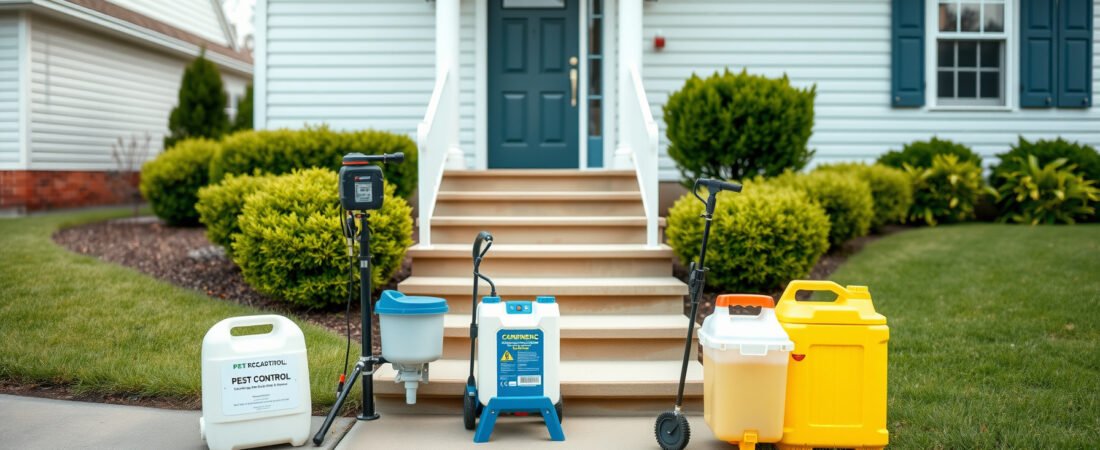
All three will show up, spray something, and hand you a service agreement. That’s where the similarities end — and where most homeowners stop doing their homework.
Here’s what the comparison articles won’t tell you: choosing between Orkin, Terminix, and Rentokil based on brand name alone is the wrong question entirely. The real question is whether any national chain is the right call for your specific pest problem — because in a surprising number of cases, it isn’t. That’s the angle worth exploring before you sign an annual contract worth $400–$1,200 and lock yourself into quarterly visits you may not need.
This article breaks down what each company actually does well, where each one falls short, and — most importantly — when you should skip all three and handle it yourself or hire a local operator instead.
What Do Orkin, Terminix, and Rentokil Actually Offer That’s Different?
On the surface, these three look nearly identical: licensed technicians, recurring service plans, guarantees, and treatment for common pests like ants, cockroaches, rodents, and termites. But the business models underneath are meaningfully different, and that affects what you actually get.
Orkin operates primarily through company-owned branches, which means more standardized training and tighter quality control from location to location. Terminix is the largest pest control company in the US by revenue and leans heavily on franchised or semi-independent operators, so your experience varies more by region. Rentokil — the least recognized name among US homeowners despite being the largest pest control company in the world — acquired Terminix in late 2022 and has been quietly consolidating operations, meaning what you’re getting when you call either brand is increasingly the same infrastructure.
This side-by-side look at how each company operates in the field is worth studying — because the gap between how these services are marketed and what technicians actually do inside your home is wider than most homeowners expect.
Is Orkin vs Terminix vs Rentokil Even the Right Comparison to Make?
Picture this: a homeowner in suburban Atlanta calls Terminix after spotting what she thinks is a termite swarm near her back door. A technician comes out, does a visual inspection, confirms subterranean termites, and quotes her $1,800 for a full Sentricon bait system installation. She signs. Three months later, she calls because she still sees activity. The local office is backed up. She waits two weeks for a follow-up. This isn’t an outlier — it’s the pattern that shows up repeatedly in consumer reviews of all three national chains.
The honest nuance here is that national chains perform best in specific scenarios: large infestations requiring specialized equipment, situations where you want a legally transferable termite bond (useful for home sales), or commercial properties with compliance requirements. For a single-family home dealing with common pest pressure — ants in spring, mice in fall, the occasional cockroach — a local licensed exterminator with lower overhead often provides faster response and more personalized service for less money. That’s not a knock on the big three; it’s just geography and incentives working against you.
“National pest control companies are built for scalability, not flexibility. Their treatment protocols are standardized by pest type and region, which is efficient but sometimes means a technician is following a script rather than responding to what’s actually happening in your specific home. For complex infestations or unusual pest behavior, a smaller operator who can spend two hours with you will often get better results than a 45-minute service call from a chain.”
Dr. Marcus Ellery, Board-Certified Entomologist and NPMA-Certified Pest Management Professional, Atlanta, GA
How Do the Service Plans and Contracts Actually Compare?
This is where the fine print matters more than the brand. All three companies push recurring annual contracts with quarterly service visits — and all three make cancellation more complicated than the sales pitch implies. Understanding the structure before you sign is worth 20 minutes of your time.
Here’s a straightforward breakdown of what you’re typically agreeing to with each provider:
| Provider | Typical Annual Cost (Single-Family Home) | Contract Required? | Termite Coverage Included? |
|---|---|---|---|
| Orkin | $400–$900 | Yes, with 30-day cancellation clause | No — separate bond required |
| Terminix | $550–$1,100 | Yes, varies by plan | Optional add-on |
| Rentokil (standalone) | $480–$1,000 | Yes, commercial focus | No — separate quote |
One thing most comparison articles gloss over: the “free re-service guarantee” all three offer sounds like a safety net, but in practice it’s only useful if you can get a technician back out within a reasonable timeframe. In high-demand seasons — spring ant invasions, fall rodent pressure — re-service wait times at national chains can stretch to 10–14 days. A cockroach population that’s not addressed within 24–48 hours of initial treatment can rebound significantly, especially German cockroaches, which produce 30–40 eggs per capsule and can repopulate a kitchen in weeks.
Which Company Is Best for Specific Pest Problems?
No single company wins across every pest type. The smarter move is matching the provider to your actual problem rather than picking a brand and hoping it covers everything adequately. Here’s how each company genuinely stacks up by pest category:
- Termites: Terminix and Orkin both have long-standing termite programs with liquid soil treatments and bait systems. Orkin’s termite division is frequently rated higher for technician consistency. Terminix’s Sentricon partnership is solid but expensive. Rentokil’s termite services are newer to the US residential market and less proven at scale.
- Bed bugs: All three offer heat treatment and chemical treatment options. Orkin’s heat treatment protocols are more standardized nationally. Expect to pay $1,000–$3,000 regardless of provider — and know that a single treatment rarely eliminates an infestation completely. Adult bed bugs can survive over 300 days without feeding, which means follow-up inspections aren’t optional.
- Rodents: This is where national chains are most overpriced relative to what you get. A standard rodent service from any of the three involves snap traps, bait stations, and an inspection — the same tools available to any homeowner. If you’re dealing with mice in walls specifically, the exclusion work (sealing entry points) is what actually solves the problem long-term, and national chains often subcontract or upsell this as a separate service. Mice can squeeze through a gap as small as 1/4 inch, and no amount of trapping helps if those gaps stay open. You can get solid guidance on that at How to Get Rid of Mice in Walls: What Actually Works.
- Cockroaches: Gel bait application is still the most effective treatment for German cockroaches indoors, and all three chains use it. The difference is how thoroughly they inspect for harborage areas — wall voids, under appliances, inside electrical boxes. A 45-minute service call often isn’t enough time to do this properly.
- General pest prevention (ants, spiders, occasional invaders): This is the use case where national chain contracts make the most sense for busy homeowners who just want quarterly perimeter treatments without thinking about it. All three companies are roughly equivalent here.
The counterintuitive insight worth sitting with: the pest problems that most homeowners call a national chain for — ants, mice, the occasional roach — are often the ones where DIY or a local operator gets you to the same result faster and cheaper. The pest problems where the big three genuinely add value (termite bonds, large-scale bed bug heat treatment, commercial compliance) are the ones homeowners are least likely to try handling themselves.
When Should You Skip All Three and Go Local — or DIY?
The assumption built into every Orkin vs Terminix vs Rentokil comparison is that one of the three should win your business. That assumption deserves pushback. For a significant portion of pest problems in single-family US homes, neither national chain nor local exterminator is the first move that makes sense.
Here’s when to skip the national chains entirely and what to do instead:
- Early-stage mouse activity (1–3 mice, fresh droppings): A well-placed snap trap costs $4 and works within 24 hours. A national chain will charge $150–$300 for an initial visit plus ongoing monitoring fees. For early-stage rodent problems, check out Best Mouse Traps: Snap, Electronic and Humane Options before picking up the phone.
- Seasonal ant invasions: Argentine ants and odorous house ants — the two most common indoor invaders — respond well to bait stations placed along trails. Spraying the perimeter (which is what most quarterly service visits include) kills foragers but doesn’t reach the colony. Baiting does.
- Single-room cockroach sightings: One cockroach visible doesn’t mean an infestation. It may mean one cockroach. Gel bait stations placed under the sink and behind the refrigerator will tell you within a week whether you have a real problem or not.
- Renters in multi-unit buildings: If you’re in an apartment, your landlord is legally responsible for pest control in most states, and calling Orkin yourself and billing the landlord is more complicated than it sounds. Know your rights before you spend money.
- Confirmed termites or large-scale bed bug infestations: This is when you do call a professional — but get three quotes including at least one local licensed operator before committing to a national chain contract.
Pro-Tip: Before signing any annual pest control contract, ask the company specifically what chemicals they’ll apply, how often a licensed technician (versus a trainee) will perform the service, and what the exact cancellation process looks like in writing. If the salesperson can’t answer the first two questions on the spot, that tells you something important about how the company operates.
Local pest control companies — often owner-operated, with fewer than 10 trucks — don’t have the marketing budget of Orkin or the name recognition of Terminix, but they frequently offer faster scheduling, more experienced technicians per visit, and more flexibility in treatment approach. Termite colonies can contain over 1 million individuals and require sustained, systematic treatment — that’s a case for a licensed pro with the right equipment. But most household pests aren’t termites, and most infestations aren’t at that scale.
The actual decision framework is simpler than the comparison articles make it sound: Is this a pest problem that requires specialized equipment or licensed-only chemicals? If yes, call a pro and get multiple quotes including local operators. If no, start with targeted DIY — not because it’s always better, but because understanding what you’re dealing with before you bring in a service contract makes you a much better consumer when you do eventually make that call.
Frequently Asked Questions
Is Orkin or Terminix cheaper for pest control?
Terminix tends to run slightly cheaper on initial treatments, with basic plans starting around $50–$70 per month, while Orkin’s pricing typically starts closer to $75–$100 depending on your region and pest type. That said, both companies give custom quotes, so the actual difference depends on your home’s square footage, location, and the specific pest problem you’re dealing with. It’s worth getting quotes from both before committing.
Does Rentokil service residential homes in the US?
Rentokil does serve residential customers in the US, but it’s much more focused on commercial accounts compared to Orkin and Terminix. If you’re a homeowner, you’ll find Orkin and Terminix have broader residential coverage, more local technicians, and more flexible treatment plans. Rentokil is worth considering if you own a rental property or small business, but for a typical home it’s usually not the first call.
Which pest control company has the best guarantee Orkin Terminix or Rentokil?
Terminix and Orkin both offer re-treatment guarantees if pests come back between scheduled visits, but Terminix’s termite damage repair guarantee — which can cover up to $250,000 in repairs — is one of the strongest in the industry. Orkin’s guarantee is solid for general pests but doesn’t match that termite coverage level. Rentokil offers service guarantees too, though the terms vary more by contract and location.
Which is better for termites Orkin or Terminix?
Terminix is generally considered the stronger choice for termite control, partly because of its $250,000 damage repair warranty and its wide use of the Sentricon and liquid barrier systems. Orkin is also well-equipped for termites and uses both bait systems and liquid treatments, but its repair warranty terms are more limited. If termites are your main concern, get a written warranty comparison from both before you sign anything.
Can I cancel Orkin or Terminix without a penalty?
Both Orkin and Terminix let you cancel, but whether you pay a fee depends on the plan you signed up for. Terminix annual contracts often include a cancellation fee if you exit early, sometimes around $200–$300 depending on how far into the contract you are. Orkin’s cancellation policy is generally more flexible, especially on month-to-month plans, so if you want less commitment, ask specifically for a no-contract option when you call.
Disclaimer: This article is for informational purposes only. Pest control costs, timelines, and outcomes vary widely depending on the pest, the severity of the infestation, your location, and the company you hire. Always get multiple quotes and ask for a written inspection report before agreeing to a treatment plan.