
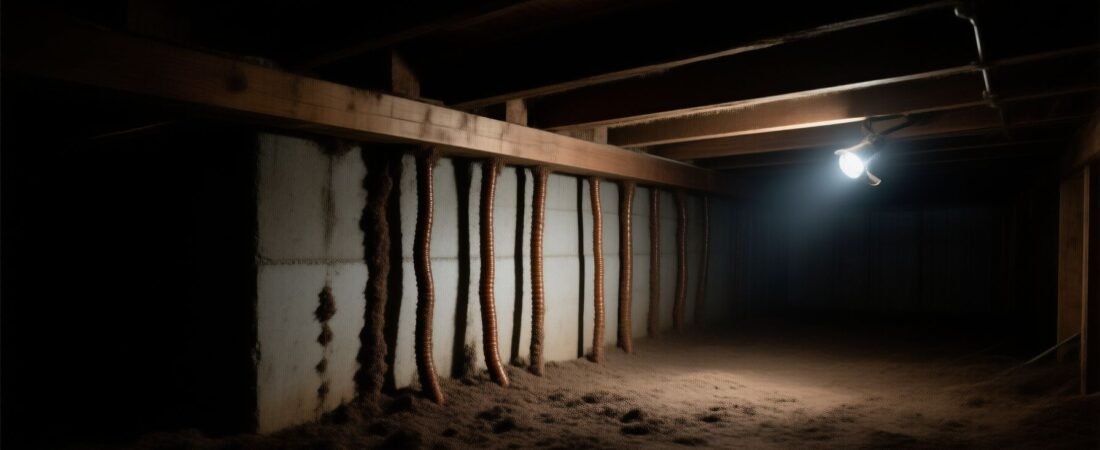
Termites in a crawl space are not a slow, creeping problem — a mature subterranean termite colony can contain over one million workers, and those workers don’t rest. What most homeowners get catastrophically wrong is treating the crawl space like an isolated battlefield. You spray, you bait, you breathe a sigh of relief. But the crawl space is just where termites are feeding — the colony itself lives in the soil underneath, and until you deal with what’s happening below grade, you’re managing symptoms, not the infestation.
That distinction — soil colony versus wood feeding site — is the whole game. This article is built around it. Once you understand why termites are using your crawl space the way they do, the treatment decisions become much clearer, and you’ll stop wasting money on products that only address half the problem.
Why Crawl Spaces Are the #1 Entry Point for Subterranean Termites
Subterranean termites need three things to thrive: moisture, warmth, and direct or near-direct soil contact with wood. Your crawl space delivers all three in a package that’s basically custom-designed for them. The soil floor retains moisture, the low clearance traps humidity, and the floor joists and sill plates are often sitting just inches above the ground — sometimes touching it directly in older homes.
Termites enter through expansion cracks in the foundation wall, gaps around pipe penetrations, or by building mud tubes up the interior face of concrete block or poured walls. They can also travel through the soil itself and emerge directly under wood that’s in contact with the ground. These mud tubes — roughly the diameter of a pencil — are the most reliable early warning sign, and in a dark crawl space, they can go unnoticed for years.
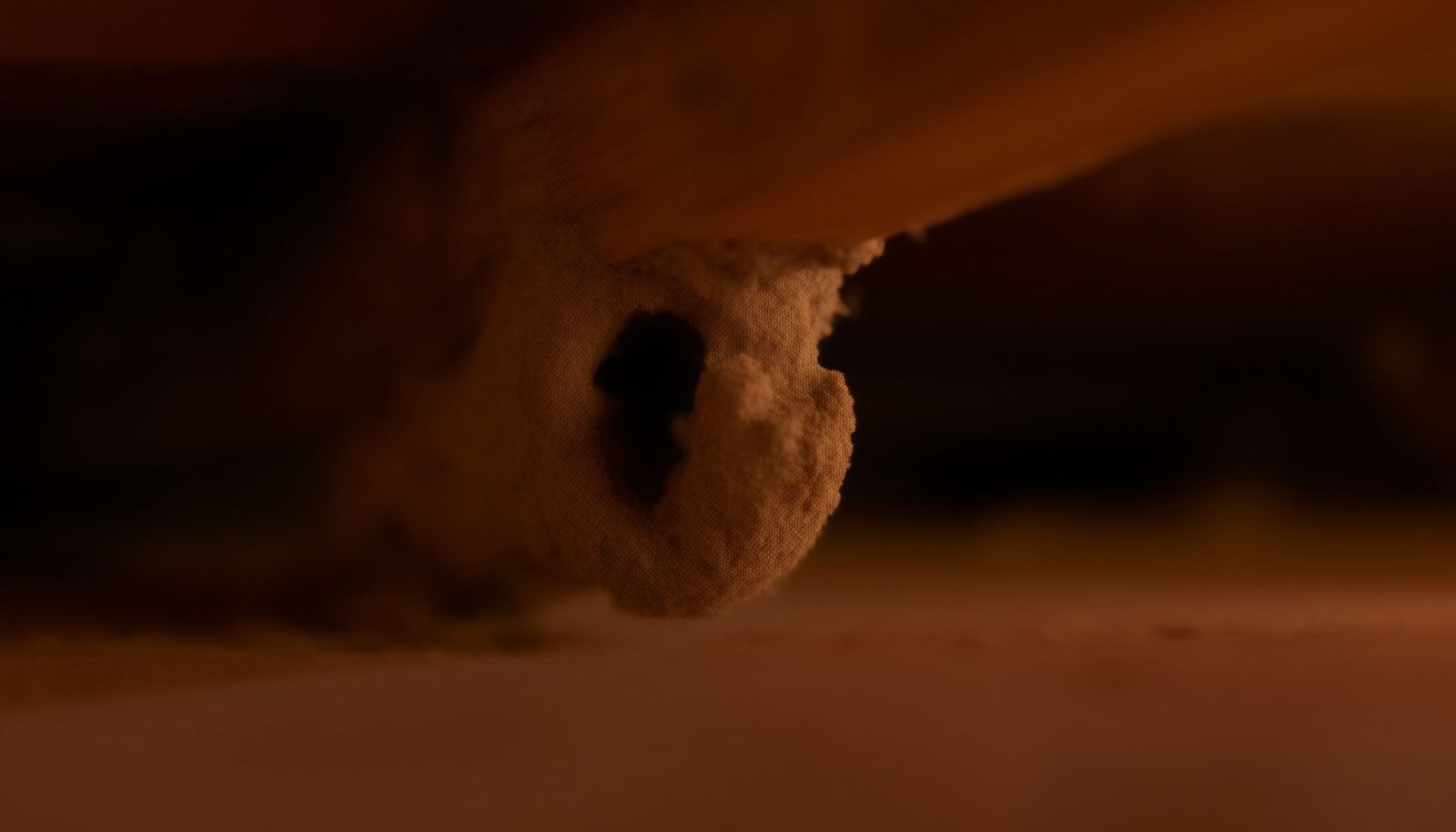
This close-up shows active mud tubes running along a concrete block foundation wall — the kind of structure that’s easy to miss with a flashlight sweep but signals an established colony working below your floor.
What Does an Active Termite Infestation in a Crawl Space Actually Look Like?
Picture this: you finally get a contractor under the house to fix a plumbing leak, and they call you from under there. “You’ve got something going on with these beams.” The wood looks solid from the outside — maybe a little darker than it should be — but when they probe it with a screwdriver, it caves inward like wet cardboard. That’s gallery damage. Termites eat wood from the inside out, hollowing along the grain while leaving a paper-thin outer shell intact. By the time the surface looks wrong, the structural damage is usually significant.
Other signs of active infestation include: mud tubes on piers, foundation walls, or running up the inside of the crawl space vent frames; discarded wings near the crawl space access hatch (a sign a swarm happened nearby); and frass that looks like tiny pellets, though this is more common with drywood species. Subterranean termites rarely leave frass in the open — they pack their galleries with soil. If you see mud-packed galleries inside wood, that’s a definitive tell.
Liquid Termiticide vs. Bait Stations: Which One Actually Works in a Crawl Space?
This is where most of the confusion — and wasted money — lives. The honest answer is that both can work, but they work through entirely different mechanisms, and the crawl space environment changes which one makes sense for your situation.
Liquid termiticides (applied as a soil treatment) create a chemical barrier or zone of toxicity in the soil around and under the structure. Bait stations work by getting worker termites to carry a slow-acting insect growth regulator back to the colony, eventually collapsing it from within. Here’s the comparison that matters for crawl space applications specifically:
| Method | How It Works | Best For | Key Limitation |
|---|---|---|---|
| Liquid Termiticide (Termidor, Taurus SC) | Creates a treated soil zone termites pass through and spread via contact | Established infestations needing fast results; inaccessible soil areas | Requires trenching/drilling around entire perimeter; not a DIY job on most homes |
| Bait Stations (Advance, Spectracide Terminate) | Slow-acting bait carried back to colony by workers; eliminates colony over weeks | Prevention + moderate infestations; homeowner-accessible exterior placement | Takes 3–6 months to collapse a colony; must be monitored and refilled |
| Foam Termiticide (Tim-bor, Bora-Care) | Borate-based foam penetrates wood and kills on contact; residual in wood | Treating accessible joists and sill plates directly | Doesn’t treat the soil source; colony can reroute around treated wood |
Pro-Tip: If you’re doing any DIY treatment in the crawl space itself, borate foam or spray (Bora-Care, Tim-bor) applied directly to unfinished wood is your most useful tool — it penetrates the wood, kills termites on contact, and leaves a residual that discourages future activity. But you still need a soil treatment or bait system outside to address the colony. Borate alone is like changing the lock without catching the burglar.
How to Treat Termites in a Crawl Space Step by Step
The sequence matters as much as the products. A lot of homeowners jump straight to spraying something on the wood and consider the job done. That skips the most important steps — the ones that actually address the colony and prevent re-entry.
- Inspect the full crawl space perimeter before touching anything. Get a bright headlamp and a flathead screwdriver. Probe every sill plate, rim joist, and pier block you can reach. Map where the mud tubes are — that tells you where the termites are most actively foraging and where the colony is likely entering from.
- Eliminate moisture problems first. No treatment holds long-term if the crawl space stays wet. Fix any plumbing drips, regrade soil that’s sloping toward the foundation, and extend downspouts at least 6 feet from the house. Install a 6-mil polyethylene vapor barrier across the entire soil floor if one isn’t already in place — this is genuinely one of the highest-impact things you can do for long-term termite control.
- Apply borate treatment to all accessible wood surfaces. Mix Tim-bor or Bora-Care per label directions and apply to sill plates, joists, and any structural wood you can reach. These products soak into the wood fibers and remain active for years. Don’t skip wood that looks undamaged — termites will find a new route.
- Treat the soil inside the crawl space. If local regulations allow, apply a diluted liquid termiticide (check your state — some require a licensed applicator for soil applications). Termidor SC (fipronil) is the most widely used professional product; Taurus SC is the DIY-accessible equivalent with the same active ingredient. Apply along the foundation walls and around any piers.
- Install bait stations around the exterior perimeter. Place them every 10–15 feet around the foundation, away from the treated soil zone by a foot or so. These intercept foraging workers before they reach the structure and provide a long-term monitoring point. Check them every 60–90 days.
- Remove wood-to-soil contact points. Scrap lumber stored in the crawl space, wooden form boards left after construction, and debris piles in or around the foundation are direct invitations. Clean them out. If any structural members are actually touching the soil, that’s a contractor conversation — they’ll need to be raised or replaced.
One thing that surprises people: treating the crawl space doesn’t have to mean tearing up your floor. The vast majority of subterranean termite work happens from underneath and outside. You rarely need to open walls or replace flooring to treat an active infestation — that only becomes necessary if the damage has already compromised structural members, which is a separate repair conversation.
What You Can Actually Do Yourself vs. When You Need a Pro
This is the honest nuance that most pest control articles skip over entirely: whether DIY is appropriate depends almost entirely on how far the infestation has progressed and what kind of soil access you have. A light to moderate infestation — mud tubes present, some soft wood, but no obvious structural compromise — is genuinely manageable for a hands-on homeowner with the right products and patience. A heavy infestation with multiple active tube systems, extensive gallery damage in load-bearing members, or a basement-to-first-floor spread is a different situation.
“The biggest mistake I see homeowners make is treating the crawl space as a standalone problem. Subterranean termites have satellite colonies — the queen may be 50 to 100 feet away from where you’re seeing damage. A borate treatment on the wood is a good first line of defense, but without closing off the soil pathway, you’re just redirecting traffic, not stopping it.”
Dr. Marcus Ellery, Board-Certified Entomologist and University Extension Specialist in Structural Pest Management
Here’s what you can reasonably handle on your own — and what’s worth calling a professional for:
- DIY-appropriate: Installing a vapor barrier, removing wood debris, applying borate treatments to accessible wood, installing exterior bait stations, monitoring for new tube activity
- DIY-possible but tricky: Soil termiticide application inside the crawl space (requires proper mixing, PPE, and knowledge of where to treat — doable, but read the label twice)
- Call a professional: Any situation where you suspect structural compromise; homes with inaccessible crawl spaces or slab sections that need drill-and-treat; large-scale infestations with multiple tube entry points; any home over 30 years old with a history of water damage
- Definitely call a professional: If you see swarming termites (winged alates) emerging from inside the house — that means the colony is large enough and close enough to the interior that the infestation is well-established
- Always worth a second opinion: If one company quotes liquid treatment only and another recommends bait-only, the right answer for most homes is probably both — a company recommending just one may not be tailoring the approach to your specific structure
One counterintuitive insight that most termite articles completely ignore: vented crawl spaces can actually make termite pressure worse in humid climates. The conventional wisdom used to be that venting a crawl space dries it out. In reality, in areas with high outdoor humidity (the Southeast especially), venting pulls moist outside air in, which condenses on the cooler soil and framing — creating exactly the wet, warm environment subterranean termites prefer. Sealed, conditioned crawl spaces have become the professional standard in these regions for a reason, and it’s not just about energy efficiency. If you’re dealing with recurring termite pressure and you live somewhere consistently humid, the crawl space encapsulation conversation is worth having — it addresses the root cause rather than just the symptom. The same moisture logic applies to other pests that exploit damp conditions below grade; if you’ve dealt with millipedes after heavy rain migrating into your home, you already know that a wet crawl space is a gateway problem that affects far more than one pest species.
It’s also worth noting that termites and other soil-dwelling pests often exploit the same structural vulnerabilities. The cracks and voids that let ants get under a concrete slab are exactly the kind of entry points that subterranean termites use to move from soil to wood — which is why a thorough perimeter inspection should look at both, not just the pest you’re currently dealing with.
The long game with crawl space termites is making your structure a less hospitable place than the soil next door — drier, less accessible, less wood-to-soil contact, with a chemical or biological barrier that the colony can’t route around. That’s not a single product or a single treatment day. It’s a system, and once it’s in place, it holds. Start with the moisture, treat the soil, protect the wood, and monitor consistently. That sequence, done right, is how crawl space termite problems actually get solved.
Frequently Asked Questions
how do I know if I have termites in my crawl space?
The most common signs are mud tubes running along the foundation walls or floor joists, wood that sounds hollow when you tap it, and small piles of frass that look like sawdust. You might also spot discarded wings near entry points after a swarm. If you see any of these, don’t wait — termite damage compounds fast.
how much does it cost to treat termites in a crawl space?
Professional termite treatment for a crawl space typically runs between $500 and $2,500, depending on the size of the infestation and the method used. Liquid termiticide treatments are usually on the lower end, while fumigation or heat treatments can push costs higher. Always get at least 3 quotes, since pricing varies a lot by region and company.
can I treat termites in my crawl space myself?
You can use DIY options like borate-based wood treatments or over-the-counter termiticide concentrates, but they’re usually only effective for minor infestations or as a preventive measure. If termites have already gotten into your floor joists or subfloor, a licensed pest control professional is your safest bet. Most pros use products that aren’t available to the public and can treat the soil barrier more thoroughly.
what attracts termites to a crawl space?
Termites are drawn to moisture, wood-to-soil contact, and wood debris left under the home. A crawl space with poor ventilation, standing water, or a vapor barrier that’s failing creates exactly the damp environment subterranean termites thrive in. Stacking firewood near your foundation or leaving form boards from old construction are two common mistakes that invite them in.
how long does termite treatment last in a crawl space?
Liquid termiticide barriers in the soil typically last 5 to 10 years, though that depends on the product used and soil conditions. Termite bait systems need to be monitored and refreshed on a schedule, usually every few months. Either way, you’ll want an annual inspection to catch any new activity before it turns into a bigger problem.
Disclaimer: This article is for informational purposes only and isn’t a substitute for professional pest control advice. Always read and follow the product label instructions exactly — label directions are legally binding and vary by brand and active ingredient. Keep all pesticides, baits and traps away from children and pets, ventilate treated areas as directed, and consider calling a licensed pest control professional if an infestation is large, recurring, or involves a structural pest like termites or carpenter ants.