
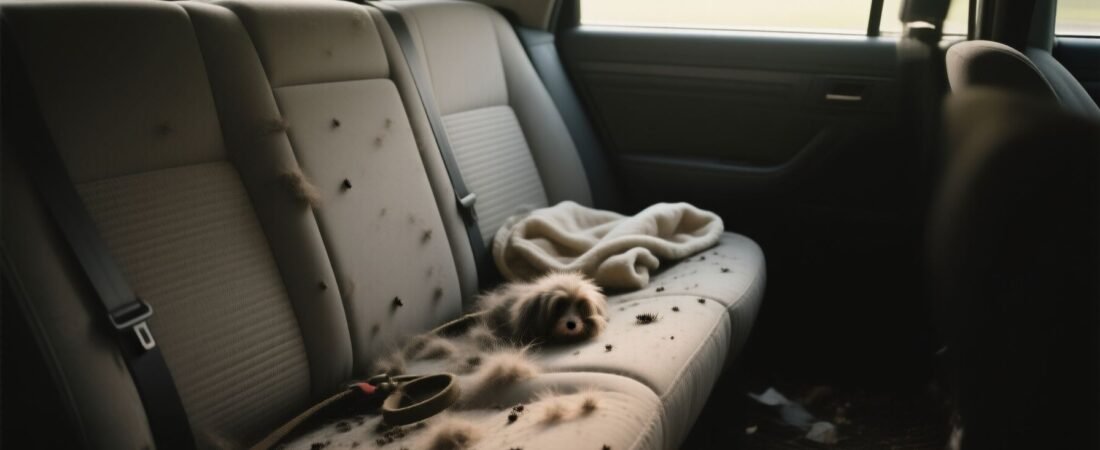
One treatment is almost never enough to clear fleas from a car — and that’s the detail most people skip right over. Everyone talks about vacuuming the seats and maybe tossing in a flea bomb, but the real problem is the flea life cycle. Adult fleas are only about 5% of the infestation at any given time. The other 95% — eggs, larvae, and pupae tucked deep into seat fibers, carpet loops, and under floor mats — are completely untouched by most sprays. If you only kill the adults you can see, the next generation hatches two weeks later and you’re back to square one.
Why Your Car Is Actually a Worse Flea Problem Than Your Living Room
Cars create near-perfect flea nursery conditions that most people don’t account for. A closed vehicle in summer sun can reach interior temperatures of 130°F or higher in direct sunlight — but here’s the catch: pupae (the cocoon stage) are extraordinarily heat-resistant and can survive temperatures that kill adults outright. The very thing you might assume would “bake” the infestation actually selects for the toughest life stage and leaves it intact.
Carpeted floors, padded seat bases, and seatbelt channels are essentially the same microhabitat as your living room carpet — dark, fibrous, and sheltered from air movement. A single female cat flea (Ctenocephalides felis, the species responsible for the vast majority of US household flea infestations regardless of whether you have a cat) can lay up to 50 eggs per day. If your dog rode in the back seat three times last week, you could easily have 300–500 eggs distributed across your car before you notice a single itch.
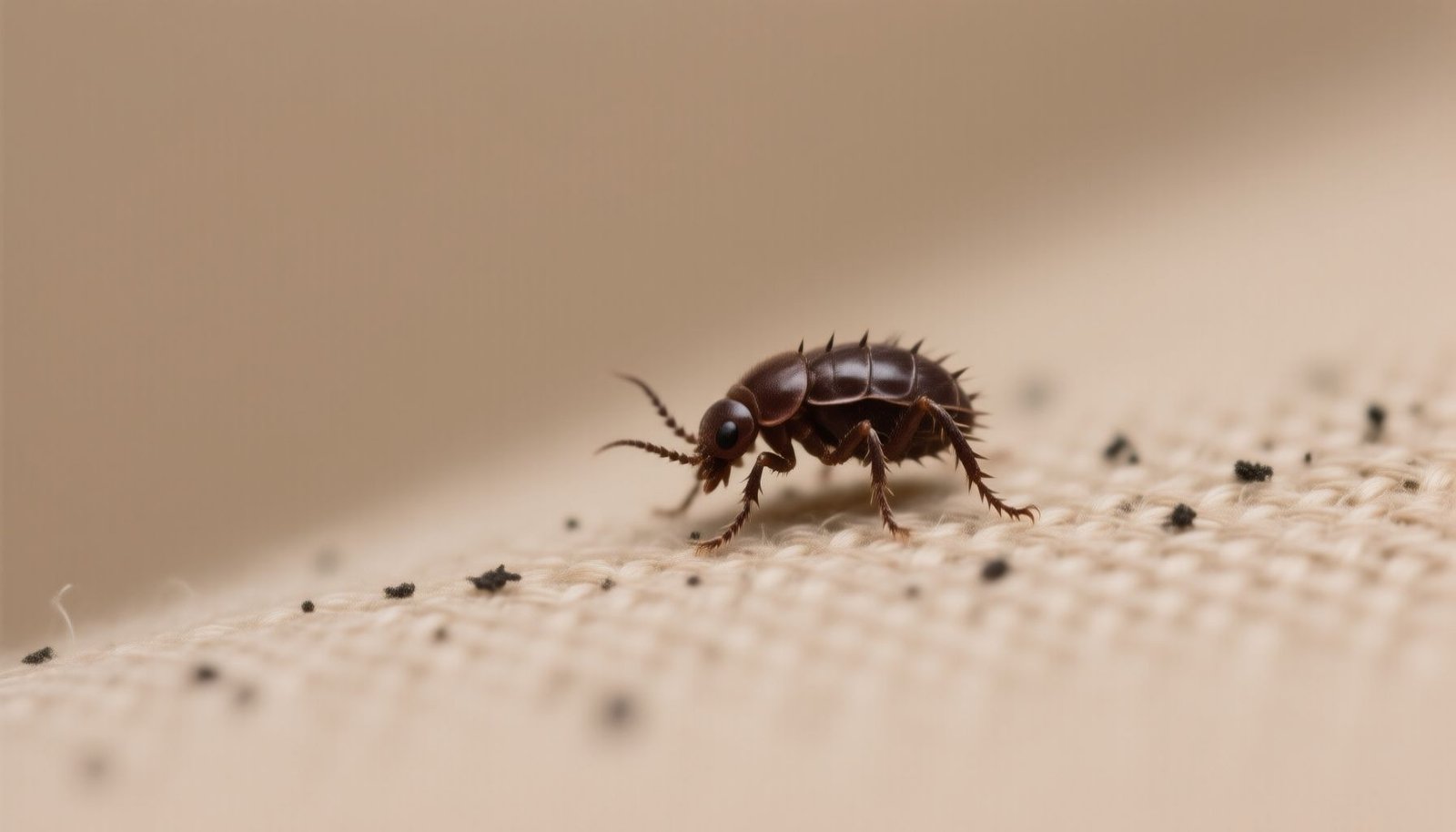
This close-up view of a car’s interior carpet and seat seam shows exactly where flea eggs and larvae concentrate — not on open surfaces, but buried in the texture and stitching where a vacuum nozzle barely reaches.
What to Do First (Before You Spray Anything)
The single most impactful thing you can do before reaching for a product is a thorough, aggressive vacuum — and most people do this wrong. A quick pass with a handheld vacuum is nearly useless. You need a full-size vacuum with strong suction, a crevice tool, and you need to spend 20–30 minutes working every surface: under the seats, along the base of the seat rails, inside the seatbelt catch recesses, in the trunk carpet, and under any removable mats. The physical vibration of vacuuming also stimulates pupae to hatch, which actually helps — it brings them out of their resistant cocoon stage into the adult stage where chemical treatments can reach them.
After vacuuming, remove the floor mats and take them outside. Wash fabric mats in hot water if possible, or leave rubber mats in direct sun for several hours. Then immediately bag and dispose of the vacuum contents outside your home — not in your kitchen trash. Flea eggs and larvae can survive inside a vacuum canister and re-emerge later. This prep step alone won’t solve the problem, but skipping it means any treatment you apply afterward will be working against an overwhelming number of viable eggs that a product can’t touch.
Which Products Actually Work on Car Flea Infestations
Here’s where it’s worth being honest: no single product type is perfect for every situation. The right choice depends on how bad the infestation is, what life stages are present, and whether you have kids or pets who ride in the car regularly.
The most effective approach combines two different mechanisms — an adulticide to kill live fleas immediately, and an insect growth regulator (IGR) to prevent eggs and larvae from developing into reproducing adults. Products like Precor 2000 Plus (which contains both permethrin and methoprene) are specifically designed for this. A flea “bomb” or fogger alone won’t cut it — foggers don’t penetrate under seat bases, under carpets, or into the crevices where the problem actually lives. They also leave residue on surfaces you touch constantly, like steering wheels and door handles.
Pro-Tip: After applying an IGR-based spray, close up the car and let it sit for at least 2–3 hours before airing it out. Longer contact time dramatically improves results, especially against larvae that are protected by the fabric pile around them. Come back in 10–14 days and vacuum again — this second vacuum is not optional, it’s what removes the dead adults and disrupts any late-hatching pupae.
Here’s a quick comparison of the main product types so you can choose the right tool:
| Product Type | Kills Adults | Stops Eggs/Larvae | Best For |
|---|---|---|---|
| IGR spray (methoprene/pyriproxyfen) | No (IGR only) | Yes — prevents development | Stopping the cycle long-term |
| Permethrin-based spray | Yes | No | Immediate knockdown of live fleas |
| Combination spray (IGR + adulticide) | Yes | Yes | Most infestations — best single option |
| Fogger/bomb | Partially | No | Not recommended for cars |
The Step-by-Step Treatment Process That Actually Breaks the Cycle
Picture this: you’ve just dropped your dog at the groomer, your car’s empty for the first time in days, and you’ve got two hours before pickup. That’s actually the ideal window to treat — no pet in the car, time for the product to work, and enough lead time to air the vehicle out before your dog gets back in and potentially picks up chemical residue. Here’s the exact sequence to follow:
- Vacuum every surface aggressively. Seats, floors, under seats, trunk, headliner if your pet rides with their head up. Use a crevice tool along every seam and rail. Spend at least 20–30 minutes — this is not decorative cleaning, it’s mechanical removal of a significant portion of eggs and larvae.
- Remove and treat floor mats separately. Take them outside. Fabric mats get a hot wash; rubber mats get a spray treatment and time in the sun. Don’t put them back until they’re completely dry.
- Apply a combination IGR/adulticide spray to all fabric surfaces. Don’t oversaturate — a fine, even mist is more effective than a soaking wet application. Hit seat crevices, carpet loops, under seat rails, and the trunk carpet. Avoid plastic controls and electronics.
- Close the car and wait 2–3 hours minimum. Park in shade if you’re concerned about heat damaging the car’s interior; a cool dark environment also slows pupal hatching so the IGR has more time to absorb into fibers before larvae encounter it.
- Air out the car thoroughly before anyone (human or pet) rides in it again. Open all doors and windows for at least 30–60 minutes. This isn’t just about odor — it’s about letting residual chemical vapor dissipate to safe levels.
- Repeat the vacuum-and-check at day 10–14. If you still see live adult fleas jumping, do a second spray. If activity has dropped to near-zero, one more vacuum is usually sufficient to close out the infestation.
One honest nuance here: if your infestation is severe — meaning you’re seeing dozens of fleas jumping in the car every time you get in — two treatment cycles may not be enough. A heavy infestation where thousands of eggs were deposited over multiple weeks can require three rounds of treatment at 10–14 day intervals to fully break the cycle. Don’t take a second-round “I still see a couple of fleas” as failure; it may mean the pupae are still hatching on schedule and one more round will finish them off.
How to Keep Fleas From Coming Back After a Pet Ride
Treating the car is only half the equation. A re-treated car fills right back up with fleas if the pet getting in still has an active infestation on their coat, or if your home environment hasn’t been addressed simultaneously. The car, the pet, and the home form a triangle — break two sides of it and the third keeps reseeding the problem.
Here are the ongoing prevention steps that actually hold fleas out of your vehicle long-term:
- Keep your pet on a veterinarian-recommended flea prevention product year-round. Oral preventatives like nitenpyram or fluralaner work systemically — fleas that bite the pet die before they can lay eggs in your car. This single step has more impact than anything you do to the car itself.
- Use a washable seat cover or dedicated pet blanket for car rides. This creates a containable surface you can throw in a hot-water wash after every trip rather than treating upholstery repeatedly.
- Vacuum the car after every pet ride during flea season — not just when you see fleas. Removing eggs before they hatch is far easier than treating larvae that have already burrowed into carpet fibers.
- Treat your home at the same time you treat the car. Flea larvae spend most of their time in floor-level environments, not on your pet. If your carpets and furniture are still infested, your pet picks up new fleas daily and carries them straight back into the vehicle. The same approach that works on stubborn indoor pests — like how to get rid of spiders behind furniture and in corners, where the real problem is in the gaps and recesses most people ignore — applies here: treat the hidden harborage points, not just the visible surface.
- After an infestation, apply a light IGR treatment to the car interior every 3–4 months through peak flea season. IGRs like methoprene break down slowly in protected environments (under carpet, inside seat foam) and provide a residual barrier that prevents eggs from developing even if a few get deposited.
“The mistake I see constantly with car flea treatments is people addressing the adult flea population and considering the job done. Cat flea pupae can remain dormant inside their cocoons for up to 5 months, and they’re essentially chemically impenetrable during that stage. Without an IGR component that interrupts the next generation before it reaches adulthood, you’re in a guaranteed repeat cycle. The car smells like spray, looks clean, and then two weeks later the owner is back to square one wondering why it didn’t work.”
Dr. Sandra Meacham, Board-Certified Entomologist and Urban Pest Management Specialist, University Extension Urban Entomology Program
There’s a counterintuitive detail worth knowing about flea pupae that almost no consumer-facing article mentions: the cocoon is electrostatically sticky. It attracts debris — carpet fibers, dust, pet hair — and this debris forms a physical shield around the pupa that makes it even harder for contact insecticides to penetrate. This is part of why the mechanical agitation of vacuuming matters so much. You’re not just removing eggs; you’re stripping away that protective debris layer from pupae that are about to hatch, making them far more vulnerable to any chemical treatment applied immediately after.
The same principle applies elsewhere in pest control — focusing on surface-level treatments while missing the protected harborage points leads to frustrating repeat infestations. If you’ve dealt with pests hiding deep in structural gaps, like getting rid of carpenter ants without finding the nest, you already know that indirect treatment methods targeting the population’s movement patterns often outperform direct nest or source elimination.
Getting fleas out of a car for good is genuinely a two-to-three week commitment, not a one-afternoon fix — but every step after the first one gets easier. Once you’ve broken the reproductive cycle with an IGR and removed the hatching adults through repeated vacuuming, the population collapses fast. Stay consistent with your pet’s prevention protocol going forward, and a car flea infestation becomes a one-time experience rather than a seasonal ritual.
Frequently Asked Questions
how long can fleas live in a car without a pet?
Fleas can survive in a car for up to 2 weeks without a host, and flea eggs can lie dormant even longer. They’ll hide in carpet fibers, seat seams, and floor mats waiting for a warm body to latch onto. The longer you wait to treat the car, the more eggs hatch and the worse the infestation gets.
what kills fleas in a car fast?
A flea fogger or car bomb designed for enclosed spaces is one of the fastest options — most start killing fleas within a few hours. Vacuuming thoroughly first removes eggs and larvae before treatment, which makes any product work better. Follow up with a flea spray on upholstery and carpets since foggers sometimes miss low-traffic spots under seats.
can fleas in a car infest your house?
Yes, absolutely — fleas hitch rides on you, your pet, or your clothing every time you get out of the car. It only takes a few fleas to start a full infestation indoors, especially if you have carpet or pets already in the home. Treat the car and your home at the same time so you’re not just moving the problem around.
does vacuuming get rid of fleas in a car?
Vacuuming removes up to 30% of flea larvae and a large portion of eggs, which makes it a critical first step — but it won’t eliminate an infestation on its own. You need to vacuum every surface including under seats, in seat crevices, and in the trunk if your pet rides there. Seal and toss the vacuum bag or empty the canister outside immediately so fleas don’t escape back into the car.
is it safe to use a flea bomb in a car?
It can be safe if you use a product specifically labeled for use in vehicles and follow the instructions exactly — never use a full home-sized fogger in a small car. You’ll need to air the car out for at least 2 to 4 hours after treatment before anyone rides in it, including pets. Keep windows cracked during treatment if the product directions allow it, and remove any food, car seats, or items you don’t want exposed to the chemicals.
Disclaimer: This article is for informational purposes only and isn’t a substitute for professional pest control advice. Always read and follow the product label instructions exactly — label directions are legally binding and vary by brand and active ingredient. Keep all pesticides, baits and traps away from children and pets, ventilate treated areas as directed, and consider calling a licensed pest control professional if an infestation is large, recurring, or involves a structural pest like termites or carpenter ants.