
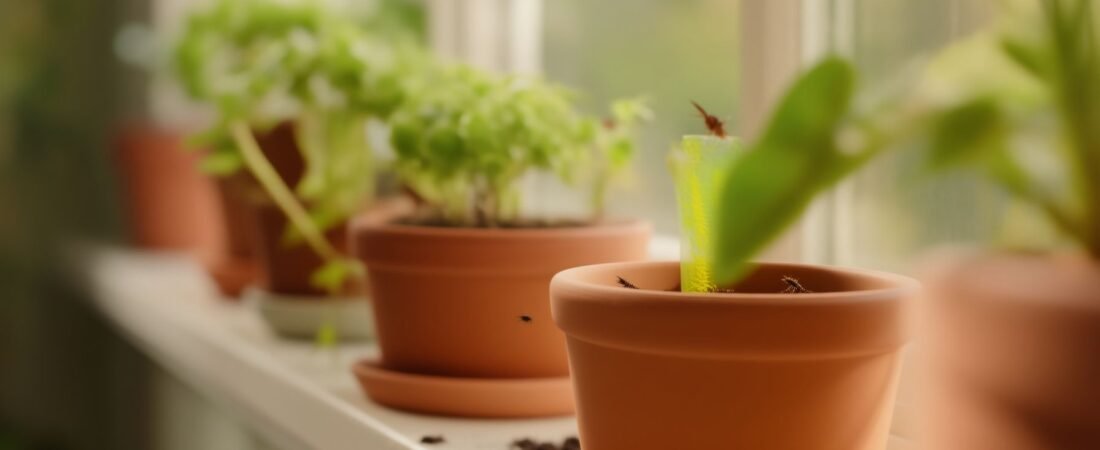
Letting your soil dry out completely will not fix a fungus gnat problem — and most of the advice you’ll find online stops there. The real issue isn’t that you’re watering too much. It’s that fungus gnats have already laid hundreds of eggs in the top two inches of your soil, and drying the surface does almost nothing to kill larvae that have burrowed deeper. If you’ve done the “let it dry out” trick twice and the gnats keep coming back, that’s exactly why.
Here’s the bottom line upfront: to actually get rid of gnats around houseplants for good, you need to attack three life stages at the same time — eggs and larvae in the soil, adults in the air, and the moisture conditions that made your pot an ideal breeding ground in the first place. Miss any one of those, and you’re just buying yourself a week of relief before the next generation hatches.
Why Do Gnats Keep Coming Back Even After You Treat Them?
Fungus gnats — specifically Bradysia species, the most common culprit in US homes — have a life cycle of roughly 17 to 28 days from egg to adult, depending on temperature. A single female can lay up to 300 eggs in her short lifetime, almost always deposited in the top inch of moist potting soil. If you only kill the adults flying around your windowsill, you’re skimming the surface of a much bigger problem that’s still developing underground.
The real reason treatments seem to “work” and then fail is the pupal stage. Gnat pupae are encased in a protective casing that resists most surface-level treatments, including yellow sticky traps and even some soil sprays. They hatch into adults 3 to 6 days after pupation completes, which is why you’ll see the population drop, then spike again in a week and a half like clockwork. You’re not failing — you’re just fighting half the lifecycle.
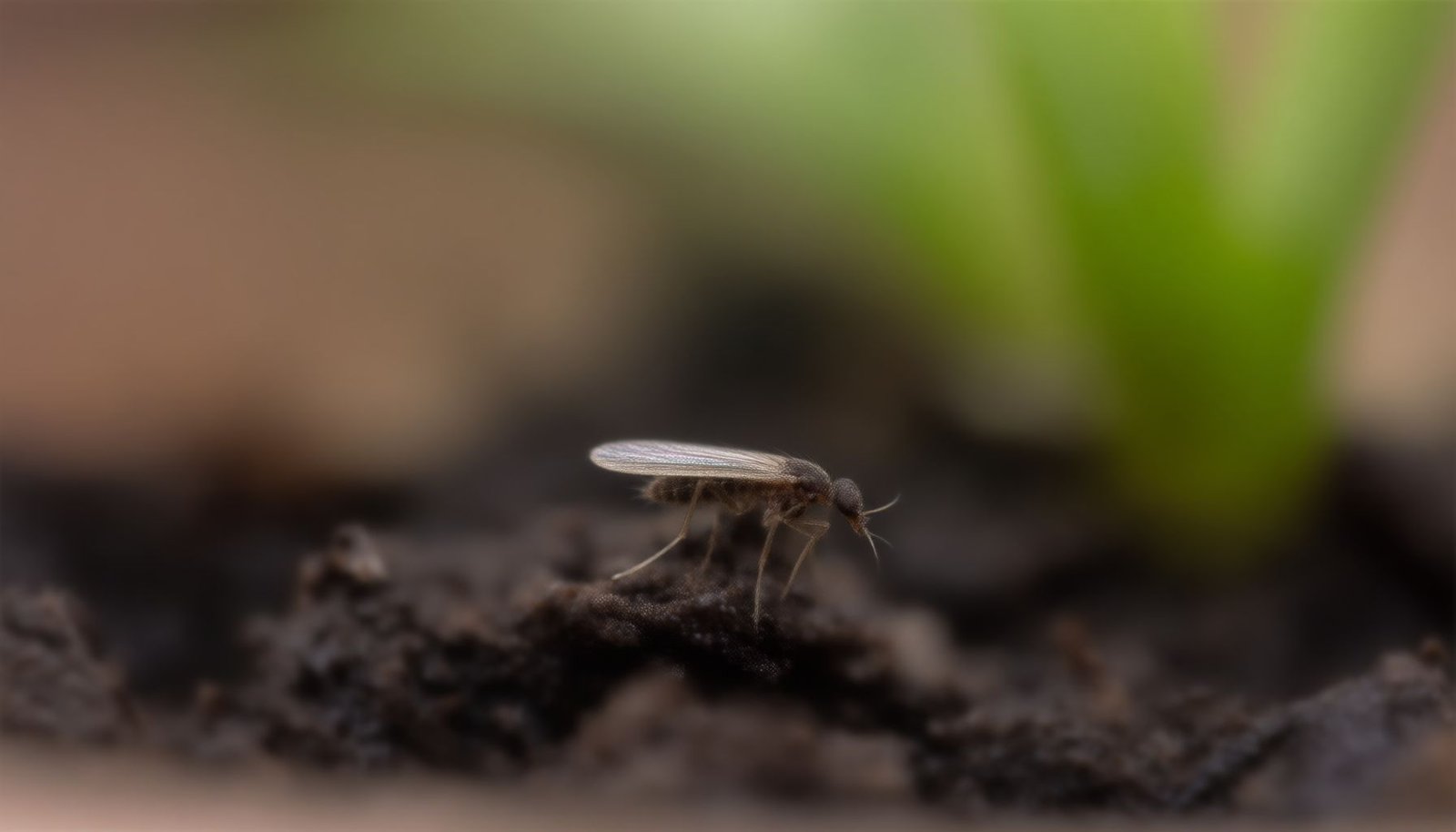
This close-up shows fungus gnat larvae near the soil surface — pale, thread-thin, with a distinct black head — which is exactly what you’re dealing with beneath the potting mix even when you can’t see them.
What’s Actually Living in Your Houseplant Soil Right Now?
Picture this: you repot a fiddle-leaf fig using a bag of premium potting mix from your local garden center, and within two weeks you’ve got gnats. The bag was sealed. You did nothing “wrong.” What happened is that many commercial potting mixes contain high amounts of peat moss, bark fines, and composted organic material — which fungus gnat females can detect through chemical signals and will actively seek out for egg-laying. Bagged soil frequently carries gnat eggs or early-stage larvae before it even hits your shelf.
Gnat larvae don’t just sit in soil passively. They feed on fungal growth, decomposing organic matter, and, critically, on live plant root hairs — which is how a “minor” gnat issue can cause real damage to seedlings and young plants over time. At any given moment in an infested pot, you might have 50 to 200 larvae per 6-inch container actively working through the root zone. That’s not a nuisance. That’s an underground population consuming your plant from below while you chase the adults flying around above.
How to Kill Fungus Gnat Larvae in Soil Without Harming Your Plants
Killing larvae is where most homeowners skip straight to yellow sticky traps — which only catch adults — and wonder why nothing changes. Larval control requires getting a treatment into the soil itself, and you have a few genuinely effective options that won’t harm your plants. Use them in sequence or together for faster results.
- Bacillus thuringiensis israelensis (Bti) soil drench — This is a naturally occurring soil bacterium sold as Mosquito Bits or Gnatrol. You soak the granules in water overnight, then water your plant with the solution. Bti produces proteins that are toxic to fungus gnat larvae specifically, without harming earthworms, beneficial insects, pets, or humans. It’s the closest thing to a targeted larval weapon you’ll find. Apply every 5 to 7 days for 3 to 4 weeks to break the cycle.
- Hydrogen peroxide soil drench (3% solution) — Mix one part 3% hydrogen peroxide with four parts water and water your plant with it. It fizzes on contact with organic matter in the soil, killing larvae on contact. It’s fast but temporary, as it breaks down quickly and won’t prevent re-infestation on its own. Use it as a quick knockdown while your Bti treatment takes hold.
- Diatomaceous earth as a top dressing — Spread a thin layer of food-grade diatomaceous earth over the top inch of soil. It dehydrates larvae and adults that crawl across the surface. It only works when dry, so reapply after watering. This won’t touch deep-soil larvae but creates a hostile barrier at the egg-laying zone.
- Beneficial nematodes (Steinernema feltiae) — These microscopic roundworms are parasitic to fungus gnat larvae and are completely harmless to plants, people, and pets. Mixed into water and applied as a soil drench, they actively hunt larvae through the soil. They’re especially useful for larger pots or heavily infested plants where other treatments can’t penetrate deep enough.
- Repotting with amended soil — In severe cases, the fastest reset is pulling the plant, shaking off as much infested soil as possible, and repotting into a perlite-heavy mix. Fungus gnats prefer water-retentive organic mixes. A mix that’s 40% or more perlite or coarse sand drains faster, stays drier, and is genuinely less hospitable to egg-laying.
Honest caveat here: how aggressive you need to be depends on the plant. Succulents and cacti tolerate a very dry, perlite-heavy mix and respond well to near-complete soil replacement. Moisture-loving tropicals like calathea or peace lilies can’t handle soil that dries out completely — so you’ll lean harder on Bti and nematodes rather than altering the soil mix dramatically. The treatment isn’t one-size-fits-all.
How to Stop Adult Gnats While the Soil Treatment Works
Adult fungus gnats live only about 7 to 10 days, but they can lay eggs continuously during that window. Controlling adults won’t solve your infestation by itself, but it reduces the number of eggs being deposited into the soil while your larval treatments are still working through the cycle. Think of adult control as buying time, not as the fix.
Yellow sticky traps work — they’re genuinely effective at catching adults — but they’re a monitoring tool as much as a treatment. If you’re pulling 20+ gnats off a single trap in 24 hours, that tells you the population is much larger than it looks. Place traps horizontally on top of the soil, not vertically on stakes, because adult gnats spend most of their time near the soil surface, not flying at eye level. That one positioning change alone can triple your trap catch rate.
Pro-Tip: Apple cider vinegar traps (a small dish with a splash of ACV, a drop of dish soap, and a cover of plastic wrap with holes poked in it) catch adult gnats remarkably well and cost almost nothing. Set one next to each infested plant. The dish soap breaks the surface tension so gnats that land on the liquid can’t escape. Replace every 3 days to keep it effective.
What Changes You Need to Make So Gnats Don’t Come Back
The counterintuitive truth about fungus gnats is that they’re not a sign of a bad gardener — they’re a sign that your conditions are genuinely great for plants. Warm, humid, organically rich soil is ideal for plant roots and equally ideal for gnat breeding. You can’t just treat your way out of a recurring problem without changing the underlying conditions that invite them in the first place.
There are specific habits that consistently distinguish homes where gnats become a permanent problem from homes where they get handled once and don’t return. Here’s what actually matters long-term:
- Bottom-water whenever possible — Set the pot in a tray of water and let the soil absorb moisture from below. The top layer of soil stays dry, which is exactly where females want to lay eggs. This single habit eliminates the most attractive egg-laying zone in your pot.
- Allow the top 2 inches to dry between waterings — Not the whole pot — just the top. Stick a finger in. If the top 2 inches feel moist, wait. For most tropical plants this won’t cause stress. For cacti and succulents, let it go even deeper.
- Cover exposed soil surfaces — A layer of coarse sand, fine gravel, or decorative stones over the soil surface physically blocks females from reaching moist soil to deposit eggs. It’s low-tech and it works.
- Quarantine new plants for 2 weeks — New plants from nurseries or garden centers are the single most common way gnats enter a home. Isolate any new arrival and inspect for adults near the soil before introducing it to your existing collection.
- Remove dead leaves and organic debris from soil surfaces — Decaying plant matter on top of the soil is a direct food source for larvae and an attractant for egg-laying females. Clear it off regularly.
“Most people treat fungus gnats like they’re a flying insect problem, but 90% of the population is underground at any given time. The adults you see represent maybe 10% of the actual infestation — the other 90% are eggs, larvae, and pupae in the soil that no yellow sticky trap will ever touch. You have to treat the substrate, not just the air.”
Dr. Raymond Gill, Extension Entomologist and Integrated Pest Management Specialist, University of California Cooperative Extension
How Do You Know When You’ve Actually Beaten the Infestation?
Most people declare victory too early. You see fewer gnats for a few days, you stop treating, and within two weeks the next generation hatches and you’re back at square one. The pupal casing that protects developing gnats means there’s almost always a “silent wave” still in the pipeline even when adult numbers drop sharply. Don’t stop treatment when you stop seeing gnats — stop treatment after two full weeks of zero catches on fresh sticky traps.
Here’s a simple tracking method that actually works:
| Week | What to Expect | What to Do |
|---|---|---|
| Week 1 | High adult trap catches, visible gnats near soil | Start Bti drench, set traps horizontally on soil, add ACV traps |
| Week 2 | Adult numbers may briefly spike as pupae hatch | Second Bti drench, replace sticky traps, maintain dry top layer |
| Week 3 | Noticeable drop in adults, fewer larvae present | Third Bti drench, continue watering habits, inspect new plants |
| Week 4+ | Zero or near-zero trap catches | Final Bti drench, transition to prevention-only mode |
Fungus gnats are also worth distinguishing from a broader flying insect context in your home. They look similar to drain flies and fruit flies to the untrained eye, and treating the wrong pest wastes weeks. Fungus gnats are roughly 1/8 inch long, dark-bodied, and almost always found hovering within inches of plant soil. Fruit flies hover around food and fermentation. Drain flies emerge from sink drains and have fuzzy, moth-like wings. If what you’re seeing doesn’t match those specifics, you may have a different problem entirely — just like misidentifying termite swarmers indoors can send you down entirely the wrong treatment path.
One thing worth knowing: if you’re also dealing with other pest issues in your home at the same time — say you recently had a pet in a vehicle and noticed insects after — the cross-contamination of infestations is more common than people realize. Keeping pest problems siloed and addressed individually, like learning how to handle fleas in a car after a pet ride versus gnats in your houseplants, helps you apply the right fix to the right situation rather than a scattershot approach that leaves gaps in both.
The bottom line is that gnats around houseplants are a solvable problem — but only when you commit to 4 full weeks of layered treatment rather than a single fix. Start the Bti drench today, position those sticky traps at soil level instead of above it, and change how you water. In a month, you’ll have broken every stage of the lifecycle. After that, the prevention habits do the heavy lifting permanently.
Frequently Asked Questions
what causes gnats around houseplants?
Fungus gnats are almost always caused by overwatered soil. Their larvae live in the top 2–3 inches of moist potting mix and feed on organic matter and roots. If your soil stays wet for more than a few days between waterings, you’re basically giving them a perfect breeding ground.
how do I get rid of gnats around houseplants fast?
The fastest fix is to let your soil dry out completely before watering again — most fungus gnat larvae die within a few days without moisture. You can speed things up by placing yellow sticky traps near the soil to catch adult gnats and break the breeding cycle. For a bad infestation, drench the soil with a diluted hydrogen peroxide solution (1 part 3% hydrogen peroxide to 4 parts water), which kills larvae on contact without harming your plants.
how often should I water plants to avoid gnats?
A good rule of thumb is to wait until the top 2 inches of soil are completely dry before watering again. For most houseplants, that means watering once every 7–10 days in normal indoor conditions, though it varies by plant type and pot size. Using a moisture meter takes the guesswork out — you’re aiming for a reading of 1–3 before you water again.
does cinnamon really get rid of gnats in houseplants?
Cinnamon does have mild antifungal properties, and sprinkling it on the soil surface can slow the growth of the fungus that gnat larvae feed on. It won’t wipe out an active infestation on its own, but it’s a decent preventive measure and won’t harm your plants. Think of it as a supplement to other methods, not a standalone fix.
are gnats around houseplants harmful to my plants?
Adult gnats are mostly just annoying and don’t damage plants directly. The real problem is the larvae — they chew on roots and can stunt growth or even kill young seedlings and plants with delicate root systems. If you’re seeing wilting, yellowing leaves, or poor growth in a plant that’s been properly watered, larval damage could be the culprit.
Disclaimer: This article is for informational purposes only and isn’t a substitute for professional pest control advice. Always read and follow the product label instructions exactly — label directions are legally binding and vary by brand and active ingredient. Keep all pesticides, baits and traps away from children and pets, ventilate treated areas as directed, and consider calling a licensed pest control professional if an infestation is large, recurring, or involves a structural pest like termites or carpenter ants.