
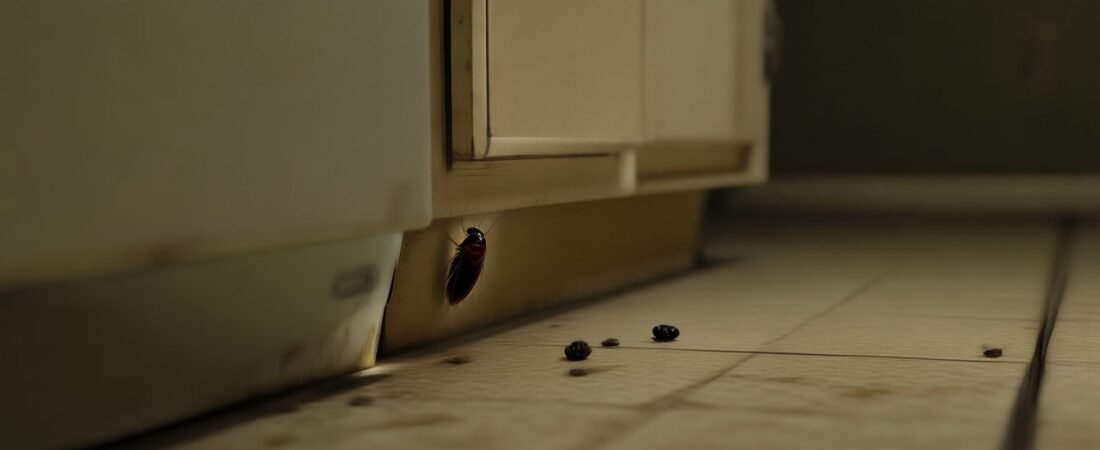
By the time you actually see a cockroach, you’re already behind. That’s the hard truth most pest guides skip over — the visible roach is almost never the first sign of an infestation. It’s one of the last. Cockroaches are nocturnal, skittish, and extraordinarily good at staying hidden. What you should be looking for is everything that comes before the roach itself shows up in plain sight: the smell, the smear, the shed skin, the egg case tucked behind your stove. Catching those early signals is the difference between a $30 fix and a $400 exterminator bill.
Why Seeing a Roach Isn’t Actually the First Warning Sign
Here’s the thing that catches people off guard: a single cockroach scuttling across your kitchen floor during the day is already a red flag for a larger problem. Cockroaches are compulsively nocturnal and only venture out in daylight when competition for food and harborage space forces them out — which typically means the population behind your walls is already crowded. A German cockroach egg capsule holds 30 to 40 eggs, and a single female can produce 4 to 6 capsules in her lifetime, so an “occasional” roach sighting can represent dozens already living in your home.
The smarter play is to treat a daytime sighting as a late-stage confirmation, not an early warning. The real early signs show up in places most people don’t look — or don’t recognize when they see them. Understanding the biology explains why: cockroaches release aggregation pheromones that chemically signal safe harborage to other roaches, meaning once a few settle in, they actively recruit more. The colony builds quietly, invisibly, for weeks before you ever see one face-to-face.
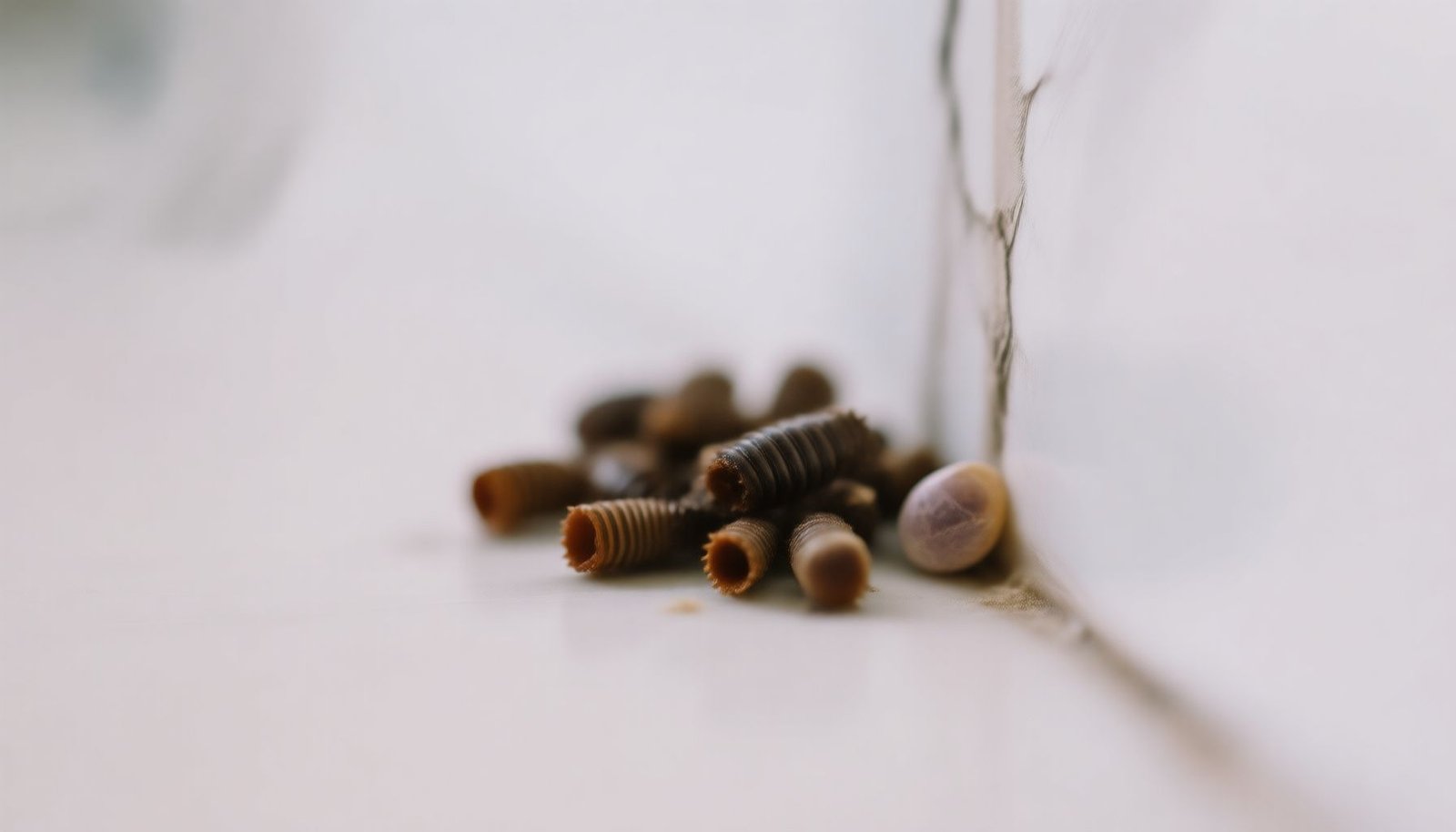
This close-up shows the kind of early physical evidence — fecal smears, shed exoskeletons, and an egg capsule — that appears in tight, dark harborage zones well before roaches become visible to the average homeowner.
What Does Cockroach Fecal Evidence Actually Look Like?
Roach droppings are probably the single most reliable early sign, and they’re almost always misidentified. Small species like the German cockroach leave droppings that look like black pepper or dark coffee grounds — tiny specks roughly 1mm across, clustered in corners, along the edges of shelving paper, inside cabinet hinges, or along the back wall of your sink cabinet. Larger species like the American cockroach leave cylindrical droppings with blunt ends, about ¼ inch long, that people frequently mistake for mouse droppings.
The key distinction between roach frass and mouse droppings is texture and tapered shape: mouse droppings taper to a point at one or both ends, while roach droppings are more uniform and sometimes have ridged sides. You’ll also notice smear marks — dark, irregular streaks where cockroaches repeatedly travel along a surface, depositing gut fluid as they move. These smears are especially common on the underside of shelves, along baseboards near water sources, and around the base of appliances. If you see smears plus specks together, that’s a cluster site — meaning roaches are spending concentrated time there.
Can You Smell a Cockroach Infestation Before You See It?
Yes — and this is one of the least-talked-about early detection methods. Cockroaches produce a musty, oily odor from their bodies and from pheromone secretions they use to communicate. A single roach doesn’t produce much scent, but as the population grows, that smell becomes distinctly noticeable. People describe it variously as “greasy,” “musty,” “like wet cardboard,” or occasionally similar to a mild almond-y chemical smell. It’s most concentrated in enclosed spaces: the inside of a cabinet under the sink, the gap behind a refrigerator, or the drawer under a stove.
Picture this: you open the cabinet under your kitchen sink to grab the dish soap and notice a faint, slightly oily smell that wasn’t there last month. No droppings yet, nothing visible — just that smell. That’s worth taking seriously. The odor comes partly from cuticular hydrocarbons (waxy compounds on the roach’s exoskeleton) and partly from the aggregation pheromones that essentially say “this is a safe place to gather.” If you can smell it, the colony is established enough to be producing it at scale, which usually means at least dozens of individuals.
“Most homeowners don’t connect a faint, musty odor in a cabinet or behind an appliance to cockroaches — they assume it’s a plumbing smell or old wood. By the time the smell is strong enough to be obvious, we’re usually looking at a well-established infestation. The olfactory sign almost always predates the visual one by several weeks in my experience.”
Dr. Renata Holloway, Board-Certified Entomologist and Urban Pest Management Consultant, Southeast Regional Extension Program
What Do Cockroach Egg Cases and Shed Skins Tell You About Timing?
Finding an egg case — called an ootheca — is one of the clearest indicators that reproduction is already happening in your home, not just that a roach wandered in from outside. A German cockroach ootheca is about 5–8mm long, dark brown, rectangular with a slightly ridged surface, and looks a bit like a tiny purse or pill capsule. American cockroach oothecae are darker and larger, roughly 8–10mm. Female German cockroaches carry their egg cases until just before hatching, so finding a deposited case means she found your home suitable enough to leave eggs behind — that’s a meaningful distinction.
Shed skins, or exuviae, are equally revealing. Cockroaches molt through 5 to 7 nymph stages before reaching adulthood, leaving behind a translucent, hollow shell each time. These cast skins accumulate in harborage zones — behind appliances, inside electrical outlet boxes, under refrigerator compressor panels — and tell you not only that cockroaches are present but roughly how long they’ve been there. Multiple size classes of shed skins together mean multiple generations, which suggests an infestation that’s been active for at least 6 to 8 weeks. This is something understanding what cockroaches carry and spread in the home makes even more alarming — shed skins and fecal matter both contribute to the allergens that affect air quality indoors.
Pro-Tip: Use a flashlight and a flat mirror (or a phone camera in selfie mode) to inspect the underside of your refrigerator motor housing and the space between your dishwasher and the cabinet wall — these are two of the most common early harborage zones that homeowners never check until an infestation is fully established.
Where in Your Home Do the First Signs Appear?
Cockroaches don’t distribute themselves randomly. They cluster where warmth, moisture, and darkness overlap — and the first signs of their presence almost always appear in the same predictable zones. Knowing exactly where to look turns an abstract worry into a 10-minute inspection you can do yourself right now.
It’s worth noting that the specific location of early signs can vary depending on species. German cockroaches almost exclusively infest kitchens and bathrooms and rarely stray far from moisture. American and smokybrown cockroaches are more likely to appear in basements, crawl spaces, and garage entries first before moving inward. That geographic difference matters for figuring out your entry point, and it’s something a lot of generic “check your kitchen” advice glosses over completely. If you’ve been wondering whether an unfamiliar bug you spotted is even a cockroach, a side-by-side comparison with something like silverfish identification can help — both species favor dark, humid spaces and are frequently confused in early-infestation scenarios.
Here’s where to focus your first inspection, in rough order of likelihood:
- Under and behind the refrigerator — The compressor generates heat, the drip pan holds moisture, and the kick plate creates a dark enclosure. This is ground zero for German cockroach infestations.
- Inside the cabinet under the kitchen sink — Pipe penetrations create entry points, and the near-constant moisture makes this prime territory. Check the back corners and along the pipe collars.
- Behind and beneath the dishwasher — Heat, moisture, and food debris combine here. Pull the lower kick panel and shine a flashlight into the cavity.
- Inside electrical outlet boxes on shared walls — Cockroaches travel through wall voids and use outlet boxes as harborage points. Droppings inside an outlet box are a significant sign.
- The motor housing of countertop appliances — Coffee makers, toasters, and microwaves generate heat and collect crumbs. The German cockroach in particular will nest inside small appliances.
- Along the back wall of bathroom vanity cabinets — Especially where the supply lines penetrate the cabinet floor. Check for both frass and smear marks on the cabinet interior walls.
How Quickly Does a Small Problem Become a Big One?
The timeline on cockroach population growth is genuinely alarming, and it’s the single best argument for acting on early signs rather than waiting for confirmation. A German cockroach egg capsule hatches in 28 to 30 days, releasing 30 to 40 nymphs. Those nymphs reach reproductive maturity in roughly 6 to 7 weeks under warm conditions. Do that math across a few generations and a pair of roaches brought in on a grocery bag can realistically become hundreds within three to four months — without a single additional roach entering from outside.
The speed of escalation depends heavily on temperature and available harborage. In a warm apartment building — especially one with shared plumbing walls and 70°F+ indoor temps year-round — development cycles run faster than in a drafty older home that dips in winter. Here’s a rough picture of how early-stage evidence compares to infestation severity:
| What You Find | Likely Stage | Estimated Population |
|---|---|---|
| Faint odor, a few pepper-like specks in one cabinet | Early — established harborage, limited spread | 10–50 individuals |
| Multiple smear marks, oothecae present, shed skins in 2+ locations | Mid-stage — reproducing colony, beginning to spread | 50–300 individuals |
| Daytime roach sightings, strong odor, evidence in multiple rooms | Advanced — population pressure forcing exposure | 300+ individuals |
Those numbers aren’t meant to be exact — they’re based on typical German cockroach population dynamics in residential settings. The key takeaway is that by the time you’re seeing roaches during daylight hours, you’re not dealing with a handful of strays. You’re dealing with an overcrowded colony.
Early signs also give you a critical window where DIY treatment is genuinely viable. Gel baits, targeted application of boric acid in harborage zones, and eliminating moisture sources can knock back an early-stage German cockroach problem before it requires professional intervention. The signs outlined below tell you where to apply that treatment and whether you’re catching it in time:
- Pepper-like fecal specks concentrated in one area — Signs are localized, population is likely contained. This is the best-case scenario for DIY treatment.
- Ootheca found without visible adults — Reproducing female present; eggs will hatch within 28–30 days if not addressed.
- Multiple shed skin sizes in one location — Multiple life stages present, meaning the infestation has been active for at least 6–8 weeks.
- Smear marks extending from kitchen toward bathroom or adjacent walls — Population is spreading, likely traveling through wall voids or plumbing chases.
- Roach spotted during daylight hours — Late-stage indicator; population pressure is high enough to displace individuals from harborage during the day.
Recognizing which of these you’re dealing with shapes your response as much as anything else. A single ootheca found during a routine under-sink check is a very different situation than smear marks in three rooms and a smell that hits you when you walk through the door.
The instinct to wait and see — to confirm with your own eyes before taking action — is exactly what lets a manageable early infestation turn into a months-long remediation project. The signs were always there. Now you know what to look for before the roaches decide to introduce themselves.
Frequently Asked Questions
What are the first signs of a cockroach infestation?
The earliest signs are usually droppings, egg cases, and a musty smell — not the roaches themselves, since they hide during the day. Droppings look like black pepper or coffee grounds and show up in cabinets, under sinks, and along baseboards. If you’re spotting these before you’ve ever seen a live roach, you likely already have an established population hiding nearby.
What do cockroach droppings look like?
Small roach droppings look like tiny black or dark brown specks, similar to ground pepper or coffee grounds. Larger species like American cockroaches leave cylindrical droppings with ridged edges, about 1/8 inch long. You’ll typically find them concentrated in corners, inside cabinets, and around appliances like refrigerators and stoves.
Can you smell a cockroach infestation before you see it?
Yes — cockroaches produce a distinct musty, oily odor that gets stronger as the infestation grows. A single roach won’t usually create a noticeable smell, but once you have dozens or more, the scent becomes hard to miss in enclosed spaces like under sinks or inside cabinets. If your kitchen or bathroom has a persistent stale smell that cleaning doesn’t fix, roaches could be the cause.
Where do cockroaches hide when they first infest a home?
Cockroaches move in close to heat, moisture, and food — so their first hiding spots are almost always behind the refrigerator, under the stove, inside cabinet hinges, and under the bathroom sink. They squeeze into gaps as thin as 1/16 of an inch, so you won’t see them out in the open early on. Check these spots with a flashlight if you suspect an infestation.
How do I know if I have one cockroach or an infestation?
Seeing a single roach during the day is actually a red flag — cockroaches are nocturnal, and one showing up in daylight often means the hiding spots are overcrowded, which points to a larger population. Finding multiple droppings, egg cases, or shed skins alongside that sighting strongly suggests an infestation rather than a lone stray. Pest control professionals generally consider 5 or more roaches spotted within a short period a clear sign of an active infestation that needs treatment.