

Cockroaches don’t actually make you sick by biting you — they make you sick by existing in your home. That distinction matters more than most people realize, because it changes everything about how you think about the risk they pose.
The common mental model goes like this: roaches are gross, they crawl through garbage, and if one touches your food you might get a stomach bug. That’s not wrong, but it’s dramatically incomplete. The real danger from cockroaches isn’t a single exposure event. It’s the slow, cumulative contamination of surfaces, air, and food that happens every night while you sleep — often for months before you realize you have an infestation at all. A single German cockroach female produces 30–40 eggs per capsule and can generate hundreds of offspring in her lifetime. By the time you spot one roach in daylight, the population behind your walls has likely been active for weeks.
The diseases cockroaches carry aren’t spread the way flu spreads between people. They’re spread mechanically — roaches pick up pathogens from sewers, drains, and decaying matter, then physically deposit them on countertops, cutting boards, and stored food. Understanding that mechanism is the key to understanding your actual exposure risk.
Why Cockroaches Are Disease Vectors Most People Underestimate
Most people rank cockroaches somewhere below mosquitoes and ticks on the disease-risk scale, and in terms of direct transmission of a single dramatic illness, that’s fair. But cockroaches are uniquely dangerous in a way those other insects aren’t: they travel fluidly between the filthiest spots in your home — inside drains, inside wall voids, behind the toilet — and your food preparation surfaces, often within the same hour. A cockroach that crawled through a bathroom drain at midnight can be walking across your kitchen counter by 1 a.m.
Their bodies are built to carry pathogens. Cockroaches have sticky tarsal pads on their legs that help them climb smooth surfaces, and those same pads trap and hold bacteria, fungi, and parasites picked up from contaminated environments. Research has identified over 33 species of bacteria on cockroaches collected from homes, including Salmonella, Staphylococcus, Streptococcus, and E. coli. They also carry pathogens internally — in their gut — and shed them through feces, which they leave constantly and everywhere they travel.
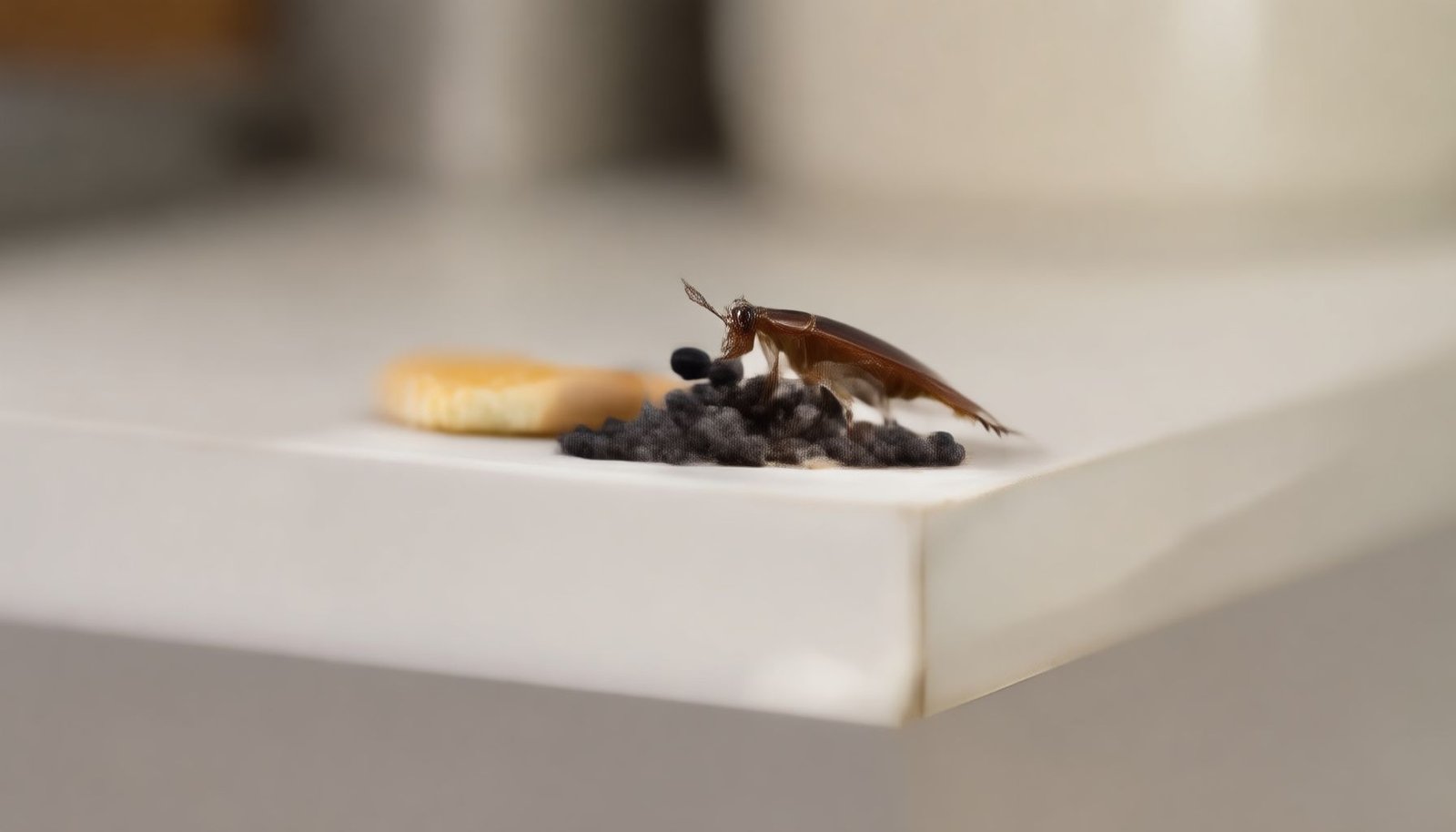
This close-up shows the textured, spined legs of a cockroach — the same structures that pick up and transfer bacteria and allergens from contaminated surfaces to the food and utensils in your kitchen.
What Specific Diseases Do Cockroaches Actually Spread?
The pathogen list tied to cockroaches reads like a gastroenterology textbook. Salmonellosis is the most documented — cockroaches pick up Salmonella typhi from contaminated waste and transfer it to food, causing the kind of severe stomach illness most people associate with undercooked chicken. Typhoid fever, dysentery caused by Shigella, cholera, and gastroenteritis from E. coli O157:H7 are all also on the list. In homes where cockroach populations are large and uncontrolled, the pathogen load on kitchen surfaces can be genuinely significant.
Here’s the part most articles skip past: cockroaches also carry and spread parasites. Specifically, they’ve been found carrying the eggs of roundworms (Ascaris), hookworms, and pinworms on their bodies and in their feces. If roach feces contaminate a surface where a toddler is playing, or an area where food is prepped without thorough cleaning, parasitic infection is a real possibility — not just a remote theoretical risk. Cockroaches have also been confirmed as mechanical vectors of Toxoplasma gondii, a parasite typically associated with cats but capable of causing serious illness in immunocompromised individuals and pregnant women.
| Disease / Pathogen | Transmission Route | Who’s Most at Risk |
|---|---|---|
| Salmonellosis (Salmonella) | Contaminated food/surfaces via roach feces and leg transfer | Everyone, especially young children and elderly |
| Dysentery (Shigella) | Fecal contamination of food and water | Children under 5, immunocompromised adults |
| Parasitic infections (pinworms, roundworms) | Egg transfer via roach feces on surfaces and food | Toddlers, children who play on floors |
| Cockroach allergen asthma trigger | Airborne particles from shed exoskeletons and feces | Asthma patients, infants, allergy sufferers |
The Cockroach-Asthma Connection: The Health Risk You’re Probably Not Taking Seriously Enough
This is the angle that gets the least attention in standard pest coverage, and it’s arguably the most important one for families with children. Cockroach allergens — proteins found in their shed skins, feces, saliva, and decomposing body parts — are among the most potent indoor asthma triggers identified in medical literature. The National Institute of Environmental Health Sciences has linked cockroach allergen exposure to a significant increase in asthma hospitalizations, particularly in urban housing. Studies done in inner-city apartment buildings found that children sensitized to cockroach allergen had asthma attacks at roughly twice the rate of those who weren’t.
The insidious part is that you don’t need a visible infestation for allergen levels to be dangerous. Cockroach allergen particles are tiny enough to remain airborne and accumulate in upholstered furniture, mattresses, and carpets long after the roaches themselves are gone. Picture this: a family treats a roach infestation successfully and assumes the problem is solved. But their child’s asthma keeps flaring unpredictably for months afterward — because the allergen debris is still embedded in the couch cushions and bedroom carpet. Eliminating the roaches is step one, but it isn’t the finish line for families dealing with respiratory sensitivity.
“Most people focus on the bacterial contamination angle when they ask about cockroach health risks, and that’s legitimate — but for households with asthmatic children, the allergen burden is often the more immediate and chronic threat. Cockroach allergen can persist in a home environment for months after an infestation is resolved, and levels high enough to trigger attacks can exist even when roach numbers are low. This is why allergen source reduction — deep cleaning, HEPA vacuuming, encasing mattresses — has to be part of the treatment plan, not an afterthought.”
Dr. Marcus Ellery, Board-Certified Entomologist and Urban Pest Management Specialist, Rutgers Cooperative Extension
How Do Cockroaches Actually Contaminate Your Food and Surfaces?
Cockroaches contaminate food through four distinct pathways, and most homeowners are only vaguely aware of one or two of them. Understanding all four is what makes the risk feel concrete rather than abstract.
- Direct contact with food: Roaches walk across exposed food, bread bags, fruit bowls, and improperly sealed containers, depositing bacteria from their legs and bodies in real time.
- Fecal deposits: Cockroach feces — small, dark, pepper-like specks — are left constantly along their travel routes, including inside cabinet shelving, on countertops, and around appliances. This is also how gut-dwelling pathogens like Salmonella and Shigella get transferred to surfaces.
- Regurgitation: Cockroaches frequently regurgitate digestive fluids as they feed. If they stop on a surface and regurgitate, they leave behind a microbial deposit that’s invisible to the eye but potentially loaded with whatever pathogens they ingested last.
- Shed exoskeletons and egg casings: As cockroaches molt, they leave behind exoskeleton fragments that crumble into dust. These particles carry allergens and can contaminate pantry shelves, flour bags with small gaps, and open containers.
- Dead roach decomposition: Dead cockroaches break down and release allergen particles and bacteria into the surrounding area. Finding one dead roach in a cabinet isn’t the end — it’s still a contamination event.
One thing worth knowing: cockroaches are most active in the 2–4 hours after lights go out, and they cover significantly more territory than most people expect. Tracking studies using fluorescent dye have shown individual cockroaches traveling 30–40 feet in a single night, moving between the bathroom, kitchen, and living spaces — which means the contamination zone in an active infestation isn’t limited to one room.
Pro-Tip: If you’re cleaning up after a confirmed roach infestation, don’t just wipe surfaces with a damp cloth — use a disinfectant rated for bacteria on food-contact surfaces, and wash all dishware and utensils that were in exposed cabinets. Cockroach fecal matter is water-soluble but requires actual disinfection to address the bacterial contamination, not just removal of the visible debris.
Who in Your Household Is Actually at the Highest Risk?
The health risk from cockroach-associated diseases isn’t distributed evenly across a household. Your overall health status, immune function, and age dramatically affect how serious an exposure actually is. A healthy adult who accidentally ingests a small amount of Salmonella-contaminated food may experience 24–48 hours of stomach illness and recover completely. The same exposure in an infant, an elderly person, or someone undergoing chemotherapy can escalate to a life-threatening situation requiring hospitalization.
Here are the household members who face elevated risk and why:
- Infants and toddlers: They spend time on floors where cockroach feces accumulate, they put hands and objects in their mouths, and their immune systems are still developing — making them more susceptible to both bacterial illness and allergen sensitization that can trigger lifelong asthma.
- Elderly adults: Immune function declines with age, and infections like salmonellosis that a younger adult shakes off in two days can cause severe dehydration and systemic illness in someone over 70.
- Immunocompromised individuals: Anyone on immunosuppressant medications, undergoing cancer treatment, or living with HIV/AIDS is at significantly higher risk from every pathogen cockroaches carry, including opportunistic pathogens that wouldn’t affect a healthy person at all.
- Pregnant women: Toxoplasma gondii, which cockroaches can mechanically carry, poses serious risks to fetal development. The risk is low in any individual exposure but real — and unnecessary when it’s preventable.
- People with asthma or respiratory allergies: Even a low-level infestation that wouldn’t significantly worry a healthy adult can trigger dangerous asthma attacks in sensitized individuals, particularly children.
There’s an honest nuance here worth acknowledging: the severity of the health risk in your specific home depends on the size of the infestation, the species present (German cockroaches are far more prolific indoors than American cockroaches), how close the roach activity is to your food prep areas, and whether any household members fall into the high-risk categories above. A handful of American cockroaches finding their way inside from a wet basement poses a different risk level than a German cockroach infestation breeding inside your kitchen cabinets. That context matters.
It’s also worth knowing that cockroaches aren’t the only pest creating invisible health risks in living spaces. If you’ve been experiencing unexplained symptoms at night — rashes, itching, respiratory irritation — and you’re not sure what’s causing them, it’s worth reading through What Is Biting Me at Night While I Sleep? 8 Possible Causes to rule out other culprits that create overlapping symptoms. Similarly, if you have mice in the home alongside a roach problem — which happens more often than people expect in multi-pest scenarios — the combination dramatically increases the pathogen load in your living environment, since mice carry hantavirus and leptospirosis in addition to bacteria. The article on How to Get Rid of Mice Nesting in Insulation covers the specific risks and removal steps for that scenario.
What You Can Do Right Now to Reduce Disease Risk — Even Before You Eliminate the Infestation
Here’s the counterintuitive reality about cockroach health risk reduction: you don’t have to wait until the infestation is fully resolved to meaningfully lower your family’s exposure. The contamination risk drops substantially with specific, targeted actions — and some of them take about ten minutes.
Start with food storage. Every item in your pantry that isn’t in a sealed hard container is a contamination target. Move dry goods — flour, cereal, pasta, rice, pet food — into airtight containers with locking lids. Cockroaches can chew through cardboard and thin plastic bags, and they don’t need much of a gap to access food. Doing this alone eliminates a large percentage of the direct food contamination risk while you work on the broader infestation problem. Beyond food, wipe down kitchen surfaces every night with a disinfecting cleaner, not just a damp cloth — cockroaches are most active after midnight, and whatever is on your countertop is fair game.
For households with asthmatic members, add HEPA vacuuming of upholstered furniture and floors to the routine — not just during active infestation, but in the months following treatment. Mattress and pillow encasements rated for allergen control will trap existing cockroach allergen particles and prevent them from becoming airborne during sleep. It’s unglamorous, but it’s the kind of practical action that actually changes respiratory outcomes for sensitized individuals, and it costs far less than another round of urgent care visits.
The broader truth about cockroaches and disease isn’t that a single roach sighting puts your family in immediate danger — it’s that an uncontrolled infestation represents a sustained, low-grade contamination of your home environment that compounds over time. The families most harmed by cockroach-associated illness aren’t usually those who had one dramatic exposure. They’re the ones who lived with a chronic infestation for months, normalized it, and didn’t connect the repeated GI illnesses or worsening asthma to what was happening in the walls. Treat it early, reduce exposure in the meantime, and don’t underestimate the allergen issue even after the roaches are gone — that’s where the ongoing health work actually lives.
Frequently Asked Questions
What diseases do cockroaches carry and spread to humans?
Cockroaches are known to carry and spread at least 33 kinds of bacteria, including Salmonella and E. coli, along with 6 parasitic worms and more than 7 human pathogens. They pick up germs on their legs and bodies while crawling through sewage, garbage, and decaying matter, then transfer those pathogens directly onto food, countertops, and cooking surfaces. The most common illnesses linked to cockroach contamination are food poisoning, dysentery, and typhoid fever.
can cockroaches trigger asthma and allergies in your home?
Yes — cockroach droppings, shed skins, saliva, and dead body parts all contain allergens that are a well-documented trigger for asthma attacks and allergic reactions. The CDC and EPA both recognize cockroach allergens as a major indoor asthma trigger, especially for children living in infested apartments or homes. If someone in your household has asthma that’s hard to control, a cockroach infestation is worth ruling out even if you haven’t spotted live bugs.
how do cockroaches contaminate food in the kitchen?
Cockroaches contaminate food by walking across it, vomiting digestive fluids onto it, and leaving behind droppings — all of which can deposit bacteria and pathogens directly on anything you eat. They’re most active at night, so they’re often crawling over open food, dishes, and prep surfaces while you’re asleep. Even sealed food can be at risk if packaging is damaged, since cockroaches will chew through cardboard and thin plastic to get to a food source.
what are the signs that cockroaches are making you sick?
Repeated bouts of stomach illness, food poisoning symptoms, or unexplained allergy and asthma flare-ups in your household can all be signs that cockroaches are the culprit — especially if you’re also seeing droppings, shed skins, or a musty odor in your kitchen or bathroom. Cockroach-related illness is often mistaken for a stomach bug or seasonal allergies because the connection to an infestation isn’t obvious. If symptoms keep coming back and you can’t find another cause, it’s worth doing a thorough inspection for cockroach activity.
are cockroach droppings dangerous to touch or breathe in?
Cockroach droppings are dangerous both ways — touching them and then touching your face or food can transfer bacteria like Salmonella, and breathing in dried dropping particles is a leading cause of cockroach allergen exposure in the home. Dried droppings break down into fine dust that becomes airborne, which is why heavily infested homes often have elevated allergen levels throughout, not just in areas where cockroaches are seen. Always wear gloves and a mask when cleaning up a significant roach infestation, and use a damp method to avoid stirring up particles.
Disclaimer: This article is for general informational purposes only and does not constitute medical advice. How a pest-related exposure, bite, or contaminant affects you can depend on age, pre-existing conditions, allergies, and the extent of exposure. If you’re experiencing symptoms you believe are linked to a pest problem in your home, please consult a licensed healthcare provider rather than relying on this article alone.