
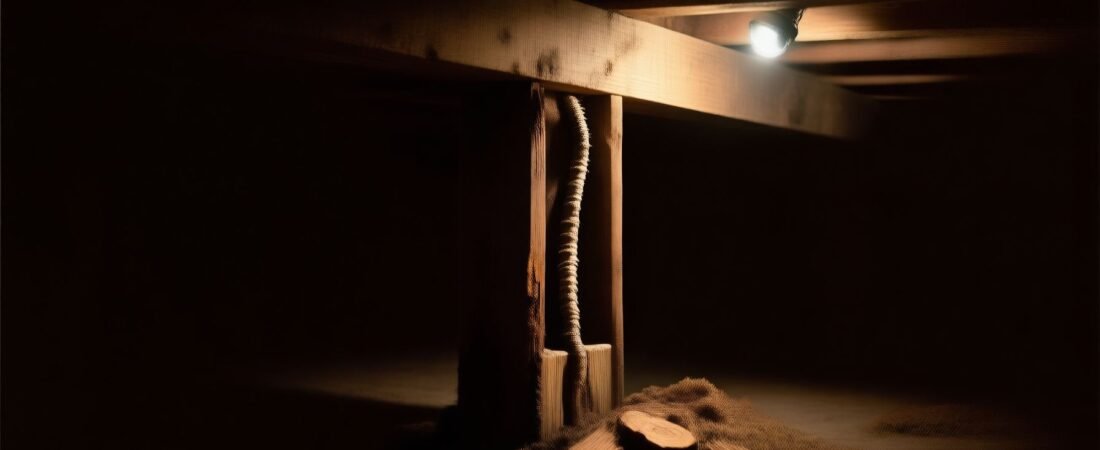
Termite damage gets noticed at the worst possible moment — when a screwdriver pokes through what should be solid wood, or a door frame suddenly won’t close right, or a home inspector delivers news that wipes out a real estate deal. By that point, a colony may have been active for three to five years. The early signs were there the whole time. The problem isn’t that the signs are invisible — it’s that most people are looking for the wrong things entirely.
Most termite articles tell you to look for mud tubes and swarming insects. That’s not wrong, but those are mid-stage indicators, not early ones. The genuinely early signs are subtler: changes in sound, texture, and smell that most homeowners dismiss as normal house aging. This article is specifically about that gap — the window between when a colony establishes itself and when the structural damage becomes obvious.
Why Early Termite Signs Are So Easy to Misread
Here’s the thing most pest control content skips over: subterranean termites — the species responsible for roughly 95% of termite damage in the US — eat wood from the inside out. They consume the soft inner cellulose while leaving a paper-thin outer shell intact. That means a beam or baseboard can look completely normal and be 70% consumed on the interior. Tapping it sounds hollow, but plenty of homeowners have never tapped their baseboards and wouldn’t know what hollow sounds like versus solid anyway.
Drywood termites work differently — they don’t need soil contact and tend to infest furniture, attic framing, and wood trim — but both species share one defining trait: they work slowly and silently enough that the signs register as background noise. A door that sticks gets blamed on humidity. Paint that bubbles gets blamed on moisture. These are the early signals, and understanding why they happen mechanically is what lets you catch them before they become expensive.
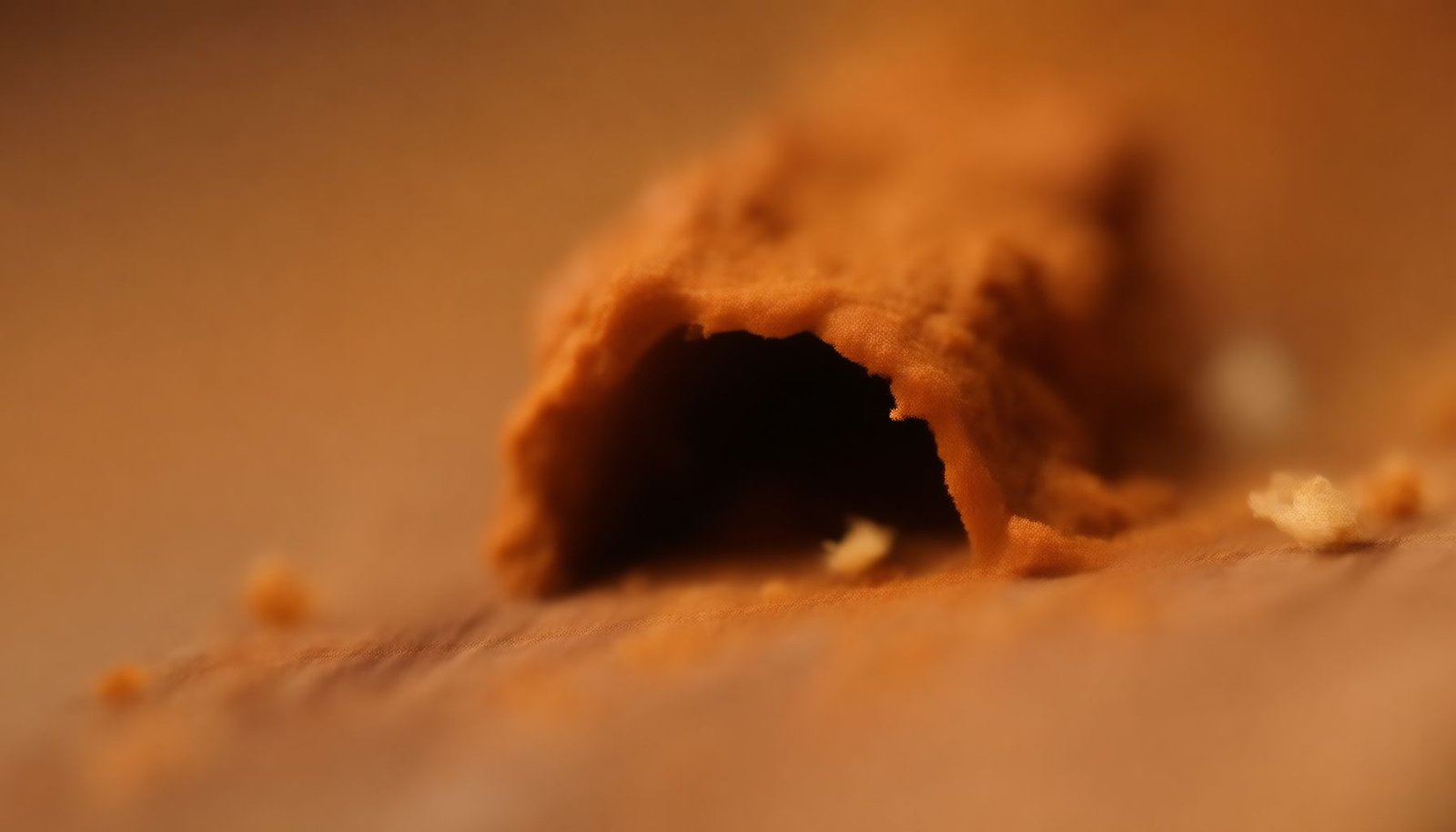
This close-up shows the paper-thin wood surface termites leave behind — it looks intact at a glance, which is exactly why early infestations go undetected until significant structural damage has already occurred.
What Do the Earliest Physical Signs of Termites Actually Look Like?
The very first physical evidence most homeowners can realistically detect — before mud tubes, before visible swarmers — is frass and surface blistering. Drywood termite frass looks like tiny pellets, almost like fine sawdust mixed with six-sided grains of sand. It accumulates in small piles near infested wood, often below window frames, door casings, or along baseboards. Subterranean termites don’t leave frass the same way, but they do leave moisture-related surface changes that show up as paint blistering or slight warping on wood surfaces — caused by the humidity termites introduce into wood as they tunnel.
Here’s a counterintuitive one: that slight “give” you might feel when walking across a hardwood or laminate floor near an exterior wall isn’t always a subfloor issue from water damage — it can be early subterranean termite activity in the joists directly beneath. The wood hasn’t collapsed, but it’s lost enough structural integrity that it flexes slightly underfoot. That subtle spongy feeling in a floor that otherwise looks fine is one of the most overlooked early indicators there is.
Pro-Tip: Grab a flashlight and a flathead screwdriver and do a tap test along your baseboards, door frames, and window sills twice a year — once in spring before swarm season and once in fall. Press the screwdriver tip gently against the wood surface. If it sinks in with almost no resistance, you’ve got a problem worth investigating immediately.
Is That a Termite Swarm or Just Flying Ants? How to Tell Before They Disappear
Swarmers — winged reproductive termites called alates — are often the first living termite a homeowner ever sees. The catch is that a swarm lasts anywhere from 30 minutes to a few hours, and by the time most people get a good look, the insects have either died or disappeared. Finding a pile of discarded wings near a windowsill, door frame, or light fixture is actually more diagnostic than seeing the swarm itself. Termite alates shed their wings almost immediately after landing because they no longer need them — those wing piles are a reliable early indicator that a colony nearby has matured enough to produce reproductives.
The distinction between termite wings and ant wings matters because the response is completely different. Termite wings are equal in length — both pairs look the same size and have a uniform, almost veiny pattern. Ant wings are unequal, with the front pair noticeably larger. Termite bodies are straight-sided with no pinched waist; ants have that distinct three-segment body with a narrow middle. A swarm indoors — especially near interior walls or a basement — is a more urgent finding than a swarm at an outdoor tree stump, since it suggests the colony may already be inside your structure.
| Feature | Termite Alates | Flying Ants |
|---|---|---|
| Wings | Equal length, both pairs the same size | Unequal — front wings larger than rear |
| Waist | Broad, straight-sided body | Pinched, narrow waist |
| Antennae | Straight, bead-like | Elbowed/bent |
| Wing shedding | Shed wings immediately after landing | Retain wings longer |
Which Parts of Your Home Do Termites Hit First — and Why Those Spots Specifically?
Subterranean termites follow moisture and cellulose, which means they don’t enter randomly — they enter at predictable points. Wood that contacts soil directly is the highest-risk entry point: deck posts, fence bases, wood mulch piled against a foundation, wooden door frames that sit close to grade, and crawl space floor joists that are accessible from below. Termites also exploit cracks in concrete foundations and gaps around utility penetrations to reach wood above the soil line. A colony can contain over 1 million individuals and forage up to 300 feet from the main nest, so the wood they’re targeting doesn’t have to be directly above their entry point.
Drywood termites, by contrast, enter through exposed wood — small cracks in siding, unfinished wood in attic spaces, or gaps around windows. They don’t need soil contact at all, which makes them harder to intercept at the entry point. Both species tend to go for wood that’s already slightly compromised: a door frame with old caulk failures, attic sheathing with minor roof leak history, or floor joists near a bathroom with a slow plumbing drip. Think of moisture damage as a flashing neon “vacancy” sign for termites. Just as certain conditions make rodent infestations more likely in specific structural zones, the same logic applies here — termites aren’t random, they’re opportunistic.
How to Do a Real Early-Detection Walk-Through of Your Own Home
Picture this: you’ve just bought a house built in the early 1980s on a concrete slab in a humid southern state. The inspector cleared it. Six months later you notice the bathroom door drags slightly and a baseboard near the back exterior wall sounds different when you knock on it. By the time a pest professional gets there, there’s active subterranean termite activity in the wall void — a colony that’s been working for at minimum two years. The inspector wasn’t negligent. The signs were pre-visual at the time of inspection. This scenario plays out thousands of times a year across the Southeast, Gulf Coast, and California.
You don’t need a pest professional to do a meaningful preliminary inspection — you need a method. Here’s how to walk through your own home systematically:
- Start at the foundation exterior. Walk the entire perimeter and look for mud tubes — pencil-thin tunnels of soil and termite secretions — running up the foundation wall, across concrete blocks, or over exposed pipes. Also look for wood mulch or soil piled directly against siding or wood trim.
- Check every exterior door frame and window sill. Press your fingertip firmly against the wood in the corners. Sound wood feels solid and doesn’t flex. Use a screwdriver handle to tap — hollow sounds in what should be solid framing is a red flag.
- Go into the crawl space or basement with a good flashlight. Look at the floor joists, sill plates (the wood that sits directly on the foundation), and any wood that’s within 18 inches of the soil. This is where subterranean termites establish their earliest access points.
- Check the attic for drywood termite frass. Look at the junction between rafters and sheathing, around attic vents, and near any exposed wood trim. Small piles of pellets — often the color of the wood they came from — indicate active drywood termite activity.
- Look at interior baseboards in rooms that share an exterior wall. Run your hand along the baseboard near corners and behind furniture. Slight surface warping, paint bubbling that isn’t near a plumbing source, or frass accumulation behind furniture are all worth a closer look.
“The homeowners who catch termite activity early almost always found it incidentally — they were fixing something else, painting a room, or moving furniture. The ones who have serious structural damage typically had subtle indicators for one to three years that got rationalized away as normal settling or humidity effects. Teaching people what those transitional signs feel and look like — not just what a mud tube looks like — is where early detection actually lives.”
Dr. Sandra Keller, Board-Certified Entomologist and University Extension Specialist in Urban Pest Management
When Early Signs Are Ambiguous — and When to Call a Professional Anyway
Not every hollow-sounding baseboard is termites. Old homes settle, wood dries out, and construction gaps exist behind plenty of walls that have never had a termite anywhere near them. The honest reality is that some early signs are genuinely ambiguous without probing tools, moisture meters, or thermal imaging — equipment that professional inspectors use specifically because visual inspection alone has real limits. The scenario matters too: a hollow baseboard in an Arizona home that’s been bone-dry for 30 years is a different situation than the same finding in a Florida home with a history of plumbing repairs.
That said, these specific combinations of signs — not individual ones — are worth calling a professional about rather than waiting:
- Discarded wings indoors near a window or light fixture, even if you didn’t see the actual swarm
- Any confirmed mud tube on your foundation, even a small or inactive-looking one
- Frass pellets accumulating in more than one location inside the home
- A door or window that began sticking suddenly in a room with no plumbing history and no recent weather extremes
- Wood in a crawl space or basement that visually looks intact but probes soft with a screwdriver without much pressure
One thing worth knowing: a free termite inspection from a pest control company comes with an inherent sales incentive, which isn’t a reason to avoid them but is a reason to get a second opinion if the proposed treatment cost is significant. Much like identifying ambiguous small flies — where a misidentification can send you treating the wrong problem entirely, similar to what happens with misidentified drain flies versus other small bathroom insects — a misdiagnosis of termite species or activity level can mean paying for a treatment approach that doesn’t match your actual situation.
Termite colonies don’t announce themselves. They grow quietly, steadily, and they have been doing this for approximately 250 million years — they’re genuinely good at it. The edge you have as a homeowner isn’t better equipment, it’s knowing which early, ambiguous signals are worth taking seriously instead of explaining away. Find those, act on them early, and you stay in the category of people who catch this before it costs tens of thousands of dollars — not after.
Frequently Asked Questions
What are the earliest signs of termites in a house?
The earliest signs of termites include mud tubes along your foundation or walls, discarded wings near windowsills and door frames, and hollow-sounding wood when you tap it. You might also notice tiny fecal pellets that look like sawdust or coffee grounds, especially near baseboards or wooden furniture. Catching even one of these signs early can save you thousands in repair costs.
How do I know if I have termites or just ants?
The easiest way to tell them apart is by looking at the body shape — termites have a straight, thick waist and straight antennae, while ants have a pinched waist and bent antennae. Termite swarmers also have two pairs of wings that are equal in length, whereas ant wings are unequal. If you’re finding wings but no actual insects, that’s a strong indicator of termites, not ants.
What do termite mud tubes look like?
Termite mud tubes are narrow tunnels about the width of a pencil, typically brown or tan, and made from soil, wood particles, and termite saliva. You’ll usually find them running vertically along your foundation, concrete blocks, or exterior walls. They can look like dried streaks of dirt and are easy to miss if you’re not specifically looking for them.
Can early signs of termites go away on their own?
No, termite activity doesn’t stop or go away without treatment — it only gets worse over time. A single termite colony can contain anywhere from 60,000 to over 1 million workers, and they’re active 24 hours a day. Ignoring early signs for even 6 to 12 months can turn minor damage into structural repairs that cost $3,000 or more.
Where should I check for early signs of termites in my home?
Start by inspecting areas where wood makes contact with soil or moisture — think foundation walls, crawl spaces, basement joists, door frames, and window sills. Also check near plumbing, HVAC units, and anywhere water has leaked, since subterranean termites are drawn to damp wood. A quick check every few months, especially in spring when swarmers are active, can help you catch a problem before it spreads.