
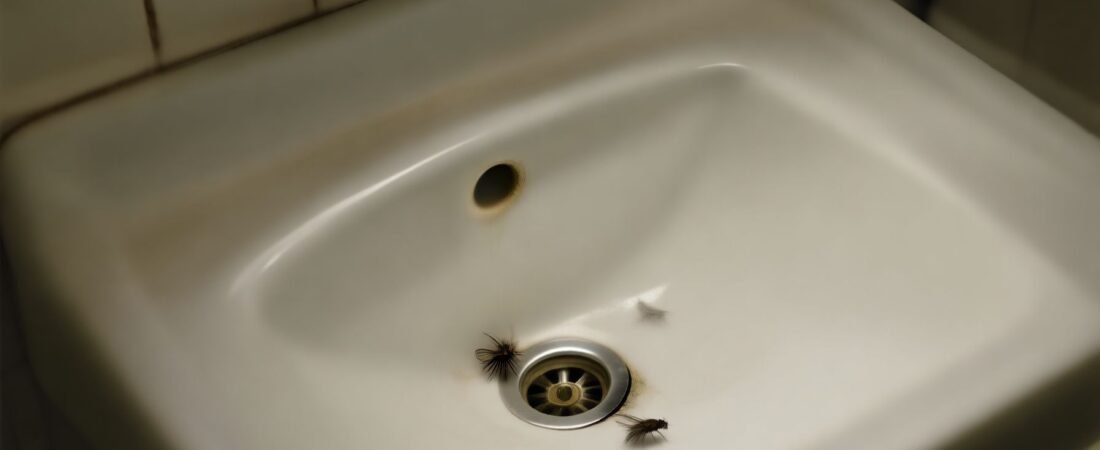
You don’t have a dirty bathroom — you have a drain problem. That’s the part most people get completely wrong about drain flies. These tiny fuzzy insects aren’t a hygiene failure or a sign of neglect; they’re a sign that organic sludge has been quietly building up inside your pipes, probably for months, completely invisible to you. The flies are just the first visible symptom of something that’s been happening underground long before you noticed them fluttering near your sink.
What Do Drain Flies Actually Look Like Up Close?
Drain flies — also called moth flies or sewer gnats — are tiny, measuring only about 1/16 to 1/8 of an inch long. They’re covered in dense, fuzzy hair on both their bodies and wings, which gives them a moth-like appearance that’s unlike almost any other fly you’d find indoors. The wings are broad, leaf-shaped, and held roof-like over the body when the fly is at rest, making them look like a speck of dust that suddenly moved.
The coloring is usually gray or tan, sometimes with a faint mottled pattern on the wings. Their antennae have 13-16 bead-like segments, though you’d need a magnifying glass to count them. One of the clearest identification clues is how they fly — or barely fly. Drain flies are weak, erratic fliers that tend to hop short distances rather than cruising across a room, and you’ll often find them just sitting motionless on walls near sinks, showers, and toilet bases.
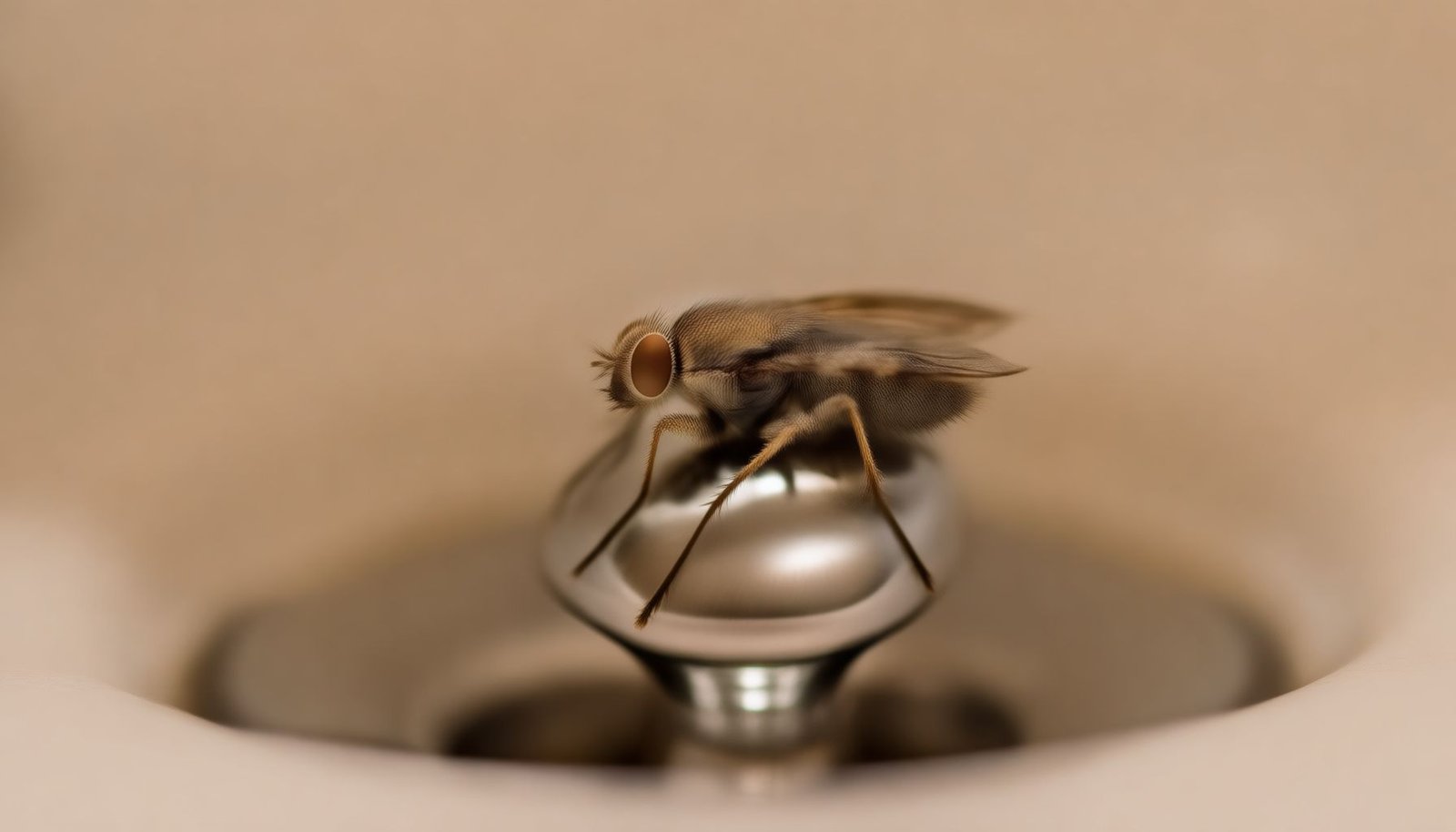
This close-up shows the distinctive fuzzy wings and moth-like body shape that set drain flies apart from fruit flies and fungus gnats — details that matter when you’re trying to confirm what you’re actually dealing with before treating the wrong thing.
Drain Flies vs. Fruit Flies vs. Fungus Gnats: How to Tell Them Apart
This is where most people go wrong, and it costs them weeks of treating the wrong problem. All three are tiny flies that show up in bathrooms and kitchens, but they breed in completely different places and require completely different solutions. Treating for fruit flies when you actually have drain flies is like taking antihistamines for a broken leg — you’ll feel like you’re doing something while the real issue continues.
| Fly Type | Wing Shape | Body Size | Breeding Location |
|---|---|---|---|
| Drain Fly | Broad, fuzzy, moth-like | 1/16–1/8 inch | Pipe sludge, slow drains, p-traps |
| Fruit Fly | Clear, narrow, rounded | 1/8 inch | Overripe fruit, spilled sugary liquids |
| Fungus Gnat | Long, narrow, translucent | 1/16–1/8 inch | Moist houseplant soil |
The fuzzy texture is the definitive tell for drain flies — run your finger over a dead one and you’ll actually feel the fuzz. Fruit flies have distinctly red eyes visible to the naked eye and smooth, clear wings. Fungus gnats look more like tiny mosquitoes with long, dangly legs. If your mystery fly doesn’t match any of these exactly, it might be worth checking a broader identification resource like the What Are the Bugs in My Basement? Complete Identification Guide, which covers a wide range of small flying and crawling insects that commonly end up in lower-level spaces.
Where Are Drain Flies Actually Coming From in Your Bathroom?
Here’s the counterintuitive part: the drain you see isn’t always the drain that’s producing them. Drain flies breed specifically in the gelatinous, decomposing organic film that coats the inside of pipes — a mix of soap scum, hair, skin cells, and bacteria. They don’t need standing water; they need that slick biological layer, which can exist in a pipe that drains perfectly fine from your perspective.
Picture this — you’ve cleaned your bathroom sink drain three times this month, poured bleach down it, and you’re still seeing flies on the wall next to the toilet. The culprit might actually be the toilet’s base seal, the floor drain you forgot existed, or a slow-draining shower across the hall that nobody uses regularly. A drain that sits unused for even a week can allow the p-trap to partially dry out, and once that water seal is gone, sewer gases — and drain fly adults — can move freely into your home. The flies you’re seeing on the wall near the sink may have actually emerged from somewhere completely different.
Pro-Tip: To pinpoint exactly which drain is producing flies, cut small pieces of clear tape and press them sticky-side-down over each drain opening at night. Check them in the morning — any drain with adult flies stuck to the tape is an active breeding site. Do this for 3-4 consecutive nights before treating, because drain fly emergence isn’t always consistent from one night to the next.
What Does the Drain Fly Life Cycle Tell You About the Infestation?
Understanding how fast drain flies multiply changes how urgently you respond. A female drain fly lays between 30 and 100 eggs at a time, directly in the organic film inside a pipe. Those eggs hatch in 32 to 48 hours under warm conditions. The larvae develop through four stages over 9 to 15 days, feeding on the same biological sludge they were born in, before pupating and emerging as adults within 24 hours of completing that stage. From egg to adult can happen in under 3 weeks.
The adults themselves only live about 2 weeks, which sounds short — but since they’re continuously breeding in cycles, a single neglected drain can sustain a persistent population indefinitely without any individual fly living very long. This also explains why you’ll suddenly see a lot of them all at once: multiple generations can emerge close together when conditions in the pipe are warm and the sludge is thick. Bathroom humidity accelerates the whole cycle, which is why infestations tend to spike in humid summer months or in bathrooms without good ventilation.
“Most people focus on killing the adult flies they can see, but that’s just mowing the top of a weed. The larvae living in pipe biofilm are the engine of the infestation, and until that organic material is physically removed — not just chemically treated — the population will keep recovering. I’ve seen bathrooms where people used drain gels for months and never resolved it because the biofilm was too thick for the product to penetrate all the way to where the larvae were actually feeding.”
Dr. Karen Voss, Board-Certified Entomologist and Urban Pest Management Specialist
How Can You Confirm It’s Drain Flies and Not Something Else?
Visual identification alone isn’t always enough, especially when the flies are dead, damaged, or just too small to see clearly. There are a few confirmation methods that work better than squinting at a tiny fly on a white wall. Use these in order before you decide what you’re dealing with:
- The tape test: Cover suspect drains with clear tape overnight, sticky side down. Adults emerging from breeding sites will get caught as they try to exit. This confirms not just which species you have, but which specific drain is active.
- Flashlight inspection: Shine a small flashlight into the drain opening and look for movement on the walls of the pipe just below the surface. Drain fly larvae are thin, legless, and pale gray — they’ll wriggle when disturbed by light.
- Wing check under magnification: Place a dead fly on a white surface and use a magnifying glass or even your phone camera’s zoom. The fuzzy, broad, patterned wings are unmistakable. Fruit fly wings are smooth and clear; fungus gnat wings are long and narrow.
- Time of day observation: Drain flies are most active in the evening. If you’re only seeing flies in the morning after they accumulated overnight, and they’re sitting passively on walls rather than flying toward food, that’s a strong behavioral indicator.
- Check the overflow drain: The small hole near the top of bathroom sinks (the overflow) is one of the most overlooked drain fly breeding sites in any bathroom. It accumulates a thick layer of organic film and is almost never cleaned. Push a cotton swab into it and check for the dark, slimy biofilm — if it’s there, larvae may be too.
One honest caveat here: in older homes or apartments with shared plumbing, drain flies may be originating from pipes you have no direct access to. If your tape tests consistently come up empty but the flies persist, the breeding site may be in a shared stack or a floor drain in a utility area you don’t regularly check. That’s a different situation than a standard single-bathroom home, and it may require a plumber’s inspection rather than a DIY drain treatment. Similarly, if you’re also hearing sounds from the wall near your plumbing, it’s worth ruling out other pests — for reference, Signs of Mice in Walls: Sounds, Smells and Damage to Look For can help you distinguish plumbing-adjacent pest activity from a rodent issue.
Which Bathrooms Are Most Vulnerable to Drain Fly Infestations?
Not all bathrooms are equally likely to develop a drain fly problem, and knowing the risk factors helps you catch it early — or prevent it entirely. The conditions that create drain fly infestations are specific, and they have almost nothing to do with how often you clean the visible surfaces of the room.
Here are the bathroom characteristics that most consistently lead to drain fly problems:
- Low-use bathrooms: Guest bathrooms or basement bathrooms that are only used occasionally are the highest-risk spaces. Infrequent water flow allows p-traps to partially evaporate and biofilm to accumulate without being disrupted.
- Slow-draining pipes: A drain that takes 30+ seconds to clear standing water has a partial clog, and partial clogs create the stagnant, film-coated surfaces that drain fly larvae need. The fly problem and the drain problem are the same problem.
- High humidity with poor ventilation: Bathrooms without exhaust fans, or those in humid climates, maintain the warm, moist pipe environment that accelerates the drain fly life cycle. At temperatures above 70°F, development from egg to adult can complete in as little as 8 days.
- Older plumbing with rough pipe interiors: Cast iron and older PVC pipes develop rough interior surfaces over time that hold biofilm more effectively than smooth modern materials. More surface texture means more habitat for larvae.
- Basement floor drains: These often go months without any water flow and accumulate organic debris. A basement drain that hasn’t been used in a while is one of the most common hidden sources of drain flies that homeowners never think to check.
The thing most pest control content glosses over is that drain flies are genuinely a plumbing symptom as much as they’re a pest problem. Treating them purely as a bug issue — spraying, trapping adults — without addressing the pipe conditions underneath is why so many people report that “nothing worked.” The flies will keep coming as long as the environment that supports them exists. Getting the drain physically cleaned, whether through enzymatic treatments, a plumber’s snake, or professional jetting for severe cases, is what actually resolves it. The identification step matters because once you’re sure you’re dealing with drain flies and not fruit flies or gnats, you know exactly where to direct your attention: the pipe, not the pantry.