

Twenty-two different arthropod species have been documented living year-round in American basement environments — and the majority of homeowners correctly identify fewer than three of them. That’s not a knock on anyone. Basements are genuinely confusing spaces for pest identification because the same conditions that attract moisture-loving bugs also mask the visual cues you’d normally use to tell one creature from another. Dark corners, cluttered storage, and that perpetual damp smell all blur the picture. The real mistake most people make isn’t misidentifying the bug they can see — it’s assuming the bug they can see is the only problem they have.
Why Is My Basement Attracting So Many Different Bugs at Once?
Basements don’t attract pests randomly. They hit a very specific trifecta: consistent humidity, stable temperatures, and reduced human foot traffic. Relative humidity levels above 60% — common in unfinished basements, especially near sump pumps, floor drains, or concrete block walls — are essentially a standing invitation for a dozen species simultaneously. That’s not a figure of speech; researchers have found that a single unventilated basement can support active populations of springtails, silverfish, camel crickets, and centipedes all at the same time, each occupying slightly different micro-zones within the same 400 square feet.
The mechanism matters here. Concrete foundation walls wick moisture from the surrounding soil through a process called capillary action, keeping surfaces subtly damp even when you don’t see standing water. That moisture feeds mold and fungal growth, which feeds fungus gnats and springtails, which in turn attract predatory species like house centipedes. It’s a food chain that builds itself from the ground up — sometimes literally through the slab. Knowing this chain is why fixing a bug problem in a basement means addressing conditions, not just killing individual bugs.
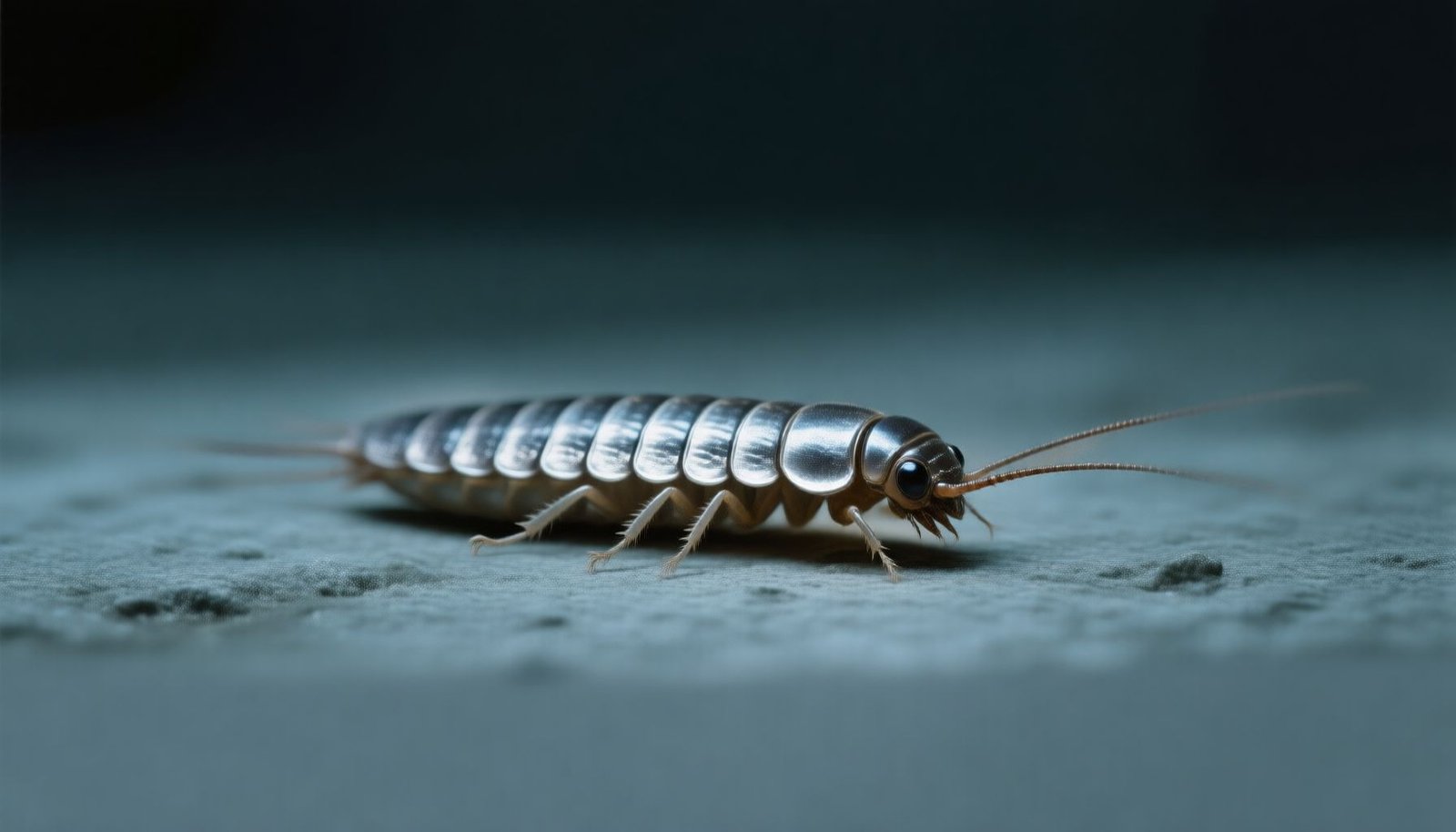
This close-up shows the kind of mixed-species environment typical of a damp unfinished basement — multiple bugs visible in the same frame is a sign of a systemic moisture problem, not a random occurrence.
Which Bugs Are Actually Living in Your Basement Right Now?
Picture this: you pull a cardboard box away from the basement wall and something fast and many-legged sprints for the shadows. Was that a centipede or a millipede? A silverfish or a firebrat? Most people freeze at that moment, and honestly, the visual overlap between some of these species is real. Here’s a breakdown of the most common basement bugs, organized by how they actually look and behave — not just what their names are.
| Bug | Key Visual ID | Primary Habitat Zone | Moisture Dependence |
|---|---|---|---|
| House Centipede | 15 pairs of legs, very long antennae, yellowish-gray banded body, up to 1.5 inches | Walls, drain areas, dark corners | High — needs humidity to survive |
| Camel Cricket | Humpbacked, no wings, extremely long hind legs, tan/brown, 1/2 to 1.5 inches | Under stored items, near walls | High — dies quickly without moisture |
| Silverfish | Silvery scales, carrot-shaped body, three rear bristles, 1/2 to 3/4 inch | Near paper, insulation, cardboard | Moderate to high |
| Springtails | Tiny (1–2mm), white/gray/blue-black, jump suddenly when disturbed | Sump pits, floor drains, wet concrete | Extreme — die within hours without moisture |
One thing that surprises a lot of people: camel crickets, despite their alarming size and sudden jumping, are completely harmless and don’t bite. They’re in your basement because it replicates a cave environment almost perfectly. House centipedes, on the other hand, do have venom — though a sting on a human is rare and produces nothing worse than mild localized pain in most people. The real concern with all of these species isn’t what they do to you directly, but what their presence signals about your basement’s broader condition.
What’s the Difference Between Basement Bugs You Can Ignore and Ones That Mean Real Trouble?
Here’s the distinction most basement pest articles skip entirely: not every bug down there is a problem. Springtails, for example, feed exclusively on mold, algae, and decaying organic matter. Finding a few near a floor drain doesn’t mean your basement is infested — it means your floor drain is slightly damp, which is almost universal. House centipedes are active predators that eat cockroaches, silverfish, and other pest insects. Some entomologists only half-jokingly call them a natural pest control asset. The bugs that actually warrant concern are a different category.
The species that should make you stop and take action are the ones that either damage your home’s structure, create genuine health risks, or signal an entry point that bigger problems will use. Termites and carpenter ants can compromise structural wood — termite colonies can contain over 1 million individuals and consume wood continuously, 24 hours a day. Rodents using the basement as an entry point bring their own serious concerns; if you’re seeing mouse droppings near the foundation, What Diseases Do Rats and Mice Carry That Affect Humans? is worth reading before you decide this is a minor issue. The hierarchy matters: some basement bugs are symptoms, some are cosmetic nuisances, and a few are genuinely urgent.
“Most homeowners are focused on the wrong question when they find bugs in their basement. They want to know ‘what is it?’ when the more important question is ‘what does it need to survive here?’ Address the environmental conditions — humidity, clutter, food sources — and you eliminate the reason for most of these species to stay, regardless of what they’re called.”
Dr. Karen Voss, Board-Certified Entomologist and Extension Pest Specialist, Midwest Regional Pest Management Program
How Do You Tell Basement Bug Evidence Apart When You Can’t See the Bug Itself?
A lot of the time, you won’t catch the bug in the act. You’ll find signs — and reading those signs correctly changes everything about how you respond. Each species leaves behind a fairly distinct evidence trail if you know what to look for. The problem is that some evidence overlaps, especially between species that occupy the same spaces.
Work through the evidence methodically, starting with the most specific markers:
- Shed skins or scales near paper or cardboard — Silverfish molt repeatedly throughout their lifespan and leave behind translucent husks, often alongside irregular feeding damage on book spines, wallpaper, or cardboard box edges. The feeding damage looks like surface grazing, not chewing through material.
- Frass (fine sawdust-like powder) near wood beams or joists — This is one of the clearest signs of either powderpost beetles or carpenter ants. Carpenter ant frass also contains insect parts and looks slightly coarser; powderpost beetle frass is almost talc-fine and may form small piles directly beneath exit holes in the wood.
- Mud tubes along the foundation wall or rim joists — Subterranean termites build pencil-width earthen tubes to travel between their underground colony and the wood they’re consuming above. Finding these changes the conversation from DIY to professional immediately.
- Small dark droppings near wall junctions or behind stored items — Rodent droppings in a basement are pointed at both ends (mice) or blunt and larger (rats). Mouse droppings measure roughly 1/4 inch. If you’re also noticing gnaw marks on foam pipe insulation or plastic storage bins, that confirms active rodent use of the space.
- Webbing concentrated near floor-level corners or window wells — Ground-dwelling spiders like wolf spiders and funnel weavers are common basement visitors. Their webs are flat and sheet-like, not the classic orb shape. Their presence indicates other insects are available for them to eat — another food chain signal.
- Clusters of very small jumping insects near the sump pump or drain — Springtails aggregate near their moisture source. If you disturb the area and dozens of tiny specks scatter in all directions, that’s almost certainly springtails. They’re identifiable primarily by that characteristic jump from a forked appendage called a furcula tucked under their abdomen.
Pro-Tip: Lay several sticky glue traps flat on the floor along different walls of your basement and check them after 48 hours. The species caught — and where — will give you a much more accurate picture of what’s actually active down there than visual inspection alone. Place them near the sump pump, under stored items, and near any floor-level wall penetrations for best results.
What Do You Actually Do After You’ve Identified the Bug?
Identification is only useful if it changes your response. The counterintuitive truth about basement bugs is that pesticide sprays — the thing most people reach for first — are among the least effective tools for most of the species you’ll find down there. Spraying for camel crickets while your basement runs at 75% humidity is genuinely futile. They’ll repopulate within days. The same applies to springtails, silverfish, and even cockroaches to a large extent. The mechanism of control has to match the mechanism of attraction.
Here’s what actually works, matched to specific pest types:
- For moisture-dependent species (springtails, camel crickets, silverfish, centipedes): A dehumidifier that maintains basement relative humidity below 50% will collapse populations within 2–3 weeks without any chemical intervention. This is the single highest-impact action you can take. Seal any visible foundation cracks with hydraulic cement or masonry caulk to reduce moisture wicking.
- For silverfish specifically: Remove cardboard boxes and replace with sealed plastic storage bins. Silverfish can survive over 300 days with minimal food if humidity is available, so removing their food source has to happen alongside moisture reduction — not instead of it.
- For cockroaches (American or Oriental species in basements): Gel bait placed in cracks near floor drains, pipe penetrations, and under appliances is dramatically more effective than spray. A female German cockroach produces 30–40 eggs per capsule — but the American cockroach species more common in basements produce fewer, and slow-kill bait allows foragers to bring toxicant back to harborage sites before dying.
- For fleas, which can survive in basement carpeting or on rodents using the space: This one surprises people. If you have a pet that occasionally comes downstairs, or if rodents have been using your basement, flea larvae can establish in the carpet fibers or even in soil near a crawl space access. What Do Fleas Look Like? How to Spot Them on Pets and Furniture covers the visual ID details, because flea larvae look nothing like adult fleas and get misidentified constantly.
- For termites or carpenter ants: These are not DIY situations once you’ve confirmed active damage to structural wood. A single missed colony satellite can continue consuming wood for years. Get a professional inspection before doing anything else.
One honest nuance worth acknowledging: how aggressive you need to be depends heavily on your specific basement type. A finished basement with drywall, carpeting, and climate control is a very different environment than an unfinished concrete block basement with a dirt crawl space attached. The finished basement hides evidence better and can sustain cockroach populations longer because human activity is lower and hiding spots are more complex. An unfinished basement is grimmer-looking but often easier to treat because everything is visible and accessible. Climate matters too — basements in humid coastal or southeastern states will fight moisture intrusion as a baseline condition that basements in arid mountain climates simply don’t deal with at the same scale.
The most effective long-term approach to a basement bug problem isn’t really about pest control at all — it’s about making your basement a place where bugs have no reason to stay. Get the humidity under 50%, eliminate cardboard and debris, seal gaps around pipes and the rim joist, and install door sweeps on any basement entry doors. Do those four things and most of the species on this list will self-resolve within a few weeks. The ones that don’t — termites, carpenter ants, rodents — will be easier to spot and address precisely because everything else has cleared out. Start with conditions, and the identification almost becomes secondary.
Frequently Asked Questions
what are the most common bugs found in basements?
The most common bugs in basements are camel crickets, silverfish, centipedes, pill bugs, and earwigs. These insects are drawn to basements because of the moisture, darkness, and clutter that most below-grade spaces provide. If you’re seeing several different species at once, it’s almost always a sign that your basement humidity is too high — ideally you want to keep it below 50%.
how do I know if basement bugs are dangerous or just a nuisance?
Most basement bugs — like silverfish, pill bugs, and camel crickets — are harmless to humans and won’t bite or sting. The ones worth taking seriously are centipedes (which can deliver a painful bite if handled), brown recluse spiders in southern and midwestern states, and any bug you can’t identify confidently. If you spot webbing, shed skins, or live insects in large numbers, it’s worth getting a pest inspection rather than guessing.
why do I suddenly have so many bugs in my basement?
A sudden spike in basement bugs usually comes down to a change in conditions — heavy rain, a plumbing leak, or rising outdoor temperatures that drive insects inside. Bugs can also multiply fast once they’re established; a small silverfish population, for example, can grow significantly in just a few months if humidity stays high. Check for water intrusion around your foundation, window wells, and any pipes that might be sweating or dripping.
what bugs in the basement mean I have a bigger pest problem?
Finding termites, carpenter ants, or subterranean ant trails in your basement means you likely have a structural pest issue that goes beyond a simple bug problem. Termites often show up as discarded wings, mud tubes along foundation walls, or soft/hollow-sounding wood. Cockroaches in the basement — especially German or American cockroaches — also signal a serious infestation that typically requires professional treatment, not just store-bought sprays.
how do I get rid of bugs in my basement without calling an exterminator?
Start by reducing moisture — run a dehumidifier to keep humidity under 50% and fix any leaks or condensation issues. Seal cracks in your foundation and around pipes with caulk or expanding foam, since most basement bugs are entering through gaps smaller than a quarter inch. Sticky traps placed along walls can help you monitor what’s there and how many, and diatomaceous earth sprinkled around entry points works well against crawling insects without harsh chemicals.