

Bed bugs are in your home for weeks before most people find one. That’s not a worst-case scenario — it’s the typical timeline. A newly infested room can host dozens of bugs, shed skins, and fresh bitemarks before a single live insect ever gets spotted, and the reason isn’t poor housekeeping or bad luck. It’s biology: bed bugs are wired to stay hidden, feed briefly, and return to tight harborage spots where you’ll almost never disturb them. The real early warning system isn’t the bugs themselves — it’s the trail of indirect evidence they leave behind while they’re still invisible to you.
Why You Won’t See Bed Bugs First — and What You’ll Notice Instead
Most pest control content leads with “look for live bugs” as the first step. That advice is backwards. Adult bed bugs measure about 4–5mm — roughly the size of an apple seed — and nymphs in early instars are translucent and barely 1.5mm wide. They feed for 3–10 minutes at night, almost always between 2 and 5 a.m., then immediately retreat into cracks, seams, screw holes, and wall gaps. By the time your alarm goes off, they’re gone.
The hidden biology matters here. Female bed bugs lay 1–7 eggs per day and up to 500 over a lifetime, depositing them in batches inside seams and crevices with a sticky secretion that makes them nearly impossible to brush away. A single mated female introduced on a hotel bag can establish a detectable population within 6–8 weeks — all without you ever catching one in the act. What you will encounter first are the byproducts: staining, smell, physical skin reactions, and cast skins that accumulate faster than the bugs themselves.
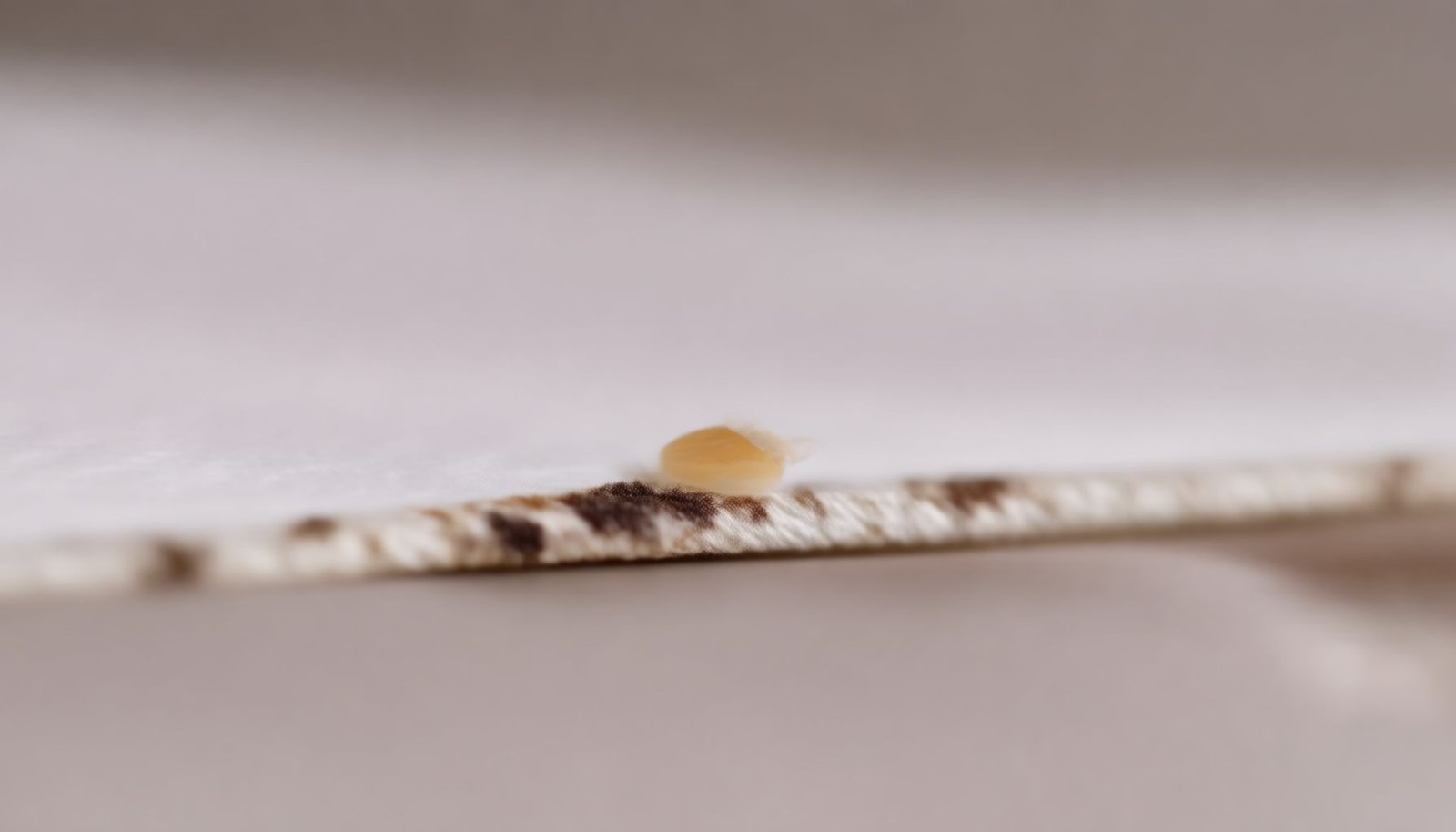
This close-up shows the kind of early physical evidence — dark ink-spot staining, cast skins, and fecal smearing along a mattress seam — that typically appears weeks before a homeowner finds a live bug, which is exactly why knowing what these marks look like can cut your response time dramatically.
The Early Signs of Bed Bugs Checklist: What to Examine Room by Room
Running through this list systematically — rather than doing a casual visual sweep — is the difference between catching an infestation at 20 bugs and catching it at 2,000. Focus on the sleeping area first, then expand outward. Bed bugs tend to stay within 8 feet of a host when populations are small, so a bedroom is always ground zero for an early search.
- Dark ink-spot staining on mattress seams and box spring fabric. Bed bug fecal matter is digested blood. It dries as small, dark brown-to-black dots that bleed into fabric fibers like a felt-tip pen mark. Run your finger across one — if it smears or has a rusty halo, it’s almost certainly bed bug fecal material. Random mattress scuffs don’t smear.
- Translucent cast skins along piping, seams, and tufts. Bed bugs molt five times before reaching adulthood. Each shed exoskeleton is a hollow, empty version of the bug itself — yellowish, paper-thin, and perfectly bug-shaped. Finding three or four of these in a mattress seam is one of the most reliable early indicators there is.
- Tiny white eggs or eggshells in fabric folds and wood joints. Eggs are about 1mm long, white, and barrel-shaped. They’re often clustered in groups of 5–15 and coated in that adhesive secretion. Hatched eggshells look slightly deflated and have a small split along one end.
- A faint, sweet-musty odor near the bed or upholstered furniture. Bed bugs produce alarm pheromones (primarily (E)-2-hexenal and (E)-2-octenal) when disturbed. In small infestations the smell is faint — some describe it as overripe raspberries or a wet, slightly sweet locker-room smell. By the time the odor is obvious, you’re dealing with a heavy infestation.
- Unexplained bites appearing in a line or cluster pattern. Bed bug bites are not diagnostic on their own — they can mimic mosquito, flea, or allergic reactions — but a repeating pattern of 3–5 bites in a rough line or cluster on exposed skin (shoulders, arms, neck) that appears overnight is a behavioral flag worth taking seriously.
- Blood transfer marks on sheets or pillowcases. After feeding, a bed bug’s abdomen is swollen and fragile. Rolling over one in your sleep crushes it, leaving a rusty-red smear on the sheet. Small round or elongated rust spots on otherwise clean white bedding are a genuine red flag, not a coincidence.
One thing worth stating plainly: the absence of bites doesn’t mean the absence of bed bugs. Roughly 30% of people have no visible skin reaction to bed bug feeding at all. Relying on bites as your early warning system means a third of households won’t get one.
How to Inspect the Places Bed Bugs Actually Hide in Early Infestations
Picture this: a family moves into an apartment, sleeps fine for two weeks, then starts noticing faint bites on two family members but not the other three. They check the mattress surface — nothing. What they didn’t check were the screw recesses on the bed frame headboard, the gap between the baseboard and carpet tack strip, or the cardboard backing of the framed picture directly above the pillow. That’s where the bugs were, and those are exactly the spots most DIY inspections skip entirely.
Early-stage bed bugs concentrate in harborage spots within a few inches of where a human body rests for more than an hour. That means the inspection needs to go beyond the mattress. Use a credit card and a flashlight — drag the card along seams to dislodge cast skins, and angle the flashlight beam low so shadows reveal texture inside tight gaps. Check the following with particular attention:
- All four sides of the mattress seam, especially the corners where piping meets
- Box spring staple seams and the fabric underneath if accessible
- Bed frame screw holes, bolt recesses, and any hollow metal tubing ends
- Headboard wall-side surface and any mounting hardware or brackets
- Nightstand drawer tracks, especially the underside of bottom drawers
- Electrical outlet faceplates and baseboard gaps within 8 feet of the bed
Just as some insects that look alarming — like the ones covered in What Do Earwigs Look Like and Are They Dangerous? — turn out to be harmless, the opposite is true with bed bugs: the evidence can look almost forgettable until you know specifically what you’re hunting for.
How Early Signs Differ by Infestation Stage — and Why That Timing Changes Everything
Not all early warning signs carry the same urgency, and understanding the timeline of a bed bug infestation helps you calibrate your response. A single fertilized female introduced to a new space takes about 6–8 weeks to produce a population large enough to leave consistent physical evidence. That lag period — sometimes called the “silent phase” — is the window where most people miss the infestation entirely.
| Infestation Stage | Typical Population Size | Most Likely Early Signs |
|---|---|---|
| Week 1–3 (introduction) | 1–5 bugs | No visible signs; possible single bite reaction in sensitive individuals |
| Week 4–8 (establishment) | 5–50 bugs | Cast skins, fecal dots on mattress seams, occasional blood smears on sheets |
| Week 8–16 (growth) | 50–500 bugs | Multiple cast skin clusters, consistent bite patterns, faint odor, eggs visible in seams |
| Week 16+ (heavy infestation) | 500+ bugs | Visible bugs in daylight, strong odor, widespread staining, bugs found outside bedroom |
Adult bed bugs can survive over 300 days without a blood meal under cool conditions — which means a bag or piece of furniture that sat in storage for months can still deliver a viable infestation. The timeline above assumes regular host access; in storage scenarios, the establishment phase stretches considerably, but the eventual population growth rate accelerates quickly once a warm host is available again.
“The single biggest reason early bed bug infestations go undetected isn’t lack of signs — it’s that people are inspecting the wrong surfaces. Fecal staining and cast skins almost always concentrate in harborage sites, not on the open sleeping surface. If you’re only checking the top of the mattress, you’re checking the one place they deliberately avoid during daylight hours.”
Dr. Andrea Hollis, Board-Certified Entomologist and Urban Pest Management Specialist, University Extension Program
Can Other Bugs Mimic the Early Signs of Bed Bugs?
Yes — and this is where a lot of early responses go sideways. Flea dirt looks visually similar to bed bug fecal staining at first glance (both are dried blood), but flea fecal matter is rounder and tends to accumulate on pet bedding and carpet rather than mattress seams. Spider droppings appear as dark liquid spots on walls or fabric but lack the fabric-bleeding quality of bed bug feces. Carpet beetle larvae shed skins that are hairy and segmented — distinctly different from the smooth, hollow exoskeletons bed bugs leave behind, but in low light they can fool you.
Bite reactions cause the most confusion. Mite bites, flea bites, and certain allergic skin reactions can all produce clustered welts that look like classic bed bug bites. The distinction matters because the treatment response is completely different. One honest nuance here: in apartments with shared walls, you can genuinely be getting bites from multiple sources simultaneously — fleas from a neighbor’s pet and bed bugs from a shared wall gap aren’t mutually exclusive. Worth keeping in mind before you self-diagnose and target only one pest. For comparison, some non-parasitic insects that people mistake for threats — like the silverfish discussed in Are Silverfish Dangerous to Humans? Bites, Allergies and Risks — don’t leave any of these physical clues behind because they don’t feed on blood at all.
Pro-Tip: Place a white paper towel under suspected fecal spots and add a single drop of water. Bed bug feces will dissolve into a rusty-red or dark brownish ring because it’s digested blood. Most other debris — dust, dirt, mold specks — won’t produce this reaction. It’s not foolproof, but it’s a fast field test that takes 10 seconds and costs nothing.
The counterintuitive reality of early bed bug detection is this: the physical evidence accumulates faster than the bugs do. Cast skins, fecal staining, and eggshells are permanent — they don’t disappear the way a live insect can. A methodical inspection of harborage sites will find evidence of five bugs more reliably than trying to catch five bugs in the act. Shift your search from “finding a bug” to “finding what bugs leave behind,” and you’ll catch infestations at a stage where a targeted, contained treatment is still a realistic outcome — before the population has a chance to spread from the bedroom into the rest of your home.
Frequently Asked Questions
what are the early signs of bed bugs before you see the bugs themselves?
The earliest signs of bed bugs include tiny rust-colored or reddish-brown stains on your sheets, small dark fecal spots about the size of a pen tip on your mattress seams, and a sweet, musty odor that some people describe as similar to overripe berries. You might also notice shed skins or pale yellow eggshells, which are roughly 1mm long, tucked into mattress folds or box spring edges before you ever spot a live bug.
what do bed bug bites look like at the very beginning?
Early bed bug bites often appear as small, raised, red welts in a line or cluster of 3 or more, sometimes called the ‘breakfast, lunch, and dinner’ pattern. They’re usually on exposed skin like your arms, neck, or shoulders, and the itching may not start until 1 to 3 days after the bite, which makes it easy to mistake them for mosquito or flea bites at first.
can you smell bed bugs before you see them?
Yes — a heavy bed bug infestation produces a distinct sweet, musty odor that’s often compared to coriander or overripe fruit, caused by pheromones the bugs release. You’re more likely to notice the smell in a small, enclosed space like a closet or under a mattress, but if you’re catching a faint, unexplained sweet smell in your bedroom with no obvious source, it’s worth doing a thorough inspection.
how do you check for bed bugs without pulling everything apart?
Start by running a flashlight along the piping and seams of your mattress and box spring, looking for dark fecal spots, shed skins, or tiny white eggs clustered in tight folds. Check the headboard, bed frame joints, and any furniture within 8 feet of your bed, since bed bugs rarely travel far from their feeding source in the early stages of an infestation.
how fast do bed bugs spread in an apartment or house?
A single pregnant female bed bug can lay 1 to 5 eggs per day and up to 500 eggs in her lifetime, so a small problem can grow into a full infestation within 6 to 8 weeks if it’s not caught early. In apartments, they can spread to neighboring units through wall voids, electrical outlets, and shared hallways, which is why catching the early signs of bed bugs quickly matters so much in multi-unit buildings.