

Rats can live inside your walls for six to eight weeks before most homeowners notice anything obvious. By that point, a single breeding pair can have already produced a second litter. That’s the real problem with how people think about rat signs — they’re waiting for something undeniable, like seeing an actual rat, when the evidence has been piling up quietly for months. The signs come early. Most people just don’t know what they’re looking at.
Why Do Most People Miss a Rat Infestation Until It’s Already Bad?
The assumption most people make is that a rat problem looks dramatic — gnawed baseboards, droppings everywhere, rats darting across the floor. In reality, rats are careful, nocturnal, and deeply suspicious of new things in their environment. A rat will avoid a trap placed in its path for days before it even sniffs it. That caution is exactly why early signs get overlooked: the evidence is subtle, spread out, and easy to rationalize as something else.
There’s also a denial factor that’s worth naming honestly. People want to believe the dark smear along the baseboard is just a scuff mark. They want the rustling in the ceiling at night to be the house settling. Rats exploit that willingness to look away. By the time homeowners stop explaining things away, they’re not dealing with one or two rats — they’re dealing with an established colony with established pathways, food caches, and nesting sites.
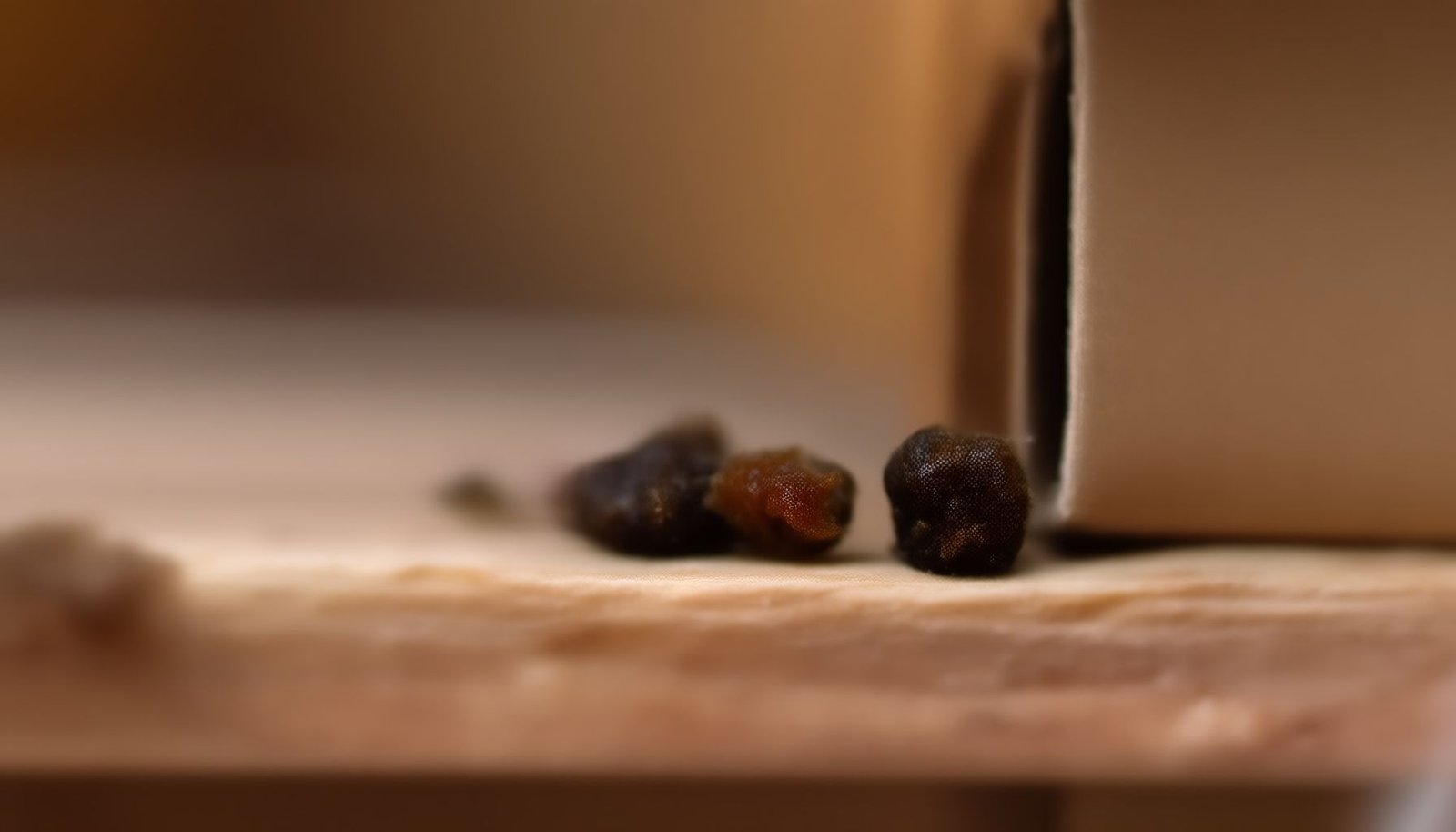
This close-up shows the kind of subtle physical evidence — grease smears, disturbed insulation, and gnaw marks — that appears long before you ever see a live rat, and learning to recognize it early is what separates a quick fix from a months-long infestation.
What Does Rat Evidence Actually Look Like Up Close?
Rat droppings are the most commonly cited sign, but most people don’t know how to read them correctly. Fresh droppings are dark brown or black, soft, and slightly shiny — they look almost like elongated grape seeds, roughly 1/2 to 3/4 inch long for Norway rats and slightly smaller for roof rats. Old droppings dry out, turn gray, and crumble when touched. That distinction matters because it tells you whether the activity is current or historical, which completely changes your urgency level and treatment approach.
Grease marks — called rub marks or runways — are the sign that most articles mention briefly and then move on from, which is a mistake because they’re actually one of the most reliable indicators of an active infestation. Rats have oily fur, and they travel the same routes repeatedly. Over time, that oil deposits as a dark, waxy smear along baseboards, wall corners, pipes, and the edges of holes. If the mark smears when you press it, it’s fresh. If it’s hardened and flaking, the route has been used for weeks or months. Finding grease marks tells you exactly where rats are moving — which is information traps need to be positioned around.
What Sounds and Smells Signal Rats Before You See Any Physical Evidence?
Scratching and scurrying sounds inside walls or ceilings are usually the first thing people notice — and then talk themselves out of. Rats are most active between dusk and a few hours before dawn. If you hear movement in the ceiling or walls during those hours, specifically a rapid, light scratching followed by pauses, that pattern is distinct from squirrels (which are active at dawn and dusk and sound heavier) and from mice (which sound almost too quiet to place). A rat moving inside a wall void at 2 a.m. sounds like something deliberate and weighted, not random.
The smell of an active rat infestation is harder to describe but unmistakable once you’ve encountered it — a sharp, ammonia-heavy odor layered with something musky and stale. That smell comes from accumulated urine, which rats use constantly to mark routes and communicate with each other. A single rat urinating along a 10-foot runway deposits dozens of micro-drops that you’d never see but your nose will register as “something’s off in the kitchen.” If the smell concentrates in a specific area — behind the stove, in a cabinet corner, along a wall — that concentration is pointing you directly at a travel route or nesting site.
“Most homeowners call us after they’ve seen a rat, but the physical evidence — rub marks, urination trails, fresh versus old droppings — tells a much clearer story about how long the infestation has been active and how large the population is. A house with heavy grease marks on three separate wall sections is a very different situation than one with a single dropping near a door. Reading the evidence correctly changes everything about how you respond.”
Dr. Marcus Elroy, Board-Certified Entomologist and Urban Pest Management Consultant, NC State University Extension
Which Parts of Your Home Show Rat Signs First?
Rats don’t distribute themselves evenly through a house — they claim specific zones based on food access, warmth, and safety from open space. Norway rats, the stockier ground-dwelling species, gravitate toward basements, crawl spaces, behind appliances, and beneath concrete slabs. Roof rats, the leaner, more agile climbers, show up first in attics, along rafters, and inside wall voids that connect to upper floors. Knowing which species you’re likely dealing with based on where you find the evidence narrows your search immediately. You can find more on distinguishing between these two species in the article on How to Identify Stink Bugs: What They Look Like and Why They Smell — but the general principle applies here too: physical characteristics determine behavior, and behavior determines location.
Here’s where to check systematically, in order of likelihood for first finding evidence:
- Behind and beneath large appliances — the space behind refrigerators, stoves, and dishwashers stays warm, collects food debris, and is rarely disturbed. Check for droppings, grease marks along the wall, and gnaw marks on wiring insulation.
- Inside lower kitchen cabinets — specifically the back corners and the area around the pipe penetrations under the sink. Rats enter through gaps around plumbing and use these spaces as staging areas before moving into the open kitchen.
- Along the interior perimeter of the basement or crawl space — look for burrow openings (Norway rats), rub marks along the foundation wall, and shredded insulation pulled from the ceiling or pipes for nesting material.
- Inside the attic, along the eave line and rafters — roof rats build nests from insulation, fabric, and plant material. Look for dark, compressed nest material tucked into corners, and droppings concentrated near rafters rather than on the floor.
- Around the garage door threshold and any utility entry points — rats enter from outside, and the first evidence of their path often appears within a few feet of entry points as droppings or rub marks on the floor or lower wall.
Pro-Tip: To tell whether a suspected rat run is currently active, press a thin layer of flour or baby powder across the pathway before you go to bed. Check it in the morning. Fresh tracks confirm live traffic, and the track pattern — claw marks with a drag line from the tail — is different enough from mice or other small animals that you can confirm the species with confidence.
How Do Rat Signs Differ From Mice Signs — And Why Does Getting It Wrong Matter?
This is where misidentification causes real damage. Rats and mice require different approaches — different trap sizes, different bait placement strategies, and different entry-point priorities. A snap trap designed for mice will not reliably catch a rat, and a rat-sized bait station placed where mice are actually feeding will catch nothing. Getting the species wrong wastes time, gives the population more time to grow, and often makes people conclude that “trapping doesn’t work” when the real problem is that they’re using the wrong tool for the wrong animal.
Just as cockroaches trigger hidden health risks that go well beyond what most people expect, rats carry risks — including leptospirosis and hantavirus — that make correct identification genuinely urgent, not just an academic distinction. Here’s a quick comparison to help you separate rat evidence from mouse evidence:
| Evidence Type | Rat | Mouse |
|---|---|---|
| Droppings size | 1/2–3/4 inch, capsule-shaped with blunt ends | 1/8–1/4 inch, pointed at both ends |
| Gnaw marks | Large, rough — rats can gnaw through lead pipes and cinder block | Small, clean-edged — mice focus on soft materials like cardboard and thin wood |
| Rub/grease marks | Prominent dark smears, often inches wide at corners and edges | Faint, barely visible — mice leave much less body oil |
| Burrows | 2–4 inch diameter holes in soil, insulation, or soft material | Rarely burrow; prefer enclosed above-ground nesting spots |
One thing worth saying plainly: the presence of both rats and mice in the same structure at the same time is unusual. Rats are predators of mice and will kill them on contact. If you find rat evidence, you almost certainly don’t have a simultaneous mouse problem in the same areas. But the reverse isn’t true — mice won’t keep rats out.
Are There Rat Signs You Can Spot Outside Before the Problem Reaches Inside?
Picture this: it’s a dry summer, and a neighbor three doors down has had trash cans knocked over every week for a month. Nobody’s connected it to anything yet. Then fall arrives, temperatures drop, and Norway rats that have been living comfortably in the overgrown strip between properties start looking for insulated shelter with food access. That’s when the calls to pest control spike — not because a new infestation appeared, but because an existing outdoor population shifted indoors. Watching the outside of your home for rat activity is genuinely the best early warning system you have.
Outdoor signs that indicate rats are living close to your home’s perimeter — and likely testing entry points — include:
- Burrow holes in the soil near the foundation, under decking, or along the base of fences — Norway rat burrows are roughly 2 to 4 inches in diameter with a smooth, hard-packed entrance from repeated use
- Gnaw marks on outdoor structures — wooden fence boards, the base of deck posts, garbage can lids (rats can chew through thin plastic in under an hour)
- Disturbed compost bins or fruit trees — fallen fruit that disappears overnight is a reliable indicator, as is compost that shows signs of digging or material being dragged to one side
- Runways in grass or low vegetation — 2- to 3-inch wide paths worn through ground cover or along fences, with plant material pushed aside by repeated traffic
- Smudge marks on utility lines or fence tops — roof rats are agile climbers and leave the same oily rub marks on fence rails and overhead wires that Norway rats leave along baseboards
The honest nuance here is that outdoor rat activity doesn’t automatically mean indoor activity — the relationship between the two depends heavily on season, building construction type, and how many entry points exist. A well-sealed newer home in a mild climate might have rats living in the yard for months without a single one getting inside. An older home with gaps around aging utility penetrations can have the same outdoor population move through a 1/2-inch gap into the basement within days of temperatures dropping. Your specific situation determines your urgency level, and neither extreme — panic nor dismissal — is the right default.
If you’re finding multiple signs converging — fresh droppings in more than one room, active grease marks, sounds in the walls, and outdoor burrows near the foundation — you’re not dealing with a scout or a single stray animal. You’re looking at an established population, and the time between recognizing that and acting on it matters more than most people realize. A female Norway rat reaches sexual maturity in about 5 weeks and can produce 5 to 6 litters per year, with up to 14 pups per litter. The math moves fast. Starting with a systematic inspection using what you’ve found here — reading the freshness of droppings, locating grease marks, checking the exterior perimeter — gives you a real picture of what you’re dealing with before you spend a dollar on any product or call anyone in.
Frequently Asked Questions
What are the first signs of a rat problem in your house?
The earliest signs of a rat problem are usually droppings and gnaw marks — rats produce up to 40 droppings per night, so you’ll often find them along walls, under sinks, or near food storage. You might also notice grease smears along baseboards from their oily fur, or hear scratching sounds in walls and ceilings at night when rats are most active.
What does rat poop look like compared to mouse poop?
Rat droppings are much larger than mouse droppings — about 3/4 of an inch long with blunt ends, while mouse droppings are tiny and pointed, closer to 1/4 inch. If you’re finding dark, pellet-shaped droppings that are roughly the size of a raisin, you’re almost certainly dealing with rats, not mice.
Can you have a rat infestation and not see any rats?
Yes, and it’s actually pretty common — rats are nocturnal and naturally avoid humans, so most people never see one even when they have a serious infestation. Focus on indirect signs like chewed food packaging, nesting materials made from shredded paper or fabric, and a strong ammonia-like smell from urine buildup in hidden areas.
What sounds do rats make in walls at night?
Rats typically make scratching, scurrying, or gnawing sounds inside walls, ceilings, and under floors, usually between dusk and dawn. You might also hear squeaking or thumping sounds if multiple rats are moving around — if the noise is coming from above, it could be roof rats nesting in your attic.
How do you know if rats are coming in from outside?
Look for entry points around your home’s foundation, utility pipes, and vents — rats can squeeze through a hole as small as a quarter (about 1/2 inch for young rats, 3/4 inch for adults). Gnaw marks around gaps, fresh dirt or grease smudges near openings, and burrow holes in the yard close to the house are strong signs that rats are entering from outside.