
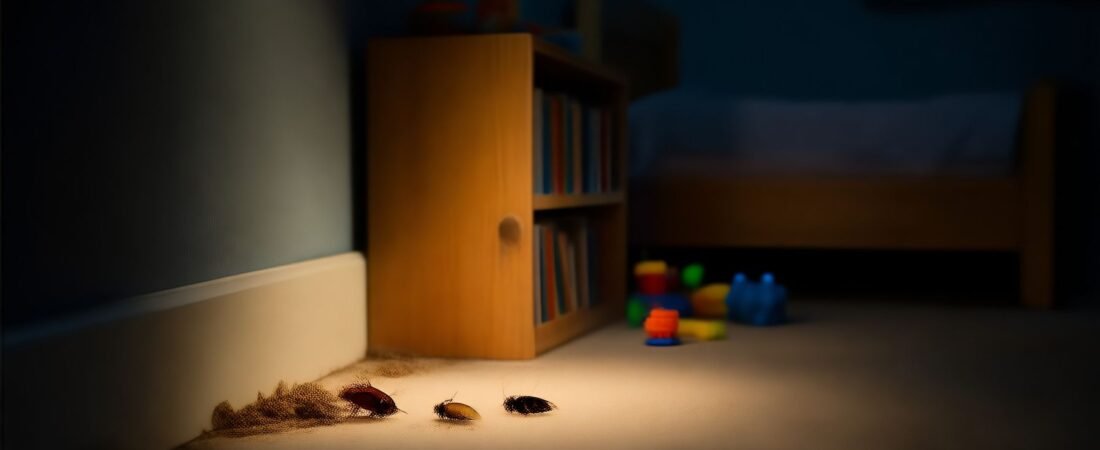
About 26 million Americans have asthma — and cockroaches are behind a larger share of those cases than most families ever find out. The part most people get completely wrong isn’t whether roaches cause asthma. They do. The part that gets missed is this: you don’t need a visible infestation for cockroach allergens to be triggering your child’s symptoms. A home that’s been professionally treated, that shows no live roaches, that passes a landlord inspection — can still be saturated with enough cockroach allergen protein to keep a child’s airways inflamed for months. Getting rid of the bugs is only half the battle, and a lot of families stop there and wonder why their kid still wheezes every night.
How Do Cockroach Allergens Actually Trigger Asthma in Kids?
The mechanism matters here, because once you understand it, you’ll stop thinking about this like a pest problem and start treating it like an indoor air quality problem. Cockroach bodies, saliva, and fecal droppings all contain proteins — primarily Bla g 1, Bla g 2, and several others — that the human immune system can misidentify as threats. In children, whose immune systems are still being calibrated, repeated low-level exposure to these proteins trains the body to overreact, producing IgE antibodies. That sensitization process is what converts an ordinary respiratory system into one that inflames at the slightest provocation.
What makes this especially tricky is that roach allergens are not airborne the way pollen is. They’re heavy particles that settle into dust, carpet fibers, mattress fabric, and upholstery. A child spending hours on the floor playing — or sleeping in a bedroom where roach activity happened six months ago — is inhaling resuspended allergen particles with every movement. The National Institute of Environmental Health Sciences has found that cockroach allergen levels in inner-city homes are frequently high enough to trigger sensitization even in children who’ve never had an allergic reaction before.
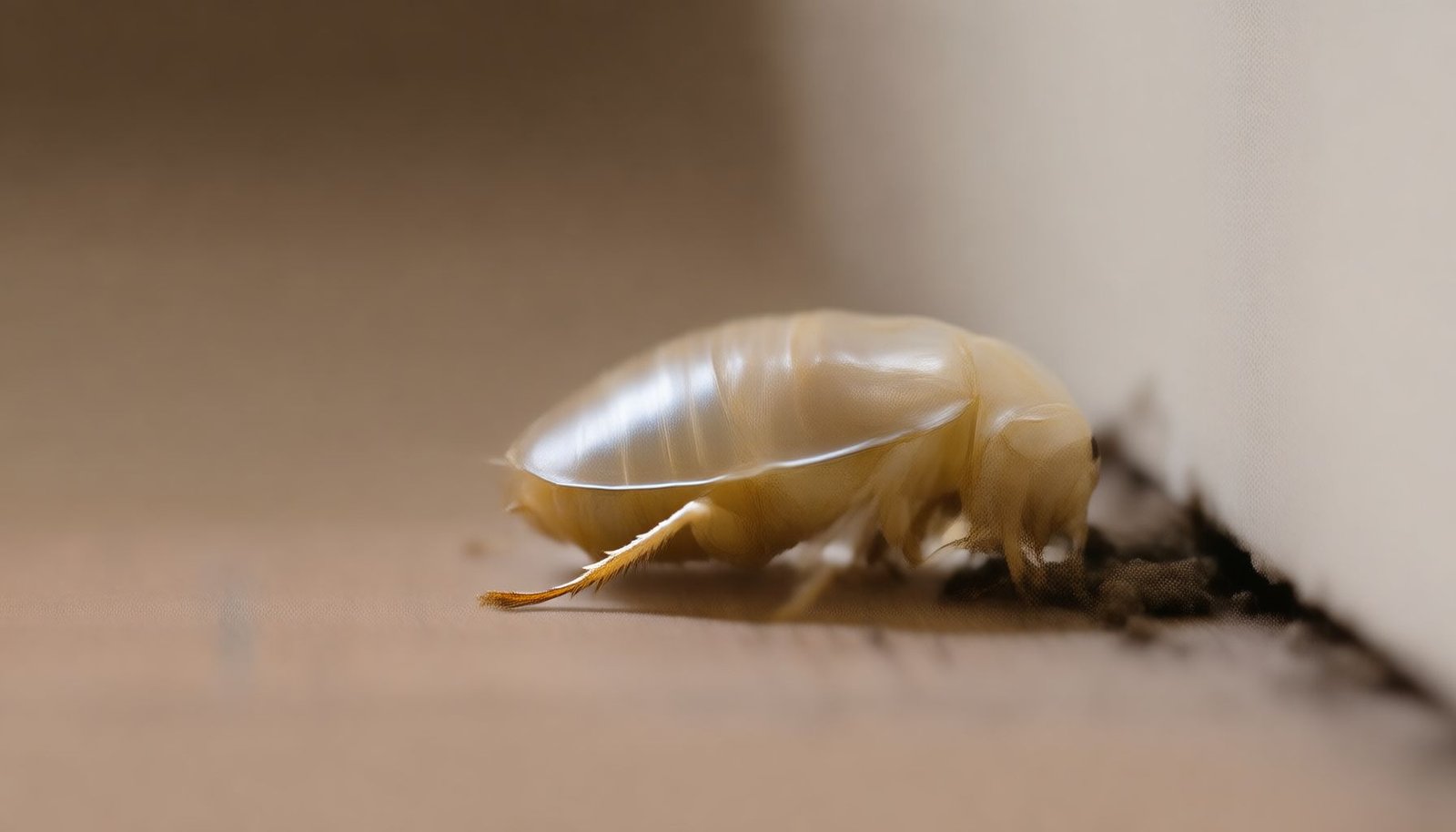
This image shows the debris cockroaches leave behind — shed skins, fecal specks, and egg casings — the exact materials that break down into the allergen-laden dust particles that children breathe in without anyone in the household realizing the source.
Why Do Symptoms Persist Even After Roaches Are Gone?
This is the question pediatric allergists hear constantly, and it’s the one pest control companies rarely prepare families for. A German cockroach — the most common indoor species and the heaviest contributor to allergen load — produces fecal pellets and molted exoskeletons throughout its roughly 200-day lifespan. A single female can produce 30–40 eggs per capsule and carry up to 8 capsules in her lifetime, meaning one cockroach quickly becomes dozens. All of that biological material doesn’t disappear when the roach dies or gets killed. It stays embedded in porous surfaces, accumulating in the same places kids spend time.
Picture this: a family in a first-floor apartment has a roach problem for eight months, treats it with a professional exterminator, confirms no live bugs are present — and their seven-year-old’s asthma attacks continue through the following winter. That’s not a treatment failure in the pest control sense. That’s allergen persistence, and it requires a different response than another round of bait gel. Studies have shown measurable cockroach allergen levels in treated apartments for 12 months or longer after active infestation ends, particularly in homes with carpeting, soft furniture, and poor ventilation.
“The clinical mistake families make is conflating ‘no roaches’ with ‘no exposure.’ Cockroach allergens are extraordinarily stable proteins. They don’t degrade quickly in a typical home environment, and standard cleaning rarely removes enough of them to drop a sensitive child’s exposure below the threshold that drives symptoms. You need an integrated approach that treats both the infestation and the allergen burden — those are two separate problems.”
Dr. Melissa Harte, Board-Certified Allergist and Clinical Immunologist, University Extension Health Sciences Program
Which Children Are at the Highest Risk for Cockroach-Induced Asthma?
Not every child exposed to cockroach allergens will develop asthma — but the risk factors stack quickly in certain living situations. The combination of genetic predisposition, early-life exposure, and high allergen concentration creates a window where sensitization becomes likely. Children under five are particularly vulnerable because their airways are smaller and their immune responses are still being established during that window.
Here’s what the research consistently shows about which children face the steepest risk:
- Children in multi-unit housing — apartments and row houses share wall voids, plumbing chases, and HVAC systems, all of which cockroaches use as travel corridors, meaning allergen migration doesn’t stop at your unit’s front door
- Children with one or both parents who have allergic disease — atopic tendency is hereditary, and a child already predisposed to allergies has a lower sensitization threshold when exposed to cockroach proteins
- Children who’ve had respiratory syncytial virus (RSV) or wheezing episodes before age two — early viral lower respiratory infections prime the immune system in ways that make subsequent allergen sensitization more likely
- Children in homes with carpet throughout, especially in bedrooms — carpet traps allergen-bearing dust far more effectively than hard flooring and releases it into breathing zones during normal activity
- Children in humid climates or poorly ventilated homes — cockroaches thrive above 75°F and 50% relative humidity, and those same conditions accelerate allergen accumulation in soft surfaces
The honest nuance here is that risk is highly situational. A child in a dry climate single-family home with hardwood floors and no prior cockroach history faces genuinely lower risk than a child in a humid, carpeted urban apartment building — even if both families take the same pest control steps. That context matters for how aggressively you pursue allergen remediation.
What Cockroach Allergen Levels Are Actually Dangerous for a Child’s Lungs?
There’s a number worth knowing here, and most pest control guides never mention it. The National Institute of Allergy and Infectious Diseases identified a sensitization threshold of approximately 2 units of Bla g 2 allergen per gram of dust — that’s the level at which repeated exposure is likely to cause a previously non-sensitized child to develop IgE antibodies against cockroach proteins. The level at which sensitized children experience acute asthma exacerbations is even lower: around 0.5 units per gram of dust in some studies. These are microscopic quantities distributed through dust you can’t see and often can’t smell.
Here’s a breakdown of how allergen levels correspond to health impact, based on what the research literature consistently reports:
| Allergen Level (Bla g 2 per gram of dust) | Associated Health Risk |
|---|---|
| Below 0.5 units/g | Low risk; unlikely to trigger symptoms in most sensitized children |
| 0.5–2 units/g | Symptom threshold zone; can trigger attacks in already-sensitized children |
| Above 2 units/g | Sensitization risk; can cause new allergic sensitization in previously unaffected children |
| Above 10 units/g | High-burden environments; associated with more frequent and severe asthma hospitalizations |
Standard household dust testing kits for cockroach allergen are available from allergy supply retailers and some allergist offices — they’re not a common recommendation, but they’re one of the most practical tools a family can use to understand whether their environment is still posing a risk after treatment. Just because you stopped seeing roaches doesn’t mean your dust has cleared.
Pro-Tip: When vacuuming areas where cockroach activity has occurred, use a vacuum with a HEPA filter — a standard vacuum without HEPA filtration exhausts fine allergen-bearing particles right back into the air, making allergen levels temporarily worse during cleaning rather than better. Vacuum slowly, in overlapping passes, especially at wall-floor junctions and beneath furniture where roach debris accumulates most densely.
How Do You Actually Reduce Cockroach Allergen Exposure After an Infestation?
Reducing allergen exposure requires working through the environment systematically, not just cleaning the obvious spots. The areas with the highest allergen concentration are almost always the ones closest to where roaches traveled and sheltered — kitchen cabinet interiors, the undersides of appliances, bathroom vanity bases, and bedroom baseboards in adjacent rooms. You might also want to check what’s happening in other parts of your home at night; some of what families attribute to one pest problem is actually multilayered, and articles like What Is Crawling on My Bedroom Ceiling at Night? are worth reading before assuming you’ve correctly identified every source of contamination.
The allergen remediation process should follow a specific order to actually work:
- Confirm the infestation is fully resolved first — allergen remediation done while live roaches are still present is pointless; they’ll re-contaminate cleaned surfaces within days, so extermination must come before deep cleaning
- Remove and replace porous materials where possible — cardboard shelf liners, paper bags, and old cushion foam are particularly effective allergen reservoirs that cleaning alone won’t adequately decontaminate
- HEPA vacuum all carpeted areas, upholstered furniture, and mattresses — move slowly enough to allow the vacuum to actually collect debris rather than just pushing it around, and do this at least twice in the first week
- Wash all bedding in hot water (130°F or above) — this temperature is required to destroy allergen protein structure; warm water washes leave allergens intact
- Use allergen-encasement covers on mattresses and pillows — these create a physical barrier between your child and any allergen already embedded in the bedding, and they’re the single most evidence-backed intervention for reducing nighttime allergen exposure
- Run a HEPA air purifier continuously in the child’s bedroom — because resuspended cockroach allergen particles are relatively heavy, an air purifier won’t capture everything, but it meaningfully reduces ambient particle levels during sleep hours when exposure accumulates most
One thing worth noting separately: if your family lives in a multi-unit building and a neighbor’s unit is the original roach source, allergen migration through shared spaces can continue even after your own unit is treated. The same wall voids that let cockroaches move between units also let allergen-laden dust drift through gaps around pipes and electrical conduits. That’s a management issue that requires coordination with property management, not just individual unit treatment — and it’s where renters often hit a wall that no amount of cleaning resolves on its own. Some of the same caution applies to other pest contaminants drifting through shared spaces; it’s the reason articles covering things like Signs of Bed Bugs Before You See Them: Early Warning Checklist emphasize tracking early evidence before assuming a problem is contained.
The counterintuitive fact that most pest articles completely skip: cockroach allergy and dust mite allergy share several overlapping protein structures, which means children who test positive for dust mite allergy may already be partially sensitized to cockroach allergens without ever having a confirmed roach infestation in their home. If your child’s allergist has flagged dust mite sensitivity, it’s worth asking them specifically about cockroach allergen panel testing — the two often travel together clinically, and addressing only one while ignoring the other explains why some kids don’t improve as expected from treatment.
Managing cockroach allergen in a home with a sensitive child is a longer project than most families expect — one that requires persistence well past the point where the pest problem itself looks solved. The good news is that research consistently shows measurable improvement in asthmatic children’s lung function scores and emergency visit rates when cockroach allergen burden in the home is systematically reduced. The work is real, and it pays off in ways that show up at the pediatrician’s office.
Frequently Asked Questions
Can cockroaches cause asthma in children?
Yes, cockroach allergens are one of the leading triggers of asthma in children, especially in urban areas. Their saliva, droppings, and shed body parts contain proteins that inflame the airways and can cause or worsen asthma symptoms. Studies show that up to 60% of people with asthma are sensitive to cockroach allergens.
What are the symptoms of cockroach allergy in kids?
Symptoms include sneezing, runny nose, itchy or watery eyes, skin rashes, and coughing or wheezing. If your child’s symptoms get worse indoors and improve when they’re away from home for several days, cockroach allergens could be the cause. Persistent nighttime coughing or frequent asthma flare-ups are also common warning signs.
how do cockroaches trigger asthma attacks
Cockroach droppings, dead body parts, and shed skin break down into tiny airborne particles that get inhaled. Once breathed in, these proteins trigger an immune response that causes airway inflammation, mucus production, and bronchospasm — the hallmarks of an asthma attack. You don’t even need to see cockroaches for this to happen; allergen levels can stay high in a home long after an infestation is treated.
what cockroach allergen levels are dangerous for children with asthma
The threshold for sensitization is considered to be around 2 units of allergen per gram of dust (2 U/g), while levels above 8 U/g are associated with triggering acute asthma attacks. These concentrations are commonly found in kitchens, bedrooms, and furniture in infested homes. Even low-level exposure matters for kids who are already sensitized.
how do I reduce cockroach allergens in my home to protect my child
Start by sealing food in airtight containers, fixing moisture leaks, and eliminating clutter where cockroaches hide. Use HEPA-filter vacuums to reduce allergen particles in carpets and furniture, and wash bedding in hot water (at least 130°F) weekly. Getting rid of the infestation itself — through bait stations, gel baits, or a licensed pest control professional — is the most effective long-term solution.
Disclaimer: This article is for general informational purposes only and does not constitute medical advice. How a pest-related exposure, bite, or contaminant affects you can depend on age, pre-existing conditions, allergies, and the extent of exposure. If you’re experiencing symptoms you believe are linked to a pest problem in your home, please consult a licensed healthcare provider rather than relying on this article alone.