
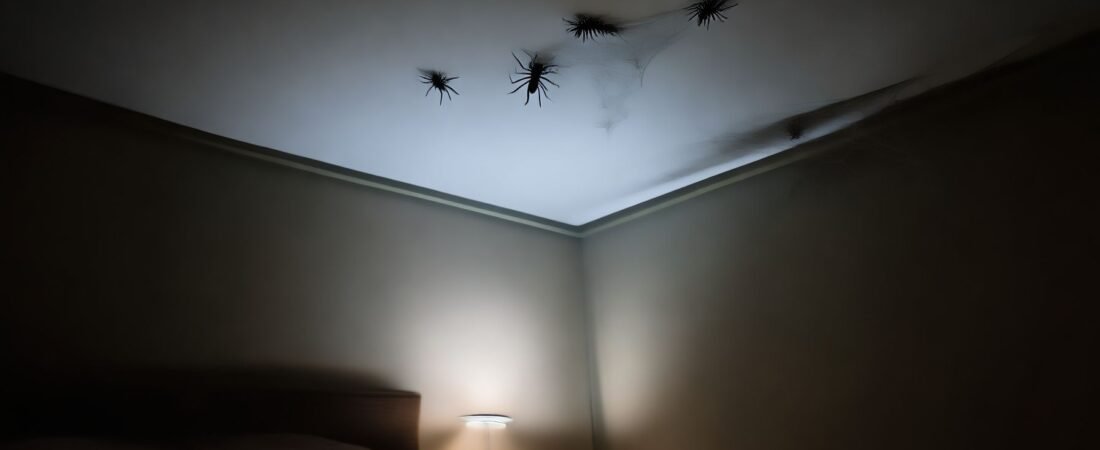
Ceiling bugs at night are almost never what you think they are — and that misidentification is exactly why most people waste weeks treating the wrong pest. The spider you’re reaching for a shoe to kill might actually be a harmless cellar spider chasing the moths that are your real problem. Getting this right on the first pass matters.
Here’s what’s actually going on: your bedroom ceiling becomes a highway after dark because light, warmth, and prey all concentrate there. Several completely different pests use the same route for completely different reasons. That’s the part most pest advice skips — it lumps “ceiling bugs” into one category and gives you a generic spray recommendation, when the fix for a house centipede is nothing like the fix for a psocid.
The real angle most people miss: the pest on your ceiling is usually a secondary visitor — something drawn there by another pest you haven’t noticed yet. Solve the right problem first, and the ceiling traffic disappears on its own.
Why Pests Specifically Congregate on Bedroom Ceilings After Dark
Ceilings aren’t random. Warm air rises, and a bedroom ceiling on a summer night can run 4–7°F warmer than the floor — which is exactly the temperature gradient that cold-blooded arthropods actively seek out. Add in the fact that most bedrooms have a single light source that draws small flying insects like a magnet, and you’ve accidentally created prime hunting territory about eight feet above your head.
The ceiling also gives predatory arthropods — spiders, centipedes, assassin bugs — a wide field of view with minimal ground vibration to spook them. They’re not there to bother you. They’re there because your bedroom has a food chain operating in it at night, and the ceiling is where apex hunters have the best angle. That’s an uncomfortable thing to sit with, but it’s the honest explanation for why the same ceiling spot keeps getting visited night after night.
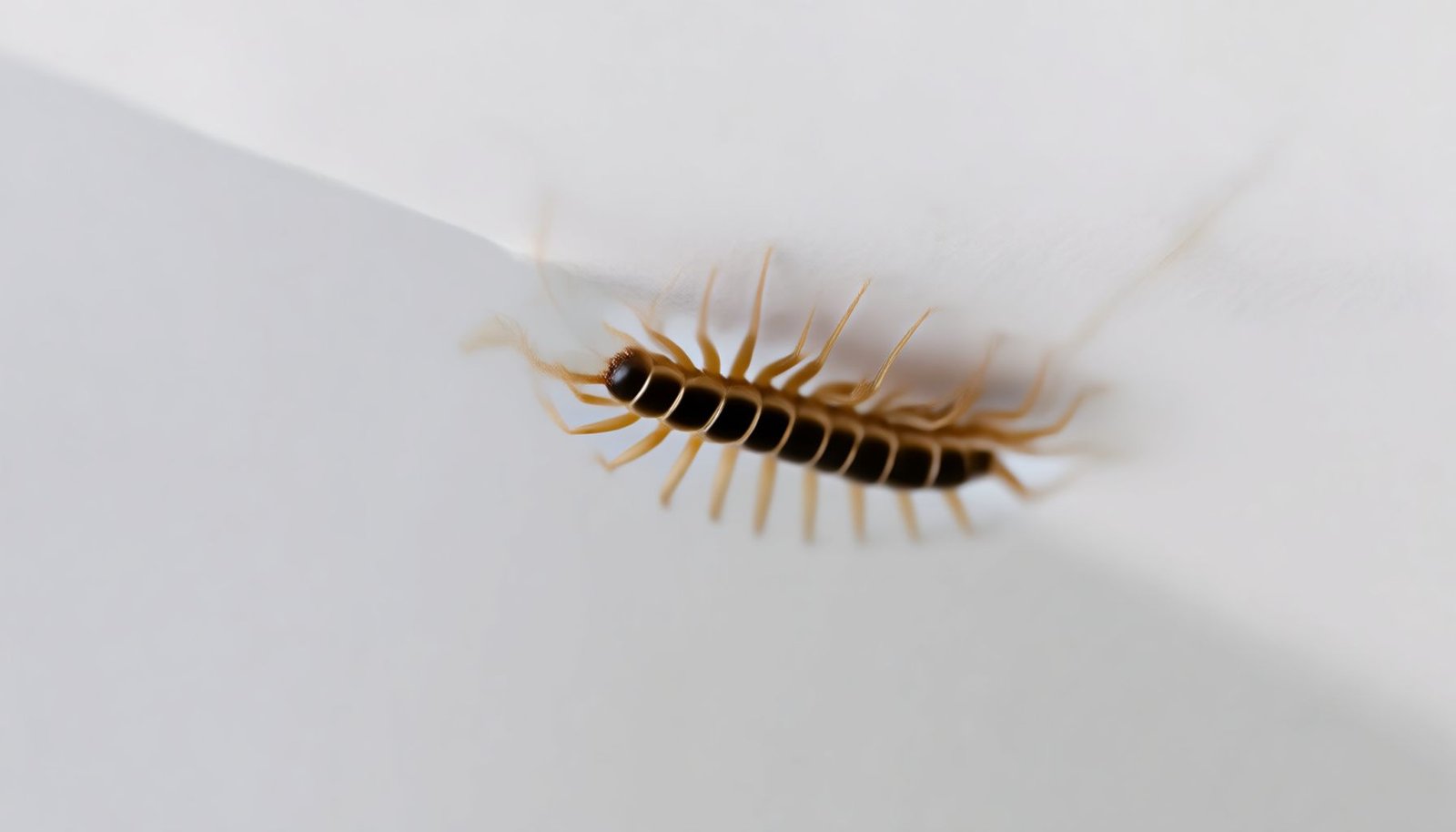
This close-up shows the kind of surface texture — paint, drywall seams, acoustic tile — that gives insects enough micro-grip to traverse a ceiling confidently, which explains why smooth ceilings sometimes have fewer visitors than textured ones.
What Are the Most Likely Bugs Crawling on Your Bedroom Ceiling at Night?
Picture this: you wake up at 2 a.m. for a glass of water, flip the light on, and catch a fast-moving silhouette crossing the ceiling before it freezes. Depending on size, shape, and speed, you’re almost certainly looking at one of a small handful of culprits. The good news is that each one leaves behind other clues that confirm the ID without you needing to catch it bare-handed.
Here’s the breakdown of the most common ceiling visitors by what you actually observe:
| What You See | Most Likely Pest | Key Confirming Clue |
|---|---|---|
| Fast-moving, many legs, 1–3 inches long | House centipede | Extremely long antennae, drops from ceiling when startled |
| Small (under ¼ inch), silverish, fish-shaped, slow | Silverfish or firebrat | Tiny scales left on surface, found near books or wallpaper |
| Tiny (pinhead-sized), moving in groups | Psocids (booklice) | Near moisture stains, invisible without phone flashlight |
| Round body, 8 legs, stationary or slow | Cellar or sac spider | Irregular web scraps in ceiling corners |
| Fuzzy, moth-like, tiny wings, barely flying | Drain fly | Resting with wings tent-like over body |
One pest that surprises people: psocids. They’re nearly invisible at 1–2 mm long and often dismissed as “dust moving” until someone looks at the ceiling with a phone flashlight and realizes there are dozens of them clustered near a damp patch. They feed on mold, fungal spores, and organic debris — and they can establish in a bedroom ceiling within 48–72 hours of a moisture event like a plumbing leak above.
Is the Pest on Your Ceiling Actually a Sign of Something Worse Inside Your Walls?
This is the question most ceiling-bug articles never get around to asking, and it’s the most important one. A house centipede on your bedroom ceiling is harmless on its own — but house centipedes eat other arthropods, and they don’t show up where there’s nothing to eat. Seeing one or two a month isn’t a flag. Seeing them every few nights almost certainly means your home has a reliable food source: silverfish, small roaches, or carpet beetle larvae living in wall voids, behind baseboards, or under the flooring.
The same logic applies to spiders. A spider setting up shop in your ceiling corner isn’t the infestation — it’s the indicator. Spiders are opportunists, and they only stay where prey is consistently available. Drain flies are the one exception worth calling out specifically: if you’re seeing small fuzzy flies near the ceiling at night, they’re almost certainly breeding in an organic clog somewhere within 20 feet, and the ceiling is just where they drift after emerging. You can read more about identifying that specific pest in this guide on how to identify drain flies: tiny fuzzy flies in your bathroom.
“Homeowners fixate on the pest they can see, which is almost always the predator or the scavenger — not the primary infestation. When I get a call about ceiling bugs in a bedroom, my first question is always ‘what’s behind your baseboards and in your attic space,’ because that’s where the answer usually lives. The ceiling visitor is just the canary.”
Dr. Marcus Ellery, Board-Certified Entomologist and University Extension Specialist, Structural Pest Management
How to Tell the Difference Between a Harmless Ceiling Bug and One That Needs Action
Not every ceiling visitor deserves a response beyond leaving it alone. House centipedes, cellar spiders, and most sac spiders are doing genuine pest control work and pose essentially zero risk to people. The ones that demand a real response are the ones that signal a larger population or a structural issue — and there are specific behaviors and secondary signs that separate the two categories reliably.
Use this checklist to gauge whether you need to act or just observe:
- Frequency: One sighting over two weeks is incidental. The same species appearing 3+ nights in a row suggests an established population nearby.
- Numbers: A single spider or centipede is a wanderer. Multiple individuals of the same species on the same ceiling patch means there’s a reliable reason they keep returning.
- Secondary evidence: Check ceiling corners and the tops of walls for shed skins, fecal specks, egg sacs, or the papery cast-off shells silverfish leave behind.
- Moisture signs: A slight discoloration or bubbling in ceiling paint near the sighting area often explains psocid or drain fly presence better than any bug description does.
- Proximity to attic access: Bedrooms with attic hatches or recessed lighting are direct entry points — what you see on the ceiling may be actively descending from above, not emerging from within the room.
Silverfish are worth special attention here. They’re quiet, slow, and people often don’t register them as a problem until they’ve been shredding book spines, wallpaper paste, and clothing fibers for months. If you’re seeing silverfish on bedroom ceilings, know that a single female can lay up to 100 eggs over her lifetime and the population grows slowly but persistently. If you’re unsure whether silverfish are actually a threat worth taking seriously, the breakdown at Are Silverfish Dangerous to Humans? Bites, Allergies and Risks covers that honestly — including the property damage angle most people underestimate.
Pro-Tip: Tape a piece of white paper to your bedroom ceiling near where you keep seeing activity, leave it for 48 hours, then examine it with a magnifying glass. Psocids, dust mites, and mold mites too small to see at normal distance will leave faint tracks or smear marks on the paper surface — and that single test can confirm or rule out an invisible micro-pest situation before you spend money on the wrong treatment.
How to Actually Get Rid of Bugs on Your Bedroom Ceiling Without Making It Worse
The fastest way to make a ceiling bug problem worse is to fog or bomb the bedroom. Bug bombs push insects into wall voids and attic spaces — the exact places they need to be inaccessible — while leaving residue on every surface you sleep near. Except for the most extreme infestations (which a bedroom fogger won’t resolve anyway), that approach creates more problems than it solves.
Instead, work through this sequentially based on what you’ve identified:
- Fix the moisture first. If psocids, drain flies, or fungus-associated pests are involved, no insecticide will produce lasting results until the humidity or water source is addressed. A bedroom consistently above 60% relative humidity is a breeding ground — a $15 humidity monitor tells you in 30 seconds whether that’s your issue.
- Seal the entry points from above. Recessed lighting fixtures, attic hatch gaps, and ceiling fan housings are the top three entry routes from attic space into bedroom ceilings. Foam gaskets inside recessed can lights and weatherstripping on attic hatches eliminate these silently but effectively.
- Apply a light residual dust in the attic void if warranted. Diatomaceous earth or a pyrethroid dust applied around attic joists above the bedroom addresses the population at the source rather than the symptom. This is especially relevant for centipedes, silverfish, and psocids moving through insulation.
- Use sticky traps at floor level near the wall-ceiling junction. Placing flat glue traps against the baseboard directly below your sighting location catches arthropods as they move up — and gives you a 5–7 day species census that tells you exactly what’s traveling through the room.
- Reduce the light draw. White LED lights attract significantly more flying insects than amber or “warm” spectrum bulbs. Switching the bedroom light closest to a window or attic vent to a warm-tone bulb cuts the ceiling congregation noticeably within one to two nights.
- If predatory arthropods persist after 3–4 weeks of prey reduction, reassess. A centipede or spider population that doesn’t thin out after you’ve addressed moisture and sealed entry points is telling you the prey source is somewhere you haven’t looked — behind an unused piece of furniture, inside a wall cavity near a plumbing run, or in stored items under the bed.
One honest caveat: the right approach genuinely depends on your building type. A ground-floor apartment bedroom in a humid climate with shared walls is a fundamentally different situation than a second-floor bedroom in a sealed suburban house. In shared-wall buildings, the source of ceiling bugs may be a neighboring unit or shared attic space — which is a conversation with building management, not a DIY fix. That distinction matters before you spend time and money on treatments that can only address what’s within your unit.
Getting the identification right is the whole game here. Once you know what you’re actually looking at — and more importantly, what it’s there to eat or where it’s coming from — the fix becomes obvious. Most ceiling bugs in bedrooms resolve completely once the primary driver (moisture, light, a hidden prey population) is addressed. The ceiling is just where you noticed the problem. The answer is almost always somewhere else.
Frequently Asked Questions
What are the tiny bugs crawling on my bedroom ceiling at night?
The most common culprits are booklice, spider mites, or ceiling spiders hunting for prey after dark. If they’re smaller than 1mm and pale or white, booklice are a strong bet — they thrive when indoor humidity climbs above 60%. Grab a flashlight and look closely at the texture; most of these bugs are easier to ID once you can see whether they have wings, visible legs, or a segmented body.
Are bugs on my bedroom ceiling at night dangerous?
Most bugs you’ll spot on a bedroom ceiling — like daddy long-legs spiders, booklice, or gnats — aren’t dangerous and won’t bite you in your sleep. The ones worth worrying about are brown recluse or black widow spiders, which are reclusive but venomous. If you’re seeing spiders regularly and can’t ID them, it’s worth contacting a pest control pro rather than guessing.
Why do bugs suddenly appear on my ceiling at night but not during the day?
Many household insects are nocturnal and hide in cracks, wall voids, or behind fixtures during daylight hours. Light sources like lamps or phone screens also attract flying insects such as gnats, fungus gnats, and small moths, which then end up circling or landing on the ceiling. If you only notice them after dark, the bugs are almost always there during the day — just hiding.
How do I get rid of bugs crawling on my bedroom ceiling?
Start by reducing what’s attracting them — fix any moisture issues since humidity above 60% draws booklice and mold mites, and seal gaps around light fixtures or window frames where insects enter. A residual insecticide spray labeled for indoor use along the ceiling perimeter can knock down populations within a few days. For spiders specifically, removing their food source (other insects) is more effective long-term than spraying alone.
Could bugs on my ceiling mean I have an infestation inside my walls?
It’s possible — carpenter ants, termites, and certain beetles often emerge from wall voids or wooden structural elements, and you’ll sometimes spot them on ceilings before you ever see damage. If you’re noticing more than a few bugs per night or seeing sawdust-like frass near baseboards or ceiling joints, that’s a red flag worth taking seriously. A licensed pest inspector can run a targeted inspection in under an hour and confirm whether the source is inside your walls.