
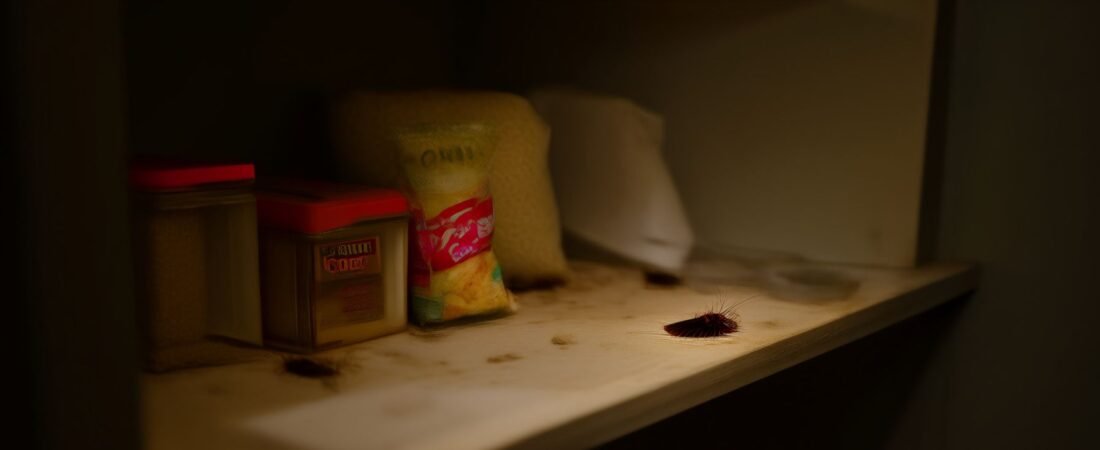
Eating food a cockroach has touched probably won’t kill you — and that’s exactly the problem. Because the risk feels low, most people shrug it off, toss the cracker, and move on. What they miss is that the danger isn’t in that single exposure. It’s in what cockroaches leave behind that you can’t see, smell, or wash off with a quick rinse.
The real issue isn’t the roach you spotted. It’s the bacteria, shed exoskeleton fragments, saliva, and fecal matter that get deposited on surfaces and food long before — and long after — any cockroach makes a visible appearance. Your body may react to contaminated food within hours, or not at all. That variability is what makes cockroach food contamination so easy to underestimate and so hard to pin down when something does go wrong.
What Actually Contaminates the Food — It’s Not Just the Roach Walking Over It
Most people picture contamination as a roach physically touching food. That’s part of it, but it’s the least of your worries. Cockroaches defecate constantly — they don’t have a dedicated bathroom. They’re leaving fecal pellets, shed body parts, and regurgitated digestive fluid on every surface they cross, including food packaging, countertops, and open containers.
The biology here matters. Cockroaches carry pathogens in their gut and on their legs that they pick up from sewers, garbage, and decaying matter — then walk directly onto your cutting board or into a bag of flour. A single American cockroach can carry over 30 different species of bacteria, including Salmonella, E. coli, and Listeria, according to CDC-cited entomology research. None of those pathogens announce themselves with a smell or a visible film.
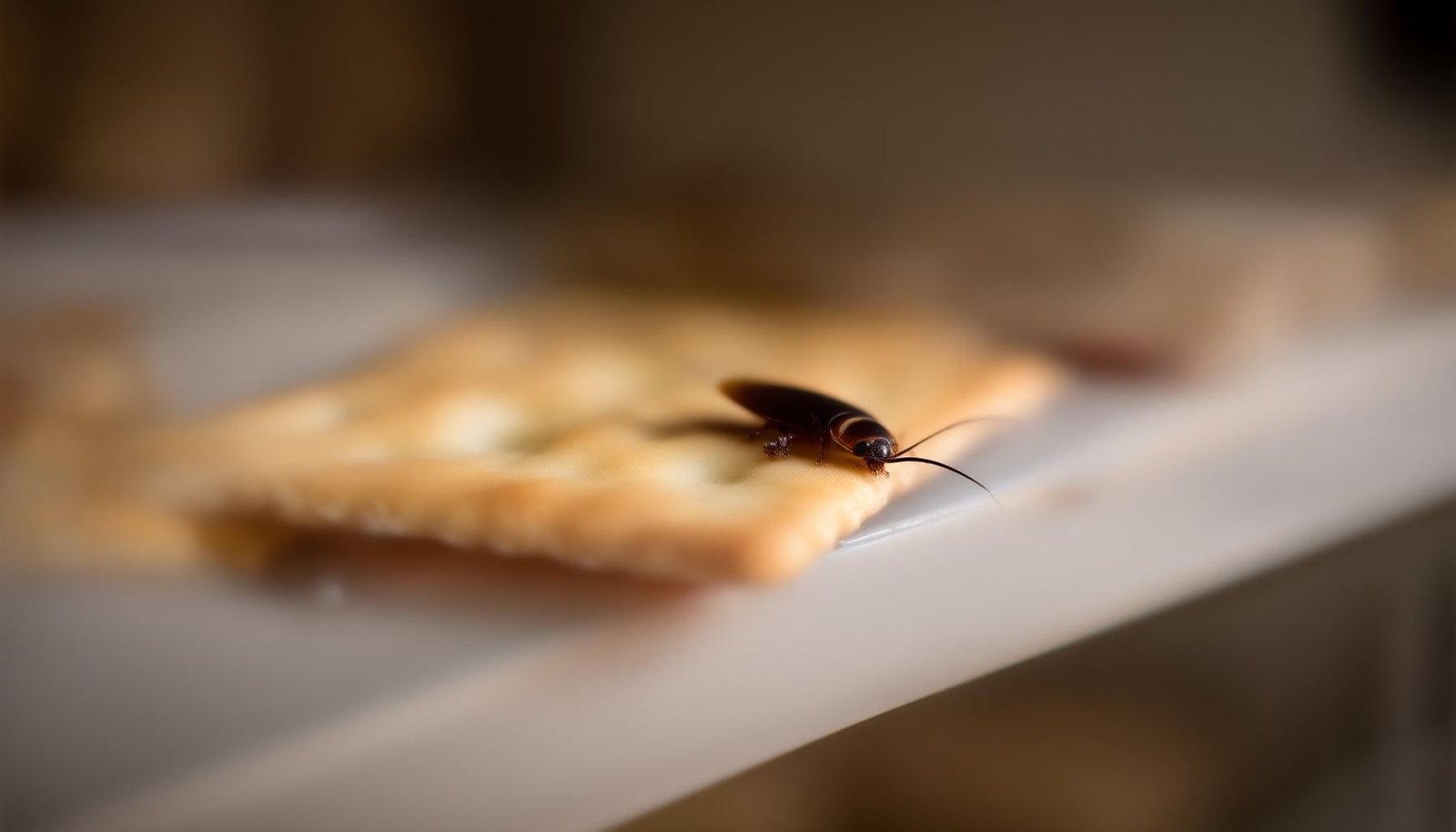
This close-up shows the kind of surface-level contamination cockroaches leave behind — fecal smears and body residue that are nearly invisible to the naked eye but carry significant pathogen loads.
What Symptoms Actually Show Up After Eating Contaminated Food?
Here’s the honest answer: symptoms range from nothing at all to a full-blown gastrointestinal illness, depending on the pathogen load, your immune system, and how much contaminated food you ingested. The most common outcomes are nausea, vomiting, stomach cramps, and diarrhea — the same symptoms people routinely chalk up to “a 24-hour bug” or “something I ate.” Which, technically, is accurate.
Salmonella contamination from cockroach exposure typically produces symptoms within 6 to 72 hours of ingestion. E. coli reactions can develop faster, sometimes within 2 to 8 hours. The maddening part is that most people never connect the dots between the roach activity in their kitchen and the stomach illness three days later. The contamination is invisible, the delay is long enough to obscure the source, and the symptoms are generic enough that food poisoning from cockroaches is almost certainly underreported nationwide.
“The pathogens cockroaches mechanically transmit are the same ones we see in foodborne illness outbreaks — Salmonella, Campylobacter, and Listeria among them. The difference is traceability. When contamination happens in a restaurant kitchen, we can investigate. When it happens in a home where cockroaches have been foraging overnight, nobody’s testing the leftovers. Families get sick and never know why.”
Dr. Patricia Dunleavy, Board-Certified Entomologist and Urban Pest Specialist, Purdue University Extension
Which Pathogens Do Cockroaches Actually Spread Through Food?
Cockroaches aren’t venomous and they don’t bite your food like a predator. They’re mechanical vectors — meaning they physically transfer pathogens they’ve picked up from contaminated environments onto food and food surfaces. The list of what they can carry is genuinely long, and it includes some serious players.
| Pathogen | Illness It Causes | Typical Symptom Onset |
|---|---|---|
| Salmonella spp. | Salmonellosis (food poisoning) | 6–72 hours |
| E. coli | Gastroenteritis, kidney complications | 2–8 hours |
| Listeria monocytogenes | Listeriosis (dangerous in pregnancy) | 1–30 days |
| Staphylococcus aureus | Staph food poisoning | 30 minutes–8 hours |
Beyond bacteria, cockroaches are also capable of spreading parasitic eggs — specifically those of roundworms and pinworms — which can survive on surfaces for days. They’ve also been documented harboring hepatitis A virus in laboratory settings, though direct transmission to humans through food in the home is harder to study. The point isn’t to catastrophize — it’s to understand that the risk isn’t theoretical. These are real pathogens with documented transmission routes.
Why the Food You Think Is Safe Probably Isn’t
Picture this: you come home, notice nothing unusual in the kitchen, and make dinner using the cutting board on the counter. What you didn’t see is that a German cockroach — Blattella germanica, the most common indoor species — had been foraging across that same counter between midnight and 4am. German cockroaches are active almost exclusively at night and spend daylight hours hidden in cracks behind appliances, which is why infestations can reach hundreds or even thousands of individuals before anyone spots one during the day.
The contamination risk doesn’t require open food. Cockroaches chew through cardboard and thin plastic packaging — cereal boxes, pasta bags, cracker sleeves — to access food inside. And once they’ve been in a package, they’ve almost certainly deposited fecal matter and shed cuticle inside it. Sealed containers in glass or hard plastic are genuinely safer, not just marginally so. If you’re seeing signs of cockroach activity and want to understand whether other pests might also be sharing your pantry, this guide on bugs in your pantry: how to identify and eliminate every type covers the full picture of what can get into stored food.
Pro-Tip: Don’t rely on smell to tell if food is contaminated. Cockroach bacteria are odorless in small amounts, and the musty smell people associate with roaches comes from aggregation pheromones in their feces — not from the pathogens themselves. If you have an active infestation, assume any food stored in cardboard, open bags, or thin packaging has been compromised, even if it looks untouched.
Who Is Actually at Risk of Getting Seriously Ill?
A healthy adult who ingests a small amount of Salmonella might experience 48 hours of miserable stomach cramping and then recover completely. But the same exposure in a toddler, an elderly person, someone on immunosuppressant medication, or a pregnant woman can turn into a hospitalization. Listeria from cockroach-contaminated food is particularly dangerous during pregnancy — it can cause miscarriage, stillbirth, or serious infection in newborns, and symptoms can take up to 30 days to appear after exposure.
The severity of illness also depends on how heavily contaminated the food was, and that depends on infestation size. A German cockroach egg capsule — called an ootheca — contains 30 to 40 eggs, and a single female can produce up to 8 capsules in her lifetime. Infestations scale fast. A kitchen with 10 roaches in January can have 300 or more by spring. The more roaches, the higher the contamination burden on every food-contact surface. This isn’t a linear risk — it compounds.
- Children under 5 — immune systems are still developing; lower pathogen doses cause serious illness faster than in adults.
- Adults over 65 — reduced stomach acid and slower immune response increase susceptibility to bacterial infection from contaminated food.
- Pregnant women — Listeria in particular poses catastrophic risk to fetal health even when symptoms in the mother are mild.
- People on chemotherapy or immunosuppressants — routine bacterial exposure that a healthy body manages easily can become systemic and life-threatening.
- Anyone with IBD, Crohn’s, or a compromised gut — the gastrointestinal tract is already inflamed; additional bacterial insult hits harder and recovery is slower.
What Should You Actually Do If You Think You’ve Eaten Contaminated Food?
If you develop gastrointestinal symptoms within a few days of noticing cockroach activity in your kitchen, don’t just wait it out. Most healthy adults will recover on their own with rest and fluids, but you should contact a doctor if symptoms include blood in stool, fever above 102°F, symptoms lasting more than 3 days, or severe dehydration. Those are the warning signs that the infection has escalated beyond a standard GI upset.
On the household side, the response has two tracks running simultaneously — medical and environmental. Continuing to use a kitchen with an active cockroach infestation while treating symptoms is like bailing out a boat without plugging the hole. Here’s what needs to happen on the prevention side:
- Discard any food stored in cardboard boxes, open bags, or thin plastic if cockroaches have been active in the same area — the risk of ongoing exposure isn’t worth it.
- Transfer all pantry staples (flour, sugar, grains, cereal) into sealed glass or hard plastic containers immediately.
- Clean all food-contact surfaces — countertops, cutting boards, shelving — with a disinfectant that lists bacteria on its label, not just a general cleaner.
- Don’t leave dishes with food residue in the sink overnight; even a thin film of food is enough to sustain a roach population.
- Address the infestation source, not just the symptoms — bait gels placed in cracks near appliances are more effective than sprays for German cockroaches specifically, because sprays can scatter them deeper into walls.
One thing worth knowing: if other pests are also present in or near the kitchen — rodents in particular — the contamination risk compounds significantly, because rats and mice carry their own distinct set of pathogens and can contaminate the same food sources. The signs of each infestation overlap less than you’d think; if you’re unsure what you’re dealing with, reading through what are signs of a rat problem in your home can help you rule out a concurrent issue that would change your treatment approach entirely.
Cockroach food contamination rarely produces a single dramatic event — no outbreak, no obvious cause and effect. It works quietly, through repeated low-level exposure, and it disproportionately harms the people in your household who are already most vulnerable. The smarter framing isn’t “what happens if I eat contaminated food once” — it’s “how long has my household been eating food from a kitchen with active roach activity, and who in my home is most at risk.” That’s the question worth sitting with, and the one that makes getting the infestation under control genuinely urgent rather than optional.
Frequently Asked Questions
what happens if you eat food contaminated by cockroaches?
If you eat food contaminated by cockroaches, you can get food poisoning from bacteria like Salmonella, E. coli, or Listeria that cockroaches carry on their bodies and in their droppings. Symptoms usually show up within 6 to 48 hours and can include nausea, vomiting, diarrhea, and stomach cramps. Most healthy adults recover on their own, but children, the elderly, and people with weak immune systems are at higher risk for serious illness.
can cockroach droppings in food make you sick?
Yes, cockroach droppings contain pathogens and allergens that can absolutely make you sick if you accidentally eat them. Beyond food poisoning, cockroach feces contain proteins that trigger allergic reactions and can worsen asthma, especially in sensitive individuals. Even small amounts of droppings left in a pantry or on a countertop can contaminate food that comes into contact with that surface.
how do you know if cockroaches have been in your food?
Look for small, dark, pepper-like droppings near or inside food packaging, a musty or oily odor coming from the food or storage area, and chewed or irregular holes in boxes and bags. You might also spot egg cases, shed skins, or smear marks along the edges of shelves. If you notice any of these signs, it’s safest to throw out the affected food rather than try to salvage it.
is it safe to eat food a cockroach walked on?
It’s not safe to eat food a cockroach walked on because cockroaches pick up bacteria, parasites, and pathogens as they crawl through sewers, garbage, and decaying matter, then transfer all of that onto your food. There’s no way to visually tell how contaminated the food is, and cooking may not destroy every pathogen depending on the temperature and how long you cook it. The safest call is to throw out any food you know or strongly suspect a cockroach has walked on.
what diseases can you get from cockroach contaminated food?
Cockroach-contaminated food has been linked to Salmonellosis, Typhoid fever, Cholera, Dysentery, and Gastroenteritis, all caused by bacteria cockroaches are known to carry and spread. They can also transmit parasites like Giardia and have been associated with spreading at least 33 different types of bacteria according to public health research. The severity of illness depends on the pathogen involved, how much contaminated food was eaten, and the overall health of the person who ate it.
Disclaimer: This article is for general informational purposes only and does not constitute medical advice. How a pest-related exposure, bite, or contaminant affects you can depend on age, pre-existing conditions, allergies, and the extent of exposure. If you’re experiencing symptoms you believe are linked to a pest problem in your home, please consult a licensed healthcare provider rather than relying on this article alone.