
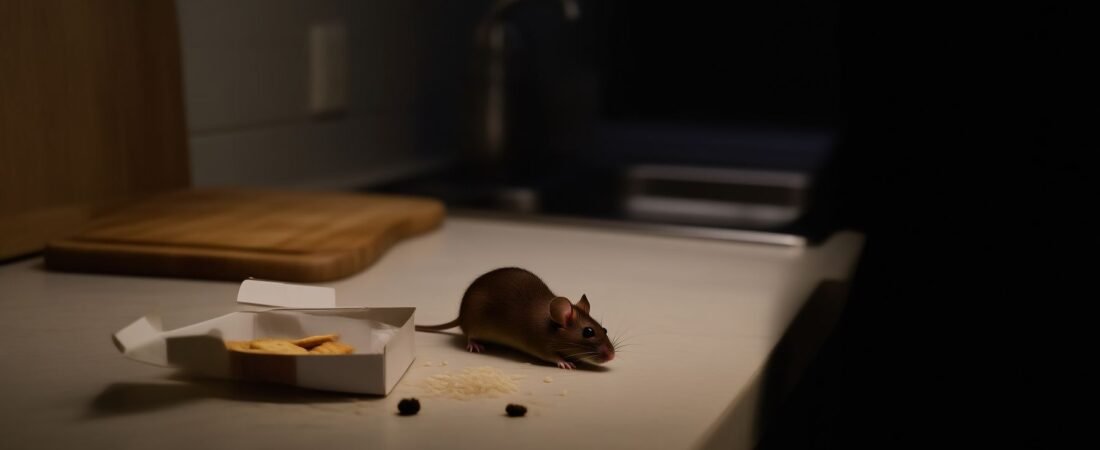
Salmonella doesn’t need a sick person to get into your kitchen — it needs a mouse that crossed your counter at 3am. That’s the part most people miss entirely. The conversation about rodents and foodborne illness almost always focuses on droppings and contaminated food, but the real transmission risk in a typical home kitchen is far more invisible than a pellet sitting next to your cereal box. It’s happening on surfaces you touch every single day, and you’d have no idea.
Yes, mice and rats absolutely spread Salmonella — and they do it constantly, not just when you find obvious evidence of them. A single mouse produces between 50 and 75 droppings per night and urinates as it moves, leaving a continuous trail of contamination across every surface it travels. The short version: if a rodent has been in your kitchen, Salmonella contamination is a realistic concern, and it doesn’t require the mouse to touch your food directly.
How Do Mice and Rats Actually Transmit Salmonella to Humans?
Rodents carry Salmonella bacteria in their gastrointestinal tracts, shedding it continuously through feces, urine, and — here’s the part most articles skip — through their fur and feet. As a mouse scurries across your countertop, cutting board, or the rim of a pot left out overnight, it’s depositing bacteria with every step. It doesn’t have to eat your food to contaminate it.
The bacteria transfer from surface to food to hands to mouth — a chain that can unfold over hours or even days after the mouse has long since retreated into the wall. Salmonella can survive on dry, hard surfaces like countertops and wooden cutting boards for up to 32 hours, and on porous materials like sponges or unsealed wood, considerably longer. That’s not a scare tactic; that’s just the biology of how this particular bacterium works outside a host.
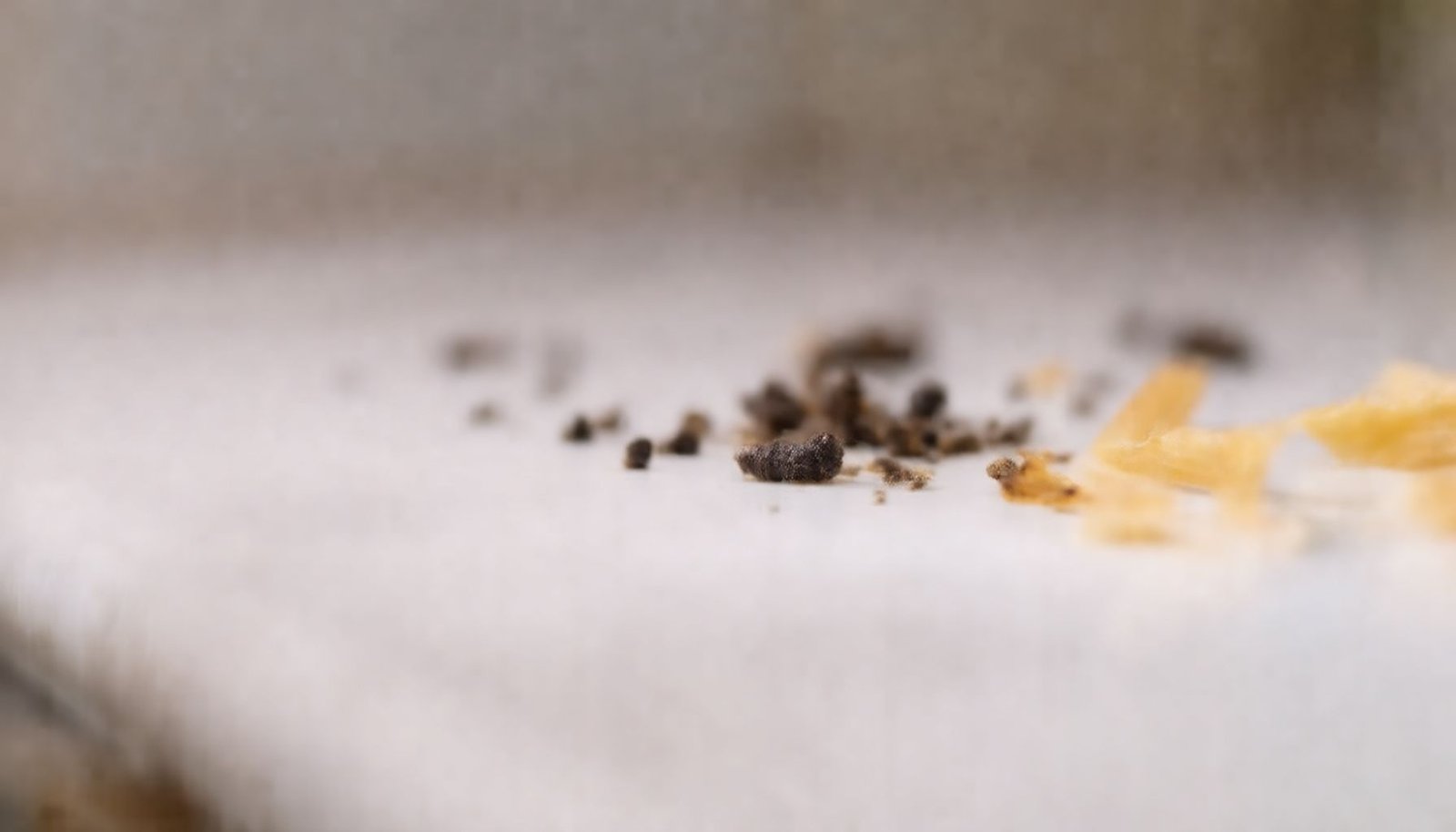
This close-up shows the kinds of kitchen surfaces — countertops, cabinet edges, stovetop seams — where rodent foot-traffic contamination goes completely undetected and where Salmonella transfer to food or hands is most likely to occur.
Why a “Clean Kitchen” Doesn’t Protect You the Way You Think
Here’s the counterintuitive part that catches a lot of people off guard: Salmonella contamination from rodents has almost nothing to do with how clean your kitchen is. A mouse doesn’t need a crumb on the floor or a dirty dish in the sink to spread bacteria. It needs a point of entry and a reason to explore — and your kitchen provides both, whether it’s spotless or not.
Mice can squeeze through a gap as small as 1/4 inch, and rats need only about 1/2 inch — openings that exist behind nearly every refrigerator, under most stoves, and around the utility lines in virtually any home. Once inside, a mouse will investigate every horizontal surface within its travel range, typically 10 to 30 feet from its nest. A clean kitchen just means there’s less food reward; the bacteria still travel.
“People assume they’d know if they had a rodent problem serious enough to worry about food safety. But rodents are nocturnal and extremely cautious — a mouse can be active in your kitchen for weeks before you find a single dropping in an obvious location. By the time you see evidence, the surface contamination has likely already occurred dozens of times.”
Dr. Marcus Ellery, PhD, Board-Certified Entomologist and Urban Pest Management Researcher, Cooperative Extension Program
Which Surfaces in Your Kitchen Carry the Highest Salmonella Risk?
Not all surfaces are equal when it comes to rodent-transmitted Salmonella risk. The highest-risk spots are the ones mice use as highways — and those are rarely the obvious places homeowners think to sanitize. Rodents tend to hug walls and travel along established paths, which means the back edges of countertops, the tops of lower cabinets, the narrow space between the stove and the counter, and the underside of cabinet overhangs are far more contaminated than the open middle of a counter you wipe down every night.
Knowing where rodents actually travel changes how you think about kitchen hygiene during an active infestation — or even after one. These are the specific surface zones that carry disproportionate risk:
- Back edge and wall-side of countertops — the strip of counter nearest the wall is a primary mouse travel lane, rarely wiped thoroughly
- Top of the refrigerator and refrigerator coil area — warm, elevated, and almost never cleaned; a common rest and travel zone
- Inside and around the stove drawer — the broiler drawer or storage drawer beneath the oven is a documented rodent nesting and travel spot
- Open dish drying racks — any utensil or plate left out overnight in a rodent-active kitchen has surface exposure risk
- Inside cabinets near the back wall — especially lower cabinets with plumbing cutouts, which are common entry points for both mice and rats
- Cutting boards left on the counter — particularly wooden ones, where Salmonella can persist in micro-cracks even after wiping
Pro-Tip: During or after a rodent infestation, don’t just wipe counters — pull appliances away from walls and disinfect behind and beneath them with an EPA-registered disinfectant. The surfaces you can’t easily see are the ones that carry the highest contamination load.
How Serious Is the Salmonella Risk Compared to Other Rodent-Borne Diseases?
Rodents carry a long list of pathogens — hantavirus, leptospirosis, lymphocytic choriomeningitis, and others — and Salmonella sits in a specific category worth understanding clearly. Unlike hantavirus, which requires inhaling aerosolized rodent waste and is extremely rare, Salmonella from rodents is a genuine everyday risk in any actively infested kitchen. The CDC estimates 1.35 million cases of salmonellosis occur in the United States each year, and while restaurant and commercial food handling are major contributors, household rodent contamination is a documented transmission route that gets far less attention than it deserves.
Salmonella illness typically develops within 6 to 72 hours of exposure and presents as diarrhea, fever, and abdominal cramps that last 4 to 7 days in otherwise healthy adults. Children under 5, adults over 65, and immunocompromised individuals face significantly more serious outcomes, including bloodstream infection requiring hospitalization. The honest nuance here is that risk severity depends heavily on how many animals are present, how long the infestation has been active, which specific surfaces were contaminated, and who in the household is most vulnerable — a single mouse passing through once is not the same exposure level as an established colony of rats that’s been using your kitchen for two months.
| Pathogen | Transmission Route | Onset After Exposure | Primary Risk Group |
|---|---|---|---|
| Salmonella | Contaminated surfaces, food, water via feces/urine/fur | 6–72 hours | Children, elderly, immunocompromised |
| Hantavirus | Inhaled aerosolized droppings/urine | 1–8 weeks | All ages — rare but severe |
| Leptospirosis | Contact with urine-contaminated water or surfaces | 2–30 days | Outdoor exposure; less common indoors |
What to Do After Finding Rodent Evidence in Your Kitchen
The cleanup protocol after rodent activity is one area where well-meaning people consistently make things worse. Sweeping or vacuuming droppings — the instinctive first move — is exactly wrong. Both actions aerosolize bacteria-laden particles, which you then breathe in and which settle on surrounding surfaces. The correct approach is methodical and wet.
Picture this: you open the cabinet under your kitchen sink and find a handful of droppings scattered across the shelf liner. Your first move is to resist the urge to grab a paper towel and wipe. Instead, here’s the sequence that actually reduces your contamination risk, step by step:
- Ventilate the space first. Open windows and leave the area for 30 minutes before touching anything. This reduces concentration of any airborne particles disturbed by your movement.
- Put on gloves and an N95 mask. Disposable nitrile gloves are fine; the mask matters most when working in enclosed spaces like under-sink cabinets or behind appliances.
- Saturate droppings with disinfectant before touching them. Spray an EPA-registered disinfectant directly on droppings and let it soak for at least 5 minutes before wiping. This is non-negotiable — it’s what kills the bacteria before you move it.
- Use paper towels, not cloth. Wipe soaked droppings with disposable paper towels and seal them in a plastic bag before disposal. Cloth rags become a contamination vector.
- Disinfect the surrounding area in a wide radius. Rodents rarely stop where you found droppings — treat a foot in every direction as potentially contaminated surface area.
- Wash your hands thoroughly with soap for at least 20 seconds after removing gloves. Remove gloves by inverting them to avoid touching the outer surface, then wash immediately.
Once cleanup is done, the food safety question remains. Any open or loosely packaged food in areas with confirmed rodent activity should be discarded. Sealed cans and glass jars that haven’t been physically compromised are generally safe after exterior disinfection, but cardboard, paper bags, and anything with even minor chew marks goes in the trash. Just as flies in the kitchen during winter signal that something is drawing pests to an area even when conditions seem unlikely, rodent activity in a kitchen that appears well-sealed means there’s an access point you haven’t found yet — and cleanup without exclusion is just a temporary fix.
One thing that often surprises people is how far the contamination radius extends from the visible evidence. Droppings concentrate in areas where mice pause or nest, but the Salmonella trail runs the full length of every surface they’ve traveled — which means your visible evidence is the tip of the contamination iceberg, not the whole picture. Just as pest damage to structural materials like wood often goes unnoticed until it’s much worse — similar to how signs of termites in wood floors, walls and furniture accumulate invisibly before becoming obvious — rodent contamination in a kitchen tends to be far more widespread than the first evidence suggests.
The only real solution to rodent-associated Salmonella risk in a kitchen isn’t bleach — it’s elimination and exclusion. Cleaning contaminated surfaces buys you time and reduces immediate exposure, but as long as mice or rats have active access to your kitchen, the contamination cycle resets every night. Seal every gap larger than 1/4 inch with steel wool backed by caulk or hardware cloth, address any moisture sources under sinks that attract rodents, and use snap traps — which kill quickly and don’t allow a poisoned rodent to die in an inaccessible wall space — along confirmed travel routes near walls. Once the rodents are gone and entry points are sealed, a thorough disinfection gives you an actual clean slate.
The broader lesson here is that food safety in a home with rodent activity requires thinking about contamination differently — not as a one-time event you can trace to a specific incident, but as an ongoing environmental condition that persists until the infestation is fully resolved. Your kitchen’s cleanliness matters for many reasons, but against Salmonella-shedding rodents that are active while you sleep, sanitizing is a response to a problem, not a prevention of one. Exclusion — physically removing rodent access to the space — is the only prevention that actually works.
Frequently Asked Questions
Can mice and rats spread salmonella to humans?
Yes, mice and rats spread salmonella through their droppings, urine, and saliva — and you don’t have to touch the rodent to get infected. They contaminate food, countertops, and utensils just by walking across surfaces. The CDC estimates rodents are responsible for transmitting over 35 diseases to humans, and salmonellosis is one of the most common.
How do you know if rodents have contaminated your food?
You can’t always tell by looking — salmonella has no smell, color, or visible sign on food. What you can look for are gnaw marks on packaging, greasy rub marks along walls, and small dark droppings about the size of a grain of rice near your pantry or cabinets. If you find any of those signs, throw out any open or chewed food immediately and don’t taste-test it first.
How do you disinfect a kitchen after mice or rats?
Start by ventilating the area for at least 30 minutes before cleaning — never sweep or vacuum droppings dry because that sends contaminated dust into the air. Spray droppings, urine spots, and nesting material with a bleach solution of 1 part bleach to 10 parts water, let it soak for 5 minutes, then wipe it up with paper towels and dispose of them in a sealed bag. Wash all countertops, cabinet shelves, and any utensils or dishes that may have been exposed with hot soapy water followed by a disinfectant.
Can you get salmonella from touching mouse droppings?
Yes, touching mouse or rat droppings and then touching your mouth, food, or food prep surfaces is a real transmission route for salmonella. Even dried droppings carry live bacteria that can survive on surfaces for hours to days depending on conditions. That’s why it’s critical to wear disposable gloves when cleaning up rodent evidence and wash your hands thoroughly with soap and water afterward.
What are the symptoms of salmonella from rodents?
Symptoms usually show up 6 hours to 6 days after exposure and include diarrhea, stomach cramps, fever, nausea, and vomiting. Most healthy adults recover on their own within 4 to 7 days, but young children, elderly adults, and anyone with a weakened immune system can develop severe illness that requires hospitalization. If you have symptoms and recently found signs of rodents in your kitchen, tell your doctor — they can test for salmonella specifically.
Disclaimer: This article is for general informational purposes only and does not constitute medical advice. How a pest-related exposure, bite, or contaminant affects you can depend on age, pre-existing conditions, allergies, and the extent of exposure. If you’re experiencing symptoms you believe are linked to a pest problem in your home, please consult a licensed healthcare provider rather than relying on this article alone.