
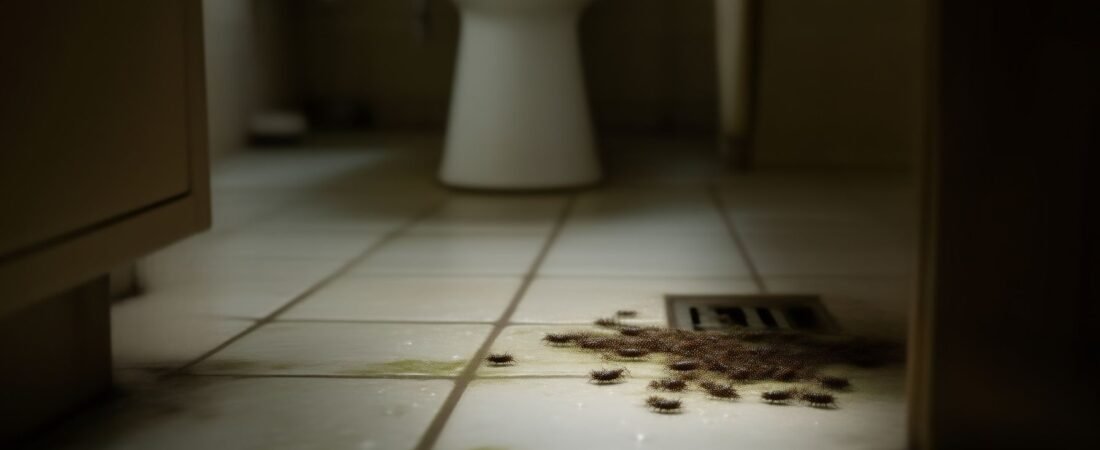
Your bathroom is clean. You scrub it weekly. And yet, there they are — tiny brown specks moving across the tile, the baseboard, or the wall near the toilet. Here’s the thing most pest articles get completely wrong about small brown bugs in bathrooms: the bugs aren’t there because your bathroom is dirty. They’re there because of moisture, and identifying which bug you’re actually looking at will completely change what you do next. Getting the ID wrong means you’ll treat for the wrong pest and accomplish nothing.
Which Small Brown Bugs Actually Show Up in Bathrooms?
There are four realistic candidates when you’re seeing small brown bugs in a bathroom, and they look similar enough that most people guess wrong on the first try. The most common are drain flies in their larval-to-adult stage, cockroach nymphs, booklice (psocids), and drugstore beetles — each with completely different biology and completely different fixes. A drain fly adult is furry and moth-like; a cockroach nymph is glossy and fast; booklice are pale tan and nearly transparent; a drugstore beetle is rounded and compact like a tiny brown ball. Size matters too — booklice rarely exceed 1–2mm while a German cockroach nymph can reach 3–6mm by its third instar.
The reason bathrooms attract this variety isn’t random. Standing water in the drain, condensation behind the toilet tank, damp grout, and even that damp bathmat that never fully dries are all micro-habitats that different bugs exploit for different reasons. Figuring out where in the bathroom you’re finding them is half the identification work — bugs near the drain suggest something different than bugs on the ceiling or inside the vanity cabinet.
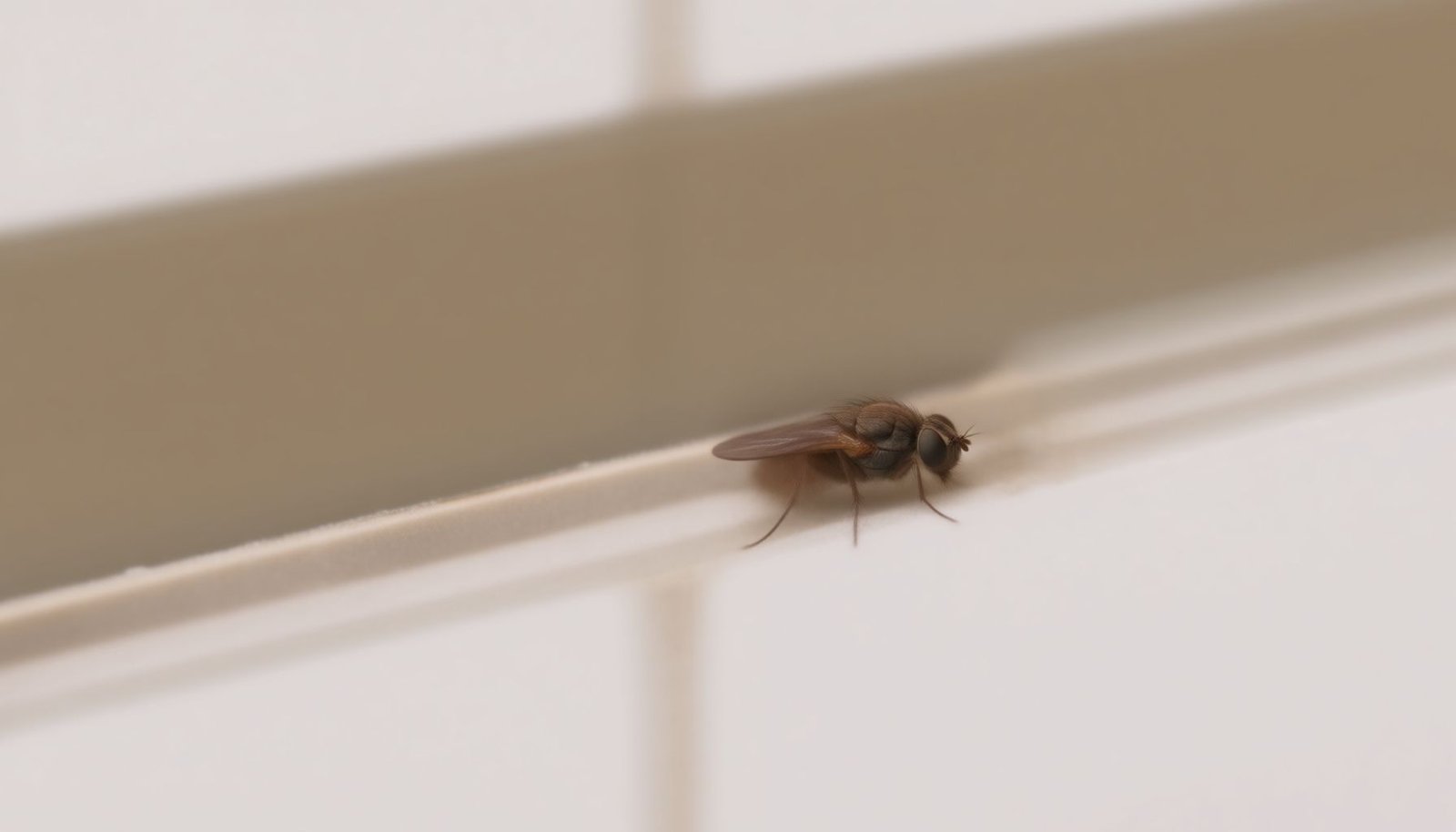
This close-up shows the size and color variation between the most common small brown bathroom bugs — details that are nearly impossible to distinguish at a glance but make all the difference when choosing a treatment.
Why Does Moisture — Not Filth — Explain Most Bathroom Bug Problems?
Picture this: a couple moves into a brand-new apartment, keeps it spotless, and three months later notices tiny brown bugs clustering around the base of the toilet. The building is new, the grout is fresh, and nothing is visibly dirty. What happened? The exhaust fan was undersized for the square footage of the bathroom, and the relative humidity inside that room was sitting above 70% for hours after every shower. That’s enough for booklice to establish, for mold spores to grow inside wall cavities, and for that mold — not food scraps — to feed an entire population of small insects.
Booklice, in particular, don’t eat your food. They eat mold and mildew, which means they can thrive behind a perfectly clean-looking tile wall if there’s condensation feeding microscopic fungal growth on the other side. A female booklouse can lay 60–100 eggs in her lifetime, and at bathroom humidity levels, those eggs hatch in as little as 11 days. You don’t need a dirty bathroom — you need a humid one, and that’s an honest nuance that depends heavily on your bathroom’s ventilation, your climate, and whether your building has single-pane windows that cause heavy condensation in colder months.
How Do You Tell the Difference Between These Brown Bugs Without a Magnifying Glass?
You don’t need to be an entomologist, but you do need to slow down and observe two things: movement pattern and body shape. Use your phone flashlight and get close. The difference in behavior alone will usually tell you what you’re dealing with before you even try to examine the body closely.
Here’s a practical breakdown of the four most likely culprits, ranked by how commonly they appear in US bathrooms:
- German cockroach nymphs — Glossy brown, fast-moving, and will scatter instantly when the light comes on. They’re narrow, flat, and often have two dark stripes running down their back even at early nymph stages. Finding one nymph almost certainly means a breeding population is nearby. A single female German cockroach can produce 300–400 offspring in her lifetime.
- Drain fly adults — Fuzzy, moth-like wings held tent-style over the body, usually 1.5–5mm. They move sluggishly and often rest on walls near the shower or sink drain. Crush one and it leaves a powdery smear — that’s the fine hair covering their wings.
- Booklice (psocids) — Pale tan to light brown, extremely small (1–2mm), and move in a slow meandering pattern. They don’t bite, don’t fly well, and are often found in groups near grout lines or behind toilet tanks where condensation collects.
- Drugstore beetles — Rounded, reddish-brown, about 2–3.5mm, with fine ridges running along their wing covers. They’re slower than roach nymphs and will often play dead when disturbed. In a bathroom context, they’re usually coming from an adjoining area — a linen closet with stored paper products, or old medication packaging left under the sink.
Pro-Tip: Tape a piece of white paper over your drain overnight and check it in the morning. If you find small brown insects stuck to or resting on the paper, you’ve just confirmed drain activity without buying a single product. This simple test takes 30 seconds and narrows your treatment plan immediately.
What Does It Mean If You’re Finding Them Near the Drain vs. the Walls vs. Under the Sink?
Location isn’t just a clue — it’s often the definitive answer. Drain flies live and breed inside the gelatinous organic film that coats the interior walls of slow or clogged drains, so adults resting on walls or ceilings within a few feet of the shower drain are almost always drain flies. If you’re finding bugs specifically on the wall near the drain, this is your most likely scenario.
Bugs clustering under the sink cabinet — especially near pipes or the back corner — point toward roach nymphs or drugstore beetles, since that area offers darkness, warmth from pipes, and often higher moisture than the rest of the bathroom. Bugs on the ceiling or upper walls in a dispersed pattern lean toward booklice or drain fly adults resting between feeding bouts. The table below maps location to most likely pest:
| Where You’re Finding Them | Most Likely Bug | Secondary Possibility |
|---|---|---|
| On walls or ceiling near drain | Drain flies | Booklice |
| Scattering from under toilet base or vanity | Cockroach nymphs | Drugstore beetles |
| Along grout lines or tile cracks | Booklice | Cockroach nymphs |
| Inside cabinet under sink | Cockroach nymphs | Drugstore beetles |
What’s the Right Fix — and Why Treating the Wrong Bug Makes Things Worse?
This is where most DIY bathroom pest efforts go sideways. Someone sees brown bugs, buys a general-purpose insecticide spray, saturates the bathroom, and then wonders why the bugs are back in two weeks. Spraying a contact killer at booklice without addressing humidity is like mopping during a rainstorm — you’re solving the symptom and ignoring the cause. The bugs come back because the mold they feed on is still there, and any eggs tucked behind tile or in wall voids weren’t touched by the spray.
Here’s what actually works, matched to the pest:
- For drain flies: Use a stiff brush to physically scrub the inside of the drain, then treat with a biological drain gel (like InVade Bio Drain) that breaks down the organic film. Pouring boiling water alone isn’t enough — the organic layer insulates eggs from heat within about 1 inch of pipe wall.
- For cockroach nymphs: Gel bait in a crack-and-crevice application under the sink and along the back of the vanity is far more effective than spray. A nymph that contacts a gel bait will carry it back to the harborage — this is the mechanism that kills breeding populations, not just the individuals you can see. It’s also worth investigating whether they’re coming from a shared wall if you’re in an apartment, because the contamination risk in a kitchen shared with roaches extends to any surface they travel across, including your bathroom.
- For booklice: Reduce relative humidity below 50% using a bathroom exhaust fan rated for your room’s square footage (check CFM rating — most builders install undersized fans). A dehumidifier run for 48–72 hours in a heavily infested bathroom will kill off booklice faster than any pesticide because they desiccate easily without humidity.
- For drugstore beetles: Find and discard the source material — usually old cardboard, paper, or stored products under the sink. Beetles won’t persist in a bathroom without a food source, so locating and removing what they’re eating ends the problem without any chemical treatment.
“The single most common mistake homeowners make with bathroom bugs is reaching for a spray before they’ve made an ID. A contact pyrethroid will knock down what you see, but if you’re dealing with booklice feeding on mold inside a wall cavity, or roach nymphs harbouring behind the toilet, you haven’t touched the population. You need to match the control method to the pest’s biology — particularly its food source and its breeding site — or you’ll be retreating the same room every few weeks indefinitely.”
Dr. Marcus Hale, Board-Certified Entomologist and Urban Pest Management Specialist
One counterintuitive fact that almost never makes it into bathroom pest articles: booklice and drain flies are not related to each other in any meaningful way, but they respond to the exact same environmental fix — reducing moisture. This means that if you’re not sure which one you have, fixing your bathroom’s humidity and ventilation first will reduce both populations before you’ve spent a dollar on pesticide. It’s a rare situation where one environmental change addresses multiple pest species simultaneously.
Cockroach nymphs require a different lens entirely. A single nymph in your bathroom isn’t just a nuisance — it’s evidence that adults are nearby, and a German cockroach population can double in size within 60 days under ideal conditions. The bathroom is rarely the primary harborage; it’s usually a secondary foraging zone. That’s worth knowing because treating only the bathroom when roaches are breeding behind the kitchen kickboard — sometimes just a shared wall away — will feel like progress for a week and then backfire. Thinking about pest problems at the building level rather than the room level matters, and the same logic applies to any pest that travels through wall voids. It’s the same reason an ant found in your bathroom might actually be a satellite colony foraging from a nest that’s inside your wall structure entirely.
Getting the identification right the first time doesn’t just save you money on the wrong products — it tells you what’s actually happening inside your walls, under your floor, and behind your tile. Small brown bugs in a bathroom are a symptom, not the problem itself, and the real story is almost always about water: where it’s coming from, where it’s sitting, and what’s growing because of it. Fix the moisture source, and in most cases, the bugs resolve without an exterminator. Skip that step, and you can treat the same bathroom indefinitely without permanent results.
Frequently Asked Questions
What are the small brown bugs in my bathroom?
The most common small brown bugs found in bathrooms are drain flies, cockroach nymphs, silverfish, and booklice. Drain flies are tiny, fuzzy, and moth-like, while cockroach nymphs are fast-moving and oval-shaped. If you’re seeing them near the drain or standing water, drain flies are the most likely culprit.
Are small brown bugs in the bathroom harmful to humans?
Most small brown bugs in bathrooms aren’t directly dangerous, but some pose real risks. Cockroaches can spread bacteria like Salmonella and trigger asthma attacks, especially in children. Drain flies and booklice are more of a nuisance than a health threat, but a large infestation of any bug is a sign of an underlying moisture or sanitation problem you shouldn’t ignore.
What causes small brown bugs in the bathroom?
Excess moisture is the number one cause — most bathroom bugs thrive in humidity levels above 70%. Leaky pipes, poor ventilation, and organic buildup inside drains give bugs like drain flies a place to breed and feed. Fixing leaks, running the exhaust fan during and after showers, and cleaning your drain weekly can cut off what’s attracting them.
How do I get rid of small brown bugs in my bathroom drain?
Start by pouring boiling water down the drain twice a week to kill larvae and break up the organic slime they feed on. You can also use a drain gel cleaner like Bio-Clean or Green Gobbler, which targets the buildup drain flies breed in. If you’ve done this for 2 to 3 weeks and still see bugs, the infestation is likely deeper in your pipes and a plumber or pest control pro should take a look.
How do I know if I have drain flies or cockroaches in my bathroom?
Drain flies are small, hairy, and tend to rest on walls near the sink or shower — they’re slow and clumsy fliers, usually only 1/16 to 1/5 of an inch long. Cockroach nymphs are faster, shinier, and will scatter quickly when you turn the lights on. A simple test for drain flies: place a piece of tape sticky-side-down over your drain overnight and check it in the morning for any trapped insects.