
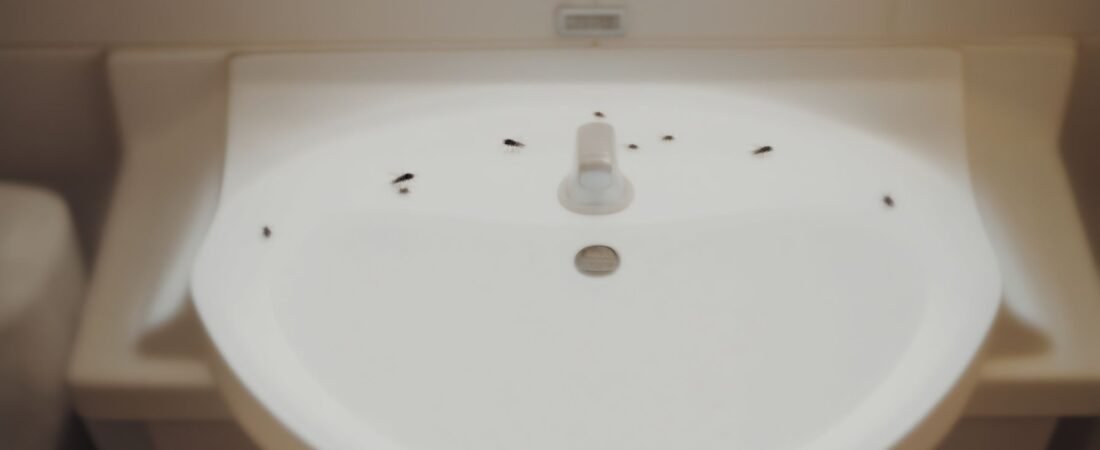
You turn on the bathroom light and something small and dark vanishes down the drain before you can get a good look at it. That moment — half-glimpsed, unsettling — is exactly what sends people to Google. Here’s the answer most pest sites bury under five paragraphs of padding: the bugs coming out of your drain almost certainly aren’t living inside your pipes. They’re breeding in the thin layer of decomposing organic slime coating the inside of the drain, and that distinction changes everything about how you deal with them.
Most homeowners attack the wrong target. They pour bleach down the drain, run hot water for ten minutes, and call it done — only to see the same bugs three days later. The slime layer (called a biofilm) is thick, adhesive, and clings to pipe walls well above the waterline where bleach just flows past. Until you understand what’s actually attracting and sustaining these insects, you’ll keep treating symptoms instead of the source.
Which Bugs Actually Come Out of Drains?
There are really only a handful of insects that show up this way with any regularity, and they’re not interchangeable — each one tells you something specific about your drain’s condition. Drain flies (also called moth flies or sewer gnats) are by far the most common. They’re small, fuzzy, moth-like insects about 1/8 inch long with distinctively broad, hairy wings, and they lay their eggs directly in the gelatinous biofilm inside the drain. A single female can deposit 30 to 100 eggs in that film, and larvae hatch within 48 hours under warm conditions.
The other frequent offenders are phorid flies (small, hump-backed flies sometimes called “coffin flies”), fruit flies that have found their way to a drain with rotting organic debris, and in less common cases, cockroach nymphs that were using the drain as a travel corridor rather than a breeding site. Fungus gnats occasionally show up in bathroom drains near houseplants, but they’re typically breeding in wet soil — not the pipe. Getting the identification right before you do anything else matters more than most people realize.
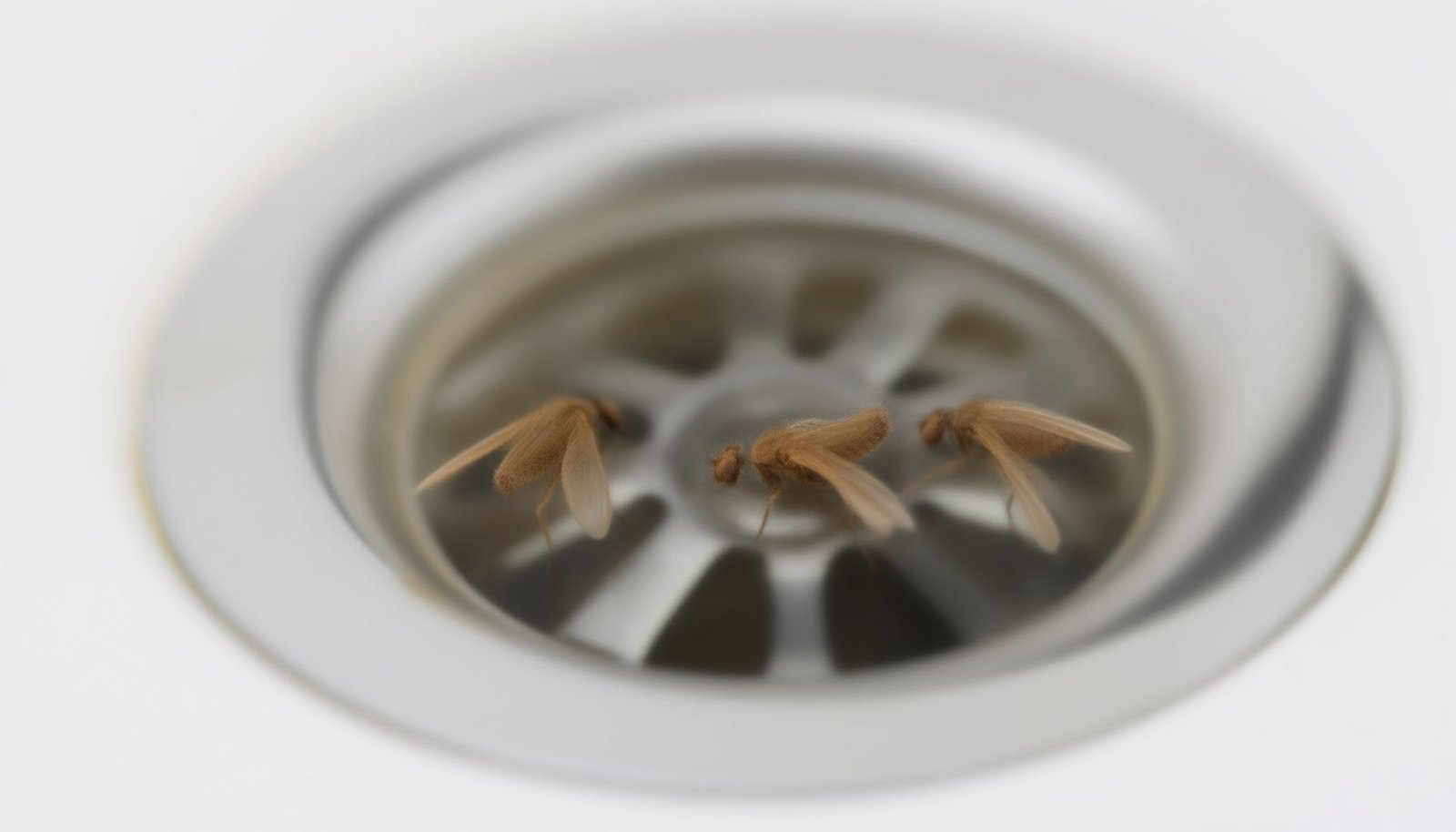
This close-up view shows the key physical differences between the most common drain insects — particularly the broad, moth-like wings of the drain fly compared to the hunched posture of a phorid fly — so you can make a confident ID before deciding on a treatment approach.
Why Are Bugs Coming Out of the Drain Instead of Just Living Near It?
This is the part that trips people up. The drain itself is just an exit point — and sometimes an entrance. Drain flies, for example, spend their larval and pupal stages inside the biofilm that builds up on the walls of the P-trap and the lower pipe interior. When they reach adulthood, they crawl upward and emerge through the drain opening. You see them appear to “come out” of the drain because that’s literally what they’re doing: completing their life cycle and emerging as adults.
Cockroaches are different. They’re not breeding in your pipes — they’re traveling through the sewer system and entering homes through drain openings, especially at night when activity in the bathroom is low. A slow or rarely-used drain with a dry P-trap gives them an unobstructed path right into your home. Picture this: a plumber in an older urban apartment building opens up a floor drain that hasn’t been used in months and finds a gap behind the trap where the water seal has evaporated. Within two weeks of the tenant moving in, American cockroaches — which can be over 1.5 inches long — start appearing in the bathroom. That’s not a sanitation problem. That’s a dry trap problem.
How Do You Confirm the Drain Is Actually the Source?
Before you spend money on any treatment, you need to verify that the drain is actually where the insects are coming from — not just where they happen to be resting near. The tape test is the most reliable DIY method. Cut several strips of clear packing tape and place them sticky-side-down over the drain opening at night (leave a small gap at one side so airflow can still draw insects upward). Check in the morning. If flies are stuck to the tape’s underside, you’ve confirmed they’re emerging from the drain. Repeat for 3 to 4 nights to get a reliable count.
A flashlight and a thin wire or drain brush can also help. Run the brush along the interior walls just inside the drain and pull it out — if you see dark, gelatinous material with a faintly sour smell, you’re looking at the biofilm where drain fly larvae are almost certainly living. The presence of that material isn’t a sign your home is dirty, by the way. It accumulates in virtually every household drain over time, regardless of how often you clean the sink itself. This is the counterintuitive reality: scrubbing the basin every day does nothing for what’s happening four inches below the stopper.
Pro-Tip: Check every drain in the affected room, not just the most obvious one. Drain flies frequently breed in the overflow drain (the small hole near the top rim of a sink bowl) where almost nobody ever cleans, and that overlooked breeding site can reinfest a drain you’ve just treated within days.
What’s the Right Way to Get Rid of Drain Bugs for Good?
The sequence matters here. Most people skip straight to chemical treatments when the physical removal of the biofilm is actually the non-negotiable first step. No enzyme cleaner, gel treatment, or drain fly spray will work long-term if the breeding substrate is still coating your pipes. Here’s a practical approach that addresses each layer of the problem:
- Physically remove the biofilm first. Use a stiff drain brush or pipe cleaning brush to scrub the inside walls of the drain and P-trap. This step alone removes the majority of eggs and larvae — no chemicals required.
- Follow with an enzyme-based drain cleaner. Enzyme and bacterial drain treatments (look for products containing Bacillus bacteria) break down the organic matter that bleach and boiling water leave behind. Pour the treatment in, let it sit overnight, and repeat for 5 to 7 consecutive nights.
- Treat adult flies with a surface spray or sticky traps. Adult drain flies don’t feed and only live for about 8 to 24 days, but they’ll keep you seeing the problem even as the breeding site is cleared. A pyrethrin-based surface spray near the drain opening or yellow sticky traps placed flat over the drain will knock down the adult population while the enzyme treatment works.
- Refill dry P-traps if cockroaches are involved. Pour about a cup of water down any floor drain or infrequently used fixture to restore the water seal. Add a tablespoon of cooking oil to slow evaporation.
- Address plumbing leaks underneath the sink. A slow drip under a sink cabinet creates a constantly damp surface that sustains biofilm growth even in areas away from the drain. Fix the leak and the conditions that feed the problem disappear.
Honest caveat: how quickly this works depends heavily on the size of the infestation, how long the biofilm has been building up, and whether you have a slow drain that keeps conditions wet. In a bathroom that’s been sitting unused for months, it can take two to three weeks of consistent treatment before adult populations drop off noticeably. Don’t assume treatment failed just because you still see flies on day five.
“The single biggest mistake I see homeowners make with drain flies is treating only the visible insects while leaving the biofilm intact. The larvae are completely protected inside that gelatinous layer — insecticide sprays can’t penetrate it. Physical removal of the breeding substrate is not optional. It’s the whole job.”
Dr. Patricia Fenlow, BCE, Board Certified Entomologist and urban pest management consultant
Could It Be Something More Serious Than Drain Flies?
Drain flies are annoying, but they’re relatively low-stakes. Cockroaches emerging from a sewer drain are a different category of concern — not just because of the psychological impact of finding a 1.5-inch insect climbing out of your toilet, but because of what they’ve been traveling through. American and Oriental cockroaches that use sewer systems as transit routes carry pathogens picked up in that environment. This is worth taking seriously in older homes and apartment buildings where the sewer connections may be aging or cracked.
There’s also a scenario that catches people completely off guard. Sometimes what appears to be a drain bug problem is actually a sign of a more extensive pest issue elsewhere in the structure. What Do Carpet Beetle Larvae Look Like? Tiny Hairy Worms Explained covers a pest that occasionally turns up in bathroom drains when it’s fallen from a nearby infestation — carpet beetle larvae don’t breed in drains, but they travel, and finding one near a drain can send you on a wild goose chase if you don’t know what you’re looking at. Similarly, structural problems that create chronic moisture — like those associated with What Are the Health Risks of a Termite Infestation? — can foster the kind of damp, decaying organic material inside wall voids that attracts fungus gnats and other moisture-dependent insects, which may exit near floor drains as an apparent “drain problem.”
Here’s a quick reference for the insects most commonly mistaken for each other in this context:
| Insect | Size & Appearance | Actual Breeding Site | Urgency Level |
|---|---|---|---|
| Drain fly (moth fly) | 1/8 in., fuzzy, moth-like wings | Drain biofilm / P-trap | Low — cosmetic problem |
| Phorid fly | 1/16–1/8 in., hump-backed, erratic movement | Decaying organic matter, sometimes broken sewer lines | Moderate — may indicate plumbing failure |
| American cockroach nymph | Up to 1/2 in. (nymph stage), reddish-brown | Sewer system — not the drain | High — sewer entry point |
| Fungus gnat | 1/16–1/8 in., delicate legs, clear wings | Wet houseplant soil nearby | Low — check plants first |
Phorid flies deserve a specific mention because they’re frequently misidentified as drain flies and treated the same way — but when phorid flies are involved, the breeding site is often not the drain at all. Phorid flies can breed in a cracked sewer line beneath a concrete slab, in a dead animal inside a wall, or in a plumbing leak that’s saturated subfloor material. If your enzyme treatments aren’t making a dent after 10 days and phorids are your bug, you may need a plumber and a pest control inspection, not just a better drain cleaner. That’s the honest answer that most online guides skip.
Here’s a checklist of signs that your drain bug problem is actually pointing to something bigger:
- Flies reappear within 3 to 4 days of thorough drain cleaning, consistently
- You’re finding phorid flies (the fast-running, hump-backed kind) rather than the slower, fuzzy drain flies
- Insects are emerging from a floor drain in a basement or laundry room you rarely use
- You live in an older building (pre-1980 construction) with cast iron or clay sewer pipes that may have cracked joints
- You notice a faint sewer gas odor that doesn’t go away after running water, which suggests a compromised P-trap seal or a broken drain line
- Cockroaches larger than 3/4 inch are appearing — these are almost certainly sewer species, not household cockroaches that bred inside your home
One unique insight that rarely makes it into pest control articles: phorid fly infestations tied to broken sewer lines are sometimes first noticed not by the homeowner but by a neighbor, because the flies can travel through shared drain systems in multi-unit buildings. If you’re in an apartment and you’re seeing phorid flies despite a clean drain, the breeding site may be entirely outside your unit. That’s worth raising with your landlord or building manager rather than continuing to treat a drain that isn’t the source.
The drain is often where you see the problem — but it’s rarely the whole story. Get the ID right, confirm the actual breeding site with the tape test, remove the biofilm physically before any chemical treatment, and stay alert to the signs that what looks like a simple drain fly issue might be a plumbing problem wearing a pest disguise. A $4 enzyme treatment and a drain brush handle 80% of these cases. The other 20% need a different kind of professional entirely.
Frequently Asked Questions
What are the tiny bugs coming out of my drain?
The most common culprit is the drain fly, also called a moth fly or sewer fly. They’re small — about 1/8 inch long — fuzzy, and tend to flutter around sinks rather than fly in straight lines. You might also see drain flies’ larvae, which look like tiny pale worms clinging to the inside of the pipe.
Are bugs coming out of drains dangerous to humans?
Drain flies aren’t known to bite or transmit diseases directly to people, but they do breed in decomposing organic matter, which means they can carry bacteria on their bodies. If you’ve got a heavy infestation — say, dozens appearing daily — that’s a sign of a serious buildup of sewage or organic sludge that should be cleaned up promptly. Other drain bugs like cockroaches are a bigger health concern since they’re linked to asthma triggers and food contamination.
How do I get rid of bugs in my drain fast?
Start by pouring boiling water down the drain two or three times to kill larvae and loosen buildup, then scrub inside the pipe with a long brush and a gel drain cleaner like Green Gobbler or Bio-Clean. You need to physically remove the organic slime lining the pipe walls — that’s what the bugs are breeding in, and liquid drain cleaners alone usually won’t reach it. Repeat the cleaning every few days for at least two weeks to break the egg-to-adult cycle.
Why do drain bugs keep coming back even after cleaning?
If bugs keep returning, there’s likely a buildup deeper in the pipe or a slow drain that’s letting standing water and organic matter accumulate. Check for partial clogs and make sure your P-trap has water in it — a dry P-trap lets sewer insects travel straight up through the pipe. You may also have a cracked or leaking sewer line if the problem is in multiple drains at once, which usually requires a plumber to inspect.
What’s the difference between drain flies and cockroach nymphs coming from drains?
Drain flies are fuzzy and moth-like with rounded wings they hold flat over their bodies, while cockroach nymphs are shiny, wingless, and move fast in a straight line when disturbed. Cockroach nymphs can be as small as 1/4 inch and range from pale white right after hatching to dark brown within hours. Telling them apart matters because the treatment is completely different — drain flies need organic matter removal, while cockroaches require bait stations, exclusion, and sometimes professional pest control.