
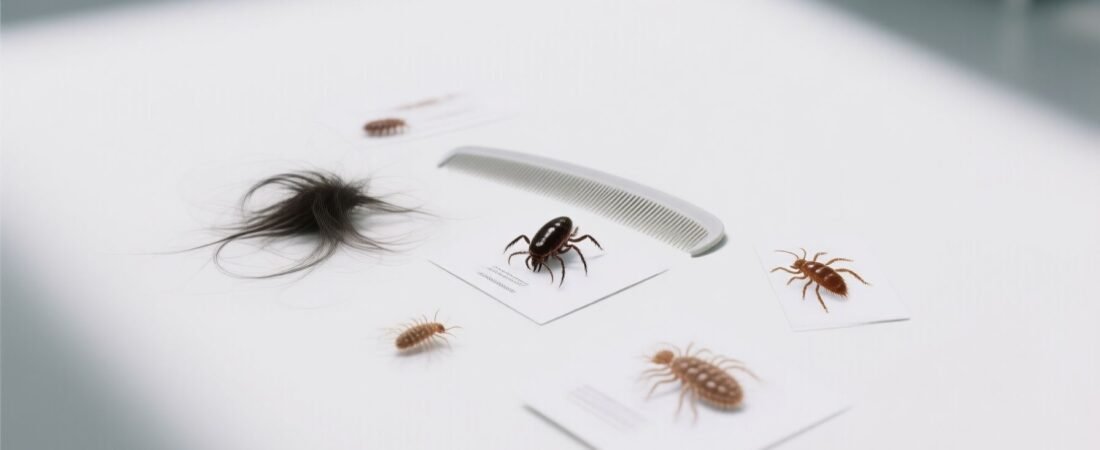
Scratching your scalp raw and watching hair come out in the shower drain doesn’t automatically mean you have a bug problem — but it might, and most people never make that connection until the damage is already done. The real issue isn’t just identifying which bugs cause hair loss; it’s that most scalp problems blamed on stress, diet, or shampoo are actually inflammatory responses triggered by something crawling on your head or in your bedding that you’ve never seen. If you’re losing hair and your scalp itches, burns, or has unexplained sores, bugs deserve to be on your suspect list before you spend money on dermatologists and biotin supplements.
Which Bugs Actually Cause Hair Loss vs. Which Ones Just Get the Blame?
Head lice get all the attention in the media, but lice alone almost never cause significant hair loss in adults. The bugs more likely to drive genuine alopecia-level shedding are the ones most people have never heard of — Demodex mites, bird mites, and sarcoptic mange mites — because their damage isn’t from biting alone. It’s from the immune response your body launches against their saliva, feces, and shed exoskeletons, which inflames hair follicles directly. A persistently inflamed follicle can shut down hair production within 2–3 weeks of sustained irritation, and depending on how long the infestation goes unaddressed, that follicle may not recover at all.
Scabies mites burrow into the skin and can reach the scalp, though they prefer thinner-skinned areas like wrists and between fingers. What’s less talked about is that the mechanical trauma from constant scratching — which bugs provoke — tears out hair that was otherwise healthy. So the hair loss you’re seeing might be a combination of follicle inflammation from mite activity and physical extraction from scratching wounds. That distinction matters when you’re trying to figure out whether the damage is reversible.
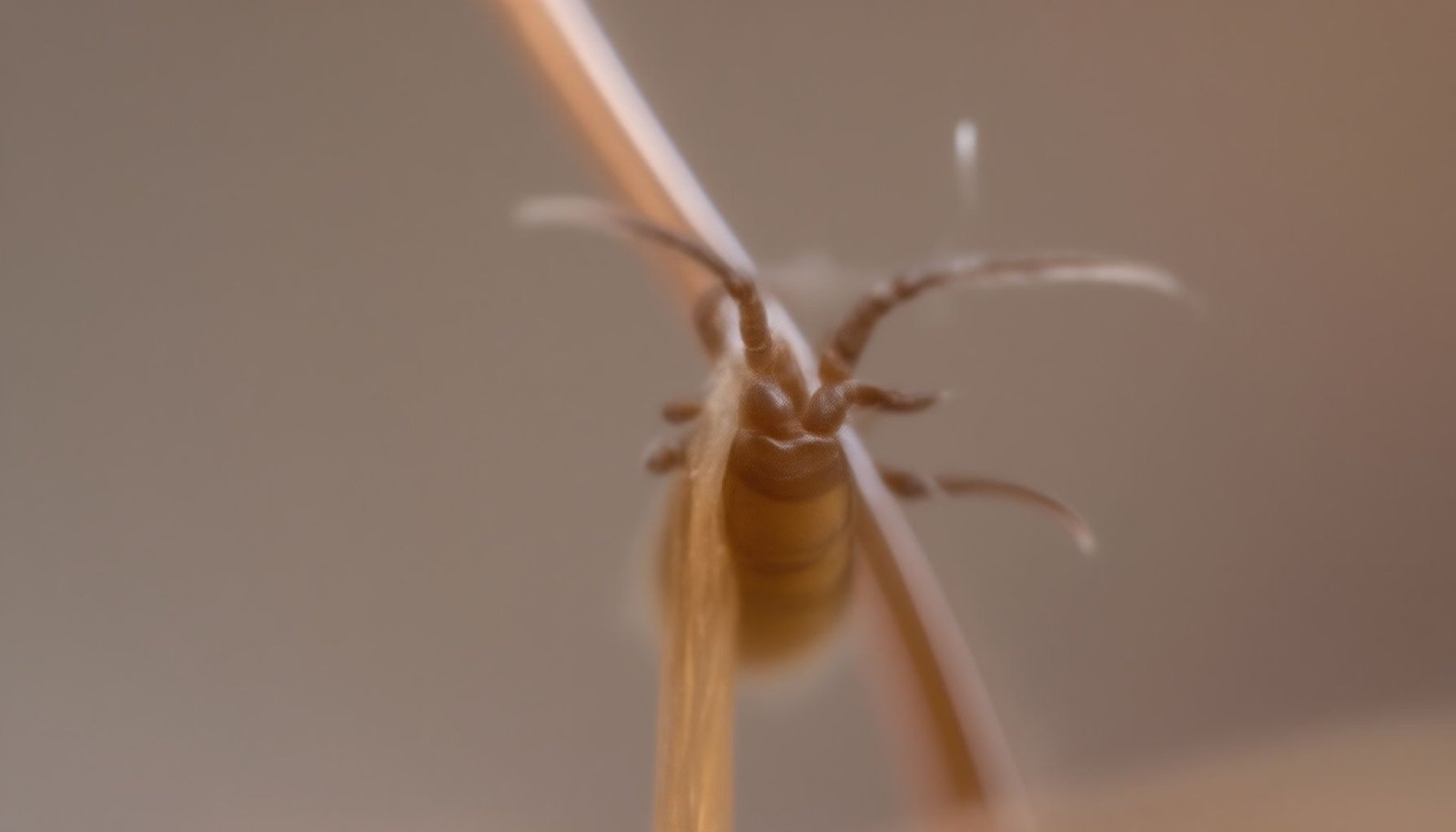
This close-up view shows scalp irritation and follicle inflammation consistent with mite activity — the kind of damage that’s easy to dismiss as dandruff or dry skin until hair loss becomes noticeable.
What Are Demodex Mites and Why Do They Target the Scalp?
Here’s the counterintuitive part: virtually every adult human has Demodex mites living in their hair follicles right now. There are two species — Demodex folliculorum lives in the follicle opening and Demodex brevis burrows deeper into sebaceous glands — and at low populations, they’re essentially harmless. The problem starts when their numbers explode past roughly 5 mites per square centimeter of skin, which can happen when your immune system is suppressed, your skin is oilier than usual, or you’ve gone through a period of high stress. At that density, they become a genuine pathogen.
Demodex mites don’t have an excretory system, which means they defecate inside your follicles when they die. That waste triggers a localized immune reaction — think of it as tiny pockets of chronic inflammation scattered across your scalp — and that’s what chokes off hair growth. Picture this: someone spends six months attributing their thinning crown to hormonal changes, tries three different shampoos, and only discovers Demodex when a dermatologist does a skin scraping and counts over 20 mites per square centimeter. The mites were there the whole time. The hair was responding the whole time. The diagnosis just took forever.
Can Bird Mites or Rodent Mites from Your House Get into Your Hair?
Yes — and this is the scenario most pest control content completely skips. Bird mites (Ornithonyssus sylviarum and Dermanyssus gallinae) are typically associated with bird nests near roof vents or window air conditioning units. When the birds leave or a nest is disturbed, these mites move indoors looking for a new host. They can’t survive long on humans, but “not long” can still mean 2–4 weeks of active feeding, and a scalp is warm, protected, and exactly the kind of environment they’ll probe while they figure out they’re on the wrong host. The bites cause intense itching, inflammatory papules, and if you scratch hard enough to break the skin repeatedly, secondary bacterial infections that can damage follicles permanently.
Rodent mites — specifically Liponyssoides sanguineus (the house mouse mite) — follow a similar pattern. They ride in on mice, and once the mouse population is treated or the mice move on, the mites go looking for any warm-blooded alternative. That’s often the people sleeping in the bedroom where mice had been nesting inside the wall. The biting tends to cluster on the scalp, neck, and hairline because those areas are harder to self-inspect and often go longest without intervention. If you’ve had any signs of a mouse problem and you’re also dealing with scalp irritation, that connection is worth taking seriously.
“Most patients I see with unexplained scalp inflammation and diffuse hair thinning have already been through the dermatology circuit without resolution. When we do a thorough environmental history — nesting sites, recent pest activity, travel, bedding hygiene — we often find an arthropod component that was never considered. Bird mites and Demodex overgrowth are underdiagnosed drivers of folliculitis and traction-related hair loss from scratching, especially in households that don’t realize they had a pest problem at all.”
Dr. Patricia Nguyen, Board-Certified Entomologist and Medical Pest Consultant, University Extension Specialist
How Do You Know If Bugs Are Causing Your Scalp Problems vs. Something Else?
The symptom overlap with non-bug causes — seborrheic dermatitis, psoriasis, telogen effluvium — is real, which is exactly why bugs get ruled out too quickly. There are specific patterns, though, that lean toward a bug origin rather than a purely dermatological one. Use this comparison to orient yourself:
| Symptom Pattern | More Likely Bug-Related | More Likely Dermatological |
|---|---|---|
| Onset timing | Sudden, after travel, new pet, or pest activity in home | Gradual, correlates with stress, diet, or hormones |
| Itch character | Crawling sensation, worse at night, moving location | Consistent, fixed area, relieved by medicated shampoo |
| Skin appearance | Scattered pinpoint bites, papules, no flaking | Scaling, plaques, or diffuse redness without bite marks |
| Response to antifungals | No improvement after 4–6 weeks of treatment | Partial or full improvement with dandruff/antifungal products |
The “crawling sensation that moves” detail is the one most worth paying attention to. Static dermatitis doesn’t feel like it’s relocating across your scalp. If you’re describing the itch as something that seems to shift from one spot to another, that’s a behavioral clue pointing at something mobile rather than an inflammatory skin condition. That symptom alone should trigger an environmental inspection of your bedding, headboard, and any areas where birds or rodents might be nesting near your sleeping space.
Pro-Tip: Press a piece of clear tape firmly against your scalp in an itchy area, then look at it under a magnifying glass or phone camera. Demodex mites are only 0.3–0.4mm long — invisible to the naked eye — but bird mites at 0.7–1mm can sometimes be spotted as tiny reddish specks on the tape, especially after feeding. It’s not a diagnostic test, but it’s a fast first filter before spending money on a dermatology appointment.
What Steps Actually Stop Bug-Related Hair Loss from Getting Worse?
Treating the symptoms on your scalp without addressing the source is a loop you don’t want to be in. The environmental fix and the personal treatment have to happen at the same time, or you’ll just keep getting reinfested. Here’s the sequence that actually works:
- Identify the source pest first. Bird mites require finding and removing the nest — check roof vents, gutters, and window AC units. Rodent mites require confirming and eliminating any mouse or rat activity. Demodex overgrowth is confirmed by a dermatologist skin scrape, not environmental inspection.
- Strip and launder all bedding at 130°F or higher. Bird mites and rodent mites die at sustained temperatures above 122°F. Do this before any topical scalp treatment, or you’re retreating yourself nightly.
- Treat the scalp with an appropriate product. For Demodex, dermatologists typically prescribe ivermectin-based topicals or crotamiton cream. For scabies on the scalp, permethrin 5% cream is standard. Over-the-counter anti-dandruff shampoos do nothing against mites — don’t waste weeks on them.
- Vacuum and treat sleeping areas if bird or rodent mites are confirmed. A pyrethrin-based spray applied to mattress seams, headboard crevices, and carpet edges, followed by diatomaceous earth along baseboards, can bring environmental mite populations down significantly within 5–7 days.
- Avoid sharing headwear, pillows, or hair tools during active treatment. Cross-contamination keeps reinfestation cycles going even when you’ve addressed the environmental source.
- Follow up on hair regrowth expectations realistically. Follicles that were inflamed but not permanently scarred typically begin producing new hair within 3–6 months of successful treatment. Follicles that were repeatedly damaged by secondary infections or deep scarring may not recover — which is why early identification matters more than any specific product.
One honest nuance here: the timeline for hair regrowth varies significantly depending on how long the infestation was active before treatment started, whether secondary bacterial infections occurred, and individual follicle resilience — which isn’t something you can fully predict. Someone who treated an 8-week bird mite problem will have a very different outcome than someone who went 10 months before figuring out what was happening.
What Household Conditions Make Your Home More Likely to Have Scalp-Affecting Bugs?
Bugs that affect the scalp don’t appear randomly — specific home conditions concentrate risk in ways most people don’t anticipate. Older homes with open roof soffits or deteriorating vent covers are significantly more likely to harbor bird nests within the wall cavity or attic space, and those nests sit directly above the spaces where people sleep. Once birds leave at the end of nesting season, typically late spring through summer, mites that were feeding on them can migrate downward through wall gaps within 24–48 hours. You never see the nest. You never see the birds leave. You just start itching.
High-humidity indoor environments also accelerate Demodex population growth because sebaceous gland activity increases with warmth and moisture. Homes that run consistently above 60% indoor humidity create conditions where the natural Demodex population on your skin can overgrow faster than your immune system suppresses it. This is worth knowing if you live in a coastal or humid climate and you’ve attributed scalp problems to the weather or water quality. It might not be the water — it might be what the humidity is doing to the microscopic population on your skin. For broader household pest context, it’s worth knowing that environments hospitable to one type of mite often attract others — similar conditions that lead people to wonder about why there are silverfish in their bedroom — high moisture, limited ventilation, and undisturbed corners — can also support mite-friendly ecosystems in sleeping spaces.
Clutter that sits undisturbed for long periods — stacked storage near sleeping areas, boxes against bedroom walls, accumulated fabric items — gives mites and small insects the dark, protected microclimates they need. The unique insight here that most pest articles miss: mite populations don’t need a current infestation to spike. Old pest activity that was “resolved” can leave behind eggs in soft furnishings, and those eggs have hatching timelines that can lag weeks behind the visible infestation. You might think you’ve solved a bird mite problem, only to see symptoms return 3–4 weeks later from a new generation hatching in your mattress or carpet pad. That’s not reinfestation — it’s the original infestation completing its cycle. It’s one of the reasons that just like understanding the signs of a pantry moth infestation requires looking past the adult moths to find the eggs and larvae, solving a mite problem requires treating beyond what you can see.
Here’s what that looks like in practice as a checklist of home conditions to audit if you’re experiencing scalp problems:
- Bird nests within 10 feet of any sleeping area vent, soffit, or window unit — inspect exterior eaves in early summer
- Any prior evidence of mice or rats in the bedroom wall or attic directly above — rodent mite transfer happens even after the rodents are gone
- Indoor humidity consistently above 60% — use a $10 hygrometer to check; this is actionable information, not just ambient context
- Mattress older than 8–10 years without a certified allergen-proof encasement — older mattresses accumulate mite populations in the interior foam that surface cleaning won’t address
- Pets that sleep in the bed and go outdoors — dogs and cats can carry both Demodex species and environmental mites directly to your pillow
Addressing these conditions won’t guarantee you eliminate the problem — severity, how long the infestation has been active, and building-specific factors all play a role — but ignoring them while treating only the scalp is why most people with bug-related hair loss stay stuck in the same cycle for months longer than they need to.
If your scalp symptoms haven’t responded to two rounds of dermatological treatment and you haven’t done a thorough environmental inspection of your sleeping space, that’s your next move. The biology here is clear: the follicles can’t recover while the source of inflammation is still active, and the source is almost never just on your head — it’s in the space around it. Start there, and the scalp usually follows.
Frequently Asked Questions
What bugs that cause hair loss are most common in US homes?
The most common bugs that cause hair loss and scalp problems in US homes are head lice, scabies mites, and demodex mites. Hair follicle mites like demodex live on nearly 65% of adults and can trigger itching and thinning when they overpopulate. Bed bugs don’t directly cause hair loss, but their bites can lead to scratching that damages follicles over time.
Can mites in your scalp cause you to lose hair?
Yes, demodex mites can absolutely cause hair loss when their numbers get out of control. A healthy scalp has a manageable population, but infestations can clog hair follicles, trigger inflammation, and lead to noticeable thinning or patchy shedding. A dermatologist can confirm demodex overpopulation with a simple skin scraping test.
How do I know if lice are causing my hair loss?
If you’re seeing hair loss alongside intense scalp itching, visible nits on hair shafts within 1/4 inch of the scalp, or tiny moving bugs, lice are likely the culprit. The hair loss itself usually comes from excessive scratching rather than the lice feeding directly. Check behind the ears and at the nape of the neck first — those are the hotspots lice prefer.
Can bed bugs get in your hair and cause scalp problems?
Bed bugs don’t live in hair the way lice do, but they can bite your scalp and hairline while you’re sleeping. Those bites cause itching and irritation, and repeated scratching can lead to temporary hair loss in affected spots. If you’re finding bites near your hairline but no nits or bugs in your hair, bed bugs are more likely than lice.
What does a bug infestation on the scalp look like vs. dandruff or dry skin?
Bug-related scalp problems usually come with itching that’s much more intense than typical dandruff, and you may spot actual movement or tiny white eggs attached firmly to hair shafts — dandruff flakes brush off easily while nits don’t. Scabies mites cause a distinctive rash-like irritation rather than flaking. If over-the-counter dandruff shampoo isn’t helping after 2 to 3 weeks, it’s worth seeing a dermatologist to rule out a parasitic cause.
Disclaimer: This article is for general informational purposes only and does not constitute medical advice. How a pest-related exposure, bite, or contaminant affects you can depend on age, pre-existing conditions, allergies, and the extent of exposure. If you’re experiencing symptoms you believe are linked to a pest problem in your home, please consult a licensed healthcare provider rather than relying on this article alone.