
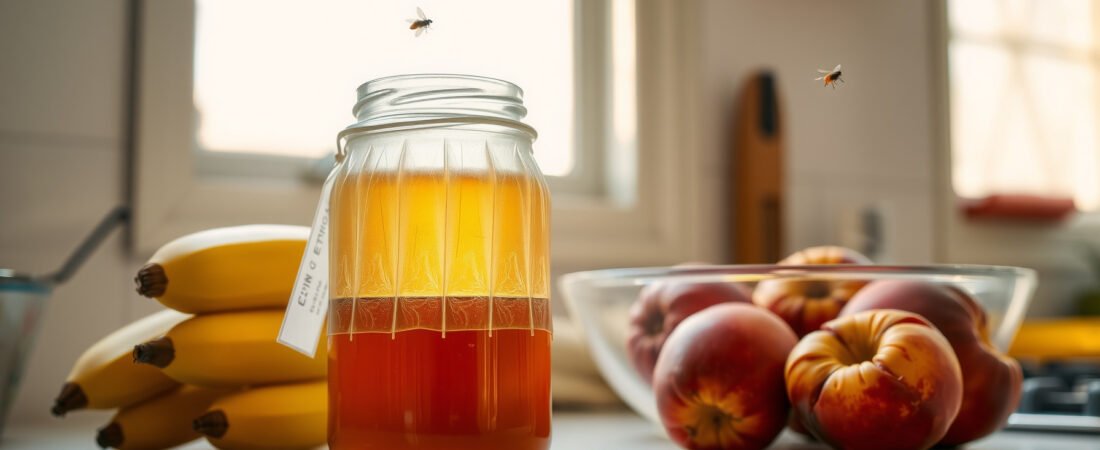
A fruit fly infestation doesn’t take weeks to build — a single female can lay up to 500 eggs in her lifetime, and those eggs hatch in as little as 24 hours under warm conditions. Here’s the part most people get wrong: the flies buzzing around your kitchen aren’t the problem. The breeding source hidden somewhere in your home is. Kill every adult fly you can see today, and you’ll have a brand-new swarm by tomorrow morning if that source is still sitting there. The 24-hour method works not because it kills flies faster, but because it targets the cycle — source first, adults second. Get the order right, and you really can shut this down in a day.
Why Are Fruit Flies in Your House Even When It’s Clean?
This is the assumption that derails most people: fruit flies mean a dirty kitchen. Not true. Fruit flies are attracted to fermentation, not filth — and fermentation happens in spotless homes every single day. A single overripe banana, a recycling bin with residue in a wine bottle, or even a mop head that stayed damp overnight is enough to start a colony.
The real kicker is that fruit flies can detect the smell of fermenting yeast from remarkably long distances, which means they’re often hitchhiking in on your grocery store produce before you even bring it inside. That punnet of strawberries sitting on your counter may already have eggs on it when it leaves the store. You didn’t cause the infestation — you just unknowingly gave it a place to land.
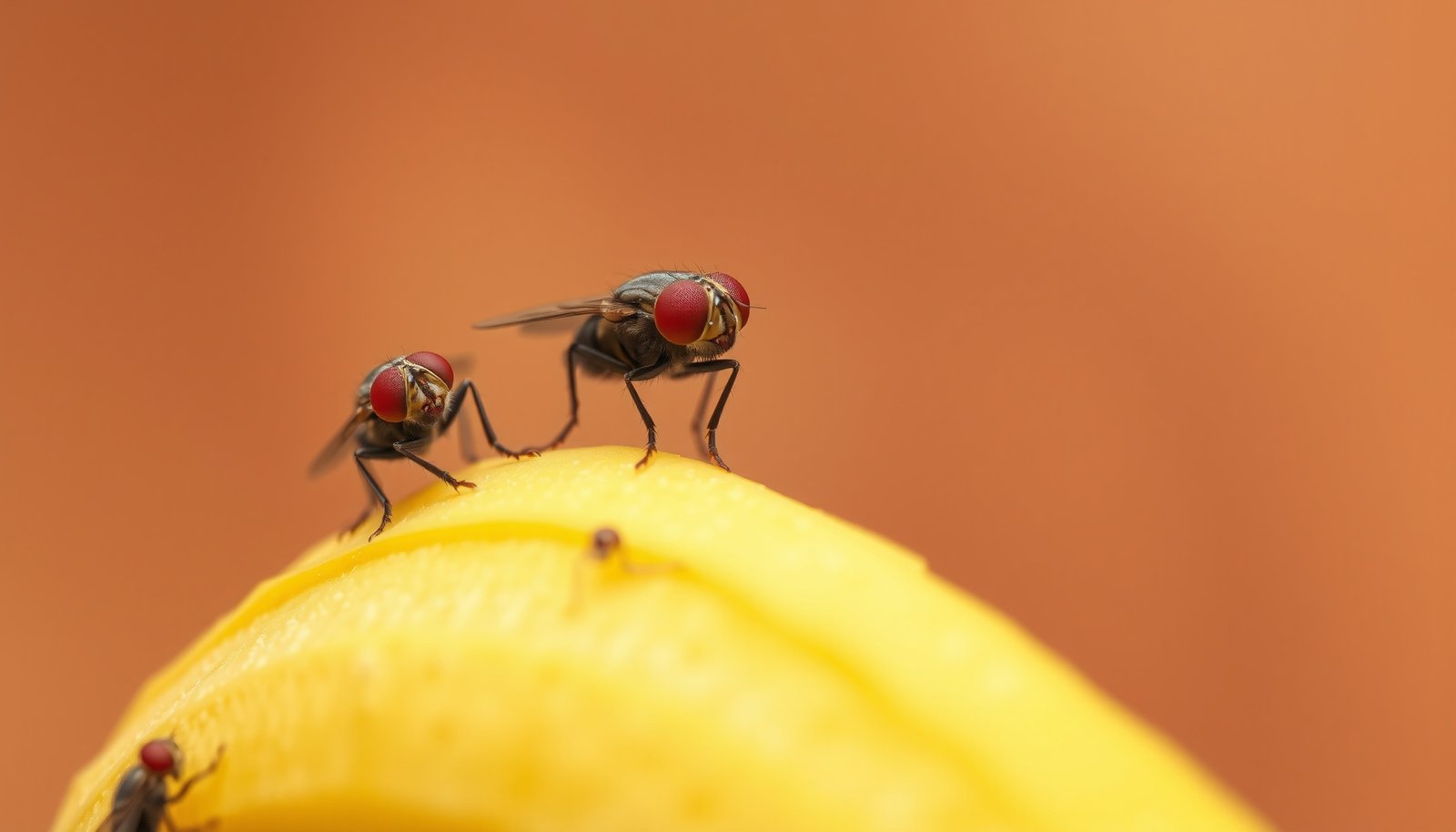
This close-up shows the tiny reddish eyes and tan body that distinguish Drosophila melanogaster — the common fruit fly — from fungus gnats or drain flies, which require different elimination strategies entirely.
Step 1: How to Find and Eliminate the Breeding Source Before You Do Anything Else
Skipping the source hunt is the single reason most DIY attempts fail. People set out traps, watch the fly count drop for a day or two, and declare victory — then the population rebounds harder than before. Traps catch adults, but adults aren’t reproducing in the trap. They’re reproducing somewhere else in your home, and you haven’t touched it.
Here’s a concrete way to find it: stand still in your kitchen for 60 seconds and watch where the flies tend to hover or land repeatedly. They’re not flying randomly. They’re orbiting their food source. Follow that cluster. Common culprits that catch people off guard include the rubber gasket on the inside rim of a recycling bin lid, a potato or onion in a dark cabinet that’s started to turn, or standing water trapped under a refrigerator drip tray. Once you’ve found the source, remove it completely — bag it, seal the bag, take it outside.
Pro-Tip: Pour a small amount of boiling water down every drain you’re suspicious of, then plug the drain with a wet paper towel overnight. If fruit flies are breeding in the drain’s organic buildup, you’ll find them clustered on the underside of the paper towel by morning. That confirms your source — and the boiling water gives you a head start on clearing the biofilm they feed on.
What Actually Works for Killing Adult Fruit Flies in Hours (Not Days)
Once your breeding source is gone, you still have a living population of adults that will take up to 48 hours to die off on their own — or longer, if any eggs you missed are still hatching. This is where targeted trapping comes in, and the good news is you don’t need to buy anything special. The most effective DIY trap uses apple cider vinegar because its acetic acid concentration closely mimics the fermentation signature that fruit flies use to locate food. White vinegar doesn’t work nearly as well. That’s not a preference — it’s chemistry.
Here’s the fastest-acting setup, in order of steps that matter:
- Pour roughly 2 inches of apple cider vinegar into a small glass or jar — a narrow opening concentrates the flies’ entry point and makes escape harder.
- Add 2 drops of dish soap — this breaks the surface tension so flies sink immediately on contact rather than floating and flying away.
- Cover the opening with plastic wrap and poke 8–10 small holes with a toothpick — the holes let the scent out but make it harder for trapped flies to find the exit.
- Place the trap directly where you observed the most activity — proximity to their hovering zone matters more than central placement in the room.
- Set a second trap near any sink or drain — even after draining the main source, residual organic matter in pipes keeps attracting stragglers for 24–36 hours.
- Replace the traps every 24 hours — the vinegar loses its attractiveness as it dilutes with dead flies and ambient moisture, so fresh traps catch significantly more than stale ones.
“The biggest mistake I see is people treating fruit flies as a surface problem when it’s always a substrate problem. The breeding material has to be physically removed — no spray, no trap, and no essential oil will substitute for that step. Populations can rebound from a handful of surviving larvae in under 72 hours under normal household temperatures.”
Dr. Rachel Fenwick, Ph.D. Urban Entomology, University of Florida IFAS Extension
Do Commercial Fruit Fly Traps Actually Outperform DIY?
Picture this: you’re at the hardware store staring at a $12 TERRO fruit fly trap and wondering if it’s worth it over the jar of apple cider vinegar already sitting on your counter at home. The honest answer is — it depends on severity and patience, not on which method is objectively better. For mild infestations caught early, the DIY vinegar trap performs comparably to most commercial options in side-by-side tests. For larger infestations with multiple active zones, commercial traps using synthetic lures can outperform vinegar simply because the lure concentration is more precisely calibrated and doesn’t degrade as quickly.
Here’s a quick comparison to help you decide what’s worth your money:
| Method | Time to First Results | Cost | Best For |
|---|---|---|---|
| DIY Apple Cider Vinegar Trap | 2–6 hours | Under $1 | Mild infestations, quick response |
| Commercial Liquid Trap (e.g. TERRO) | 4–8 hours | $10–$14 | Moderate infestations, longer-lasting bait |
| Sticky Yellow Card Traps | Immediate contact kills | $5–$8 | Fungus gnats, visual monitoring |
| Drain Gel Treatment (e.g. InVade Bio Drain) | 24–48 hours | $15–$20 | Drain-based infestations, organic buildup |
One thing worth knowing: sticky yellow card traps are actually designed primarily for fungus gnats, not fruit flies. If you’ve bought them and they’re catching very few insects, it might mean you’re dealing with a drain fly or gnat situation rather than a true Drosophila infestation — and the fix is different. Just as with other pest misidentification scenarios (the kind of thing that leads people to treat for the wrong species entirely, like confusing termite frass with other debris), confirming what you’re actually dealing with before you treat saves a lot of wasted effort.
How to Stop Fruit Flies From Coming Back After You’ve Cleared Them Out
Clearing an infestation and preventing reinfestation are two completely different problems, and most guides treat them as the same step. They’re not. The conditions that let the first infestation happen will produce a second one within days if you don’t address the structural habits — not just the mess, but the environmental patterns your household has that create recurring fermentation opportunities.
These are the specific changes that break the cycle long-term:
- Store all ripe or cut fruit in the refrigerator — not in a bowl on the counter, regardless of how it looks. Fruit flies can detect ethanol off-gassing from ripening fruit through walls and closed bags.
- Rinse recycling before it sits overnight — even a thin film of beer, juice, or wine residue inside a can or bottle is enough to attract and sustain a colony for several days.
- Clean sink drains weekly with a drain enzyme cleaner — not bleach. Bleach temporarily clears surface odor but doesn’t break down the organic biofilm that fruit flies breed in. Enzyme cleaners actually digest the substrate.
- Check under and behind appliances monthly — refrigerator drip trays, the tray under a dishwasher, and the area beneath a stove collect moisture and food particles that most people never think to inspect.
- Take compost out every 48 hours maximum during warm months — an indoor compost bin is essentially a controlled fermentation container. It will always attract fruit flies if it sits more than two days in summer temperatures.
One honest nuance here: if you live in a ground-floor apartment or a home with a basement that stays humid, you’re fighting harder against fruit fly reinfestation than someone in a dry climate or upper-floor unit. Humidity accelerates the decomposition of organic material, which means the fermentation smell that attracts flies develops faster. In those situations, a small electric fan near kitchen trash cans — which disperses the concentrated scent plume — can meaningfully reduce how quickly flies zero in on your kitchen. It’s not a cure, but it’s the kind of low-effort environmental tweak that actually moves the needle when the structural conditions are working against you. For renters dealing with persistent pest pressure that goes beyond DIY fixes, it’s worth knowing what options exist — resources on affordable pest control alternatives for renters are more useful than most people realize when the problem keeps recurring.
Fruit flies are one of the few household pests where a determined 24-hour effort genuinely can produce a fly-free kitchen — but only if you hit the source first and the traps second. Get that order backwards, and you’re just doing pest control theater. Get it right, and you’re done by tomorrow. The next time you see a few hovering over your sink, you’ll know exactly what to do and in what order — and that’s the difference between a one-day fix and a two-week annoyance.
Frequently Asked Questions
how to get rid of fruit flies fast in 24 hours?
The quickest method is to set an apple cider vinegar trap immediately — pour about 2 tablespoons of apple cider vinegar into a small glass, add a drop of dish soap, and cover it with plastic wrap poked with tiny holes. Most people see a noticeable drop in fruit fly numbers within 12 to 24 hours, especially if you combine the trap with removing any overripe fruit or standing liquid that’s feeding them.
where are fruit flies coming from in my house?
Fruit flies almost always breed near a food or moisture source — the most common culprits are overripe fruit on the counter, a dirty drain, an unwashed recycling bin, or a spill that soaked under an appliance. Check your kitchen drain first, since a single drain with built-up organic residue can produce hundreds of fruit flies even when your counters look clean.
does bleach kill fruit flies in drains?
Bleach can kill adult fruit flies on contact, but it moves through drains too quickly to destroy the larvae and eggs buried in the organic buildup along the pipe walls. A better option is to pour boiling water down the drain daily for a week, or use a foaming drain gel that clings to the sides long enough to break down the breeding material.
how long does it take to get rid of a fruit fly infestation?
If you remove the breeding source and use traps consistently, most infestations clear up within 3 to 7 days. The key is eliminating whatever they’re breeding in — without that step, traps alone will only reduce the population temporarily because new flies keep hatching every 24 to 30 hours.
are fruit flies harmful to humans?
Fruit flies aren’t known to bite, but they can carry bacteria like E. coli and Salmonella from rotting material and transfer it to food surfaces and countertops. They’re more of a contamination risk than a direct health threat, which is why it’s worth dealing with an infestation quickly rather than waiting it out.
Disclaimer: This article is for informational purposes only and isn’t a substitute for professional pest control advice. Always read and follow the product label instructions exactly — label directions are legally binding and vary by brand and active ingredient. Keep all pesticides, baits and traps away from children and pets, ventilate treated areas as directed, and consider calling a licensed pest control professional if an infestation is large, recurring, or involves a structural pest like termites or carpenter ants.