
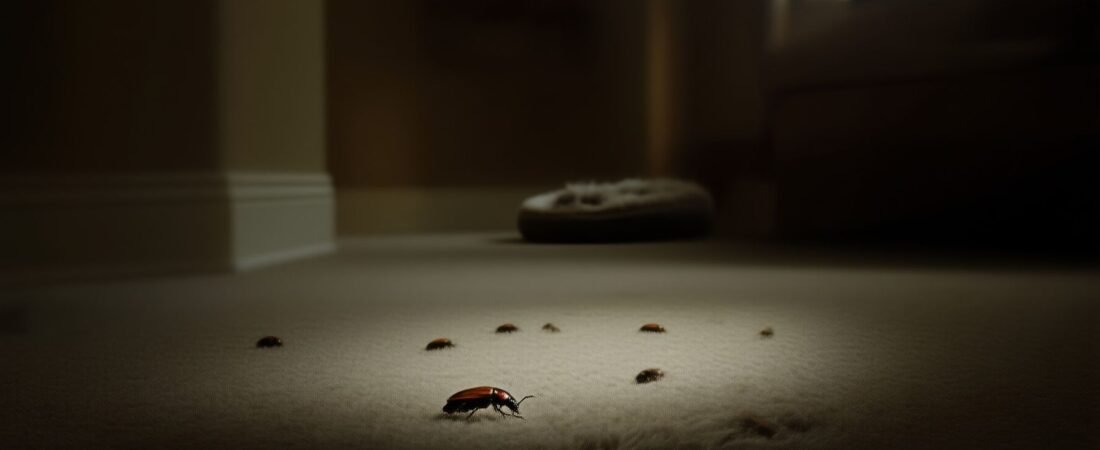
Carpet beetles don’t bite. That’s the answer most people find — and then stop reading. But here’s what that answer misses entirely: the beetles themselves aren’t the real health threat. It’s their larvae, and more specifically, the microscopic barbed hairs those larvae shed, that cause genuine physical symptoms in both people and pets. Most homeowners spend months treating the wrong stage of the insect and wondering why they’re still waking up with welts.
The confusion is understandable. Adult carpet beetles look harmless — tiny, almost decorative, the kind of bug you’d flick off a windowsill without a second thought. But the larvae are a different story, and the health effects they trigger range from minor skin irritation to respiratory symptoms that look suspiciously like allergies or asthma. If you’ve been dismissing carpet beetles as a cosmetic problem — a pest that eats sweaters, not one that affects your health — this article is going to change how you think about them.
Do Carpet Beetles Actually Cause Physical Symptoms in Humans?
Yes — and the mechanism is more specific than most people realize. Carpet beetle larvae are covered in tiny, bristle-like hairs called setae. These hairs are barbed at a microscopic level, meaning they don’t just sit on the skin — they hook in and cause localized inflammation. The result is a rash called papular urticaria, which looks almost identical to bed bug bites: small, raised, red welts that appear in clusters or lines, often on the arms, neck, or any area of skin that made direct contact with infested fabric or upholstery.
The key distinction — and this is where most online articles get it wrong — is that this isn’t an allergic reaction in the traditional sense. You don’t have to be “allergic” to carpet beetles to develop symptoms. The hairs cause a mechanical irritation response in almost anyone who has sustained contact with them. That said, some individuals do develop a true IgE-mediated allergic response after repeated exposure, which can amplify symptoms significantly over time.

This close-up shows carpet beetle larvae alongside shed skin casings — the casings themselves contain the same barbed setae that cause skin and respiratory symptoms, which is why symptoms can persist long after the live larvae are gone.
Can Carpet Beetle Larvae Cause Respiratory Problems?
This is the angle that almost nobody talks about, and it deserves more attention. Carpet beetle setae don’t just affect skin on contact — they become airborne. As larvae move through carpet fibers, upholstery, and stored clothing, the hairs break off and become part of household dust. You breathe them in. In sensitive individuals, inhaling shed larval hairs can trigger sneezing, runny nose, itchy eyes, and in some cases, bronchospasm — the same type of airway constriction seen in asthma attacks.
Picture this: a family spends most of a winter season treating what they assume is worsening seasonal allergies. The symptoms ease up slightly in summer, return in fall, and don’t respond well to antihistamines. What they eventually discover — after a pest inspection reveals a moderate carpet beetle infestation in a bedroom closet — is that they’d been breathing in larval debris for months. The symptoms weren’t seasonal. They were tied to the indoor lifecycle of the beetles, which typically peaks in late spring and early fall when larvae are most active.
“Carpet beetle larvae are genuinely underdiagnosed as a cause of indoor respiratory and dermatological complaints. The setae are durable enough to persist in carpet fibers and bedding long after a larva has pupated or died, which means the exposure window is much longer than most people assume. We’ve seen patients report symptoms for six months or more from a single season’s infestation.”
Dr. Marcus Kelleher, Board-Certified Entomologist and Urban Pest Management Consultant, University Extension Program, Southeast Region
Are Carpet Beetles Dangerous to Pets — Dogs, Cats, and Small Animals?
Pets are arguably more at risk than humans from carpet beetle larvae, for a simple reason: they spend far more time in direct contact with floors, rugs, and furniture surfaces where larvae live and shed. Dogs and cats that sleep on carpet or curl up on fabric furniture can develop skin irritation, patchy hair loss, and persistent scratching — symptoms that often get misattributed to fleas, food allergies, or mange. The barbed setae cause the same mechanical irritation in animal skin that they do in human skin.
Small mammals — think guinea pigs, rabbits, and hamsters kept in fabric-lined enclosures — are particularly vulnerable. Their bedding material can harbor larval populations without any obvious signs of damage, and because these animals can’t scratch effectively or vocalize discomfort the way dogs do, an infestation can go undetected for a long time. Birds are also susceptible; carpet beetle larvae are known to feed on feathers and down, and an aviary with a larval infestation can cause feather damage that looks like a preening disorder or nutritional deficiency.
Pro-Tip: If your pet has unexplained hair loss or persistent skin irritation and your vet has ruled out fleas and mange, run a flashlight along the base of your baseboards and inside closets. Look for the distinctive shed skin casings of carpet beetle larvae — they’re golden-brown, hollow husks that hold their shape, often found clustered near wool rugs, stored pet bedding, or mounted animal products.
What Symptoms Should You Actually Watch For — and When Are They Serious?
Not every itch is a carpet beetle problem, and not every carpet beetle problem causes symptoms. Severity depends on several variables: how large the infestation is, how much direct contact you or your pets have with infested materials, your individual sensitivity, and how long the infestation has been active. A light infestation in a little-used guest room may never cause noticeable symptoms, while a heavy infestation in a bedroom closet next to clothing you wear daily is a different situation entirely.
Here’s a breakdown of symptoms to watch for, organized by type and what they usually indicate:
- Raised red welts in clusters or lines: Typically appear on skin that contacted infested fabric — forearms, neck, torso. These are caused by direct larval hair exposure and usually fade within 3–7 days without treatment, though they can persist longer in sensitive individuals.
- Persistent sneezing, runny nose, or eye irritation: Airborne setae can cause hay-fever-type symptoms year-round. If your “allergies” don’t match a known pollen season and antihistamines aren’t helping much, an indoor source — including carpet beetle debris — is worth investigating.
- Unexplained skin redness on eyelids or around eyes: Setae are lightweight enough to drift to eye level. Eye irritation is a less commonly reported but documented symptom in people with heavy household infestations.
- Worsening asthma symptoms indoors: If your asthma is better controlled when you’re outside or traveling but spikes at home, airborne insect debris — carpet beetles included — is a legitimate trigger to rule out. Studies have identified carpet beetle proteins as a recognizable component in household dust allergen panels.
- Pet hair loss or skin irritation concentrated on the belly and legs: These are the contact points closest to carpet. If a pet is losing fur in patches with no flea evidence and no diet changes, have a pest inspection done alongside the vet visit.
One honest nuance worth flagging: in homes with forced-air HVAC systems, airborne larval debris can circulate through the entire house from a single infestation point. A carpet beetle problem confined to one closet can produce symptoms in bedrooms on the other side of the house — which makes tracing the source genuinely difficult without a methodical inspection.
How to Confirm Carpet Beetles Are the Source — Not Bed Bugs or Mites
This is where a lot of people waste time and money. Carpet beetle larval rash and bed bug bites are visually almost indistinguishable. Both produce clustered, red, itchy welts. Both tend to appear on exposed skin. The difference is in the evidence trail — bed bugs leave fecal spots, blood smears, and shed skins in predictable locations (mattress seams, headboard joints, furniture crevices). Carpet beetle larvae leave a different kind of evidence: shed golden-brown casings, damaged natural fibers, and sometimes the larvae themselves — slow-moving, bristly, about 1/8 to 1/4 inch long, often banded in light and dark brown stripes. If you’re not sure what you’re looking at and you’ve spotted small, unidentified bugs near a window, it’s worth comparing notes with What Are the Tiny Red Bugs on My Windowsill? — not all small red or brown bugs near windows are the same insect, and misidentification leads to the wrong treatment.
The table below summarizes the key differences between carpet beetle larvae symptoms and other common culprits that produce similar complaints:
| Symptom Source | Skin Symptoms | Key Physical Evidence | Pets Affected? |
|---|---|---|---|
| Carpet Beetle Larvae | Clustered welts, rash, eye/nose irritation | Shed larval casings, damaged wool/feathers/fur | Yes — especially floor-level contact |
| Bed Bugs | Clustered welts, often in lines | Fecal dots, blood smears, cast skins near sleeping areas | Rarely — prefer human hosts |
| Dust Mites | Respiratory symptoms, skin flares | No visible evidence — confirmed via allergen test | Yes — respiratory primarily |
| Clover/Bird Mites | Intense itching, fine rash | Tiny moving specks, often near windows or vents | Yes — especially birds |
One thing that separates carpet beetle infestations from some other pest problems is the nature of the physical evidence they leave behind. Unlike termites, which cause damage that’s largely invisible until it’s serious — as explored in What Does Termite Damage Sound Like Inside Walls? — carpet beetle damage is tactile and visible if you know what to look for. Irregular holes in wool rugs, thinning patches in natural-fiber clothing, and those papery shed casings near baseboards are reliable indicators that larvae have been active, even if you haven’t seen a live one.
Here’s a checklist of the physical evidence to look for when confirming a carpet beetle infestation:
- Shed larval skins (golden-brown, hollow, bristly casings, about 1/8–1/4 inch) near baseboards, inside closets, or under furniture
- Irregular feeding damage on wool rugs, cashmere, silk, leather, or stored taxidermy — carpet beetles target keratin-rich materials
- Live larvae — slow-moving, banded, hairy — found in dark, undisturbed areas like under heavy furniture or inside rarely-opened drawers
- Adult beetles (small, oval, patterned in black, white, and orange or solid black depending on species) near windows or light fixtures — adults don’t cause the health symptoms, but their presence confirms a breeding population
- Pet fur or feathers incorporated into furniture or carpet that shows signs of feeding — larvae will eat pet hair and dander as a food source, which is both why they thrive in pet-owning homes and why pets are often in close proximity to them
- Fecal pellets — tiny, dark, sand-grain-sized specks near feeding sites
A single carpet beetle female can lay between 25 and 100 eggs in her lifetime, and the larvae can remain in the feeding stage for anywhere from 60 days to over a year depending on temperature and food availability. That extended larval period — which is significantly longer than most people expect — is exactly why a moderate infestation produces sustained, recurring symptoms rather than a single acute event. The exposure doesn’t end when you stop seeing adult beetles.
Getting the infestation confirmed accurately matters before you treat, because the interventions for carpet beetles are different from those for mites or bed bugs. Misdiagnosis wastes money and leaves the actual source untouched. If you’re seeing skin symptoms alongside any of the physical evidence items above, treat the infestation as confirmed until a thorough inspection proves otherwise. That’s a more practical approach than waiting for certainty while continuing to be exposed.
Frequently Asked Questions
Can carpet beetles make you sick?
Carpet beetles don’t transmit diseases or bite, so they won’t make you sick in the traditional sense. However, their tiny bristle-like hairs can cause allergic reactions in some people, including skin rashes, watery eyes, and respiratory irritation — especially with heavy infestations or prolonged exposure.
Do carpet beetles bite humans or pets?
Carpet beetles don’t actually bite — they don’t have mouthparts designed to pierce skin. What most people mistake for bites are irritation reactions caused by the larvae’s barbed hairs making contact with skin, which can leave red, itchy welts that look a lot like bug bites.
Are carpet beetles dangerous to dogs and cats?
Carpet beetles aren’t directly dangerous to pets, but dogs and cats can have allergic skin reactions if larvae crawl through their fur or bedding. Pets that ingest larvae while grooming may also experience mild gastrointestinal upset, though this is rarely serious.
How do I know if I’m allergic to carpet beetles?
Signs of a carpet beetle allergy include a raised, itchy rash that appears after spending time on carpets, rugs, or upholstered furniture — areas where larvae are most active. Some people also experience runny nose, itchy eyes, or asthma-like symptoms, particularly in rooms with a heavy infestation.
How many carpet beetles does it take to be a problem?
Even a small number of carpet beetles can cause noticeable fabric damage and trigger allergic reactions in sensitive individuals — there’s no safe threshold. If you’re spotting more than 1 or 2 adult beetles or finding shed larvae skins regularly, that’s a sign of an active infestation that needs to be addressed before it spreads.
Disclaimer: This article is for general informational purposes only and does not constitute medical advice. How a pest-related exposure, bite, or contaminant affects you can depend on age, pre-existing conditions, allergies, and the extent of exposure. If you’re experiencing symptoms you believe are linked to a pest problem in your home, please consult a licensed healthcare provider rather than relying on this article alone.