
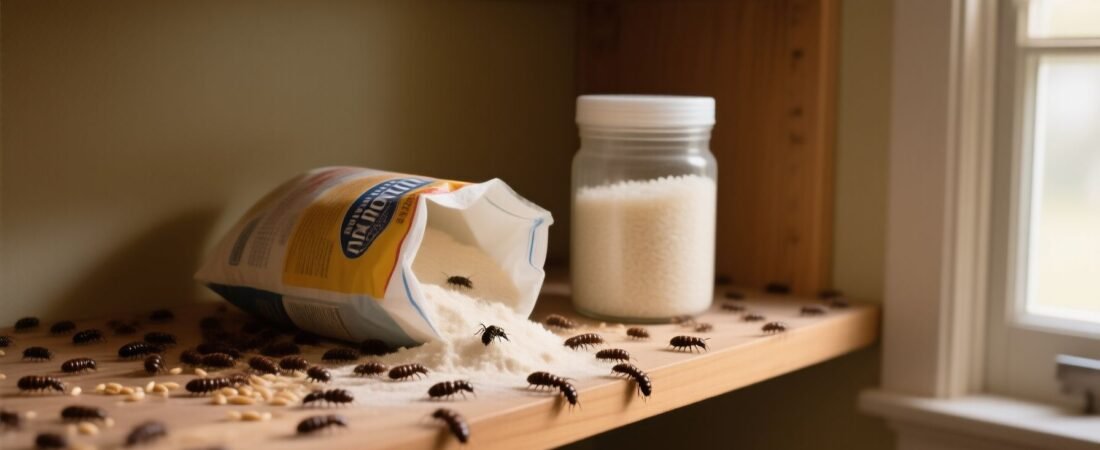
Those bugs were already in your food before you bought it. That’s the part most people never consider — they tear apart their pantry looking for where the infestation “came from,” never realizing they carried it home in a sealed bag from the grocery store. Brown bugs in flour and rice almost always enter your home as eggs or larvae hidden inside the packaging itself, not as invaders that crawled in through a gap in your wall.
The two most common culprits are the sawtoothed grain beetle (Oryzaephilus surinamensis) and the rice weevil (Sitophilus oryzae) — both small, both brown, and both extraordinarily good at going undetected until a population has already exploded inside your cabinet. A single female rice weevil can lay up to 400 eggs in her lifetime, depositing each one inside an individual grain of rice and sealing it with a waxy plug. By the time you see adults crawling around, there are already hundreds of larvae developing silently inside your food.
Which Specific Brown Bug Is Actually in Your Flour or Rice?
Getting the ID right matters a lot here because these bugs behave differently, breed differently, and require slightly different approaches to eliminate. The rice weevil is about 1/8 inch long, reddish-brown to dark brown, with a distinctive long snout projecting from the front of its head — that snout is a dealbreaker for ID. It bores directly into whole grains, which is why you’ll almost exclusively find it in rice, corn, wheat berries, and dried pasta rather than finely milled flour.
The sawtoothed grain beetle is flatter, slightly smaller at about 1/10 inch, and has six saw-like projections along each side of its thorax — visible under a magnifying glass. Unlike the weevil, it cannot chew into intact grains, so it thrives in flour, cereals, oats, and already-damaged or processed grains. You’ll also encounter the confused flour beetle (Tribolium confusum), which looks almost identical to the red flour beetle and produces a distinctive unpleasant smell when populations get large.
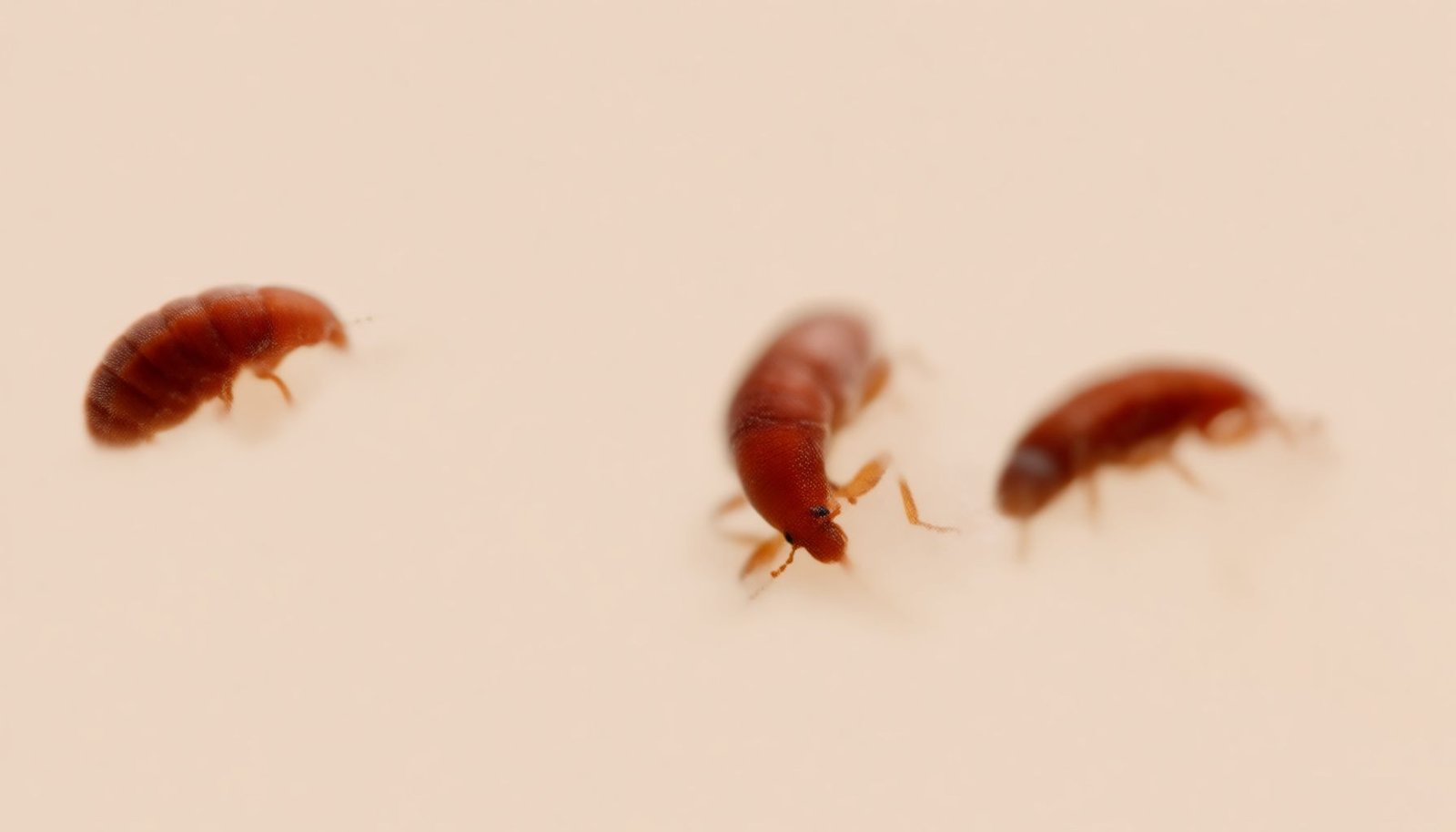
This close-up comparison shows the key physical differences between the most common pantry beetles — pay attention to the snout on the weevil and the serrated edges on the grain beetle, since correctly identifying which one you have will determine exactly which foods you need to pull and inspect first.
Why Do Sealed Bags and “Fresh” Packages Still Have Bugs in Them?
This is where most online advice fails homeowners completely. The assumption is that if a bag is sealed, it’s safe — but rice weevil eggs are laid inside individual grains at the processing facility, mill, or storage warehouse long before the product is bagged. The eggs are microscopic and pass right through standard food inspection. At room temperature (around 70–80°F), those eggs hatch in 3–5 days, and larvae can complete development inside a single grain in as little as 25–35 days.
Sawtoothed grain beetles take a different route — adult females lay their eggs loosely in flour or among grain particles, and those eggs are small enough to slip through the weave of paper bags or the micro-gaps in cardboard packaging. A paper flour bag sitting in a warm warehouse for 6–8 weeks before reaching your shelf is basically a time bomb. The bugs aren’t coming from your home — they’re graduating from larvae to adults right in your pantry after you’ve already brought them home.
Pro-Tip: Before storing any new flour, rice, or grain product, freeze it at 0°F for at least 4 days. This kills all life stages — eggs, larvae, and adults — without affecting the quality of the food. It’s the single most effective prevention step that virtually no one does, and it costs nothing.
How to Tell How Bad Your Infestation Actually Is
One adult beetle crawling across your counter and a full-blown infestation that has spread to 8 different pantry items are two very different situations — and they require very different responses. The severity assessment is what most people skip, diving straight into throwing things away without understanding how far the problem has actually spread. Here’s how to gauge what you’re actually dealing with:
- Check every susceptible item in your pantry, not just the obvious ones. Rice weevils and grain beetles will infest oats, cornmeal, dried pasta, pet food, birdseed, spice packets, dried beans, and even chocolate. Pull everything out and inspect it, including products you just bought.
- Look for the “flour dust” sign. Infested flour often shows a fine layer of webbing-like clumping or tiny frass (bug waste) that looks like a slightly discolored dust settled at the bottom of the bag. Squeeze the flour — if it clumps in spots that shouldn’t clump, that’s a sign.
- Check the rice grain-by-grain for exit holes. Rice weevils leave a small, round exit hole in the grain when adults emerge. Pour rice onto a white plate and look for grains with a tiny hole, hollowed-out appearance, or powdery residue around individual kernels.
- Count the adults you’re seeing. Finding 1–3 adults suggests a contained early infestation. Seeing 10 or more adults regularly, especially in multiple locations, means the population has established and you likely have multiple infested products.
- Check the pantry shelf itself. Beetles and weevils hide in shelf cracks, under shelf liners, and in the gaps between shelf brackets. If you see adults or tiny oval eggs in these spaces, the infestation has moved beyond any single food source.
- Inspect any items that have been open for more than 3 weeks. Any opened bag of flour, rice, or cereal that’s been sitting at room temperature is a viable breeding site, even if it looks and smells fine from the outside.
One honest reality check: how bad this gets depends significantly on your climate and home temperature. Grain beetles and weevils develop roughly twice as fast at 85°F as they do at 70°F — so a Florida or Texas household in summer can go from a few eggs to a pantry-wide infestation in 6–8 weeks, while the same situation in a cooler northern home might take 3–4 months to reach the same scale. That timeline difference matters for how urgently you need to act.
How Are These Brown Pantry Bugs Different From Pantry Moths?
A lot of homeowners conflate brown pantry beetles with pantry moths, and that confusion leads to wrong treatment choices. The Indian meal moth (already covered in depth elsewhere on this site) leaves obvious webbing in your food — stringy, silky threads running through flour or cereal. Grain beetles and rice weevils produce no webbing whatsoever. If you’re seeing fine, thread-like silk, you’ve got a moth problem. If you’re seeing small brown crawling insects with no silk, you’re dealing with beetles or weevils.
The other key difference is lifecycle visibility. Moth larvae are obvious — they’re caterpillar-like, creamy white, up to 1/2 inch long, and they migrate out of food to pupate on cabinet walls or ceilings. Grain beetle larvae are tiny, pale, and rarely leave the food source, which is why you can have a substantial infestation and never see a single larva — only the adults that emerge. This makes grain beetles easier to miss in early stages and often means the infestation is further along by the time it’s spotted.
| Pest | Size | Key ID Feature | Primary Food Target |
|---|---|---|---|
| Rice Weevil | ~1/8 inch | Long snout, pits on thorax | Whole grains, rice, corn |
| Sawtoothed Grain Beetle | ~1/10 inch | 6 saw-tooth projections on thorax sides | Flour, cereals, processed grains |
| Confused Flour Beetle | ~1/7 inch | Reddish-brown, club-shaped antennae | Flour, spices, dried fruit |
| Indian Meal Moth (larva) | Up to 1/2 inch | Caterpillar-like, leaves webbing | Grain products, nuts, dried fruit |
“The number one mistake I see homeowners make is treating a grain beetle problem like a cockroach problem — spraying pesticides in the pantry and putting food back on the shelves. These insects don’t respond to contact sprays the way you’d expect because the most vulnerable life stages are sealed inside the food itself. The only effective strategy is source removal first, sanitation second, and then targeted treatment of the empty cabinet if needed. Spraying without removing the infested food is basically fertilizing the population.”
Dr. Patricia Kelso, Board-Certified Entomologist and University Extension Specialist in Stored Product Pests
How to Actually Get Rid of Brown Bugs in Flour and Rice — and Keep Them Out
Picture this: you’ve identified the bugs, you know which products are infested, and now you’re standing in front of an empty pantry shelf wondering what to spray. Here’s the counterintuitive truth — in most cases, you don’t need to spray anything. The entire life cycle of these insects depends on access to the food source. Remove the food, and you remove the breeding habitat. No food equals no next generation.
That said, eliminating the current generation isn’t the same as preventing the next infestation, which is where most people fail. They clean out the pantry, restock it, and find bugs again 6–8 weeks later because they put new food back in the same unsealed bags it came in. The long-term fix is storage, not chemicals. Here’s what an effective, lasting response actually looks like:
- Remove and discard all infested products immediately. Don’t just reseal them — bag them in plastic and take them outside to your trash. Any product you’re unsure about should be treated as infested if it’s been open or stored near a confirmed infested item.
- Vacuum the entire pantry shelf-by-shelf, including cracks, corners, shelf brackets, and any liner paper. Use a crevice attachment to get into every gap. Dispose of the vacuum bag immediately outside — adult beetles and weevils can crawl back out.
- Wipe shelves with white vinegar or warm soapy water, then let them dry fully before restocking. Vinegar helps remove the pheromone trails and food residue that attract beetles back to the same spots.
- Transfer all susceptible dry goods into hard-sided airtight containers — glass mason jars or thick polypropylene food containers with gasket seals. Standard zip-lock bags are not sufficient; sawtoothed grain beetle larvae can chew through thin plastic.
- Use bay leaves as a low-effort deterrent. Place 2–3 dried bay leaves inside each airtight container. The volatile compounds in bay leaves are mildly repellent to several stored-product pests. It won’t eliminate an existing infestation, but it’s a reasonable supplemental deterrent for newly stored food.
- Keep your pantry temperature below 65°F if possible, or at minimum reduce humidity. Grain beetle and weevil development slows dramatically below 65°F and essentially halts below 50°F. Even a slightly cooler, well-ventilated pantry is meaningfully less hospitable to these insects.
One thing worth knowing: if you’re dealing with a heavy infestation that has spread to shelf cracks and cabinet voids, food-safe diatomaceous earth applied lightly into those crevices (not onto food surfaces) can help kill any adults or larvae that have moved beyond the food itself. It works mechanically by damaging the insect’s exoskeleton, so beetles can’t develop resistance to it. It’s not a substitute for removing the infested food, but it’s a reasonable add-on for persistent situations.
It’s also worth considering what else might be attracting small insects to your kitchen. While grain beetles are specific to stored dry goods, other tiny pantry visitors like Pharaoh ants — tiny yellow ants common in kitchen environments — can sometimes be confused with beetle activity when you’re seeing multiple pest types at once. And if you’ve had any unexplained skin reactions while dealing with a pantry infestation, it’s worth ruling out unrelated causes — there’s a surprisingly common tendency to attribute various skin irritations to whatever pest problem is top of mind, similar to how spider bites are routinely mistaken for bed bug bites when people know bed bugs are in the house.
The bigger picture here is that brown bugs in flour and rice are almost always a supply chain problem before they’re a home hygiene problem. Your pantry didn’t attract them — a warehouse, shipping container, or grocery store shelf incubated them, and your warm kitchen just gave them the conditions to finish developing. That reframe matters because it means obsessive cleaning alone will never fully solve this. The real defense is in how you store food after it comes through your front door. Freeze new grains, use airtight containers, and inspect regularly — that’s what actually breaks the cycle rather than just delaying the next outbreak.
Frequently Asked Questions
What are the tiny brown bugs in my flour and rice?
Those tiny brown bugs are almost certainly weevils or flour beetles — the two most common pantry pests found in dry goods across the US. Weevils are about 1/8 inch long with a distinctive snout, while flour beetles are flatter and reddish-brown. Both infest grains, flour, rice, oats, and pasta, and they’re usually introduced into your home through store-bought packages that were already contaminated.
Is it safe to eat flour or rice that has bugs in it?
Technically, weevils and flour beetles aren’t toxic, but most people reasonably don’t want to eat them. The bigger concern is that infested grain can carry mold, bacteria, and waste that affects flavor and can cause stomach upset in sensitive individuals. If you see more than a few bugs or spot webbing and clumping in the flour, it’s best to toss the whole package rather than try to salvage it.
How did bugs get into my sealed flour or rice?
Even ‘sealed’ bags from the store aren’t always bug-proof — weevils and grain beetles can chew through thin plastic and cardboard packaging, and eggs are often laid inside grain products at the processing facility before the bags are even sealed. Once one infested package sits in your pantry, the bugs spread to neighboring bags within days. This is why an infestation seems to appear out of nowhere even when you haven’t changed your shopping habits.
How do I get rid of brown bugs in my pantry for good?
Start by pulling everything out of your pantry and throwing away any infested or suspect packages — don’t just seal them in another bag and leave them in the cabinet. Vacuum the shelves thoroughly, then wipe them down with white vinegar or a mild bleach solution to kill any remaining eggs. Store all dry goods in airtight glass or hard plastic containers going forward, and check new packages within the first week of bringing them home.
Do brown pantry bugs spread to other rooms or bite people?
Weevils and flour beetles don’t bite humans, sting, or spread disease, so they’re a nuisance pest rather than a health hazard in that sense. They do spread quickly through a pantry, moving from one food package to another, but they’re not known to establish themselves in walls, furniture, or bedrooms the way some other household pests do. If you clean out your pantry completely and eliminate all infested food sources, the infestation typically resolves within 1 to 2 weeks without any chemical treatment.