
About 40 million Americans have indoor allergies — and a significant chunk of them are reacting to insects living inside their walls, not to dust or pollen. Here’s what most people get wrong: they assume allergic reactions from bugs mean getting stung or bitten. They don’t. The bigger, sneakier problem is that common household insects shed body parts, excrete waste, and leave behind proteins that you breathe in every day without knowing it. You’re not getting a rash from a cockroach bite. You’re getting one from inhaling a microscopic piece of a cockroach that died behind your refrigerator three weeks ago.
Which Household Insects Are Actually Triggering Your Allergic Reactions?
Cockroaches are the single most significant insect allergen source in US homes, full stop. Their saliva, feces, shed exoskeletons, and decomposing body parts all contain proteins — particularly Bla g 1 and Bla g 2 — that the immune system of a sensitized person treats like a full-on biological attack. Studies have found cockroach allergen in over 63% of US homes, including homes with no visible infestation. That last part trips people up constantly.
Dust mites get most of the press for indoor allergies, and they deserve it — but they’re not insects, they’re arachnids. The insects that actually cause allergic reactions in the home are a shorter list than most people expect: cockroaches, certain stored-product beetles, clothes moths, and to a lesser extent, cluster flies and certain ant species. Each one triggers reactions through a different mechanism, which matters if you’re trying to figure out what’s making you wheeze every time you open the hall closet.

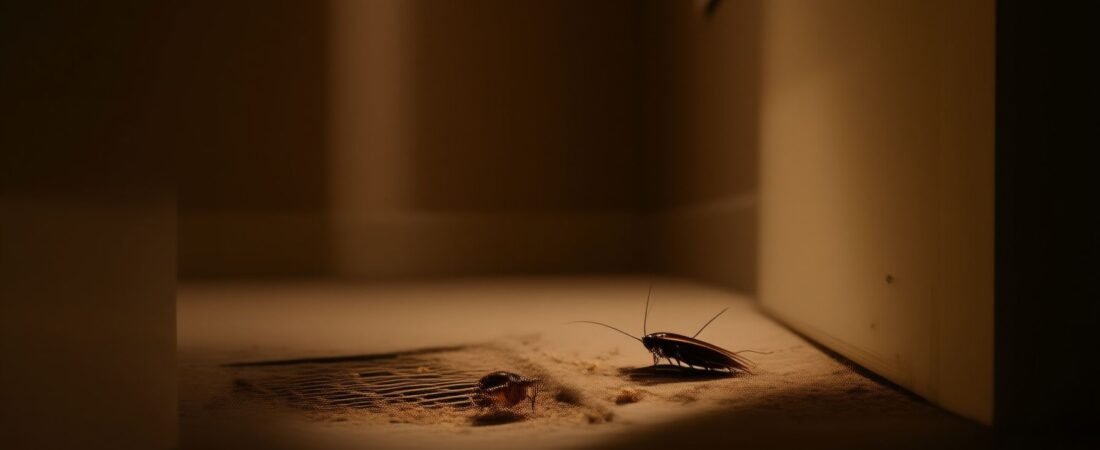
This close-up shows the kind of insect debris — shed casings, frass, and body fragments — that becomes airborne in infested homes and enters your respiratory tract without any direct contact with a live insect.
Why Do Cockroach Allergens Persist Even After You’ve Eliminated the Infestation?
This is where most pest control articles stop short of the real answer. Killing cockroaches doesn’t remove cockroach allergen. The proteins that trigger immune responses are embedded in fecal smear marks on walls, in cracks in baseboards, inside cabinet hinges, and throughout HVAC ductwork. A single German cockroach produces fecal pellets almost constantly throughout its adult life — and a female can generate 30-40 eggs per capsule, meaning colonies build up fast. When those insects die, their dried, fragmenting bodies become part of the dust you breathe.
Picture this: a family treats their apartment for cockroaches in the spring. The insects are gone within a few weeks. But their youngest child keeps having asthma flare-ups through the fall. The allergist eventually identifies cockroach allergen as the trigger — not a new infestation, just the residual proteins that were never cleaned up after extermination. This is why post-treatment deep cleaning of wall voids, cabinet interiors, and air returns isn’t optional for allergic households — it’s the part that actually stops the symptoms. If you’re not sure whether you even have an infestation to begin with, How to Tell If You Have Roaches When You Never See Them will walk you through the real indicators beyond spotting a live bug.
What Symptoms Should You Actually Attribute to Insect Allergens vs. Other Indoor Triggers?
The frustrating part of insect-related allergies is that the symptoms overlap almost perfectly with seasonal allergies, mold sensitivity, and pet dander reactions. Runny nose, itchy eyes, persistent cough, skin rashes that come and go, and worsening asthma are all on the list. The key distinguishing factor isn’t the symptom itself — it’s the pattern. Insect allergen exposure tends to be worse indoors, year-round, and concentrated in specific rooms where insects have been active.
Here’s a breakdown of how the main insect allergen sources in US homes compare by symptom type and mechanism:
| Insect | Primary Allergen Source | Most Common Symptoms |
|---|---|---|
| German Cockroach | Feces, shed exoskeleton, saliva, body fragments | Asthma, rhinitis, skin rash, eye irritation |
| Clothes Moths / Larvae | Larval hairs and shed skins | Skin rash, contact dermatitis, respiratory irritation |
| Stored-Product Beetles (e.g., flour beetles, grain beetles) | Body fragments, frass in contaminated food | Digestive reaction, skin hives, respiratory irritation |
| Cluster Flies | Decomposing bodies in attic/wall voids | Respiratory irritation, mild rhinitis |
One honest nuance here: the severity of insect-triggered allergies depends heavily on your building type, climate, and how long an infestation has gone unaddressed. Someone in a humid southeastern US apartment with a year-old cockroach problem will accumulate far more allergen in their indoor air than someone in a drier climate who caught an infestation within a few weeks. Geography and timing matter more than most guides admit.
Can Stored-Product Insects in Your Pantry Cause a True Allergic Reaction?
Yes — and this is probably the most underappreciated allergy risk in the average home. Flour beetles, grain beetles, and their relatives don’t just contaminate food visually. They shed body parts and excrete frass directly into dry goods, and when those goods are cooked or consumed, sensitized individuals can react. Baker’s asthma — a recognized occupational condition — is caused by inhaling flour that’s been infested with beetles and mites. The same thing can happen on a smaller scale in a kitchen pantry that’s had a low-level infestation for months.
The reaction isn’t always dramatic. Some people notice vague digestive discomfort or mild hives after eating baked goods made from infested flour and never connect it to the bugs. If you’ve had unexplained skin reactions or gut symptoms that seem tied to specific homemade foods, it’s worth checking your dry goods carefully — and reading up on What Are the Brown Bugs in My Flour and Rice? to ID exactly what you might be dealing with. Throwing out the food is obvious; what most people skip is washing the shelves, cracks, and surrounding containers where beetle fragments and frass have settled.
Pro-Tip: After clearing a pantry beetle infestation, vacuum the shelf surfaces and wipe them down with a damp cloth before restocking — loose beetle fragments and frass can remain on shelving for months and continue to contaminate new food placed on top of them. Store new dry goods in airtight glass or hard plastic containers immediately.
How Do You Reduce Insect Allergen Load in Your Home Without Relying Solely on Pesticides?
Reducing the actual allergen load — not just the insect count — requires a different approach than standard pest control. Pesticides kill insects. They don’t remove the proteins those insects have already deposited throughout your home. Allergen reduction requires a combination of targeted cleaning, humidity control, and physical exclusion that most pest control guides barely mention.
Here’s what actually moves the needle on indoor insect allergen levels, in rough order of impact:
- HEPA vacuuming of all cracks, baseboards, and cabinet interiors — standard vacuums recirculate fine insect particles back into the air. A HEPA-filtered vacuum traps particles as small as 0.3 microns, which is small enough to capture cockroach allergen fragments.
- Lowering indoor humidity below 50% — cockroaches and many stored-product insects thrive between 70-80% relative humidity. At or below 50%, their populations decline and existing allergen deposits break down faster. A dehumidifier in a basement or kitchen makes a measurable difference.
- Sealing wall voids and pipe penetrations — cockroach feces and body fragments accumulate most heavily near entry points and nesting sites. Sealing gaps around pipes and behind appliances with caulk or steel wool cuts off both ingress routes and concentrated allergen hot spots.
- Replacing cardboard storage with sealed hard containers — corrugated cardboard is a cockroach nesting site and a moisture trap. Every cardboard box in a pantry, closet, or basement is a potential allergen reservoir. Switching to sealed bins eliminates habitat and makes cleaning possible.
- Washing bedding and soft furnishings at 130°F or above — if cockroach activity has occurred near sleeping or sitting areas, fabric surfaces carry allergen that skin contact redistributes. Hot washing kills residual allergen proteins in a way that cold washing does not.
- Running an air purifier with a HEPA filter in bedrooms and main living areas — airborne insect allergen particles can remain suspended for hours after disturbance. A HEPA air purifier running continuously can reduce ambient allergen concentration by 50-80% in a single room.
The counterintuitive fact most pest control guides miss entirely: in heavily infested apartments, the act of extermination itself — disturbing insect populations during treatment — temporarily spikes airborne allergen levels for 24-72 hours as insects scatter, die, and fragment. Allergic individuals should ideally vacate during and shortly after treatment, not just during the application window.
“The core mistake people make is treating insect allergen like a pest control problem. It’s not — it’s an indoor air quality problem that happens to have a pest control component. You can have a cockroach-free home and still have cockroach allergen levels high enough to trigger asthma attacks for years if you don’t address the residue. Cleaning protocols post-extermination are as important as the extermination itself, particularly in multi-unit housing where re-infestation pressure from adjacent units is constant.”
Dr. Patricia Hale, MS, BCE, Board Certified Entomologist and Indoor Air Quality Consultant, University Extension Specialist
Which Insects Cause Skin Reactions Through Contact Rather Than Inhalation?
Not every insect allergy is respiratory. Clothes moth larvae are a good example of a contact allergen that most homeowners attribute to something else entirely. The tiny hairs on moth caterpillars — called urticating hairs — can embed in skin and fabric, causing persistent itching and localized rashes that look like dry skin or eczema. If you’ve had unexplained skin irritation that gets worse when you wear certain stored clothes or handle old blankets, moth larvae may be responsible rather than a laundry detergent or fabric softener.
Beyond moths, here are the other contact-route insect allergen sources worth knowing:
- Carpet beetle larvae — their bristle-like hairs (called setae) cause a condition sometimes called “carpet beetle dermatitis,” characterized by rows of itchy red bumps on skin that contacts infested carpet, upholstery, or stored woolens. It’s frequently misdiagnosed as bed bug bites or hives.
- Blister beetles — less common indoors but occasionally carried in on cut flowers or through open windows. They secrete cantharidin, a chemical that causes painful blisters on direct skin contact. No biting required.
- Stored-product moth larvae (Indian meal moth, Mediterranean flour moth) — their shed larval skins in infested pantry food can cause contact reactions in sensitive individuals who handle heavily infested packages.
- Cockroach contact — direct skin contact with live cockroaches can trigger urticaria (hives) in highly sensitized individuals, separate from the inhalation exposure. This is less common than airborne reactions but documented in people with severe cockroach allergy.
The real-world implication of all this is straightforward even if the biology is complicated: if you’ve got unexplained skin or respiratory symptoms that your doctor hasn’t been able to pin on a standard allergen, it’s worth requesting specific allergy testing for cockroach, moth, and stored-product insect antigens. These panels aren’t part of a standard allergy workup, and many allergists won’t order them unless a patient specifically asks. Getting the right diagnosis is what allows you to both treat the allergy and address the actual source in your home — which are two separate problems that both need solving.
Frequently Asked Questions
What insects in the home are most likely to cause allergic reactions?
Cockroaches, dust mites, bed bugs, and stinging insects like wasps that get inside are the most common culprits. Cockroach allergens are especially problematic — studies show they’re a major asthma trigger in roughly 26% of the general US population and up to 60% of urban residents. Dust mites aren’t true insects, but they’re closely related and found in nearly every home.
Can cockroach allergies make asthma worse?
Yes, and it’s one of the most underdiagnosed connections in indoor air quality. Cockroach droppings, saliva, and shed body parts release proteins that trigger airway inflammation, especially in kids. If your asthma symptoms consistently flare indoors and you’ve spotted even one cockroach, it’s worth getting tested for cockroach allergen sensitivity.
What are the symptoms of an allergic reaction to insects in your house?
Common symptoms include sneezing, runny nose, itchy eyes, skin rashes, and worsening asthma or coughing — especially at night. Reactions from cockroaches and dust mites tend to be chronic and low-grade, while bed bug bites can cause localized hives or, in rare cases, a more serious allergic response. If you’re experiencing shortness of breath or throat tightening, that’s an emergency and you should call 911.
How do you get rid of insects that cause allergies in your home?
Start by eliminating food and moisture sources, sealing cracks in walls and around pipes, and vacuuming at least twice a week with a HEPA-filter vacuum. For cockroaches, gel baits and boric acid are more effective long-term than sprays alone. If the infestation is moderate to severe, a licensed pest control professional can clear it faster and reduce allergen levels more reliably than DIY methods.
Are dust mites or cockroaches worse for allergies?
Both are serious, but cockroach allergens tend to cause more severe asthma attacks, while dust mites affect a broader portion of the population — roughly 20 million Americans are allergic to them. Dust mites thrive in bedding, carpets, and upholstered furniture, so your bedroom is usually the highest-exposure area. If you’re not sure which is triggering your symptoms, an allergist can run a skin prick test to pinpoint the source.
Disclaimer: This article is for general informational purposes only and does not constitute medical advice. How a pest-related exposure, bite, or contaminant affects you can depend on age, pre-existing conditions, allergies, and the extent of exposure. If you’re experiencing symptoms you believe are linked to a pest problem in your home, please consult a licensed healthcare provider rather than relying on this article alone.