

Fleas can bleed a small animal — or a small child — into genuine medical trouble, and most people don’t realize it until something is already wrong. That’s the part virtually every flea article skips. Everyone talks about itching and tapeworm risk, but flea-induced anemia is a real, documented condition that veterinarians treat regularly and that doctors occasionally have to explain to alarmed parents. The question isn’t whether it’s possible — it is. The question is exactly how much flea pressure it takes, who’s most at risk, and what the warning signs look like before things get serious.
How Do Fleas Actually Cause Anemia in the First Place?
A single flea consumes roughly 15 times its own body weight in blood every day. That’s not a rounding error — it’s a physiological fact that changes how you should think about a heavy infestation. A female flea, which is larger than the male and feeds more aggressively to support egg production, can draw up to 1 microliter of blood per feeding session, and she feeds multiple times daily. Multiply that by hundreds or thousands of fleas living on or around a small host, and the cumulative blood loss becomes genuinely significant within days.
The mechanism is straightforward blood-volume depletion — not toxicity, not venom, not an immune reaction. Fleas are obligate hematophages, meaning blood is the only thing they eat. When the rate of blood loss outpaces the body’s ability to produce new red blood cells, hemoglobin levels drop, and anemia sets in. This is exactly the same process behind anemia from internal parasites like hookworms, just delivered externally through the skin. Your body doesn’t care whether the bleeding is happening inside or outside — a red blood cell deficit is a red blood cell deficit.
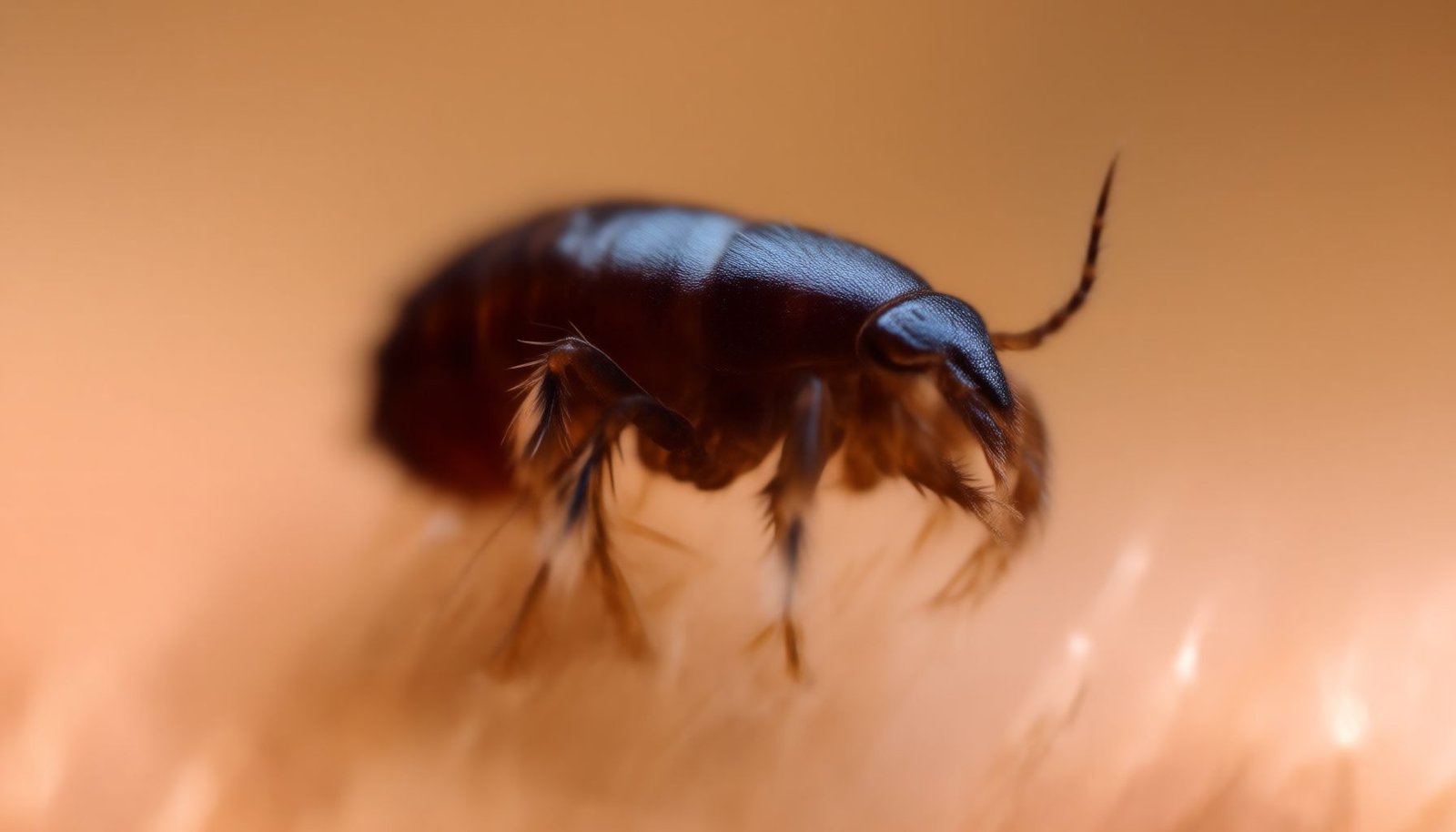
This close-up shows the size difference between a fed and unfed flea — the engorged abdomen after a blood meal is visibly darker and distended, which helps illustrate just how much blood a flea extracts during a single feeding event.
Who Is Actually at Risk — and Why the Answer Surprises Most People
Here’s the thing most articles get wrong: they frame flea anemia as a pet problem with a brief footnote about babies. The reality is more layered than that. The risk isn’t just about species — it’s about body mass relative to flea load, baseline health, and how long the exposure has been going on. A healthy 180-pound adult can sustain a moderate flea infestation for weeks with nothing worse than relentless itching. A 6-pound kitten with 200 fleas on its body is in a medical emergency within 48 to 72 hours.
Human infants, especially newborns and babies under 6 months, occupy a genuinely concerning middle ground that doesn’t get nearly enough attention. Their blood volume is small — a newborn has only about 300 milliliters of blood total — and their bone marrow hasn’t reached adult efficiency at producing replacement red blood cells. A heavily infested nursery or sleeping area where a baby is being bitten repeatedly through the night is not a hypothetical risk. Pediatric hematologists have documented cases of flea-associated anemia in infants, particularly in households where a pet brought in a severe infestation and the connection wasn’t made quickly. This is rare in clinical terms, but it’s not impossible, and the fact that it surprises people is the problem.
“Flea anemia in cats and small dogs is one of the most underdiagnosed conditions I see, because owners attribute the lethargy and pale gums to other causes. By the time they bring the animal in, the packed cell volume is sometimes below 15 percent — dangerously low. The flea population causing that level of blood loss is never just a few strays. It’s always a full household infestation that’s been building for weeks, often without the owner realizing how bad it’s gotten.”
Dr. Sandra Okafor, DVM, DACVIM (Internal Medicine), board-certified veterinary internist
What Does Flea-Related Anemia Look Like? Signs by Host Type
The symptoms of flea anemia aren’t dramatically different from anemia caused by any other source, which is exactly what makes it easy to miss. You’re not looking for something flea-specific — you’re looking for the standard signs of low red blood cell count, then connecting the dots backward to the infestation. The tricky part is that people rarely think “fleas” when they see a lethargic pet or a pale, irritable baby. They think illness, teething, stress, or a bad night’s sleep.
Knowing what to look for in each type of host — and knowing how quickly things can deteriorate — is the difference between catching this early and dealing with a veterinary or medical emergency. The timeline from “noticeable infestation” to “clinically anemic small pet” can be as short as one to two weeks under heavy flea pressure.
| Host | Warning Signs of Flea Anemia | Urgency Level |
|---|---|---|
| Kittens / Puppies (under 12 weeks) | Pale or white gums, weakness, rapid breathing, cold extremities | Emergency — seek vet care within hours |
| Adult cats / small dogs (under 15 lbs) | Lethargy, pale gums, reduced appetite, exercise intolerance | High — vet visit within 24 hours |
| Human infants (under 6 months) | Unusual pallor, prolonged crying, reduced feeding, listlessness | High — contact pediatrician immediately |
| Healthy adults | Rarely clinically anemic; fatigue and iron depletion possible with extreme, prolonged infestation | Low — but infestation still needs immediate elimination |
How Bad Does a Flea Infestation Have to Be Before Anemia Becomes a Real Risk?
This is the question most articles dodge entirely, and it’s the most practically useful one. The honest answer is that “how bad” depends on a ratio, not an absolute number. A hundred fleas on a 90-pound Labrador is an annoyance requiring treatment. A hundred fleas on a 2-pound newborn kitten is a life-threatening condition. The flea load doesn’t change — the host does. What you actually need to calculate, conceptually, is blood loss per unit of body mass per day.
Veterinary literature generally identifies a flea burden of more than 200 to 300 fleas on a small cat as the threshold where clinically significant anemia becomes likely within one to two weeks. For a kitten under 8 weeks old, that threshold is far lower — some studies suggest even 50 to 100 fleas can produce measurable anemia in very young animals. For context, a mature flea infestation in a household — the kind where you’re seeing fleas jumping on your ankles — almost certainly involves several hundred to several thousand fleas when you count all life stages in carpets, bedding, and furniture. The adults you’re seeing represent only about 5% of the total population. The other 95% are eggs, larvae, and pupae waiting to emerge.
Pro-Tip: If you’re seeing fleas on your pet but haven’t found them in carpets or furniture yet, don’t assume the infestation is small. Adult fleas on the host are almost always the last visible sign of a population that’s already established throughout your home. Treat the environment aggressively at the same time you treat the animal — waiting even a few days gives the next generation of larvae time to develop.
What Should You Actually Do If You Suspect Flea Anemia in Your Home?
Acting in the right order matters here. A lot of people treat the pet first, feel like they’ve done something, and then wait to see if the fleas go away on their own. They won’t. The flea life cycle runs 14 to 21 days under warm conditions, and pupae inside cocoons are essentially immune to insecticides — they can wait up to 5 months before emerging. That means even after you’ve treated the pet and vacuumed everything, you’ll see adult fleas reappearing for weeks. That’s not treatment failure. That’s biology.
If you have a small pet showing any signs of lethargy, pale gums, or weakness alongside a known or suspected flea problem, get to a vet before you do anything else. Blood transfusions are sometimes necessary for severely anemic kittens and small dogs, and the window for intervention is narrow. On the human side, if you have an infant in a home with a flea infestation and the baby has been unusually pale or difficult to rouse, call your pediatrician that day and mention the flea situation specifically — it may not be on their radar as a cause without the prompt. For the household itself, here’s the sequence that actually works:
- Remove all pets from the home temporarily and have them treated by a vet or with a vet-approved topical or oral flea treatment before they re-enter. Putting a treated pet back into an untreated environment just reloads the flea population onto the host.
- Wash all bedding, pet beds, and soft furnishings in hot water (at least 130°F) and dry on high heat for at least 30 minutes. Flea eggs and larvae in fabric don’t survive sustained heat exposure.
- Vacuum every carpeted surface, every upholstered piece of furniture, and every floor crack before applying any chemical treatment. Vacuuming mechanically removes a substantial portion of eggs and larvae and also stimulates pupae to emerge earlier — making them vulnerable to insecticides sooner.
- Apply an insect growth regulator (IGR) throughout the home, targeting carpets, baseboards, and under furniture. IGRs like methoprene or pyriproxyfen don’t kill adult fleas, but they prevent eggs and larvae from developing into breeding adults, which is how you actually break the cycle rather than just suppressing it temporarily.
- Repeat vacuuming every two to three days for at least three weeks. This is the step people skip, and it’s the reason infestations seem to come back. Each vacuuming session removes newly hatched larvae and stimulates more pupae to emerge into the treated environment.
- Schedule a vet follow-up for any pet that showed anemia symptoms two to four weeks after treatment to confirm blood counts are recovering. Recovery from flea anemia in small animals typically takes two to four weeks of appropriate nutrition and no ongoing blood loss.
One thing worth acknowledging honestly: how quickly you can resolve a flea infestation varies significantly based on your home’s layout, the severity of the infestation, whether you have an attic or crawl space that hasn’t been treated, and how warm your indoor climate is. A one-bedroom apartment with hardwood floors is a different problem than a carpeted four-bedroom house with a basement. Don’t let anyone tell you there’s a universal timeline — this depends on your specific situation. Pest control professionals who specialize in flea treatments use different protocols for different environments, and there’s no shame in calling one if the infestation is severe or if you have a vulnerable animal or infant in the home.
It’s also worth noting that flea infestations don’t always announce themselves the way you’d expect. You might notice small dark specks on your pet’s white fur (flea dirt — actually digested blood, which turns red when wet), or you might see tiny pale larvae near the edge of carpets and baseboards before you ever see a jumping adult. If you’re already investigating other pest activity in your home, like Signs of Mice in the Kitchen: 7 Things to Check Tonight, keep in mind that rodents can carry fleas indoors even without pets — a mouse infestation and a flea problem sometimes arrive together, with the fleas detaching from the rodents once they’ve found a warmer host.
Similarly, fleas aren’t always evenly distributed throughout a home. They concentrate where the host rests and sleeps, and they thrive in humid, sheltered spots — which is why bathrooms and laundry rooms with warm pipes and moisture sometimes harbor flea larvae even when the living room carpet seems clean. If you’ve been puzzling over unexpected pest locations in your home, the same logic that explains Why Are There Cockroaches in My Bathroom but Not Kitchen? applies here: warmth, humidity, and undisturbed corners matter more than you’d expect.
Here’s what a severe infestation scenario actually looks like in practice. Picture a family that moves into a rental home in late spring. The previous tenants had cats. The home sat empty for two weeks — just long enough for dormant flea pupae to sense the vibration of new occupants and begin emerging en masse. Within four days of moving in, everyone in the household is getting bitten. The family has no pets, so they don’t immediately think “fleas.” They check for bed bugs, they look at the mattress, they spray a generic bug killer from the hardware store. Meanwhile, the family dog they’re bringing over next weekend hasn’t arrived yet. By the time the dog arrives, the emerging adult flea population is waiting. The dog — a 14-pound beagle — is covered within 48 hours, and within 10 days, the dog is visibly lethargic and the vet finds a packed cell volume of 22%, well below the normal range of 37% to 55%. The flea infestation was always the problem. The dog just made the medical consequence visible faster.
The broader takeaway here is one that the pest control industry tends to undersell: flea anemia isn’t a worst-case outlier reserved for neglected animals in terrible conditions. It’s a predictable biological outcome of heavy flea pressure on a small-bodied host, and it can happen in clean homes with attentive owners who simply didn’t realize how fast a hidden infestation was scaling up. Getting ahead of it means knowing what to look for, acting on the environment and the host simultaneously, and not waiting to see if the problem resolves itself — because flea populations don’t self-limit. They expand until something stops them.
If you’ve confirmed fleas in your home and you have pets, young children, or elderly family members, treat this as a time-sensitive problem rather than an inconvenience. The biology is working against you every day you wait — a single female flea can lay 40 to 50 eggs per day, every day, for months. Getting the infestation under control now is the only thing that makes the anemia risk drop to zero.
Frequently Asked Questions
can a flea infestation cause anemia in humans?
Yes, it can — but it’s rare in healthy adults. Flea infestation anemia in humans is most likely to occur in infants, elderly people, or anyone with an already-low red blood cell count, since it takes a significant number of flea bites over time to deplete iron stores. A single flea drinks about 15 times its body weight in blood per day, so a heavy infestation with hundreds of fleas biting repeatedly is what tips the scale toward anemia risk.
how many fleas does it take to cause anemia in a cat or dog?
Vets generally consider a pet at serious risk when flea counts reach into the hundreds, and kittens or puppies can become critically anemic from as few as 20 to 30 fleas because of their small body size and low blood volume. Signs to watch for include pale gums, lethargy, and rapid breathing. Flea infestation anemia in pets can turn fatal quickly in young or small animals, so it’s considered a veterinary emergency when those symptoms appear.
what are the symptoms of flea infestation anemia?
In pets, the clearest signs are pale or white gums, weakness, rapid heart rate, and reluctance to move. In humans, flea-related blood loss severe enough to cause anemia would show up as fatigue, dizziness, shortness of breath, and a pale complexion. If you or your pet are showing these symptoms alongside a known flea problem, get to a doctor or vet right away rather than waiting it out.
can fleas cause anemia in babies or toddlers?
Yes, and it’s one of the more serious flea infestation risks that pediatricians flag for young children. Infants have a much smaller total blood volume than adults — roughly 75 to 80 mL per kilogram of body weight — so repeated flea bites can cause measurable blood loss relatively fast. Parents should treat any flea infestation in a home with a baby as urgent, not just an annoyance.
how do you treat anemia caused by fleas?
Treatment has two parts: address the anemia and eliminate the infestation. For pets, a vet may recommend iron supplementation, a high-protein diet, or in severe cases a blood transfusion, alongside a prescription flea treatment. For the home, you’ll need to treat all pets simultaneously, wash all bedding, vacuum daily, and use an IGR-based flea spray on carpets and furniture to break the flea life cycle — otherwise the anemia risk keeps coming back.
Disclaimer: This article is for general informational purposes only and does not constitute medical advice. How a pest-related exposure, bite, or contaminant affects you can depend on age, pre-existing conditions, allergies, and the extent of exposure. If you’re experiencing symptoms you believe are linked to a pest problem in your home, please consult a licensed healthcare provider rather than relying on this article alone.