
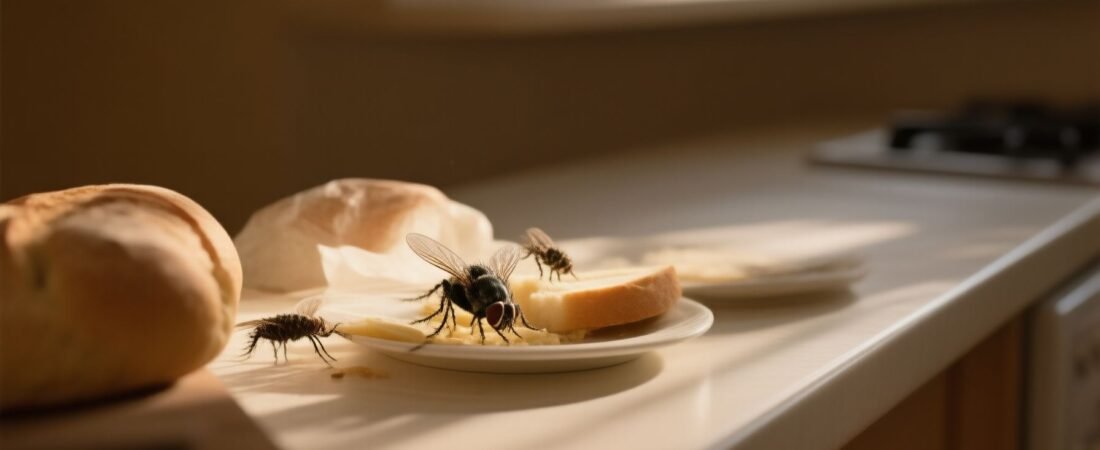
Cluster flies almost certainly won’t make you sick — but not for the reason you think, and there’s a specific situation where the answer quietly changes. Most people assume cluster flies are just an annoyance, sluggish and dopey, clustering on sunny windowsills in autumn. What they miss is that cluster flies spend their larval stage tunneling through earthworms in your soil, and that background matters a lot more than the flies themselves once food gets involved.
Are Cluster Flies Actually Dangerous to Humans?
Cluster flies — Pollenia rudis and related species — are not the same as house flies, blow flies, or filth flies. That distinction is the entire ballgame when you’re asking whether they’re a health risk. House flies breed in garbage, feces, and decaying meat, picking up pathogens at every stop. Cluster flies, by contrast, breed exclusively in soil, where their larvae parasitize earthworms underground before emerging as adults.
That lifecycle means cluster flies don’t carry the same pathogen load as filth flies. They haven’t been crawling across raw sewage or rotting carcasses before landing on your kitchen counter. Studies examining fly species as mechanical vectors of disease consistently rank cluster flies far below house flies, bottle flies, and blow flies in terms of disease transmission risk. So in a straight comparison, cluster flies are genuinely one of the lower-risk flies that can end up in your home.
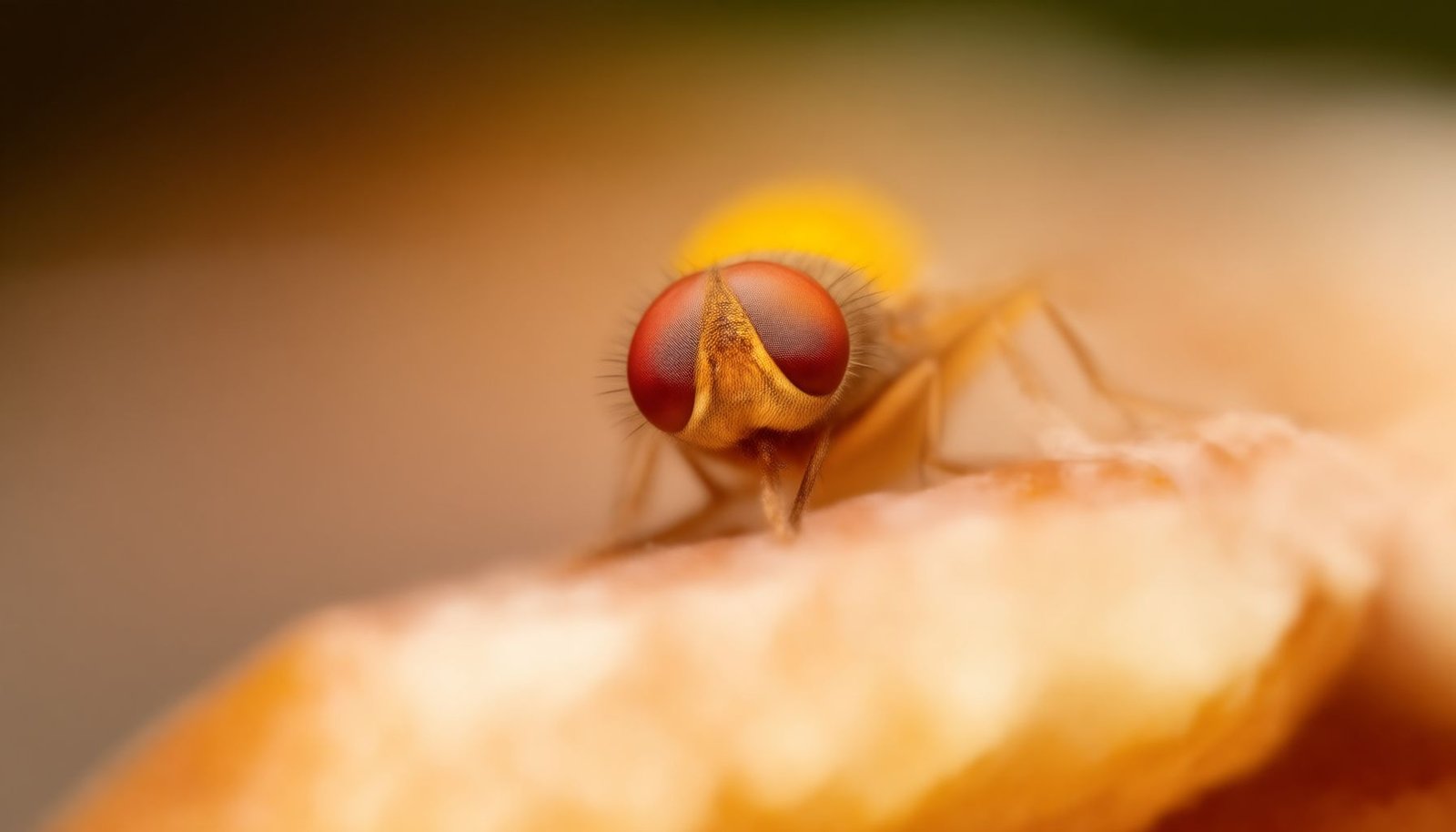
This close-up shows how cluster flies congregate near food surfaces — even one or two flies walking across exposed food can transfer bacteria picked up from previous surfaces, which is why the context of where they’ve been matters more than the species alone.
What Happens If a Cluster Fly Lands on Your Food?
Here’s the part most articles skip over entirely: the risk isn’t really about the fly’s breeding history — it’s about where the fly walked before it reached your plate. A cluster fly that spent three days crawling along your attic insulation, across mouse droppings, through dead insect debris, and then down onto your kitchen counter has picked up surface bacteria along the way. Its origin story doesn’t protect it from becoming contaminated during its adult life.
Flies — all species — walk on their food before they eat it and vomit digestive fluid onto it to liquefy it first. That’s not a scare tactic; it’s just fly biology. Any bacteria on a fly’s legs, mouthparts, or body can be deposited onto food within seconds of contact. The fly doesn’t need to have hatched in a dumpster to transfer something unpleasant. One study from the University of Florida’s entomology department found that a single house fly can carry over 100 different species of pathogens — cluster flies carry fewer, but “fewer” is not “none.”
“The species of fly matters less than people think once it’s inside your living space. What matters is the contamination gradient — where has this individual fly been since it entered the building? A cluster fly that’s been in a clean attic for two days is very different from one that’s been walking across a decomposing rodent up there. Surface-to-surface transfer is the real mechanism of food contamination with any fly species.”
Dr. Marcus Heller, Board-Certified Entomologist and Urban Pest Management Specialist
Why Large Indoor Infestations Change the Risk Calculation
A single cluster fly in your kitchen is a nuisance. Hundreds of them overwintering in your walls, attic, and ceiling void — which is exactly what a cluster fly infestation looks like — is a different scenario. Cluster flies enter homes in groups that can number in the thousands; a large Victorian farmhouse can harbor tens of thousands of flies in wall cavities between October and March. That scale matters for more than just your sanity.
When cluster flies die in large numbers inside wall voids and attic spaces, the decaying bodies attract secondary pests: larder beetles, carpet beetles, and sometimes rodents. Those secondary pests introduce their own contamination risks, and the whole situation compounds. If you’ve had cluster flies in your attic for multiple seasons and you’re noticing other small beetles appearing in your living space, the flies themselves may not be your primary health concern anymore — it’s the ecosystem they’ve invited in. The same logic that applies to rodent activity inside walls applies here: the visible pest is often pointing to a larger concealed problem.
Pro-Tip: If you’re finding dead cluster flies in window tracks or on sills every morning, check whether your attic or wall void has a large overwintering colony. A pest control professional can use thermal imaging or a borescope to assess the density without tearing into drywall — knowing the scale before you treat is worth the diagnostic cost.
Can Cluster Flies Contaminate Pantry Food or Stored Ingredients?
Cluster flies are not pantry pests — they don’t breed in grain, flour, sugar, or cereal the way Indian meal moths or grain beetles do. They’re not in your pantry looking for food to eat; they’re just moving through your home looking for a warm spot or trying to exit toward light. That said, “not a pantry pest” doesn’t mean “can’t contaminate pantry food.”
The real risk in your pantry comes from two specific scenarios. First, if flies are landing on open containers, bowls of fruit, unsealed bags of pet food, or anything else sitting out uncovered. Second — and this is the one people overlook — when flies die inside improperly sealed pantry containers that someone left cracked open. Finding a dead fly in a bag of rice you’re about to cook is jarring, but it’s the bacterial surface transfer from a live fly actively walking across food that carries more practical risk than a single dead fly in a sealed-ish container.
| Fly Type | Breeding Location | Relative Food Contamination Risk |
|---|---|---|
| House Fly (Musca domestica) | Garbage, feces, decaying matter | High — frequent pathogen carrier |
| Blow Fly / Bottle Fly | Carrion, rotting meat, feces | High — associated with Salmonella, E. coli |
| Cluster Fly (Pollenia rudis) | Soil / earthworm parasitism | Low-to-moderate depending on indoor environment |
| Fruit Fly (Drosophila) | Fermenting fruit, drains | Low — occasional surface transfer |
What Should You Actually Do If Cluster Flies Get Into Food?
Picture this: you walk into your kitchen on a cold November morning and find two or three sluggish cluster flies sitting directly on a bowl of fruit you left out overnight. Your first instinct is to wonder whether the fruit is ruined. Here’s the honest answer — probably not, but the right move is still to discard any food the fly was visibly on or walking across, especially if it’s something you’d eat raw without cooking. Cooking to an internal temperature above 165°F kills most bacteria a fly could deposit, so a tomato that got buzzed and then went into a sauce you simmered for 30 minutes is very different from a grape you’d eat straight off the counter.
Beyond the immediate “throw it out or don’t” decision, the smarter question is what to do about the flies coming in. Cluster flies enter through gaps, cracks, and poorly sealed attic vents before the first freeze each autumn — they’re trying to overwinter, not to live in your kitchen permanently. Sealing entry points before October is genuinely more effective than any indoor treatment after the fact. Some things, like the nuance of how humidity levels in your specific home affect how long flies remain active indoors versus going dormant in the walls, depend heavily on your building type and climate. A dry attic in Arizona behaves very differently from a damp crawl space in coastal New England.
Here’s a practical action list for dealing with cluster flies that have already made it inside:
- Discard any uncovered food that flies were visibly on — especially raw produce, baked goods, or anything you’d eat without cooking. It’s not worth the risk for a few dollars of groceries.
- Use a vacuum to remove live and dead flies indoors — swatting cluster flies spreads their body fluids and can trigger allergic reactions in sensitive individuals; a vacuum with a bag is cleaner and faster.
- Move all pantry food into airtight containers if you have an active infestation — cluster flies won’t eat dry goods, but they can land on open bags and transfer surface bacteria.
- Check your attic, loft, or wall void for the overwintering colony — the flies you’re seeing downstairs are almost always scouts or strays from a much larger group above you.
- Apply a residual insecticide to attic entry points and exterior cracks in autumn — pyrethroid-based products applied to siding, eaves, and window frames before October create a barrier before cluster flies begin congregating.
- Contact a pest professional if you’re finding more than 20–30 dead flies per day — that number suggests a large overwintering colony that DIY treatment won’t fully address before spring emergence.
One more thing worth knowing: some people are sensitive to the fine particles produced when cluster flies die and desiccate in wall voids. The dried body fragments can become airborne and act as an allergen, similar to how small arthropod debris in confined spaces can affect air quality over time. It’s not a dramatic health emergency, but if you or someone in your household has asthma or dust allergies and you have a known large infestation, it’s worth factoring in.
Here’s a summary of the specific conditions that change the risk level from low to worth-taking-seriously:
- Open or poorly sealed food left out on counters overnight during peak cluster fly season (late September through November)
- An infestation large enough that flies are dying in significant numbers inside wall voids, potentially attracting secondary pests
- Evidence of rodent activity in the same spaces where cluster flies are overwintering — the two problems compound each other’s contamination risk
- Household members with respiratory conditions who may be affected by airborne allergens from decomposing fly bodies
- Cluster flies found near pet food bowls or water dishes, which are often left open and at floor level where fly activity is concentrated
Cluster flies sit in an odd middle ground: genuinely lower risk than the flies most people worry about, but not harmless by default in every situation. The honest takeaway isn’t “you’re fine, don’t worry” — it’s that the specific circumstances in your home determine how concerned to be. A handful of cluster flies in a clean, modern kitchen with sealed food storage is a nuisance with minimal health implications. A multi-year overwintering infestation in an older farmhouse, with secondary pests establishing in the same wall voids and food consistently left out, is a situation that deserves real attention. Know which one you’re dealing with before you decide how hard to push back.
Frequently Asked Questions
can cluster flies in food make you sick?
Cluster flies aren’t known to transmit diseases the way house flies do, so eating food they’ve briefly landed on is unlikely to make you seriously ill. That said, they can still transfer bacteria from outdoor surfaces to your food, so it’s not worth the risk — toss anything they’ve been crawling on for more than a moment or two.
what’s the difference between cluster flies and house flies in terms of food contamination?
House flies are far more dangerous around food because they breed in garbage, sewage, and rotting matter, making them heavy carriers of pathogens like Salmonella and E. coli. Cluster flies spend most of their lives outdoors feeding on earthworms and don’t frequent filth the same way, so their contamination risk is lower — but they’re not completely harmless either.
how do I know if cluster flies have gotten into my pantry food?
Look for flies resting on or inside open packaging, dead flies near food containers, or small dark specks that could be fly droppings. Cluster flies tend to move slowly and cluster together near windows or walls, so if you’re seeing them in your pantry, check for any unsealed bags, loose lids, or gaps around door frames they could’ve come through.
should I throw away food that a cluster fly landed on?
If a cluster fly landed briefly on sealed or hard-surfaced food like fruit, wiping it down is usually enough. If it was sitting on exposed food like bread, an open dish, or anything sticky for more than a few seconds, it’s safer to throw it out — the risk of bacterial transfer goes up the longer contact lasts.
why are cluster flies suddenly getting inside my house?
Cluster flies move indoors in late summer and fall to find warm places to overwinter, typically squeezing through tiny gaps around windows, siding, and vents. Once one gets in, others tend to follow because they release an aggregation pheromone — which is why you can go from seeing 2 or 3 to suddenly having dozens in your walls or attic.
Disclaimer: This article is for general informational purposes only and does not constitute medical advice. How a pest-related exposure, bite, or contaminant affects you can depend on age, pre-existing conditions, allergies, and the extent of exposure. If you’re experiencing symptoms you believe are linked to a pest problem in your home, please consult a licensed healthcare provider rather than relying on this article alone.