
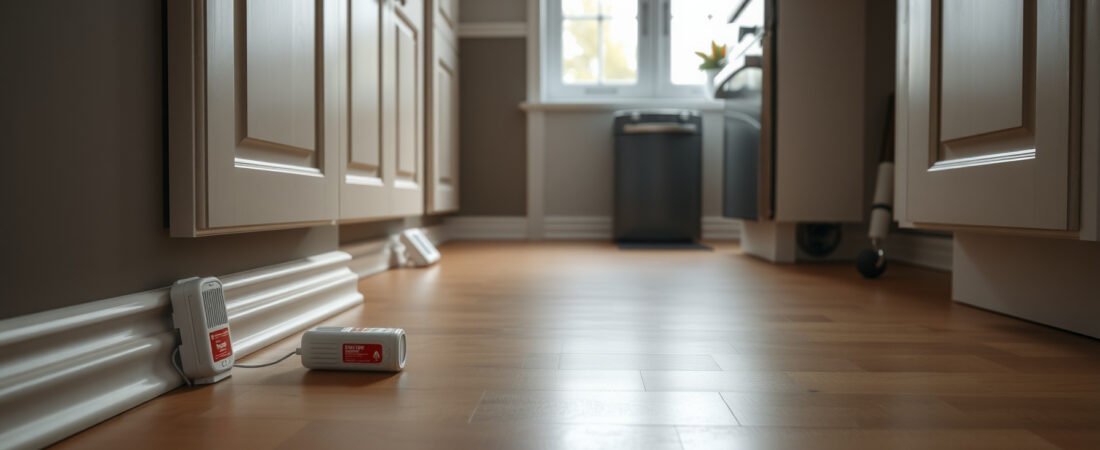
A single professional cockroach treatment almost never ends the infestation — and most pest control companies won’t volunteer that information upfront. That’s the part homeowners consistently get wrong: they expect to pay for one visit, wait a few days, and watch the problem disappear. The reality is more layered than that, and understanding what’s actually happening during and after treatment is what separates people who solve their cockroach problem from people who keep calling back for retreatments every six months.
Why “One and Done” Cockroach Treatments Rarely Work
The biology works against you here. A single female German cockroach — the species behind the vast majority of indoor infestations in the U.S. — produces an ootheca (egg capsule) containing 30–40 eggs roughly every 3–4 weeks. She carries that capsule until just before hatching, which means a treatment that kills the adult doesn’t necessarily reach the eggs. Those nymphs hatch into a pesticide-treated environment, but their exposure depends entirely on how long the residual chemical stays active and whether they make contact with treated surfaces before it degrades.
That’s why most licensed pest control professionals schedule a follow-up visit 2–4 weeks after the initial treatment. The gap is intentional — it targets the generation that hatched after the first application. Skipping the follow-up because “the roaches seem gone” is one of the most common reasons infestations bounce back within 60–90 days. The infestation isn’t gone; the visible adults are.
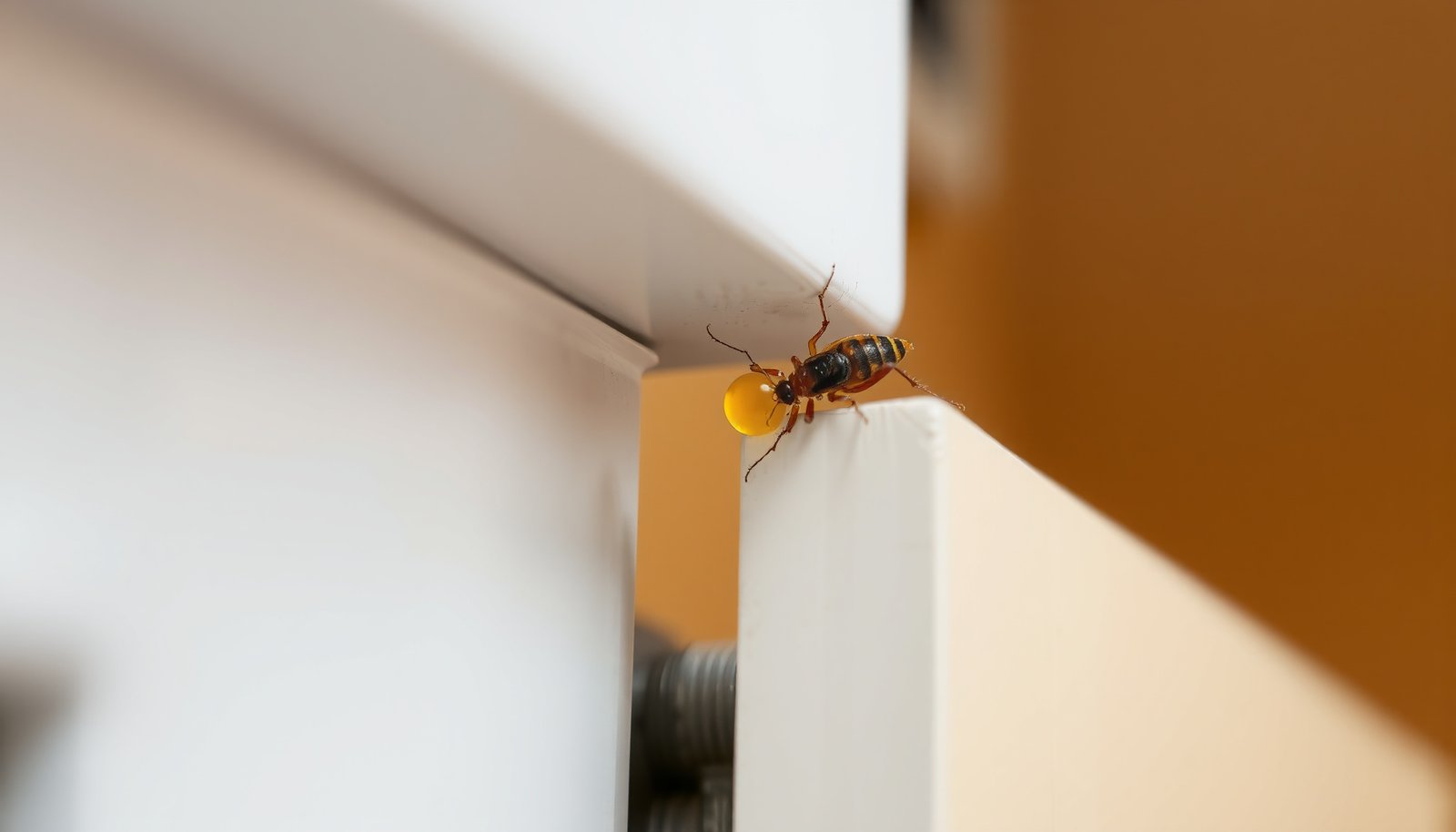
This close-up shows a technician applying gel bait along a cabinet base — a critical placement zone because cockroaches travel cabinet edges as primary harborage routes, and precision matters far more than volume of product applied.
What Happens During the First Treatment Visit?
Picture this: the technician arrives and spends the first 10–15 minutes inspecting before applying anything. They’re looking at harbourage zones — the backs of cabinets under the sink, the gap between your refrigerator motor and the wall, the void beneath your dishwasher, the inside of your electrical outlet boxes. These aren’t places most people think to check, and they’re exactly where cockroaches spend 75–80% of their lives during daylight hours. The inspection isn’t a formality; it determines which tools get used where.
A professional treatment typically combines two or three application methods simultaneously, because no single product covers all infestation scenarios. Here’s what a thorough first visit usually involves:
- Gel bait placement — Small dots of bait applied to cracks, crevices, and harborage areas. Cockroaches eat it, return to the colony, and die there, where other roaches then feed on the contaminated body and feces (this secondary kill mechanism is called horizontal transfer, and it’s one of gel bait’s most underappreciated advantages).
- Insect growth regulator (IGR) application — A chemical that disrupts cockroach molting and reproduction. It doesn’t kill adults outright but sterilizes females and prevents nymphs from reaching reproductive maturity. Without an IGR, you’re only addressing the current generation.
- Residual insecticide spray — Applied to wall voids, under appliances, and perimeter baseboards. Common active ingredients include pyrethroids like cypermethrin or bifenthrin, which remain active on surfaces for 30–90 days depending on product formulation and surface type.
- Dust application in voids — Diatomaceous earth or boric acid dust injected into wall voids and electrical boxes. Dust stays effective indefinitely in dry conditions and reaches areas liquid sprays can’t penetrate.
- Sticky monitoring stations — Left behind after treatment to track population levels and identify lingering harborage zones. These also give the technician data for the follow-up visit.
Why You Might See More Roaches Right After Treatment — Not Fewer
This is the detail that panics most homeowners and it shouldn’t. In the 24–72 hours after a professional treatment, it’s entirely normal — actually expected — to see more cockroach activity than before. The residual insecticide and the IGR disrupt the chemical communication systems cockroaches use to coordinate harborage behavior. Roaches that were hiding become agitated, leave their harborage zones, and expose themselves to treated surfaces they’d otherwise avoid. Seeing dead or dying roaches in the open during this window is the treatment working, not failing.
The concern is if heavy activity continues past the 7–10 day mark with no sign of die-off. At that point, a few things might be happening: the infestation is larger than the initial treatment accounted for, there are harborage points the technician missed (common in apartments where roaches migrate through shared wall voids from neighboring units), or you’re dealing with a population that has developed resistance to a specific active ingredient. Pyrethroid resistance in German cockroach populations has been documented in urban environments across the U.S., which is why rotating chemistry between treatments matters.
“Resistance is the word most homeowners have never heard when they’re trying to figure out why a treatment didn’t work. German cockroaches in multi-unit housing have been under selection pressure from pyrethroids for decades. When a treatment fails, the first question I ask is whether the same chemistry has been used repeatedly in that building. If the answer is yes, we need to switch modes of action entirely — often to an oxadiazine or a diamide — before we’ll see meaningful knockdown.”
Dr. Michael Scharf, Professor of Entomology and Urban Pest Management, Purdue University
What You Need to Do Before and After Treatment for It to Actually Work
Prep work isn’t optional theater — it directly determines treatment efficacy. Gel bait fails when it’s placed near cleaning products, grease residue, or competing food sources, because cockroaches have a preference hierarchy and they’ll ignore bait if something more attractive is available within a few feet. That’s the mechanism behind why a spotless kitchen still gets bait-ignored roaches: one open drain or grease pocket behind a stove burner outcompetes any commercial gel formulation.
Here’s what actually matters before and after a professional cockroach treatment:
- Clear under-sink and cabinet spaces — Move stored items out so the technician has unobstructed access to harborage zones. This isn’t about tidiness; it’s about whether bait can be placed at the correct 4–6 inch intervals along cabinet edges.
- Don’t clean treated surfaces for at least 1–2 weeks — Wiping down baseboards and cabinet interiors removes residual insecticide. Most treatments lose 60–80% of their effectiveness if surfaces are cleaned within 72 hours of application.
- Remove pet food and water bowls from treated areas overnight — Both compete with gel bait and can create exposure risks for pets depending on the active ingredient used.
- Don’t apply your own sprays or bug bombs after treatment — Aerosol repellents will push cockroaches away from treated bait stations and dramatically reduce horizontal transfer kill rates. This is one of the most common ways homeowners accidentally undo a professional treatment.
- Fix moisture sources before the technician arrives — German cockroaches need water every 24–48 hours to survive. A dripping pipe or high-humidity cabinet is a survival resource that works directly against any population reduction effort.
Pro-Tip: If you have a floor drain, utility sink drain, or slow bathroom drain in the treated area, address it before your appointment. Drain environments can harbor roaches and create re-introduction points that look like treatment failure. For drain-related pest issues, check out best drain fly treatments including gels, sprays, and enzyme cleaners — the same organic buildup that attracts drain flies also creates harborage conditions for cockroaches.
How Long Does a Professional Cockroach Treatment Actually Take to Work?
Honest answer: it depends on the severity of the infestation, the species involved, and the building type. That’s not a dodge — those three variables genuinely produce different timelines. Here’s what typical treatment progressions look like across different scenarios:
| Infestation Level | Building Type | Expected Resolution Timeline |
|---|---|---|
| Light (occasional sightings, under 10 roaches/week) | Single-family home | 2–3 weeks after initial treatment + one follow-up |
| Moderate (daily sightings, evidence in multiple rooms) | Single-family home or condo | 4–8 weeks with 2–3 treatment visits |
| Heavy (large numbers, daytime activity, visible egg cases) | Apartment or multi-unit building | 3–6 months; ongoing monitoring required |
Apartment infestations take longer not because the treatments are less effective, but because the infestation exists across multiple units simultaneously. A technician treating your unit while the adjacent units remain untreated is essentially bailing out a boat with an active leak. Re-infestation through shared plumbing chases and wall voids can happen within days of a successful treatment if neighboring units aren’t addressed. This is a building management problem as much as a pest control problem, and it’s worth raising explicitly with your property manager — something the existing piece on how to get rid of drain flies in 48 hours or less touches on indirectly when discussing shared drain systems in multi-unit buildings.
One thing most pest control writeups won’t tell you: the species being treated matters as much as the severity. American cockroaches (the large, reddish-brown ones) are generally easier to eliminate than German cockroaches because they’re less reproductively prolific and spend more time outdoors. German cockroaches — the small, fast ones that live entirely indoors — have shorter generation times, higher reproductive rates, and greater potential for insecticide resistance. Treating them identically is a mistake many generalist technicians make.
Getting the follow-up visits right is ultimately what separates a resolved infestation from a managed one. The treatment itself is the beginning of the process, not the endpoint — and approaching it that way, with realistic timelines and active cooperation on your end, is what actually gets your kitchen back.
Frequently Asked Questions
How long does a professional cockroach treatment take?
Most professional cockroach treatments take between 30 minutes and 2 hours, depending on the size of your home and how bad the infestation is. A severe infestation in a larger home can push that closer to 3 hours. Your technician will typically need access to the kitchen, bathrooms, and any utility areas where roaches tend to hide.
How long after professional cockroach treatment will roaches be gone?
You’ll usually see dead roaches within the first 24 to 72 hours after treatment, but it can take 2 to 6 weeks to fully eliminate the infestation. Don’t panic if you see more roaches right after treatment — that’s normal, since the products flush them out of hiding. Most pest control companies will schedule a follow-up visit around 2 to 4 weeks later to check progress.
Do I need to leave my house during cockroach extermination?
It depends on the treatment method your exterminator uses. Gel baits and insect growth regulators typically don’t require you to leave, but if the technician uses a spray or fumigation, you’ll likely need to stay out for 2 to 4 hours while surfaces dry. Always ask your pest control company ahead of time so you can make arrangements for kids and pets.
How should I prepare my home for a cockroach exterminator?
Clear out the areas under your kitchen and bathroom sinks, pull appliances away from walls, and store any food, dishes, and pet bowls in sealed containers or a separate room. You should also empty your cabinets if your technician is treating inside them. The more access they have to baseboards, corners, and dark spaces, the more effective the treatment will be.
How many treatments does it take to get rid of cockroaches?
Most infestations require at least 2 to 3 treatments spaced 2 to 4 weeks apart to fully break the roach life cycle. A single treatment rarely does the job because eggs aren’t always killed on contact, and newly hatched nymphs can start the cycle over. German cockroaches, which are the most common indoor species in the US, are especially tough and almost always need multiple visits.
Disclaimer: This article is for informational purposes only. Pest control costs, timelines, and outcomes vary widely depending on the pest, the severity of the infestation, your location, and the company you hire. Always get multiple quotes and ask for a written inspection report before agreeing to a treatment plan.