
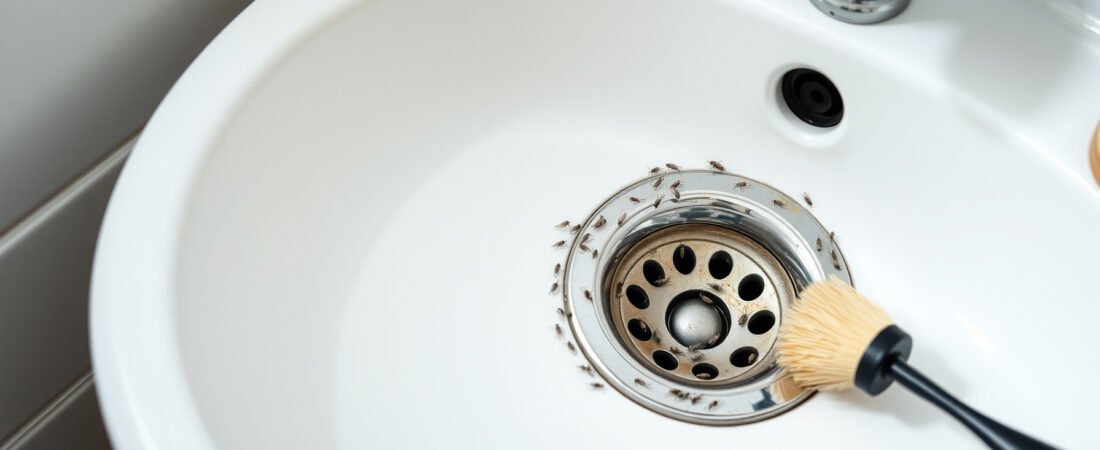
Pouring bleach down your drain will not kill drain flies. That’s the fix you’ll find on half the internet, and it almost never works — not because bleach is too weak, but because you’re treating the wrong thing entirely. Drain flies don’t live in standing water. They live in the thick, decomposing organic film that coats the inside of your pipes, and bleach dilutes and washes past that layer too quickly to destroy it. Get that one fact straight and everything else about eliminating drain flies in 48 hours or less falls into place.
Why Are Drain Flies Suddenly in Your Home?
Drain flies — scientifically Psychoda alternata, sometimes called moth flies or sewer gnats — are tiny, fuzzy-winged insects about 1/8 inch long that look almost like miniature moths when they rest on a wall. They don’t fly in from outside looking for food. They breed right inside your plumbing infrastructure, specifically in the gelatinous slime layer (called a biofilm) that accumulates inside slow or rarely used drains. A single neglected drain can sustain hundreds of adults inside a week.
The reason populations seem to explode overnight is their reproductive speed. A female drain fly lays 10 to 200 eggs at a time directly in that biofilm, and those eggs hatch in 32 to 48 hours under warm conditions. The larval stage lasts only 9 to 15 days before they pupate and emerge as adults. One overlooked bathroom drain in a warm home can produce three full generations in under a month. That’s not a pest problem — that’s a breeding factory running inside your wall.
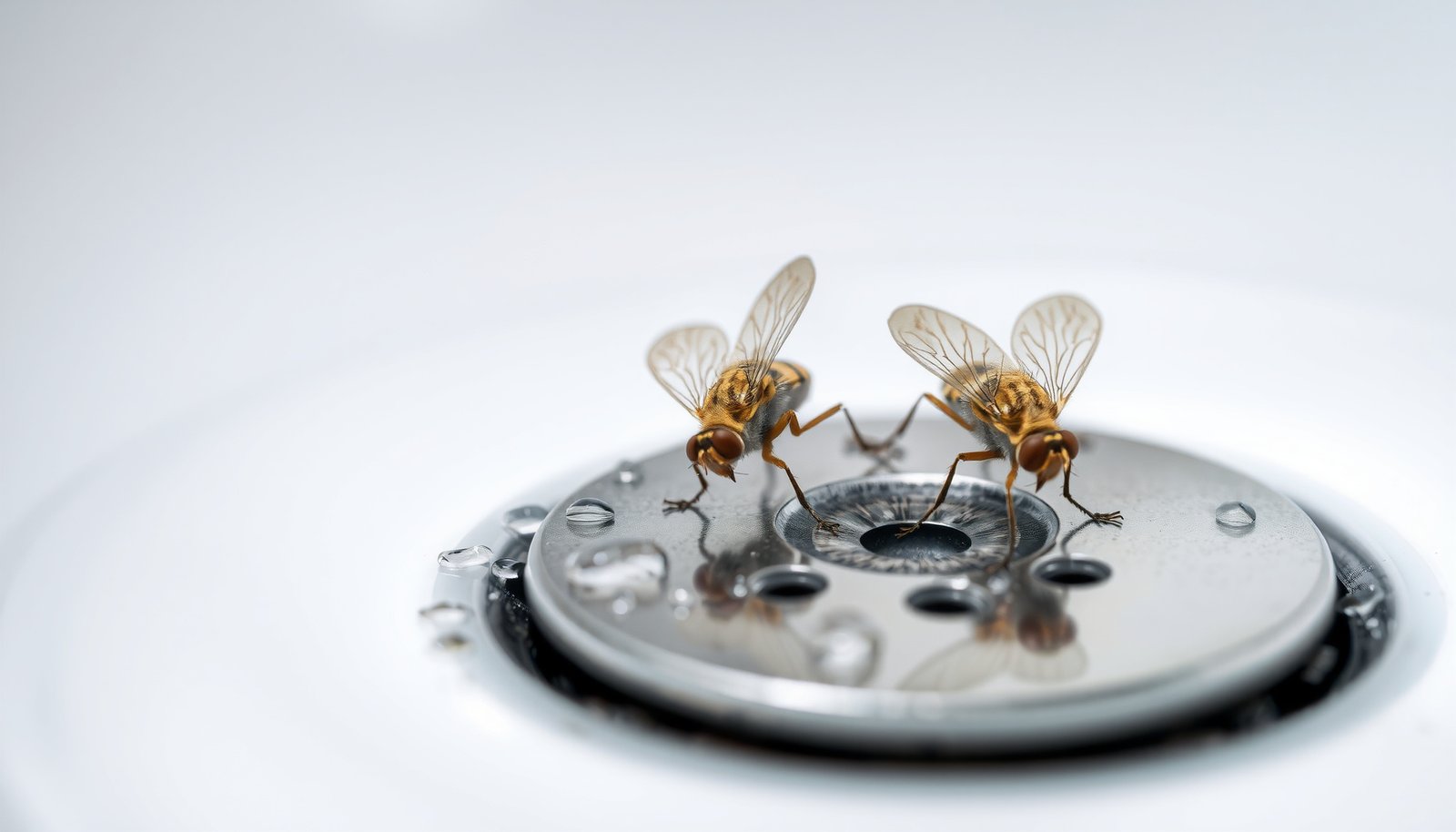
This close-up shows the distinctive fuzzy wings and moth-like body shape of an adult drain fly — knowing exactly what you’re looking at matters because drain flies are frequently misidentified as fruit flies, which require a completely different treatment approach.
How Do You Confirm It’s Actually Drain Flies (Not Fruit Flies)?
This is where a lot of people waste two weeks treating the wrong pest. Fruit flies are reddish-brown with red eyes and hover near overripe fruit or garbage cans. Drain flies are gray to black, hold their wings flat over their body like a tent when at rest, and almost always appear near a sink, shower, or floor drain rather than near food. Here’s a quick field test: tape a piece of clear tape, sticky side down, over your suspect drain overnight. If you peel it up the next morning and find tiny fuzzy bodies stuck to it, you’ve confirmed drain flies — and you know exactly which drain to target.
The distinction matters because the treatment for fruit flies focuses on eliminating food sources and adult traps, while drain fly treatment focuses on physically destroying the biofilm inside the pipe. Treating a drain fly infestation with a fruit fly trap is like putting out a fire with a spray bottle — you’ll catch a few adults, but the source keeps producing more. Do the tape test on every drain in your home, not just the obvious ones. Basement floor drains, laundry sink drains, and even the overflow hole inside your bathroom sink basin are all common culprits that get missed.
The 48-Hour Elimination Method: What Actually Works
The 48-hour timeline is achievable, but it requires doing two things simultaneously: destroying the biofilm mechanically and following up with a biological or enzymatic drain treatment to eliminate what you missed. Relying on either step alone will leave you fighting drain flies for weeks. Here is the complete sequence, in order:
- Boiling water flush: Pour a full kettle of boiling water slowly down the drain. This softens and partially dislodges the biofilm. Do this twice, 30 minutes apart, not all at once.
- Mechanical scrubbing: Use a long-handled drain brush or a pipe-cleaning brush to physically scrub the interior walls of the drain pipe as far down as you can reach — at least 6 to 8 inches. This step is non-negotiable. Enzymes and gels cannot fully penetrate a thick, undisturbed biofilm.
- Enzymatic drain gel application: Apply an enzymatic or bacterial drain cleaner (products containing Bacillus strains work well) and let it sit for a minimum of 8 hours — overnight is ideal. These products digest organic matter at the microbial level and reach spots brushes can’t.
- Repeat the enzymatic treatment: Apply the drain gel a second time the following evening. Two applications 24 hours apart are consistently more effective than a single heavy dose.
- Trap remaining adults: Set a simple DIY trap near the drain — a small bowl of apple cider vinegar covered tightly with plastic wrap, a few small holes poked in the top. Adults are drawn in and can’t escape. This handles the flies already in your home while the drain treatment runs.
- Seal the drain at night: Place a piece of duct tape or an upside-down bowl over the drain opening each night for 3 to 4 nights. This traps any emerging adults underground and confirms when activity has stopped.
The reason this sequence works inside 48 hours is that you’re attacking every life-stage at once — larvae and eggs in the biofilm, pupae still developing, and adults already flying around your bathroom. Most DIY approaches only target one stage, which is exactly why people treat the same drain three times and still see flies two weeks later.
Pro-Tip: Don’t use chemical drain cleaners like Drano as a substitute for enzymatic products. Chemical drain openers are designed to dissolve clogs, not digest biofilm, and their caustic formulas can actually kill the beneficial bacteria in enzymatic treatments if you apply both. Stick to enzymatic or bacterial-based products specifically labeled for drain fly or organic buildup removal — look for words like “drain maintainer” or “biological drain cleaner” on the label.
Which Drains Are the Hidden Sources You’re Probably Missing?
Picture this: you’ve treated your bathroom sink twice, you’ve scrubbed and gelled the shower drain, and drain flies keep appearing. Three days later you find them clustering near the utility sink in the basement — a drain nobody has used in four months. Stagnant, rarely used drains are the number-one reason drain fly infestations persist after treatment. Biofilm builds fastest in drains with intermittent or no water flow, because there’s no regular flushing to disrupt it. Running a drain once a week is not enough to prevent colonization in warm weather.
Here’s a complete list of drain locations homeowners routinely overlook when treating for drain flies:
- Basement floor drains — often dry or rarely flushed, with deep organic buildup that can go undisturbed for months or years
- Sink overflow holes — the small hole near the top of your bathroom basin that prevents flooding; it’s a breeding site almost nobody cleans
- Condensate drain lines on HVAC systems and dehumidifiers — slow drip rates create perfect low-flow biofilm conditions
- Refrigerator drip trays — warm, damp, dark, and almost never cleaned; a textbook drain fly habitat
- Garage utility sinks — used occasionally, dried out between uses, rarely thought of as a pest source
- Wet or saturated soil under a slab — in severe cases, drain fly breeding happens in the soil itself around a cracked sewer line, not just inside your pipes
That last one — breeding in soil around a damaged sewer line — is the honest nuance most articles skip over. In older homes with clay or cast-iron drain pipes, a small crack can allow persistent moisture and organic matter to accumulate in the surrounding soil, and drain flies can breed there even after every interior drain in the home has been treated. If you’ve done everything right and the flies keep coming back after 10 to 14 days, a plumber’s inspection for a slow sewer leak is worth considering, particularly if your home is more than 40 years old. This is also a situation where your landlord’s obligations become relevant — if you’re renting and a sewer line defect is sustaining the infestation, that’s a structural issue that falls outside what a tenant can reasonably fix. Understanding who’s responsible for pest problems tied to building maintenance is something Is a Landlord Responsible for Mice and Roaches? What the Law Says covers in useful detail.
When Does a Drain Fly Problem Require a Professional?
The vast majority of drain fly infestations are entirely DIY-solvable. Drain flies don’t transmit disease, don’t bite, don’t damage structural components of your home, and don’t require pesticides in most cases. But there are specific scenarios where calling a pest control company or a plumber makes more practical sense than continuing to treat on your own.
| Situation | Best Next Step | Why |
|---|---|---|
| Infestation limited to 1–2 interior drains | DIY enzymatic treatment + mechanical scrubbing | Fully addressable without chemicals or professionals |
| Flies return within 2 weeks after full treatment | Inspect for hidden drains; consider plumber | Likely a secondary breeding site or slow sewer leak |
| Flies present but no drain source found after tape test | Pest control inspection | May be a different pest (fungus gnats, phorid flies) requiring different treatment |
| Infestation in a commercial kitchen or multi-unit building | Licensed pest control professional | Scale, liability, and access to restricted-use products justify professional involvement |
One thing worth knowing: pest control companies can apply residual insecticides to drains (products containing pyrethrins or IGRs — insect growth regulators), and IGRs in particular are effective because they prevent larvae from maturing into breeding adults rather than just killing existing ones. A single IGR application to a problem drain can break the reproductive cycle for 30 days or more. That said, you can achieve the same outcome with a quality enzymatic product applied consistently — the professional advantage is mostly in diagnosing hard-to-find sources, not in access to dramatically more powerful chemicals. And if you’re dealing with a mixed pest situation — say, drain flies in the bathroom and something else in the kitchen — proper identification is everything. You’d approach cockroach identification completely differently than a drain fly situation, even if both insects show up near moisture.
“The biggest mistake I see homeowners make with drain flies is treating only the visible drain opening and skipping the mechanical step entirely. The biofilm these flies breed in can be a quarter-inch thick in a neglected pipe — enzymatic products need physical disruption to penetrate it effectively. Scrub first, treat second, and check every drain in the structure, not just the obvious ones. People are always surprised when I point to the HVAC condensate line.”
Dr. Marcus Ellery, Board-Certified Entomologist and Urban Pest Management Specialist, University Extension Service
Drain flies are genuinely one of the easier pest problems to solve when you understand the biology behind them. The 48-hour window isn’t a marketing promise — it reflects how quickly you can collapse both the breeding habitat and the adult population when you treat methodically. Once this infestation is behind you, the real prevention is simple: run water through every drain in your home at least once a week, use an enzymatic drain cleaner monthly in low-use drains, and clean that bathroom sink overflow hole every time you clean the basin. The flies don’t come back when there’s nothing left to breed in.
Frequently Asked Questions
how to get rid of drain flies fast
Pour boiling water down the drain 1-2 times per day for about a week to kill eggs and larvae on contact. Follow that up with a gel drain cleaner like American Bio-Sciences DF 5000, which breaks down the organic sludge drain flies breed in. Most people see a major drop in adult flies within 48 hours when they combine both methods.
what causes drain flies in the house
Drain flies breed in the thin layer of organic slime — hair, grease, soap scum, and bacteria — that builds up on the inside of slow or rarely used drains. You’ll typically find them in bathroom sinks, shower drains, and basement floor drains that sit stagnant for long periods. Even a small amount of standing moisture and buildup is enough to support a full infestation.
how do I know if I have drain flies or fruit flies
Drain flies are small and fuzzy with moth-like wings they hold flat over their bodies, while fruit flies are smooth, round, and have distinctly red eyes. Drain flies almost always stay near sinks, showers, or floor drains, whereas fruit flies cluster around ripe fruit, trash cans, and recycling bins. If you’re seeing tiny flies near your bathroom drain rather than your kitchen counter, it’s almost certainly drain flies.
do drain flies go away on their own
They won’t go away on their own as long as the breeding source — the organic buildup inside your drain — is still there. Adult drain flies only live about 20 days, but they lay up to 300 eggs at a time, so the population keeps replacing itself. You have to physically clean out the drain to break the cycle.
are drain flies harmful to humans
Drain flies don’t bite, sting, or transmit diseases directly to humans, so they’re not dangerous in the way mosquitoes or ticks are. That said, their decomposing body parts can trigger asthma or allergic reactions in sensitive people, especially in enclosed spaces. They’re more of a sanitation red flag than a health emergency, but you still want to deal with them quickly.
Disclaimer: This article is for informational purposes only and isn’t a substitute for professional pest control advice. Always read and follow the product label instructions exactly — label directions are legally binding and vary by brand and active ingredient. Keep all pesticides, baits and traps away from children and pets, ventilate treated areas as directed, and consider calling a licensed pest control professional if an infestation is large, recurring, or involves a structural pest like termites or carpenter ants.