
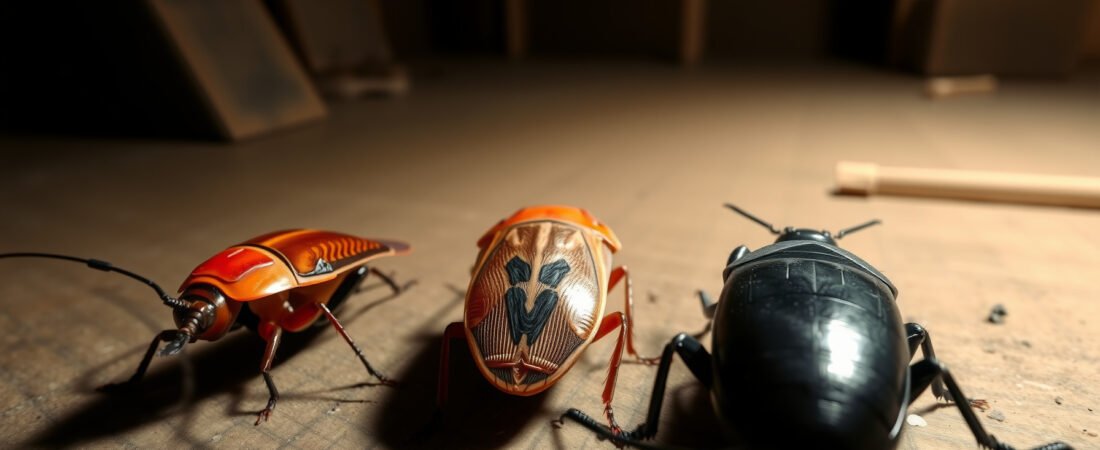
Three cockroaches scatter under your stove at 2am, and you catch just enough of a glimpse to wonder: are these the kind that stay in the kitchen, or the kind that’s already colonizing your walls? That question matters more than most pest control content will tell you. The species of cockroach in your home determines how fast the infestation grows, where it’s hiding, what bait will actually work, and whether DIY treatment has any realistic chance of succeeding. Most homeowners waste weeks on the wrong product because they misidentified the roach — and every major pest control guide glosses right over the part that trips people up most: German cockroaches look almost nothing like the other two, yet their infestations are exponentially harder to control.
Why Getting the Species Wrong Leads to Treatments That Fail
Here’s the thing almost no one says plainly: the three cockroach species that most commonly invade U.S. homes require fundamentally different treatment strategies. Spraying a residual pesticide around baseboards might knock back American cockroaches coming in from outside, but it will do almost nothing against an established German cockroach population living inside your cabinetry. These insects have different biology, different harborage preferences, and different reproductive rates — treating them interchangeably is the single biggest reason infestations persist for months after a homeowner starts “treating” them.
The other piece people get wrong is assuming that one cockroach means one cockroach. German cockroaches, in particular, are almost never solitary — a single female can produce an egg capsule (called an ootheca) carrying 30–40 eggs, and she may produce 4–8 of those capsules in her lifetime. By the time you see your first live German cockroach during daylight hours, there’s a good chance hundreds are already hiding in wall voids, under appliance motors, and inside cabinet hinges within a few feet of where you’re standing.
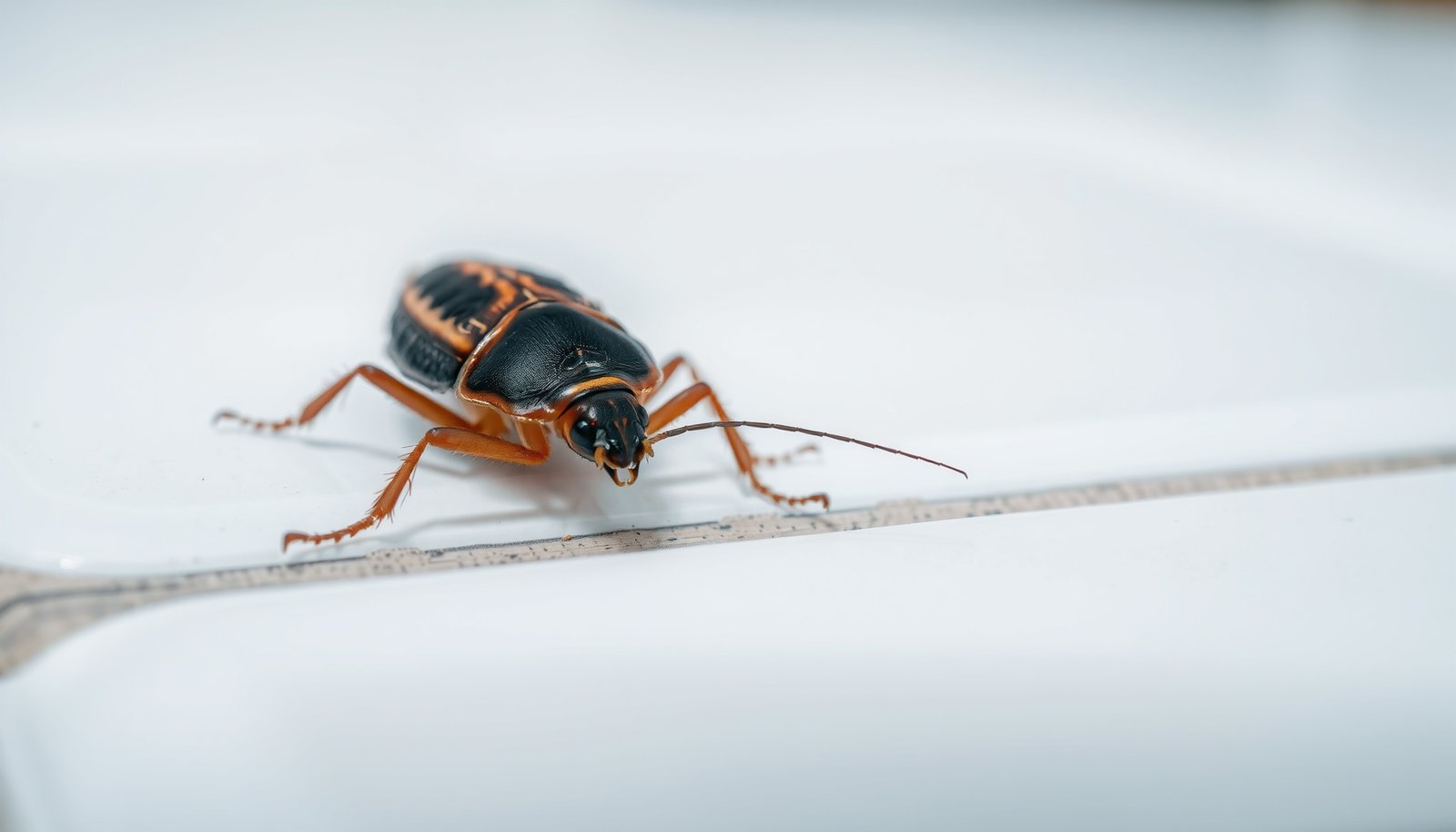
This side-by-side comparison shows the three species at roughly the same scale — notice how dramatically different the size, coloration, and wing coverage are between them, which is exactly why getting a clear look (even a photo on your phone) before you buy anything is worth the extra 60 seconds.
American vs German vs Oriental Cockroach: A Direct Visual Comparison
Size alone gets you 80% of the way to a correct ID. American cockroaches are the biggest of the three — adults typically measure 1.5 to 2 inches long, making them unmistakably large. They’re reddish-brown with a distinctive yellowish figure-8 pattern on the back of their head (the pronotum). German cockroaches are noticeably smaller, ranging from about 1/2 to 5/8 of an inch — roughly the size of a thumbnail — and tan to light brown, with two dark parallel stripes running down the pronotum. Oriental cockroaches fall in the middle at about 1 inch long and are the darkest of the three, nearly black or very dark brown, with a shiny, almost lacquered appearance.
Wings cause a lot of confusion, so here’s how to read them cleanly. American cockroaches have full wings and can fly short distances, though they rarely do — most sightings are ground-level runners. German cockroaches have wings but almost never fly; the wings don’t extend past the abdomen. Oriental cockroaches are the easiest to sort out on wings: males have short wings that cover about three-quarters of their abdomen, but females have only tiny wing pads and look nearly wingless. None of the three are strong, persistent fliers the way some tropical species are.
| Feature | American Cockroach | German Cockroach | Oriental Cockroach |
|---|---|---|---|
| Adult Length | 1.5–2 inches | ½–⅝ inch | ~1 inch |
| Color | Reddish-brown | Tan / light brown | Dark brown / black |
| Distinguishing Mark | Yellow figure-8 on head | Two dark stripes on pronotum | Shiny, glossy body |
| Flight Capable? | Rarely flies | Essentially never | No (females wingless) |
Where Each Species Hides — and Why That Location Tells You Which One You Have
Harborage location is the shortcut ID tool that almost no one talks about, and it’s honestly more reliable than trying to measure a cockroach in your kitchen at midnight. German cockroaches are almost exclusively indoor species — they’re thermophilic, meaning they gravitate toward warmth, so you’ll find them within a few feet of heat sources: behind refrigerators, inside microwave cavities, under the motor housing of dishwashers, and inside cabinet hinges that are close to the stove. If your roach sighting happened in the kitchen or bathroom and the roach was small and pale tan, it’s almost certainly German.
American cockroaches, despite their name, are actually transplants from Africa that entered North America via trade ships — and their biology still reflects a preference for warm, damp, semi-outdoor environments. They’re the roaches you find in basements, floor drains, sewer access points, under sinks connected to exterior pipes, and occasionally in attics. Seeing a large reddish-brown roach that seems to have come from nowhere, especially in a ground-floor bathroom or laundry room, almost always points to an American cockroach coming in from the exterior or from plumbing infrastructure. Oriental cockroaches go even darker and damper — they’re often called “water bugs” because they prefer temperatures below 84°F and are frequently found in crawl spaces, under refrigerators near floor drains, in damp basements, and in leaf litter immediately outside foundation gaps.
Pro-Tip: Before buying any product, spend 5 minutes with a flashlight checking the area directly behind your refrigerator’s compressor and under the motor housing of your dishwasher. If you find live small roaches or shed skins there, you have German cockroaches — and you need gel bait placed in tight harborage zones, not a spray around the perimeter.
How Each Species Gets Into Your Home — and Which One Is Actually Your Fault
Picture this: you move into a new apartment, keep it spotless, and three weeks later you find a cockroach in your kitchen. A neighbor will imply your cleaning habits are the problem. They’re almost certainly wrong. German cockroaches — the most common species found in multi-unit buildings across the U.S. — are almost never introduced through structural gaps or cracks in a building. They hitchhike. They come in inside secondhand appliances, grocery bags, cardboard boxes, used furniture, and in the belongings of a new tenant moving into an adjacent unit. Cleanliness has almost no bearing on whether German cockroaches appear; it only affects how fast they reproduce once they’re in.
American and Oriental cockroaches are different — they genuinely do enter from outside through structural vulnerabilities. American cockroaches enter through gaps around plumbing penetrations, utility conduits, crawl space vents, and gaps under exterior doors. Oriental cockroaches frequently enter at or below grade level through foundation cracks, sump pump openings, and gaps where pipes enter basement walls. For both of these species, a structural inspection and targeted sealing is a legitimate first-line strategy. With German cockroaches, sealing entry points accomplishes almost nothing if the population is already inside. If you’re a renter dealing with an infestation that predates your tenancy, understanding whether your landlord is legally responsible for the roach problem is a more productive starting point than weather-stripping your door.
“The misidentification problem is real and it’s costly. I regularly see homeowners who’ve spent two months using perimeter sprays on what turns out to be a German cockroach infestation — a species that lives entirely indoors and is essentially unaffected by exterior treatments. A ten-second look at size and stripe pattern would have saved them the time and the money.”
Dr. Patricia Calloway, Board-Certified Entomologist and University Extension Specialist in Urban Pest Management
Which Species Is Hardest to Eliminate — and What Actually Works for Each
German cockroaches win this category by a wide margin, and it’s not close. Their reproductive rate is unmatched among common household species — a single mated female can theoretically give rise to tens of thousands of descendants within a year under ideal conditions. More practically relevant: German cockroaches have developed resistance to many of the pyrethroids and carbamates that make up the active ingredients in most consumer sprays. Spraying a German cockroach population with a repellent insecticide doesn’t kill it — it disperses it, pushing cockroaches deeper into walls and into adjacent units, which can actually make the infestation worse and harder to treat. Gel bait (fipronil, indoxacarb, or imidacloprid-based) applied directly inside harborage zones is the method with the strongest real-world evidence behind it.
American and Oriental cockroaches are generally easier to address, partly because their populations tend to be smaller and their entry routes are addressable. The treatment approach for each breaks down like this:
- German cockroach: Gel bait in harborage zones (behind appliances, inside cabinet hinges, under sink pedestals) combined with insect growth regulators (IGRs) to break the reproductive cycle — not perimeter sprays.
- American cockroach: Locate and seal exterior entry points around plumbing penetrations and utility conduits; apply boric acid or gel bait inside floor drains and under appliances near entry zones; address moisture sources in basements and crawl spaces.
- Oriental cockroach: Reduce moisture aggressively — fix leaking pipes, improve crawl space ventilation, clear decaying organic material from the perimeter; apply residual insecticide around the foundation exterior and inside crawl space entry points.
- All species: Eliminate competing food sources — open pet food bags, uncovered trash, unsealed pantry items, and grease buildup behind stoves — to reduce bait competition and make gel treatments more effective.
- Multi-unit buildings (German cockroach specifically): Coordinate treatment across adjacent units; treating a single apartment while neighboring units remain untreated produces temporary results at best, because cockroaches reinfest through shared wall voids within weeks.
One honest nuance: the severity of a German cockroach infestation matters enormously when deciding whether DIY treatment is realistic. A small, early-stage population caught within the first few weeks responds well to gel bait alone. A heavy infestation in an older multi-unit building with shared wall voids and a history of treatment-resistant populations is a different situation entirely — and there’s no shame in recognizing that professional treatment combined with building-wide coordination is the only approach with a real chance of success. After professional treatment, knowing exactly how long to stay out of the treated area and what to do in the days after makes a measurable difference in whether the treatment holds.
Secondary Signs to Confirm Your ID When You Can’t Get a Clear Look at the Roach
Sometimes all you catch is movement — the roach is gone before you can register size or color. Secondary evidence fills in the gap. Droppings from German cockroaches look like ground black pepper or coffee grounds scattered in tight clusters near harborage zones; they’re tiny, about 1mm long, and you’ll typically find them inside cabinet corners, along the edges of drawer liners, and around appliance motor housings. American cockroach droppings are larger — roughly 2mm, cylindrical, and blunt-ended with ridges running lengthwise. Oriental cockroach droppings are similar in size to American but darker and frequently found near floor drains, in basement corners, or along the lower edges of walls near moisture sources.
Egg cases (oothecae) are another reliable differentiator. Finding them is one of the most useful things you can do because their shape and color differ noticeably between species:
- German cockroach ootheca: Tan to light brown, about 1/4 inch long, carried by the female until just before hatching — often found tucked in tight cracks near the refrigerator or under cabinet hardware.
- American cockroach ootheca: Dark brown, about 3/8 inch long, deposited in protected areas near food sources — under shelving units, inside basement wall cracks, near garbage storage areas.
- Oriental cockroach ootheca: Reddish-brown to dark brown, about 3/8 inch long and noticeably fatter than the American variety, typically found in damp locations near floor level.
- Musty odor: All three species produce a characteristic smell from their aggregation pheromones, but German cockroach infestations produce the strongest and most distinctive musty, oily odor — noticeable even in moderate infestations when you open the cabinet beneath a kitchen sink.
- Shed skins (exuvia): Cockroaches molt 5–6 times before reaching adulthood; finding pale, translucent shed skins in concentrated clusters points to an established harborage site, not just a wandering individual.
There’s a counterintuitive aspect to roach sightings that most people have backwards: seeing cockroaches during daylight hours is actually a worse sign than finding them only at night. Cockroaches are nocturnal by nature; daytime activity — especially in German cockroaches — typically signals that the population has grown dense enough that competition for harborage space is forcing individuals out into the open. One daytime sighting is worth more alarm than a dozen nighttime ones.
Get the species right first, and everything else — where to look, what to buy, whether to call a professional — becomes a much cleaner decision. The species ID isn’t just academic trivia. It’s the single variable that determines whether your treatment plan has any chance of working at all.
Frequently Asked Questions
What does an American vs German vs Oriental cockroach look like?
American cockroaches are the largest of the three, growing up to 2 inches long, reddish-brown with a yellowish figure-8 pattern behind their head. German cockroaches are much smaller at about half an inch, tan or light brown with two dark stripes running down their back. Oriental cockroaches are shiny black and about 1 inch long, giving them a beetle-like appearance that makes them easy to confuse with other insects.
which cockroach is hardest to get rid of German or American or Oriental?
German cockroaches are by far the hardest to eliminate because they reproduce the fastest — a single female can produce up to 30,000 offspring in a year. They also develop pesticide resistance faster than the other two species and rarely leave indoors to forage, meaning treatments have to be thorough and consistent. American and Oriental cockroaches are easier to control because they spend more time outdoors and don’t breed as aggressively inside your home.
where do American German and Oriental cockroaches hide in a house?
German cockroaches stick close to food and moisture, so you’ll almost always find them in kitchens and bathrooms, tucked inside cabinet hinges, under appliances, and behind refrigerators. American cockroaches prefer warm, damp areas like basements, crawl spaces, laundry rooms, and floor drains. Oriental cockroaches gravitate toward the coolest and dampest spots in a home, including basements, under sinks, and around leaky pipes — they’re often found at or below ground level.
can American or Oriental cockroaches fly unlike German cockroaches?
American cockroaches have fully developed wings and can fly, especially when it’s hot outside, though they usually prefer to run. German cockroaches have wings but almost never fly — they rely entirely on crawling and hitchhiking on items like grocery bags and boxes to spread. Oriental cockroaches are essentially flightless; females have no functional wings at all, and males have short wings that cover only about 75% of their abdomen but still don’t fly.
how do I know if I have a German cockroach infestation vs American or Oriental?
If you’re seeing cockroaches inside your kitchen or bathroom during the day, that’s a strong sign of a German cockroach infestation since daytime sightings usually mean the population is large and overcrowded. American cockroaches tend to appear occasionally, often wandering in from outside or through drains, so seeing one doesn’t automatically mean you have an infestation. Oriental cockroaches are usually found near floor-level drains or in damp basements, and their presence is often accompanied by a strong musty odor that’s noticeably worse than the other two species.