
Forty-six states have explicit habitability laws that allow tenants to break a lease over pest infestations — but the vast majority of renters who actually try this end up getting sued for back rent anyway. Not because the law wasn’t on their side. Because they skipped one specific step that courts consider non-negotiable before any lease termination is legally defensible. That’s the gap this article closes.
Most guides on this topic tell you “check your state’s warranty of habitability” and leave it there. What they don’t tell you is that the legal right to break a lease over pests is almost always conditional — and the conditions aren’t about how bad the infestation is. They’re about what you did (and documented) before you left.
The Right to Break a Lease Exists — But It’s Triggered by Landlord Inaction, Not the Infestation Itself
Here’s the part most tenants get backwards: a roach infestation alone doesn’t give you legal grounds to walk away from a lease. What gives you those grounds is your landlord’s failure to act after you’ve given them proper written notice. The infestation is the condition; the landlord’s inaction is the legal trigger. That distinction has cost people thousands in civil court judgments.
Under the implied warranty of habitability — which exists in some form in nearly every U.S. state — landlords are legally required to maintain rental units in a livable condition. Pest infestations severe enough to threaten health or safety generally qualify as habitability violations. But “qualify” doesn’t mean “automatic exit clause.” Courts want to see a paper trail showing the landlord had a reasonable opportunity to fix the problem and chose not to.

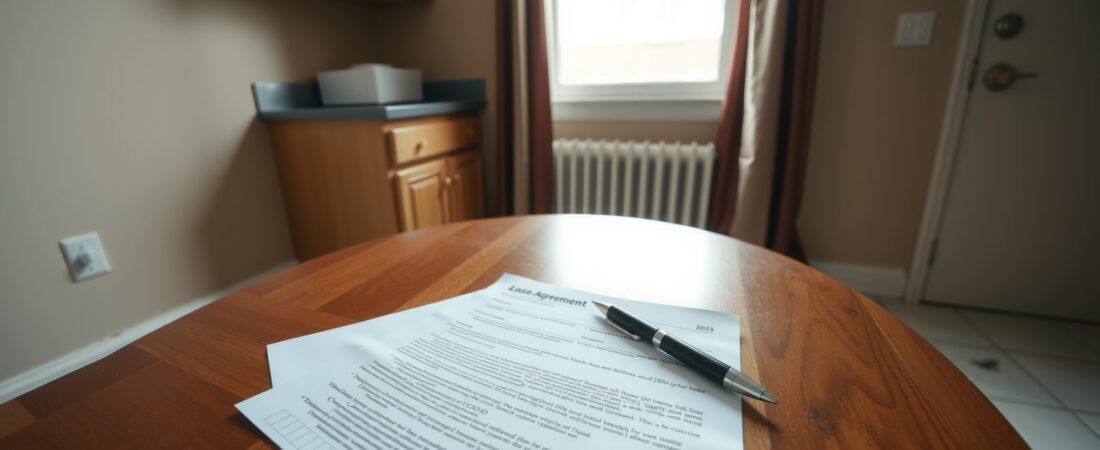
This image shows a written notice letter alongside pest evidence documentation — exactly the kind of paper trail a tenant needs before any lease termination will hold up in court.
What Counts as a “Qualifying” Infestation Under Habitability Law?
Not every pest sighting clears the legal bar. A single mouse in a rural property is treated very differently from a German cockroach colony that’s spread across multiple units — and courts are aware of that difference. Severity, persistence, and health risk all factor in. A female German cockroach produces 30–40 eggs per capsule and can generate hundreds of offspring in a single month, which is why a cockroach problem that goes unaddressed for 60 days looks dramatically different to a judge than one that was reported last week.
Generally speaking, infestations that courts have recognized as habitability violations include: active rodent infestations (mice can squeeze through a gap as small as 1/4 inch, making full exclusion nearly impossible without professional intervention), bed bugs spreading between units, cockroach infestations that contaminate food preparation areas, and termite damage that compromises structural integrity. A minor fruit fly issue near a drain — the kind that responds to enzyme treatments and basic cleaning — almost certainly won’t qualify on its own. The threshold is whether a reasonable person would consider the unit unfit to live in.
The Exact Steps You Must Take Before Legally Breaking a Lease
This is where most tenant guides wave their hands and say “follow your state’s procedures.” Here’s what those procedures actually look like in practice, in the order they have to happen. Skipping any step — or doing them out of order — can invalidate your legal standing even if the infestation is genuinely terrible.
- Document the infestation with dated photos and video. Timestamp everything. If possible, photograph pest droppings, damage, or live pests in multiple locations. Termite droppings (frass) and rodent feces are particularly useful because they’re hard to dispute.
- Send written notice to your landlord via certified mail. Email alone may not be sufficient in some states. The notice must describe the infestation specifically, reference the habitability obligation, and request remediation within a defined timeframe — typically 14–30 days depending on your state.
- Keep a log of every landlord response (or non-response). Date and time every call, text, email, and in-person conversation. Non-responses are just as legally useful as responses — they show willful inaction.
- Get an independent inspection if your landlord disputes the problem. A licensed pest control professional’s written report carries significant weight. Some states explicitly require third-party documentation before a tenant can invoke lease termination rights.
- Send a second notice if the landlord fails to act within the stated window. This is your “cure or quit” equivalent — you’re formally stating that failure to remedy within X additional days will result in lease termination. Some states require this second notice by statute.
- Provide written notice of your intent to terminate the lease. This is not the same as the complaint notice. It’s a separate document stating the specific date you will vacate and citing the habitability violation as the legal basis.
Picture this: a tenant in a multi-unit building sends one text message saying “there are roaches,” gets no reply, and moves out two weeks later — then gets sued for 4 months of unpaid rent. The infestation was real. The landlord was genuinely negligent. But because there was no certified letter, no second notice, and no independent inspection, the court sided with the landlord. The text message wasn’t enough. This scenario plays out in housing courts regularly, and it’s entirely preventable.
“Tenants have more legal protection than they realize, but that protection is almost entirely procedural. The law doesn’t reward people for being right — it rewards people for following the right steps in the right order. I’ve seen tenants with overwhelming evidence of uninhabitable conditions lose their cases simply because they didn’t send a second written notice before vacating.”
Marcus Delgado, J.D., tenant housing attorney and former legal aid counsel specializing in habitability disputes
How State Laws Differ — and Why “It Depends on Where You Live” Actually Matters Here
The honest answer to “can you break a lease because of a pest infestation?” is: yes, but differently depending on which state you’re in. Some states give tenants explicit statutory remedies — including lease termination — spelled out in landlord-tenant codes. Others rely entirely on common law warranty of habitability, which means your case would be decided by a judge interpreting case precedent rather than a clear statute. That’s a meaningful difference when you’re deciding whether to stop paying rent.
| State Approach | What It Means for Tenants | Example States |
|---|---|---|
| Explicit statutory lease termination right | Law specifically allows lease termination after notice period; clearest legal path | California, New York, Texas, Florida |
| Rent withholding or escrow remedy | Tenant can withhold rent or pay into escrow until repairs are made; lease termination possible but less direct | Illinois, Maryland, Washington D.C. |
| Common law habitability only | No statute; tenant must argue habitability breach in court; higher legal uncertainty | Several rural/southern states |
One counterintuitive fact that almost no pest-related legal guides mention: in states with rent escrow laws, you may actually be better off withholding rent into an escrow account than breaking the lease outright. Staying in the unit, continuing to pay (into escrow), and forcing the landlord to fix the problem can result in a better financial outcome than moving — especially if moving costs, security deposits, and new lease terms make relocation expensive. Breaking a lease should be your last option, not your first.
Pro-Tip: Before sending any notice to your landlord, look up your state’s specific notice period requirements for habitability violations. In California it’s a reasonable time (typically 30 days); in Texas it’s 7 days for a second notice after initial written notice is ignored. Using the wrong timeframe in your notice letter can void the entire process — your state’s attorney general website or local legal aid office will have the exact statute.
What About Infestations You (or a Previous Tenant) May Have Caused?
This is the uncomfortable question most tenant-focused guides skip entirely: habitability protections generally don’t apply if the tenant caused or significantly contributed to the infestation. Cockroaches attracted to food waste left out for weeks, a bed bug infestation traced to furniture a tenant brought in from a known infested building, or a rodent problem enabled by a tenant leaving gaps under doors unsealed — courts have ruled against tenants in all of these scenarios. Your lease almost certainly has a clause about maintaining sanitary conditions, and landlords will use it.
The determination of “who caused it” gets murky fast in multi-unit buildings, which is where most habitability disputes actually occur. If German cockroaches — which can travel between units through gaps as small as a few millimeters around pipes and conduits — spread from an adjacent unit, responsibility shifts toward the landlord for failing to treat the building as a whole. If you’re dealing with a professional-level infestation that started in your unit immediately after you moved in, that’s strong evidence it was pre-existing and the landlord’s responsibility. If it developed gradually over a year of occupancy, expect the landlord’s attorney to argue contributory negligence. The truth is, what to expect from a professional cockroach treatment — including how inspectors identify infestation origin points — can actually be relevant evidence in these disputes.
The nuance that matters most here is this: courts don’t typically require tenants to be entirely blameless. They look at whether the landlord’s failure to maintain the property was the primary or substantial cause of the uninhabitable condition. A tenant who reported a minor cockroach issue months ago and got no response — and now has a full infestation — is in a very different position than one who never reported anything. Documentation of prior complaints, again, is the thing that changes outcomes.
Lesser-Known Remedies That May Work Better Than Breaking the Lease
Breaking a lease is financially painful even when you’re legally justified. You may still owe rent through the date your landlord finds a replacement tenant — many states require landlords to “mitigate damages” by re-renting the unit, but that process can take 60–90 days, and you’ll potentially owe rent during that window. There are alternatives worth knowing before you commit to termination.
Repair-and-deduct is available in roughly 30 states: if your landlord won’t treat the infestation, you hire a licensed exterminator yourself and deduct the cost from rent, with receipts. The deduction is typically capped at one month’s rent, so it works best for contained problems — a drain fly infestation, for example, where targeted treatments like enzyme gels and drain sprays can resolve the issue for under $100. Here’s a quick look at which remedies apply in what situations:
- Repair-and-deduct: Best for contained, treatable infestations where professional intervention costs less than one month’s rent
- Rent withholding into escrow: Best for ongoing infestations where you want to stay but need legal leverage to force remediation
- Rent reduction claim: Useful when the infestation reduces (but doesn’t eliminate) habitability — courts can award back rent reductions retroactively
- Municipal housing code complaint: Filing with your local housing authority triggers an official inspection and can result in fines against your landlord — often faster than civil litigation
- Constructive eviction (lease termination): The nuclear option — legally sound but financially risky without airtight documentation and a clear paper trail
The municipal housing code complaint route is genuinely underused. Local health and housing inspectors have authority to issue citations, mandate remediation timelines, and impose fines on landlords — all of which creates official government documentation of the violation that’s far more powerful in court than anything you could produce yourself. And it costs you nothing to file.
Whatever path you choose, the single most important thing you can do right now — before you send any notices, before you stop paying rent, before you call a lawyer — is write down everything you already know about this infestation with dates attached. When you first noticed it. What you saw. What you reported. What response you got. That timeline is the foundation of every legal remedy available to you, and it’s almost impossible to reconstruct accurately after the fact.
Frequently Asked Questions
Can you break a lease because of pest infestation?
Yes, in most U.S. states you can break a lease because of a pest infestation if the landlord fails to fix the problem after written notice. The infestation has to make the unit genuinely uninhabitable — think a severe bed bug or cockroach problem, not a single mouse sighting. Most states require you to give your landlord a reasonable window to respond, typically 14 to 30 days, before you can legally terminate the lease.
does a landlord have to fix a pest problem before I can break my lease?
In almost every state, yes — you have to give your landlord a chance to fix the pest problem before you can legally walk away from your lease. You should send a written notice, keep a copy, and give them a specific deadline, usually somewhere between 14 and 30 days depending on your state’s laws. If they ignore it or the problem isn’t resolved, you’ll have much stronger legal footing to claim the unit is uninhabitable and terminate early.
what pests are considered uninhabitable conditions in a rental?
Bed bugs, cockroaches, rats, and mice are the pests most commonly recognized by courts and housing codes as creating uninhabitable conditions. A few isolated ants or a single spider typically won’t meet that threshold. The infestation usually needs to be widespread enough to threaten your health or safety — if pest droppings are showing up in kitchen cabinets or you’re waking up with bed bug bites, that’s the kind of evidence that matters.
do I still owe rent if I break my lease due to pests?
It depends on how you break the lease and whether you followed the correct legal steps. If you properly invoked your state’s habitability laws and gave proper written notice, you generally won’t owe rent for the months after you vacate. However, if you just leave without documentation or legal notice, your landlord could sue you for the remaining rent balance, sometimes thousands of dollars, so it’s worth doing this the right way.
can I withhold rent instead of breaking my lease for a pest infestation?
Rent withholding is allowed in many states as an alternative to breaking your lease, but the rules vary a lot by location. Some states let you pay reduced rent or place rent into escrow until the pest problem is fixed, while others require you to follow a strict legal process before withholding anything. Skipping rent without following your state’s specific procedure can actually get you evicted, so check your local tenant rights laws or consult a tenant advocacy group before you stop paying.
Disclaimer: This article is for general informational purposes only and does not constitute legal advice. Landlord-tenant laws and pest-related disclosure or habitability requirements vary significantly by state and even by city, and they change over time. Before withholding rent, breaking a lease, or taking other legal action over a pest infestation, consult a licensed attorney or your local tenant rights organization familiar with the laws in your area.