

Rent withholding is legal in most U.S. states — but the tenants who actually win that fight are a much smaller group than you’d expect. Here’s the part most guides skip entirely: it’s not whether you can withhold rent that determines your outcome. It’s whether you followed a very specific procedural sequence first. Skip one step in that sequence — even if your apartment has an active rodent infestation — and a judge can side with your landlord and order you evicted. The pest problem almost becomes a footnote.
That’s the real issue here. The legal right to withhold rent over a pest infestation exists, but it’s conditional and procedural in ways that most tenant-focused articles gloss over. This article is about those conditions — what triggers them, how to satisfy them, and what happens if you guess wrong.
Does a Pest Infestation Legally Justify Withholding Rent?
In most states, yes — but only when the infestation rises to a level that violates the implied warranty of habitability. That’s the legal doctrine that requires landlords to maintain rental units in a livable condition, and pest infestations can absolutely trigger it. A single mouse sighting probably won’t meet the threshold. A recurring cockroach infestation throughout a unit, or evidence of rodent activity that poses a genuine health risk, very likely does.
The problem is that “habitability” isn’t uniformly defined across all 50 states. Some states have explicit statutes naming pest infestations as a habitability violation. Others rely on case law, local housing codes, or health department standards to define the line. A German cockroach infestation — where a single female can produce 30–40 eggs per capsule and populations can explode within weeks — would be treated very differently than a seasonal ant problem in most jurisdictions.
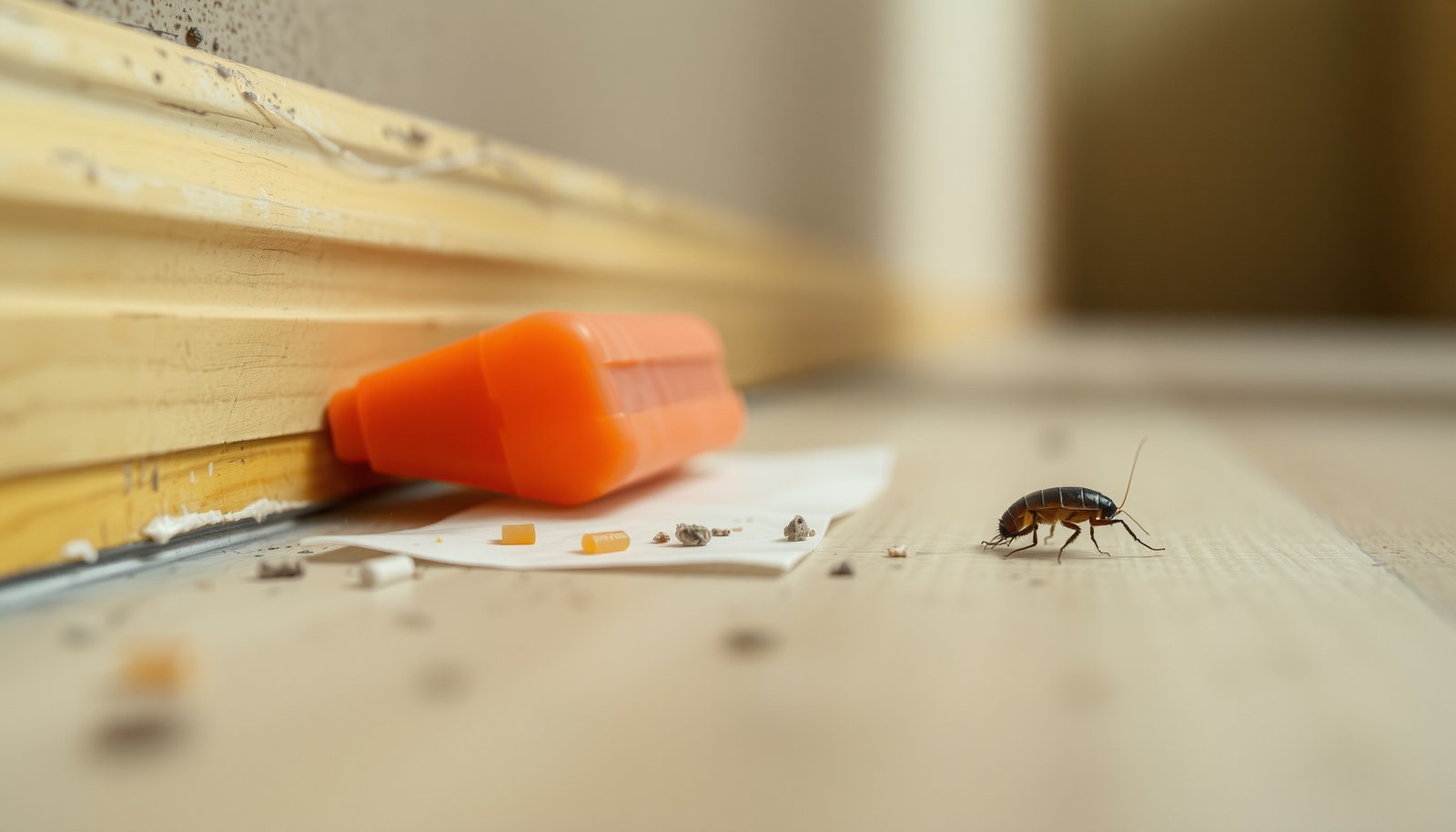
This image illustrates the kind of documented pest evidence — droppings, damage, and harborage signs — that tenants need to photograph and preserve before any legal action over a pest infestation becomes viable.
What Steps Must You Take Before Withholding Rent?
This is where most tenants go wrong, and it’s costly. Withholding rent without following the required pre-steps doesn’t just weaken your legal position — in many states, it eliminates your protection entirely and converts your case from “tenant asserting rights” to “tenant in breach of contract.” The procedural requirements aren’t a technicality. They’re the foundation of your entire legal argument.
Here’s the sequence that most states with rent withholding statutes require you to follow, in order:
- Document the infestation in writing. Photographs with timestamps, written descriptions of what you’ve observed and when, and any pest droppings, damage, or harborage evidence you can capture. Courts want specifics — “I saw cockroaches multiple times” is far weaker than “I photographed approximately 8–12 cockroaches in the kitchen on three separate dates.”
- Notify your landlord in writing. Verbal complaints don’t exist legally. Send written notice — email with read receipts, certified mail, or a dated letter — describing the infestation specifically and requesting remediation. Keep a copy. This notice is often what starts the legal clock.
- Allow a reasonable time for the landlord to respond. Most statutes define this window — commonly 14 to 30 days, though some states allow as little as 7 days for severe conditions. Your landlord must have a genuine opportunity to fix the problem before you can withhold.
- Verify your state’s specific statute. Some states require you to pay rent into a court-controlled escrow account rather than simply stopping payment. Keeping the money yourself when your state requires escrow is a technical default that can cost you the case.
- Continue documenting after the notice period. If the landlord does nothing, or treatment fails, you need a second wave of evidence showing the problem persisted after notice was given. A single round of documentation followed by a gap looks bad in housing court.
Picture this: a tenant in a Chicago apartment notifies her landlord in writing about an active mouse infestation — mice can squeeze through gaps as small as 1/4 inch, and she found droppings in three rooms within a week. The landlord sends a pest control company once, the tech does a cursory inspection, and the activity continues. She withholds rent the following month without checking whether Illinois requires escrow. She’s now in technical breach even though her underlying complaint is completely valid. That kind of procedural mistake unravels an otherwise strong case.
Which States Actually Allow Rent Withholding for Pest Problems?
Not every state gives tenants this tool. Some states have strong, explicit rent withholding statutes. Others offer alternative remedies — like “repair and deduct,” where you hire a pest control company yourself and subtract the cost from rent — but no direct withholding mechanism. A few states offer almost no tenant remedy beyond filing a habitability complaint with a local agency, which has limited teeth.
| Remedy Type | How It Works | States That Commonly Allow It |
|---|---|---|
| Rent Withholding / Escrow | Tenant pays rent into court escrow; landlord receives it after repairs | California, New York, Maryland, Massachusetts, Illinois |
| Repair and Deduct | Tenant arranges repairs and deducts cost from rent (usually capped) | Arizona, California, Texas (limited), Oregon, Washington |
| Rent Reduction | Tenant pays reduced rent reflecting diminished habitability | Several states via case law; varies widely |
| Complaint-Only States | Tenant files with housing authority; no direct financial remedy | Some Southern and Plains states; check local statutes |
California’s repair-and-deduct remedy caps reimbursement at one month’s rent, and you can only use it twice in any 12-month period — so it’s not a solution for long-running infestations unless you escalate to rent withholding through other legal channels. New York City has a particularly tenant-friendly framework with Housing Court procedures specifically designed for habitability disputes. The gap between states is wide enough that the same infestation situation could result in completely different outcomes depending on whether you’re in Baltimore or Birmingham.
“The number one mistake I see tenants make is assuming that because a pest infestation is real and documented, the law automatically protects them. It doesn’t work that way. The procedural requirements exist precisely because landlords have due process rights too. A tenant who skips notice and goes straight to withholding rent is handing the landlord a procedural win they didn’t earn on the merits.”
Dana Whitfield, Tenant Rights Attorney and former housing court mediator, Chicago, IL
What Counts as “Sufficient” Pest Evidence in Housing Court?
Housing court judges see a lot of pest cases, and they can tell the difference between a genuine, documented infestation and a tenant using a pest complaint as leverage for another grievance. What you bring to court matters enormously. The standard isn’t just “I had a pest problem” — it’s “here is proof of an ongoing, documented condition that my landlord failed to remediate after proper notice.”
Strong evidence typically includes the following:
- Timestamped photographs and video showing live pests, droppings, damage, or nesting material — with enough detail to establish scale and location within the unit
- Written correspondence with your landlord — every email, text, or certified letter that documents when you reported the problem and what response (if any) you received
- Health department or housing inspection reports — a third-party inspection that documents the infestation is among the most compelling evidence you can present, because it removes any “tenant exaggeration” argument
- Neighbor testimony or complaints — particularly relevant in multi-unit buildings, where a cockroach or rodent problem in adjacent units suggests a building-wide condition rather than tenant-caused harboring
- Evidence of failed treatments — if a pest control company visited and the problem continued, documentation of continued activity after that visit is powerful proof that the landlord’s response was inadequate
One thing judges tend to be skeptical of: infestations that somehow only began right after a rent dispute or lease non-renewal. Timing matters. If your pest complaints appear in writing only after you received a rent increase notice, a judge is going to notice that. Keep your documentation ongoing and contemporaneous — start the paper trail the first time you see something, not after a conflict starts.
Pro-Tip: File a complaint with your local housing authority or health department as soon as you have evidence of a serious infestation. Their inspection report creates an official, third-party record that’s far harder for a landlord to dispute in court than your personal photos alone — and the inspection is typically free.
What Are the Risks of Withholding Rent If You Get the Process Wrong?
The downside of improperly withheld rent isn’t just losing the case — it’s losing the case, owing back rent, potentially facing eviction, and having an eviction filing on your rental history. An eviction record follows you for years and can disqualify you from future housing. That’s a serious consequence for a procedural error, not a factual one. The pest infestation might be completely real and completely unaddressed, and you can still end up worse off than when you started.
There’s also a counterintuitive dynamic worth understanding: landlords who know their tenants are legally sophisticated are more likely to remediate quickly. A well-written notice that cites your state’s specific habitability statute by name, requests remediation within the statutory window, and mentions your awareness of rent escrow remedies will frequently produce faster action than a frustrated phone call ever would. When deciding how to approach your landlord, it’s also worth comparing what professional pest control actually costs — reviewing something like Orkin vs Terminix Cost Comparison: Which Pest Control Service Is Cheaper? can help you understand what a landlord should reasonably be paying to resolve the problem, which is useful context if you end up in repair-and-deduct territory.
The honest nuance here is that outcomes genuinely depend on factors outside your control: which judge you get, how organized your local housing court is, whether your landlord has legal representation, and even how severe the infestation was relative to what your jurisdiction considers habitability-level. A building with termite colonies — which can contain over 1 million individuals and cause structural damage that a tenant has no ability to address themselves — will be viewed very differently than a seasonal pest issue that the tenant may have contributed to through food storage habits. If the landlord can credibly argue that your behavior worsened or caused the infestation, your legal position weakens considerably even if the underlying condition is real.
Separately, some tenants get so focused on the legal route that they overlook interim steps that cost nothing. You can legally place many EPA-registered pest control products inside your unit while a landlord dispute is ongoing — this creates additional documentation that you were proactive about the problem. And if you’re renting a home with ongoing spider or secondary pest issues layered on top of a primary infestation, understanding what’s actually worth treating yourself (like reviewing the Best Spider Repellents for Indoor Use: Sprays and Essential Oils) versus what requires professional intervention can help you demonstrate good faith while the legal process plays out.
Rent withholding is a real legal remedy — not a myth, not just a threat — but it requires you to treat it as seriously as a landlord would treat a breach of lease. The tenants who use it successfully tend to be the ones who did the procedural groundwork so thoroughly that by the time they stopped paying rent, they had already built a case that a judge could rule on without ambiguity. That level of preparation is what separates a legal victory from an eviction notice.
Frequently Asked Questions
Can you withhold rent because of a pest infestation?
In most US states, yes — but only after you’ve formally notified your landlord in writing and given them a reasonable window to fix it, typically 14 to 30 days depending on your state. Withholding rent over a pest infestation is tied to the implied warranty of habitability, which landlords are legally required to uphold. Skipping the written notice step is the most common reason tenants lose these cases.
how long does a landlord have to fix a pest infestation before I can withhold rent?
Most states require landlords to respond within 14 to 30 days of receiving written notice about a pest problem, though some states set the threshold as low as 72 hours for severe infestations. The clock generally starts when your landlord receives your written complaint, not when you call or text them. Always send notice via certified mail or email so you have a timestamped record.
what pests count as a habitability violation for withholding rent?
Cockroaches, rodents, bed bugs, and termites are the most commonly recognized habitability violations across US states because they pose direct health or structural risks. A single mouse or a few ants typically won’t qualify — the infestation needs to be significant enough to make the unit unsafe or unlivable. Check your specific state’s landlord-tenant statutes, since some states like California and New York explicitly name certain pests in their housing codes.
what happens if I withhold rent for pest infestation and my landlord tries to evict me?
If you followed proper notice procedures, you can use the habitability violation as an affirmative defense in eviction court, meaning the landlord’s failure to treat the infestation becomes your legal justification for withholding rent. Courts in most states will require you to show written proof of notice and evidence the problem was never resolved, like photos, pest control reports, or inspector findings. Without documentation, it’s very hard to win — a paper trail is everything in these cases.
can I withhold rent for pest infestation if I caused the problem myself?
No — if the infestation is a result of your own poor sanitation, hoarding, or failure to follow lease terms, you generally can’t withhold rent and your landlord may actually be able to charge you for extermination costs. Responsibility comes down to the source: landlords are liable for structural entry points like gaps in walls or pipes, while tenants are responsible for conditions they created. A pest control inspection report can help establish who’s actually at fault.
Disclaimer: This article is for general informational purposes only and does not constitute legal advice. Landlord-tenant laws and pest-related disclosure or habitability requirements vary significantly by state and even by city, and they change over time. Before withholding rent, breaking a lease, or taking other legal action over a pest infestation, consult a licensed attorney or your local tenant rights organization familiar with the laws in your area.