
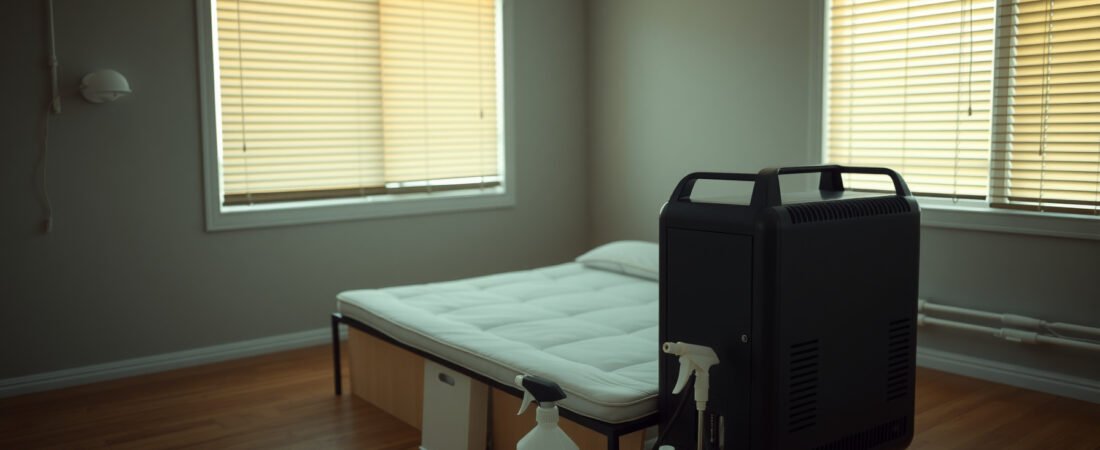
Heat treatment kills bed bugs in a single day. Chemical treatment is cheaper upfront. Neither of those facts tells you which one is actually worth your money — and that’s the question most comparison articles completely sidestep.
Here’s what they miss: the real cost difference between heat and chemical isn’t the price tag on day one. It’s whether you need a second treatment, whether your specific infestation responds to the method you chose, and whether the structure you live in even supports the option you’re paying for. A $1,400 heat treatment that eliminates the problem is dramatically cheaper than a $600 chemical treatment you repeat three times over four months while still sleeping with bed bugs.
So before you hand over a deposit to the first exterminator who answers the phone, here’s an honest breakdown of what heat treatment for bed bugs actually costs, where chemical treatment still makes sense, and the specific situations where one will fail you even when applied correctly.
What Does Heat Treatment for Bed Bugs Actually Cost?
A whole-home heat treatment typically runs between $1,000 and $3,000 for an average-sized house or apartment, with most homeowners landing somewhere around $1,200 to $2,000. The price scales with square footage, the number of rooms treated, and how many industrial heaters the crew needs to deploy. Some companies charge a flat rate per room — expect $300 to $600 per room when it’s priced that way.
What’s included matters enormously. A reputable heat treatment involves industrial propane or electric heaters that push the ambient temperature in every treated space above 120°F — the threshold at which bed bugs and their eggs die — and sustained at that level for 90 minutes to several hours depending on how heat-dense the clutter and furniture is. Thermometers are placed throughout the space to verify kill temperatures were actually reached everywhere, not just in the open air. If a company can’t show you temperature logs after the job, that’s a red flag worth taking seriously.
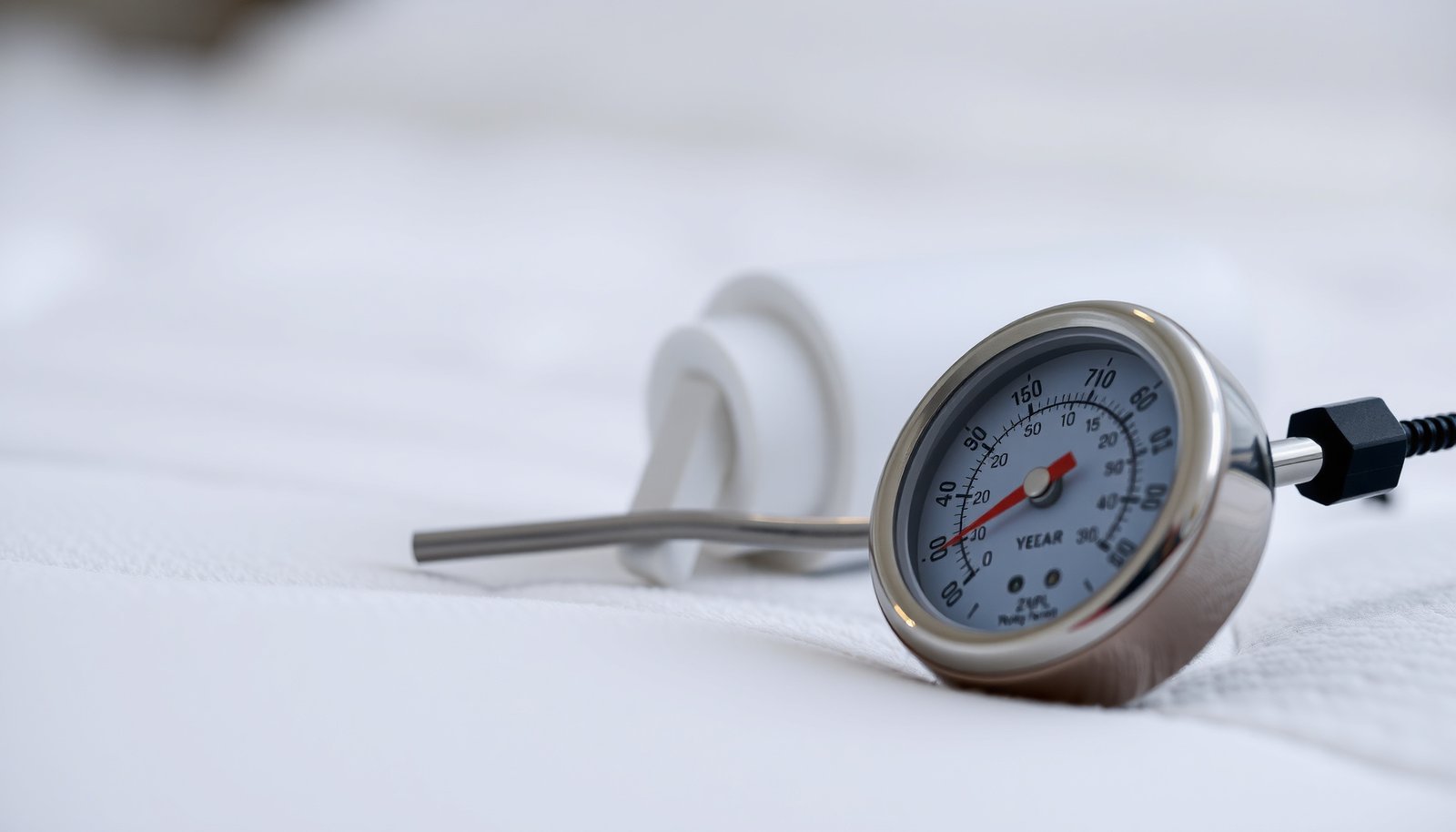
This image shows industrial heating equipment staged inside a treated room — the placement of multiple heat sources and temperature sensors is what separates a genuine heat treatment from an underpowered attempt that leaves cold zones where bed bugs survive.
What Does Chemical Treatment Cost — and What Are You Actually Getting?
Professional chemical treatment for bed bugs runs $300 to $900 for an initial visit, with most pest control companies building in a follow-up treatment two to three weeks later at no extra charge, or for a reduced fee. That follow-up isn’t optional — it’s built into the biology. Pyrethroids and neonicotinoids kill live bed bugs on contact, but eggs are chemically resistant. A female bed bug can lay 1 to 5 eggs per day and up to 500 over her lifetime, which means any eggs present during the first treatment hatch into nymphs that the initial chemical no longer protects against. The second visit is timed to hit those newly hatched nymphs before they mature and reproduce.
The honest nuance here: chemical resistance is a real and growing problem in bed bug populations across the United States. Studies have found that many urban bed bug populations have developed resistance to pyrethroid-based insecticides at the genetic level — meaning the standard spray that worked perfectly a decade ago may have near-zero efficacy on a current infestation in a major city like New York, Chicago, or Los Angeles. If a pest control company isn’t rotating chemical classes or combining actives (like a pyrethroid plus a neonicotinoid plus a desiccant dust like diatomaceous earth or CimeXa), you may be paying for treatments that biologically cannot solve your problem.
Where Heat Treatment Wins — and Where It Quietly Fails
Heat’s biggest advantage is penetration. It reaches inside mattress seams, inside wall voids, behind electrical outlets, inside furniture joints — places where even a thorough chemical application leaves gaps. Adult bed bugs can survive over 300 days without feeding, which means a survivor hidden deep inside a box spring doesn’t just disappear because you stopped noticing bites. Heat physically can’t be avoided the way a spray residue can.
But heat has real failure modes that most sales pitches gloss over. The biggest one is cold spots. Exterior walls in winter, rooms with inadequate heater placement, or spaces loaded with dense clutter — stacked books, cardboard boxes, tightly packed closets — can trap pockets of air that never reach lethal temperature. Bed bugs are small enough to survive inside a dense stack of clothing or a laptop bag that acts as its own insulation. Picture this: a technician sets up heaters in a studio apartment in February, but the tenant’s wall of IKEA shelving packed with hardcover books creates a thermal shadow behind it. Every bug sheltering in that zone walks away alive. The exterminator has no idea, the temperature logs from the center of the room look fine, and the infestation rebounds within six weeks.
Pro-Tip: Before a heat treatment, remove all aerosol cans, medications, candles, vinyl records, and anything heat-sensitive — but do NOT remove clutter like clothing or bedding unless specifically told to. Bed bugs follow movement, and taking bags of potentially infested items out of the treatment zone before the heat runs is one of the most common ways people accidentally spread an infestation to a car, a storage unit, or a family member’s home.
Here’s a counterintuitive fact most articles won’t tell you: heat treatment has a higher reinfestation rate than chemical in multi-unit buildings — not because it’s less effective at killing, but because it leaves no residual protection. The moment a treated apartment is re-entered, any bed bug hitchhiking in on luggage, a used piece of furniture, or through a wall void from an adjacent unit finds zero chemical barrier. A well-applied residual chemical treatment keeps working for weeks to months after the visit. In a building where your neighbors also have bed bugs, that residual protection isn’t a nice-to-have — it’s the only thing slowing reintroduction.
How to Decide Which Treatment Actually Makes Sense for Your Situation
The right choice depends on four specific variables. Run through each one honestly before you commit to either option.
- Severity of infestation. A light infestation caught early — bed bugs confined to a mattress or bed frame — can often be resolved with chemical treatment plus interceptor traps. A heavy, widespread infestation throughout multiple rooms and furniture pieces is where heat’s penetrating power earns its price.
- Building type. Single-family homes are the ideal candidate for heat treatment. Apartments, especially in dense urban buildings, carry significant reinfestation risk post-heat because the source problem (neighboring units) remains untreated. Chemical with residual in this scenario makes more practical sense.
- Chemical resistance history. If you’ve already done one or two chemical treatments with limited results, continuing to throw pyrethroids at a resistant population is not a cost-effective strategy. That’s the moment heat — or a combination approach — becomes the rational call.
- Your ability to prepare properly. Heat treatment requires significant prep: removing heat-sensitive items, clearing certain areas, ensuring pets are out. If your household cannot realistically achieve that prep level — elderly family members, mobility limitations, extreme clutter — heat treatment is more likely to underperform.
- Whether you want it solved in one day or can manage a multi-week protocol. Chemical treatment requires patience, monitoring, and typically two or three visits over four to eight weeks. Heat, done correctly in a suitable space, resolves the infestation in a single treatment day. If the psychological burden of ongoing infestation is affecting sleep and mental health — which it does, and that’s a legitimate factor — the premium for heat is justifiable on those grounds alone.
“The question I always ask homeowners is not ‘which treatment kills bed bugs better’ — because both can work. The question is which treatment is the right match for their specific structure, infestation level, and whether they’re in a building where reintroduction is likely. I’ve seen heat treatments fail in apartments and I’ve seen chemical treatments fail on resistant populations. The method matters less than choosing the right method for the right situation.”
Dr. Michael Bentley, Entomologist and Director of Training, National Pest Management Association (NPMA)
Heat vs. Chemical vs. Combination: Side-by-Side Cost and Performance
A lot of homeowners assume heat and chemical are mutually exclusive — you pick one and go. Many pest control professionals actually recommend a combination approach for moderate-to-severe infestations: heat to achieve an immediate, high-percentage kill, followed by a residual chemical application on baseboards, wall voids, and furniture joints to handle any survivors and prevent reinfestation. It costs more upfront, typically 20 to 40 percent above heat-only pricing, but the retreatment rates are noticeably lower.
| Treatment Type | Average Cost (Whole Home) | Kills Eggs? | Residual Protection? | Typical Visits Needed |
|---|---|---|---|---|
| Chemical Only | $300–$900 | No | Yes (weeks to months) | 2–3 visits |
| Heat Only | $1,000–$3,000 | Yes | No | 1 visit (sometimes 2) |
| Heat + Chemical Combo | $1,500–$3,500 | Yes | Yes | 1–2 visits |
One thing this table doesn’t capture: the hidden costs of treatment failure. A chemical-only approach that requires three retreatments over four months can easily eclipse the original cost of a heat treatment — and that’s before you factor in replacement bedding, interceptor traps, encasements, and the cost of laundering every piece of fabric in your home multiple times. The cheapest quote is rarely the cheapest outcome.
It’s also worth knowing that DIY heat options — space heaters, leaving a car in the sun, portable bed bug heaters — are not equivalent to professional treatment. A car interior can reach 130°F on a hot day, which is lethal, but it takes hours at that temperature sustained throughout the entire interior, including inside bags and luggage. A space heater in a bedroom will heat the air but not penetrate furniture interiors uniformly. The mechanisms that make professional heat treatment effective are the industrial heaters, the airflow management, and the temperature verification — not just “high heat somewhere in the room.” Just as best ultrasonic pest repellers sound plausible in theory but fall apart in real-world testing, DIY heat approaches that seem logical rarely deliver the consistent temperatures required to achieve a reliable kill.
Pest control methods are full of these gaps between what sounds reasonable and what actually works at the biological level. The same principle applies when you’re dealing with other household pests — like if you’re trying to figure out whether a surface spray is enough or whether you need to address harborage points directly, which is a distinction that matters just as much when you’re dealing with something like how to get rid of earwigs inside your home as it does with bed bugs.
The bottom line on combination treatment: if you’re in a single-family home with a moderate to heavy infestation and you can afford to spend $1,500 to $2,500, a reputable company offering heat plus a residual chemical application is probably your most reliable single investment. Get it in writing that temperature logs will be provided and that a follow-up inspection is included. If a company can’t or won’t commit to those two things, keep calling.
Here’s what the comparison articles don’t say plainly enough: neither heat nor chemical is a passive solution you pay for and walk away from. Both require you to understand what signs to watch for afterward, both carry reinfestation risk if the source of the infestation isn’t addressed, and both can fail if the pest control company executing them is cutting corners. The best version of this decision isn’t “heat or chemical” — it’s “which reputable company, with verified equipment and a clear treatment plan, is the right match for my specific space?” That question changes the conversation entirely, and it’s the one worth starting with.
Frequently Asked Questions
How much does heat treatment for bed bugs cost?
Heat treatment for bed bugs typically costs between $1 and $3 per square foot, so treating an average 1,500 sq ft home usually runs $1,500 to $4,500. Prices vary based on your location, the severity of the infestation, and whether the company charges a flat rate or by room. Always get at least 3 quotes before committing.
Does heat treatment for bed bugs work in one visit?
Yes, that’s one of its biggest advantages — a professional heat treatment kills bed bugs at all life stages, including eggs, in a single treatment by raising room temperatures to 120–135°F. Chemical treatments usually require 2 to 3 follow-up visits spaced weeks apart. If the prep work is done correctly and heat reaches every area, retreatment is rarely needed.
Is chemical treatment cheaper than heat treatment for bed bugs?
Chemical treatment is almost always cheaper upfront, typically running $300 to $1,500 for a full home depending on size and infestation level. However, because it requires multiple visits and doesn’t kill eggs on contact, the total cost can creep up over time. If your infestation is severe or you’ve already failed one chemical treatment, heat treatment’s higher price tag may actually save you money in the long run.
Can heat treatment for bed bugs damage my belongings?
It can if the technician isn’t careful — items like candles, vinyl records, certain medications, and aerosol cans shouldn’t be exposed to temperatures above 120°F. A reputable company will give you a prep checklist ahead of time so you can remove or protect heat-sensitive items. Electronics like laptops and TVs are generally fine, but you should always confirm with your specific provider.
What are the chances bed bugs come back after heat treatment?
Heat treatment doesn’t leave a residual barrier, so if live bed bugs hitchhike back into your home after the treatment, there’s nothing stopping a new infestation from starting. Reinfestation rates depend more on your habits and environment than the treatment method itself — apartments in multi-unit buildings are especially vulnerable to repeat problems. Some companies offer a 30 to 90-day warranty and will retreat for free if bed bugs reappear within that window.
Disclaimer: This article is for informational purposes only. Pest control costs, timelines, and outcomes vary widely depending on the pest, the severity of the infestation, your location, and the company you hire. Always get multiple quotes and ask for a written inspection report before agreeing to a treatment plan.