
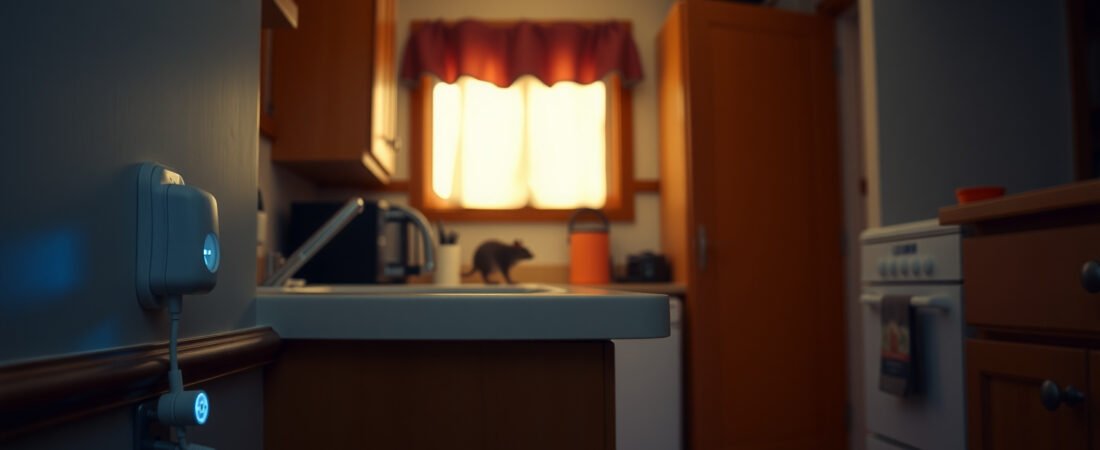
Ultrasonic pest repellers don’t work — at least not in any reliable, lasting way that would justify replacing actual pest control. That’s the short answer, and most of the $30–$60 devices sitting in Amazon carts right now won’t change it. The science is pretty consistent on this, and yet millions of these plug-in units sell every year because the marketing is genuinely convincing and the alternative — dealing with a real infestation — feels overwhelming. So let’s be honest about what these devices actually do, why they fail, and what the one narrow situation is where they might offer a marginal benefit.
What Do Ultrasonic Pest Repellers Actually Claim to Do?
Ultrasonic pest repellers emit high-frequency sound waves — typically between 15,000 and 65,000 Hz — that humans can’t hear but that manufacturers claim irritate, disorient, or drive away pests like mice, cockroaches, spiders, and ants. The theory sounds plausible on paper: animals perceive sound differently than we do, so a frequency that’s harmless to us might be unbearable to a mouse. The problem is that “sounds plausible” and “has been proven to work under controlled conditions” are very different things.
The Federal Trade Commission has actually sent warning letters to multiple ultrasonic device manufacturers for making unsubstantiated claims — a fact that rarely appears on product packaging. These aren’t obscure fringe companies either; the FTC’s concern has extended to widely distributed brands. What the devices do produce is real ultrasonic sound. What that sound reliably does to pest behavior in a real home environment is, at best, inconsistent and short-lived.
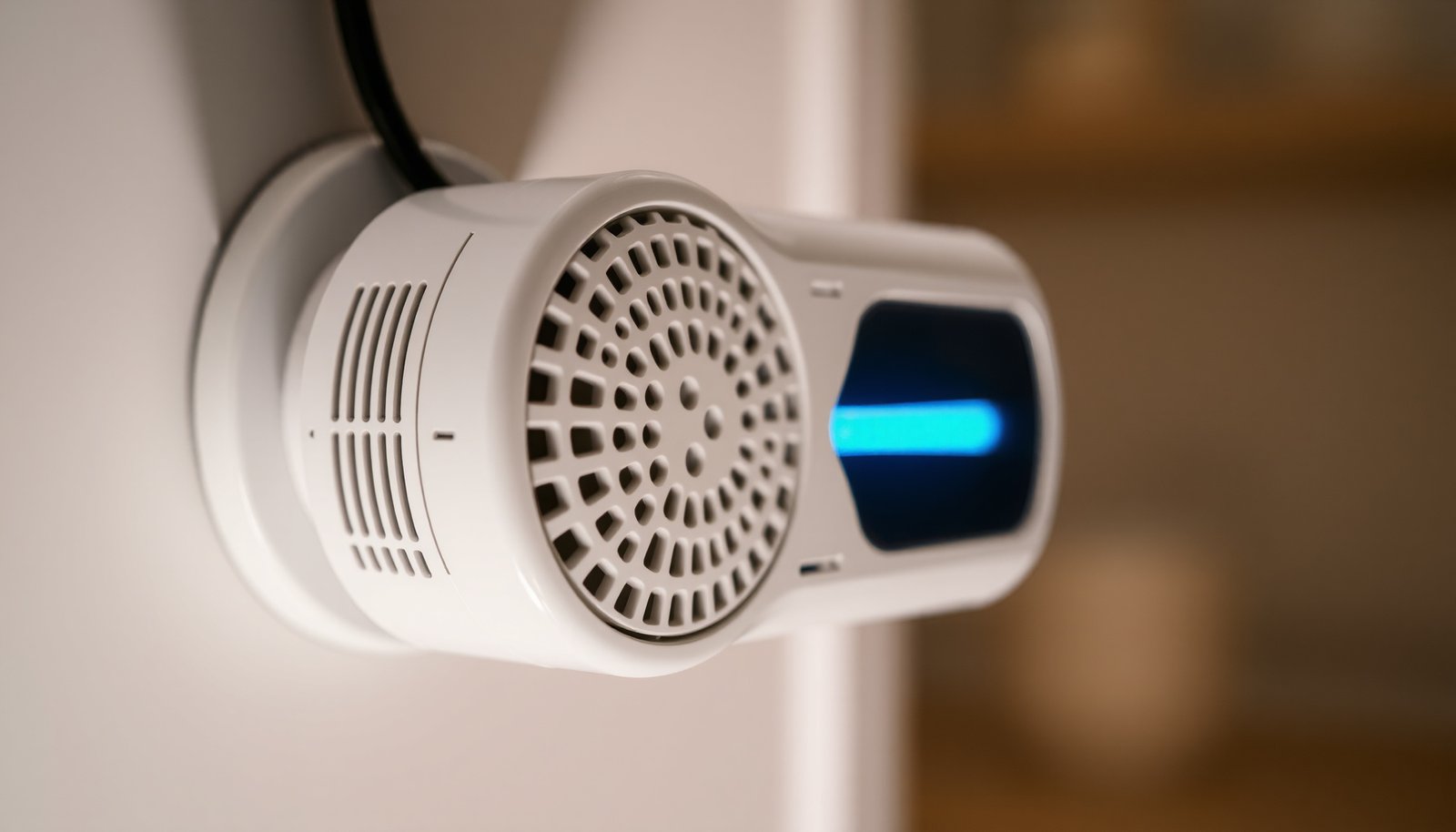
This close-up view of a typical plug-in ultrasonic unit shows just how small the transducer (the sound-emitting component) actually is — which matters because the effective range of these devices in a furnished room is far smaller than the box suggests.
What Does the Research Actually Say About Ultrasonic Repellers?
Multiple university studies — including research from Kansas State University and the University of Arizona — have tested ultrasonic devices under controlled conditions, and the results are not encouraging. In most trials, rodents showed an initial startle response for a few days, then fully habituated to the sound and resumed normal feeding and nesting behavior within 3–7 days. Insects showed even less response, with cockroaches and ants displaying no statistically significant change in movement or population density near active devices.
Here’s the part most product reviews skip entirely: ultrasonic waves don’t travel through walls, furniture, or most household objects. A single unit plugged into a living room outlet creates a sound field that’s largely blocked by your couch, your bookshelf, and the wall separating that room from your kitchen — which is exactly where pests tend to congregate. You’d need a device in virtually every room, in every corner, pointed at open floor space to even approximate the coverage the packaging implies. That’s not a pest control solution; that’s an expensive disappointment spread across your entire electrical system.
“The habituation issue is really the death knell for ultrasonic repellers as a standalone pest control tool. Rodents are cognitively flexible animals — they’ll ignore a repeated stimulus that doesn’t actually harm them within days. We’ve seen this in lab settings repeatedly. The sound is real, but the behavioral effect fades fast, and in a home with established harborage, it fades even faster.”
Dr. Michael Bentley, Entomologist and Director of Training, National Pest Management Association (NPMA)
Why Do So Many People Think These Devices Worked for Them?
Picture this: a homeowner spots a mouse in October, panics, orders two ultrasonic repellers that arrive in three days, plugs them in, and doesn’t see another mouse for six weeks. The repellers get a five-star review. What actually happened? Mice populations naturally fluctuate with season — they surge indoors in fall as temperatures drop, then activity levels change as they establish harborage. The homeowner also probably became more vigilant about food storage and sealing entry points. The repellers got credit for everything else they did simultaneously.
This is the confirmation bias trap that makes ultrasonic repellers so sticky in the market. Pest activity goes up, you buy a device, pest activity eventually normalizes (for completely unrelated reasons), and the device feels like the reason. The honest nuance here is that in a very lightly infested space — one or two scouts, no established nesting — the initial ultrasonic irritation might push a single mouse to choose a different route. But if you already have an established colony or infestation? There’s no sound frequency that will evict them. A female house mouse can produce 5–10 litters per year with 5–6 pups each; a persistent chirp from your outlet isn’t going to override that reproductive pressure.
Pro-Tip: If you’ve already bought an ultrasonic repeller and want to get some value from it, use it as a supplement — not a solution. Pair it with snap traps placed along walls (mice run along baseboards, not open floor space), seal any entry point larger than 1/4 inch with steel wool and caulk, and eliminate food sources. The traps do the actual work. The repeller is, at best, background noise.
Which Pests Are Ultrasonic Repellers Most and Least Likely to Affect?
Not all pests respond the same way, and the research is nuanced enough to be worth breaking down. The short version: mammals show the most initial response, insects show almost none, and arachnids fall somewhere in the middle of “we genuinely don’t know yet.” Here’s what the available data suggests for the most common household pests:
| Pest Type | Initial Response to Ultrasonic Sound | Long-Term Effectiveness |
|---|---|---|
| Mice & Rats | Mild startle/avoidance (3–7 days) | Rapid habituation — negligible after 1 week |
| Cockroaches | Little to no measurable response | None documented in peer-reviewed studies |
| Ants | No significant behavioral change | None — colony behavior unaffected |
| Spiders | Inconsistent across species | Insufficient evidence either way |
The cockroach finding is particularly striking. Cockroaches have been on Earth for roughly 320 million years and have survived conditions that would kill most other organisms. A plug-in device emitting 25,000 Hz is genuinely not in their threat register. Similarly, ants navigate primarily by pheromone trails, not sound — disrupting their acoustic environment does essentially nothing to the chemical communication network that drives colony behavior. If you’re dealing with ants in your kitchen or earwigs finding their way inside your home, an ultrasonic device is not where to start.
Are There Any Ultrasonic Devices Worth Buying — And What Should You Use Instead?
There’s one category of ultrasonic device that has more legitimate backing than the plug-in repellers: ultrasonic rodent deterrents used in combination with other exclusion methods in specific enclosed spaces like crawl spaces, attics, and garages. Even here, the evidence is modest — but the confined space limits the habituation variable somewhat, and they’re often used alongside actual trapping. If you’ve been hearing strange noises overhead and you’re trying to figure out what’s in your attic — squirrels, mice, or something bigger — an ultrasonic device alone won’t solve the problem, but the identification step matters for choosing the right control method.
For the vast majority of pest problems, here’s what actually works based on mechanism, not marketing:
- Snap traps for mice and rats — placed perpendicular to walls, triggered within 24–48 hours of mouse activity along that run, and checked daily
- Gel bait stations for cockroaches — placed in harborage zones (under sinks, behind appliances, inside cabinet hinges), not in open areas where they’ll be avoided
- Boric acid or diatomaceous earth for crawling insects — applied as a thin dust in voids and along baseboards where insects actually travel
- Exclusion first, always — steel wool packed into gaps, expanding foam over pipes, door sweeps on exterior doors; no product compensates for an open entry point
- Sticky monitors as diagnostics — placed in corners and along walls to identify which pests are actually present before spending money on any treatment
The counterintuitive insight worth holding onto: the most effective pest control tools are almost always the least exciting ones. Snap traps cost $2 each. Boric acid costs $8 for a container that lasts years. A tube of cockroach gel bait costs $12 and outperforms every ultrasonic device on the market in head-to-head testing. The pest control industry’s most effective products just don’t have the same marketing budget as a gadget that looks high-tech plugged into your wall.
How to Evaluate Any Pest Repeller Before You Buy It
Before spending money on any pest control product — ultrasonic or otherwise — there’s a four-question filter worth running through. It takes about three minutes and will save you from most of the ineffective products crowding the pest control aisle:
- Has it been tested by a university or independent lab, not just the manufacturer? Manufacturer-funded studies have obvious conflicts of interest. Look for extension service publications, EPA registration data, or peer-reviewed journal citations — not testimonials.
- Does the claim address mechanism, or just outcome? “Repels pests” is not a mechanism. “Disrupts the nervous system of insects at concentrations above X ppm” is a mechanism. Vague outcome claims with no explanation of how the product works are a red flag.
- Is it registered with the EPA? Pesticide products — sprays, baits, dusts — must be EPA-registered. Ultrasonic devices are classified as electronic pest control devices, not pesticides, which means they face no efficacy testing requirement before going to market. That’s not a small loophole.
- What happens if you stop using it? Effective pest control eliminates or excludes pests. A product that requires continuous use to maintain any effect — but doesn’t reduce the pest population — isn’t solving your problem. It’s renting you a temporary (and unproven) buffer.
The broader point is that pest control decisions made in a moment of stress — which is almost always when people buy ultrasonic repellers — tend to prioritize anything that feels like immediate action over anything that’s been shown to work. That’s completely human and completely understandable. But the pest doesn’t care how much the device cost or how good the reviews were. It cares about food, water, harborage, and whether anything is actually blocking its access to those things.
Spend your time and money on identification first — know exactly what pest you’re dealing with and where it’s coming from — then match the right tool to that specific problem. That approach will outperform any plug-in device every single time, and it won’t require you to buy three more units when the first one inevitably stops seeming to work.
Frequently Asked Questions
Do ultrasonic pest repellers actually work?
The honest answer is: not reliably. Most peer-reviewed studies, including research from Kansas State University, found that ultrasonic devices had little to no measurable effect on common household pests like cockroaches, ants, and mice. They’re not a substitute for sealing entry points, traps, or professional treatment.
What pests are ultrasonic repellers supposed to work on?
Manufacturers claim ultrasonic pest repellers work on mice, rats, spiders, cockroaches, ants, and mosquitoes. In practice, rodents may show a brief reaction to the sound but typically habituate to it within a few days to two weeks and go right back to their normal activity patterns.
How far do ultrasonic pest repellers reach?
Most units are rated for 800 to 1,200 square feet, but that range assumes an open space with no walls or furniture blocking the signal. Ultrasonic sound waves don’t pass through walls, so a single plug-in unit in your living room won’t protect your kitchen or bedrooms — you’d need one per room.
Are ultrasonic pest repellers safe for pets?
They can be a problem if you have pet rodents like hamsters, gerbils, or guinea pigs — the frequencies used are the same ones meant to bother mice and rats, so it’ll stress those animals out. Dogs and cats generally aren’t bothered by most ultrasonic devices, but some units that also emit electromagnetic frequencies could potentially irritate them.
Are ultrasonic pest repellers worth the money?
For most homeowners dealing with an actual infestation, no — they’re not worth it as a primary solution. A basic snap trap costs under $5 and has far more evidence behind it than a $30 to $60 ultrasonic device. If you want to use one as a supplemental deterrent in a pest-free area, the risk is low, but don’t expect it to solve an existing problem.