
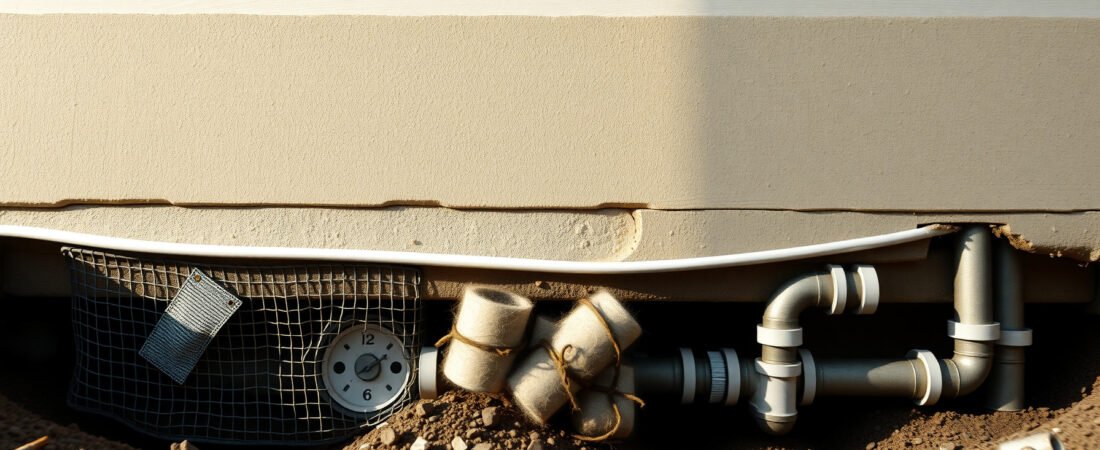
Sealing a few holes with steel wool and calling it “exclusion” is one of the most expensive mistakes a homeowner can make. Real professional rodent exclusion isn’t a quick patch job — it’s a systematic process that most pest control marketing glosses over entirely, leaving homeowners confused about what they’re actually paying for. The real gap isn’t in whether exclusion works; it’s that most people don’t realize exclusion and extermination are two completely different services, and getting one without the other almost always leads to reinfestation within a season.
What Is Rodent Exclusion vs. Rodent Extermination — And Why Most People Mix Them Up?
Extermination kills the rodents currently inside your home. Exclusion physically prevents new rodents from getting inside in the first place. These are not the same service, and many pest control companies offer them separately — yet the industry tends to bundle them under vague terms like “rodent control,” which creates real confusion for homeowners shopping around.
Think of it this way: traps and bait stations are temporary pressure relief on an active population. Exclusion is the structural fix that removes the invitation permanently. A house that gets treated with poison bait but never sealed will see new mice moving in within weeks — because the entry points that brought the first wave are still wide open and broadcasting a scent trail to every rodent in the neighborhood.
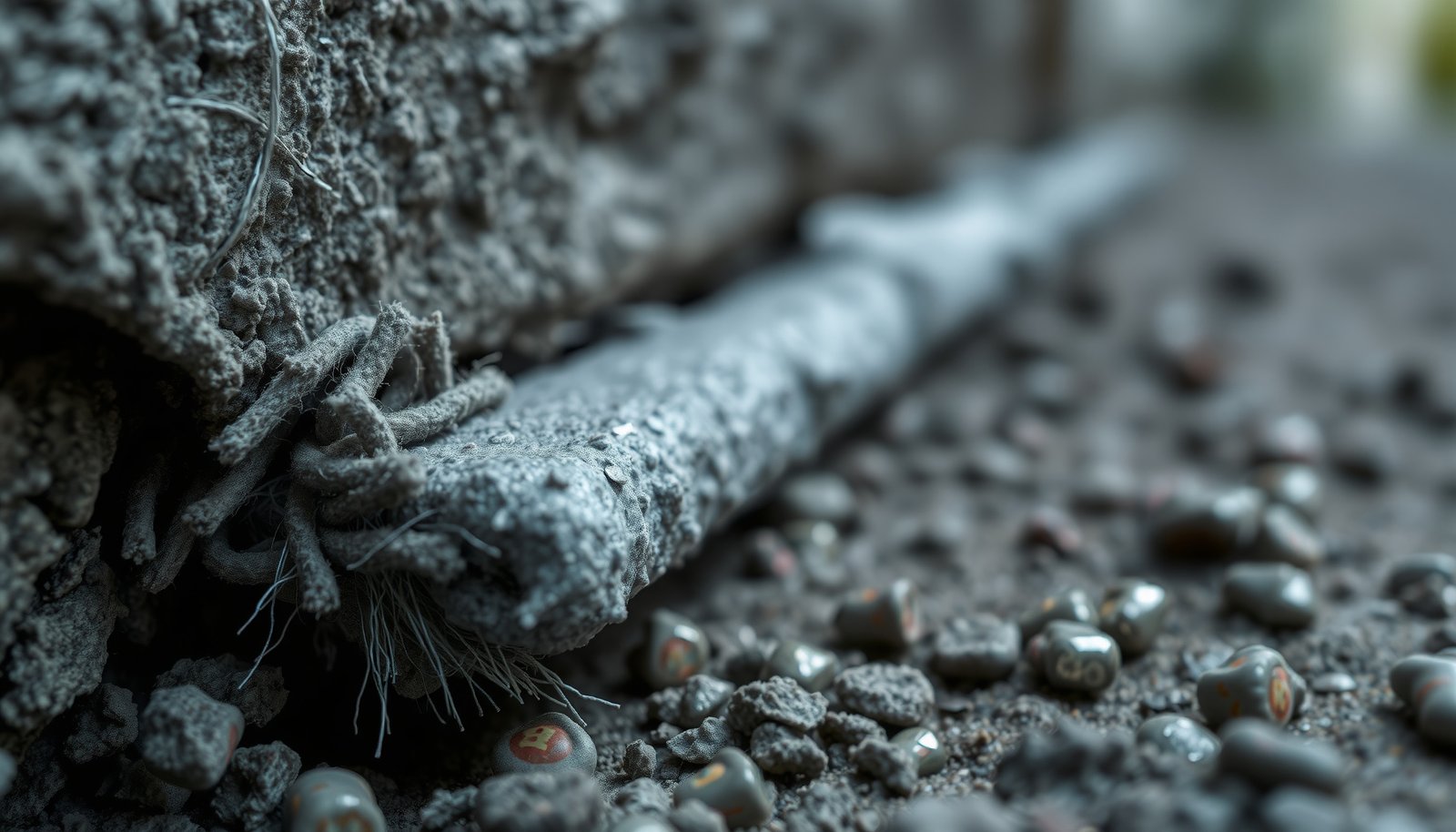
This image shows a technician sealing a gap at a pipe penetration point along a foundation wall — the kind of subtle, easy-to-miss entry point that a standard pest inspection often skips but a dedicated exclusion service targets first.
What Does a Professional Rodent Exclusion Inspection Actually Cover?
Before any physical sealing begins, a qualified technician does a full structural assessment of your home’s exterior and interior access points. This isn’t just a casual walk-around — a thorough inspection maps every gap larger than 1/4 inch, which is the minimum opening a mouse needs to enter a structure. Rats need only about 1/2 inch. Both measurements are shockingly small, and they’re everywhere on an average house.
A proper exclusion inspection covers the following areas in sequence:
- Foundation and sill plates — where wood framing meets the foundation is one of the top five entry zones on virtually every older home, especially those built before modern construction tolerances tightened up.
- Utility penetrations — every pipe, conduit, cable line, and HVAC line that passes through an exterior wall creates a potential gap. Installers rarely seal these to rodent-proof standards.
- Roofline and soffit junctions — roof rats and young Norway rats exploit gaps where fascia boards meet soffit panels, and where roof sheathing meets exterior walls at the eaves.
- Door and garage door sweeps — worn or missing door sweeps create a gap that’s often well above 1/2 inch, especially on older garage doors that have sagged or warped over time.
- Crawlspace vents and access doors — unscreened or corroded crawlspace vents are a primary entry route in the South and Pacific Northwest, where rodent pressure tends to be highest year-round.
- Interior attic inspection — not just for active signs of rodents, but to identify where animals are traveling inside the structure and to check for secondary entry points at interior walls.
A company that skips the attic interior or doesn’t physically probe utility penetrations with a flashlight and a probe tool isn’t delivering a true exclusion inspection — they’re doing a visual pass that will miss at least a third of the real entry points.
What Materials and Methods Do Professionals Actually Use to Seal Entry Points?
This is where professional exclusion separates itself most clearly from DIY attempts. The materials used to seal gaps have to be rodent-proof — not just physically present. Spray foam, caulk, and wood filler are all things rodents can chew through in under an hour. Professional-grade exclusion uses materials specifically chosen because rodents either can’t chew through them or won’t attempt to.
Here’s a breakdown of the materials a legitimate exclusion service should be using and where each one applies:
| Material | Best Use | Why Rodents Can’t Defeat It |
|---|---|---|
| Hardware cloth (1/4″ galvanized steel mesh) | Vents, crawlspace openings, weep holes | Steel gauge too thick for rodent incisors to compress or chew through |
| Copper mesh (Stuf-Fit) | Pipe gaps, irregular-shaped penetrations | Copper oxidizes against gnawing; doesn’t compress like steel wool |
| Sheet metal flashing | Roofline gaps, sill plate joints, corners | Rigid surface with no purchase point for gnawing; lasts decades |
| Rodent-proof caulk with steel fiber reinforcement | Small cracks, foundation hairlines, around sealed mesh edges | Steel fibers embedded in silicone create a chew-resistant matrix |
One thing worth noting: regular steel wool — the kind from the hardware store — is not a permanent solution. It rusts, compresses, and deteriorates within a single season. Professionals use copper mesh or galvanized hardware cloth precisely because longevity matters when you’re trying to stop reinfestation, not just delay it.
“The number one reason exclusion fails isn’t the materials — it’s the inspection. You can seal every gap you find and still have rodents if you missed three gaps you didn’t find. Rodents don’t need much. A gap the width of a pencil eraser is a mouse-sized door, and houses have hundreds of them if you’re not being systematic.”
Dr. Marcus Holt, Board-Certified Entomologist and Structural Pest Management Specialist, Mid-Atlantic Pest Management Association
Does a Rodent Exclusion Service Include Trapping — and Should It?
Here’s the counterintuitive piece that most exclusion articles skip right over: sealing a building before eliminating the rodents already inside can make your problem worse, not better. If you trap animals inside by sealing entry points while they’re still living in your walls, they’ll chew new holes out of desperation — sometimes in places that are even harder to access and seal than the original entry points.
A properly structured professional rodent exclusion service addresses this sequencing issue. The industry-standard approach runs trapping and baiting first to reduce or eliminate the interior population, then performs the structural sealing once interior activity has dropped off significantly. Picture this scenario: a homeowner in a 1960s ranch home had a company come out and seal the foundation in one visit with no trapping phase — two weeks later, the mice had chewed through a kitchen cabinet toe-kick into the wall cavity and created three new access routes. The company had to redo the entire job at their cost. That’s not a rare edge case; it’s a predictable outcome when the sequencing is wrong.
Pro-Tip: Before hiring, ask the company explicitly: “Do you do the trapping and the sealing in the same visit, or do you stage them?” If they say the same visit and there’s confirmed active activity inside, push back. The correct answer for an active infestation is always trapping first, sealing after interior signs have cleared.
What Should Be Included in the Written Guarantee — and What Usually Isn’t?
This is the part of professional rodent exclusion that homeowners tend to overlook until they need it. A service guarantee for exclusion is fundamentally different from a guarantee on a spray treatment. Exclusion guarantees should cover structural workmanship — meaning if rodents re-enter through a sealed point within a defined period, the company comes back and re-seals at no additional charge. What most guarantees do not cover is new entry points that weren’t present at the time of the original service.
Here’s what a solid exclusion guarantee should spell out clearly:
- Coverage period — industry standard runs from 6 months to 1 year for residential exclusion; anything shorter than 6 months for a full exterior exclusion is below average.
- Scope of return visits — does the guarantee cover re-inspection only, or does it include re-sealing labor and materials? Get this in writing before signing.
- Exclusions to the guarantee — most contracts void the warranty if the homeowner causes structural damage (renovations, repairs) that creates new gaps, which is fair; but some companies also void it for any new rodent activity, which makes the guarantee nearly worthless.
- Seasonal considerations — rodent pressure spikes in fall as temperatures drop, and a company that stands behind their work will acknowledge this in their warranty terms rather than pretending seasonal reinfestation is always the homeowner’s fault.
- Photo documentation — reputable companies photograph every sealed entry point before and after the service; this protects both parties and is your evidence if a warranty dispute arises.
One honest nuance: how long exclusion holds up depends significantly on the age and condition of your home, your region’s rodent species, and surrounding land use. A newer construction home in a suburban area with minimal vegetation against the foundation will hold an exclusion treatment far longer than a 1940s craftsman bungalow surrounded by ivy and a wood pile. No exclusion service is forever, and any company that implies otherwise isn’t being straight with you. Just as you’d evaluate products by reading a direct comparison of what’s inside the formula before making a purchase, you should evaluate exclusion bids by comparing exactly what’s in scope — not just the price.
How Much Does a Professional Rodent Exclusion Service Cost — and What Drives the Price Up?
Costs vary widely, but a realistic range for a full residential rodent exclusion service on a standard single-family home runs from $350 to $1,500, with most homeowners landing somewhere between $500 and $900 depending on square footage, home age, and the number of entry points identified. Larger homes, homes with extensive crawlspaces, and homes with significant roofline access issues push the price toward the higher end.
The variables that most meaningfully drive price up aren’t always the ones homeowners expect. Roof work — sealing gaps along the fascia, soffit, and roofline — adds cost because it requires ladder work or lift equipment and takes significantly more labor time than ground-level sealing. Similarly, crawlspace exclusion with vapor barrier repair or vent screen replacement is time-intensive. It’s also worth knowing that exclusion pricing is often separate from ongoing monitoring; some companies charge a flat one-time exclusion fee and then offer an optional monthly monitoring plan with bait station checks, which can add $30 to $80 per month. This kind of dual structure is common, but it’s not always disclosed upfront in the initial quote. If moisture issues are bringing unexpected pests into your home alongside rodents — some homeowners dealing with damp basements find themselves with springtails appearing at the same time — those underlying conditions won’t be addressed by exclusion work alone and may require separate remediation.
The bottom line on cost: the cheapest exclusion bid is almost never the best value. A low-bid company that misses 30% of entry points will cost you more in repeat services than a higher-bid company that does a systematic job the first time. Ask every company how many linear feet of sealing they expect to complete, and how many individual points they typically identify on a home of your size — vague answers to those specific questions are a yellow flag worth noticing.
Rodent exclusion done right is one of the few pest control investments that compounds over time — a properly sealed home stays sealed, and each season without a new infestation means no damage to insulation, no gnawed wiring, and no contaminated pantry. The homeowners who regret paying for professional exclusion are rare. The ones who regret skipping it are not.
Frequently Asked Questions
How much does a professional rodent exclusion service cost?
Most homeowners pay between $200 and $600 for a standard professional rodent exclusion service, though larger homes or severe infestations can push costs above $1,000. The price typically includes an inspection, sealing entry points, and sometimes a follow-up visit. It’s worth getting at least 2-3 quotes since pricing varies a lot between pest control companies.
What entry points do exterminators seal during rodent exclusion?
Technicians look for any gap larger than 1/4 inch for mice or 1/2 inch for rats, since that’s all the space they need to squeeze through. Common spots include gaps around pipes, utility lines, vents, roof eaves, door sweeps, and foundation cracks. They typically use materials like steel wool, hardware cloth, sheet metal, or caulk depending on the location and size of the opening.
How long does rodent exclusion take to work?
You should notice a significant drop in rodent activity within 1-2 weeks after a professional rodent exclusion service is completed. If traps or bait stations were placed during the same visit, any rodents already inside are usually eliminated within that same window. Keep in mind that exclusion stops new rodents from getting in — it doesn’t instantly remove ones already living inside your walls.
Does rodent exclusion include getting rid of the mice or rats already inside?
Not always — exclusion and extermination are two separate services, and not every company bundles them together. A true professional rodent exclusion service focuses on sealing the structure so rodents can’t enter, but you’ll often need trapping or bait stations to deal with any existing infestation. Always ask upfront whether interior treatment is included or priced separately.
How do I know if my home needs rodent exclusion or just traps?
If you’re dealing with a one-time mouse sighting, traps alone might handle it. But if you’re seeing rodents repeatedly, finding droppings in multiple areas, or hearing scratching in your walls at night, that usually means there’s an ongoing entry point — and that’s when professional rodent exclusion makes the most sense. Exclusion treats the root cause instead of just reacting to each new rodent that shows up.
Disclaimer: This article is for informational purposes only. Pest control costs, timelines, and outcomes vary widely depending on the pest, the severity of the infestation, your location, and the company you hire. Always get multiple quotes and ask for a written inspection report before agreeing to a treatment plan.